
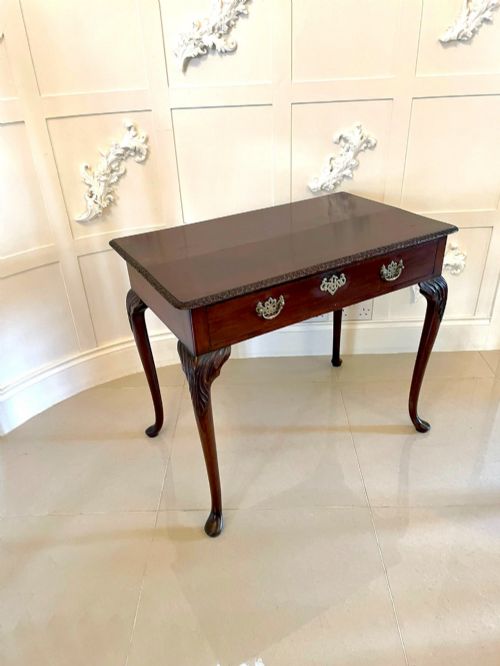
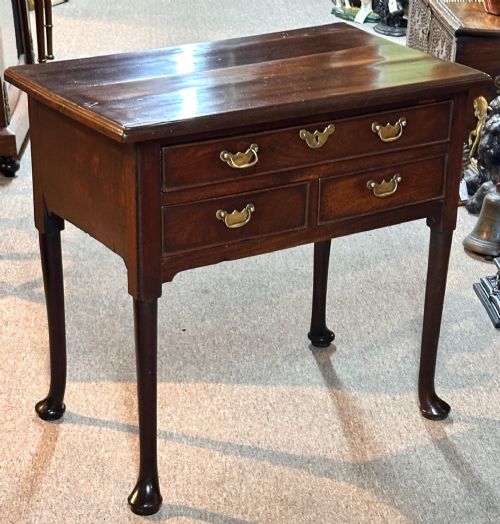
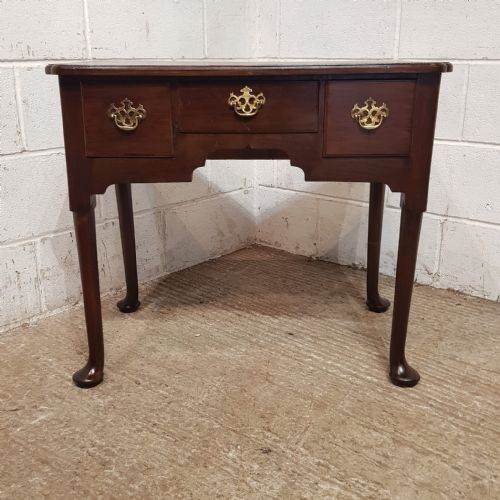
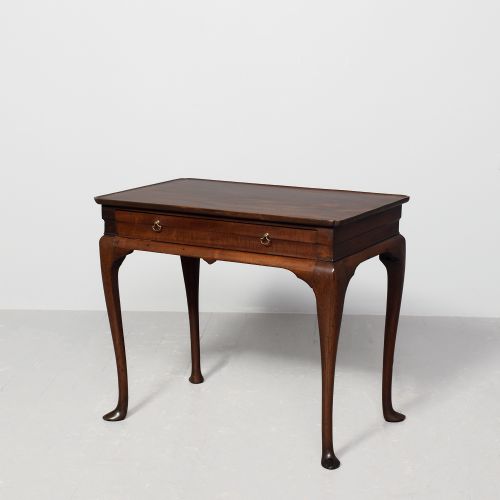



George III Mahogany Lowboy
A george iii mahogany lowboy is a compact and useful table built for storage and display during the Georgian period.
George III Mahogany Lowboy
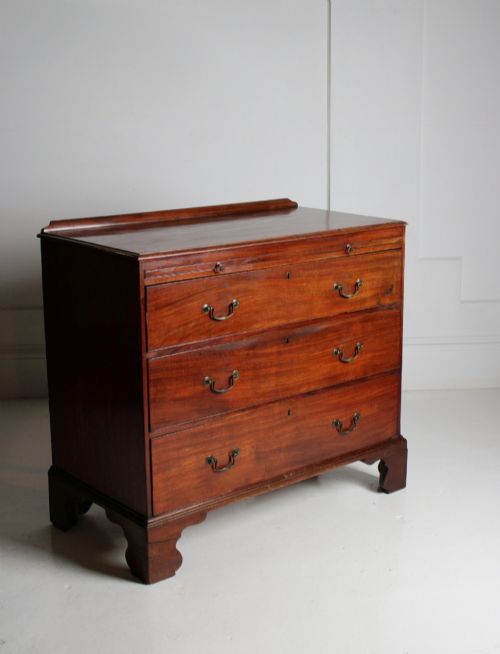
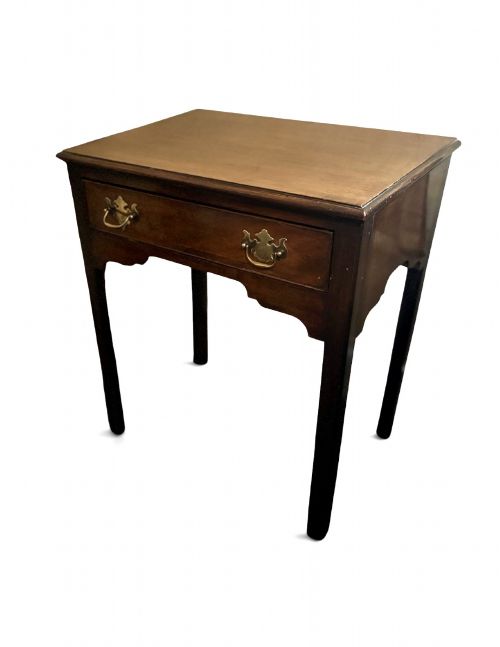
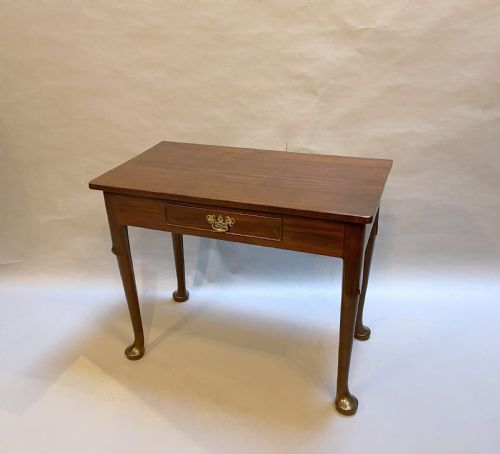
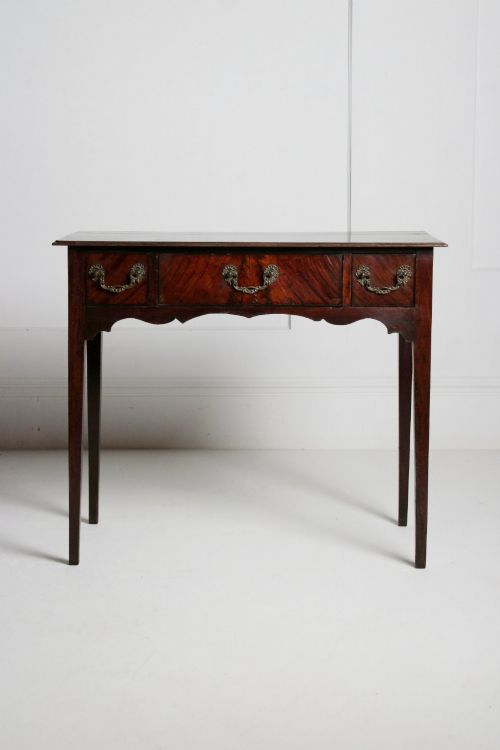
A george iii mahogany lowboy is primarily found as a small side table or low table equipped with drawers. The pieces seen here span the Georgian period, the eighteenth century, and around eighteen hundred, taking the form of side tables and lowboys alongside occasional chests of drawers.
Most examples function as compact writing desks, dressing tables, or hall consoles. The design typically incorporates multiple drawers beneath a polished top, resting on slender legs suited to smaller rooms.
Quality Variations
Quality rests in the selection of figured mahogany timber and the richness of the natural surface patina. Stronger examples display finer grain patterns and more complex top designs, such as serpentine shapes.
Construction details also separate standard pieces from superior ones, including the neatness of drawer dovetails and the integrity of the original brass hardware.
Listings feature mahogany, pine, and brass materials across eighteenth-century Georgian periods.
The George III Mahogany Lowboy Glossary
- Lowboy
- A short table with one or more rows of drawers, commonly used as a dressing or side table during the eighteenth century.
- Crossbanding
- A strip of veneer applied to the border of a furniture top running perpendicular to the main grain, adding a decorative frame.
- Serpentine top
- A table surface featuring a gently undulating edge with a convex centre flanked by concave curves.
- Patina
- The deep surface sheen and colour developed by mahogany timber through age and regular polishing.
- Dovetail
- A traditional interlocking joint used to secure drawer corners together securely.
George III Mahogany Lowboy: Frequently Asked Questions
What is a lowboy used for?
A lowboy serves as a compact side table or dressing table with convenient drawer storage. Historically placed in bedrooms or halls, it provides a surface for lamps and small objects.
Today, these tables fit easily into modern living spaces as hallway consoles or writing desks. Their modest height and footprint make them adaptable to many rooms.
How do I date a george iii mahogany lowboy?
Dating relies on examining the timber species, construction methods, and hardware styles. Pieces from this era generally show hand-cut dovetails and period-appropriate brass drawer pulls.
Consulting the specific details of the grain and secondary woods like pine or oak helps narrow the period further towards the late eighteenth century.
Are all george iii lowboys made of solid mahogany?
While mahogany forms the primary show wood, secondary timbers such as oak and pine commonly appear in drawer linings and internal framing. Crossbanding and veneers are also utilised on selected decorative surfaces.
Examining the interior construction reveals the mix of woods used by the cabinet maker.
Where should I place a lowboy in my home?
These tables suit narrow hallways, living room corners, or bedrooms where space is limited. Their shallow depth allows them to sit flush against walls without blocking walkways.
Pairing the table with a mirror or a small lamp creates a functional focal point in an entryway.