



George III Mahogany Cellarette
When you search for a george iii mahogany cellarette, you are looking at substantial drinking vessels designed to hold bottles securely beside the dining table.
George III Mahogany Cellarette
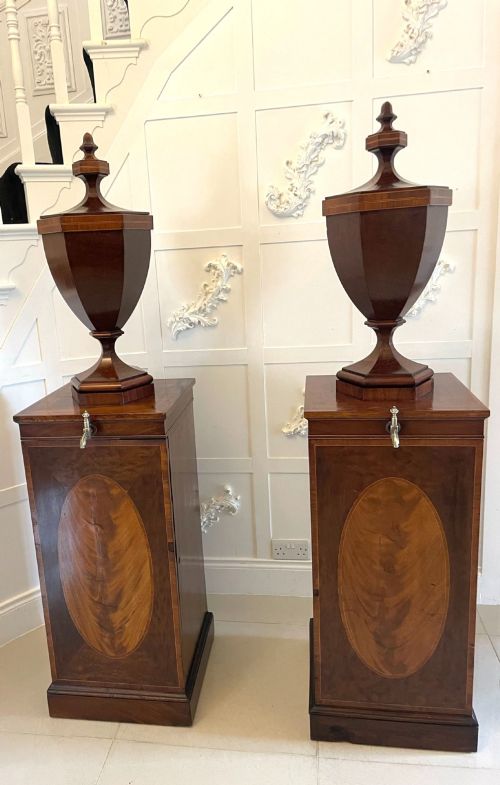
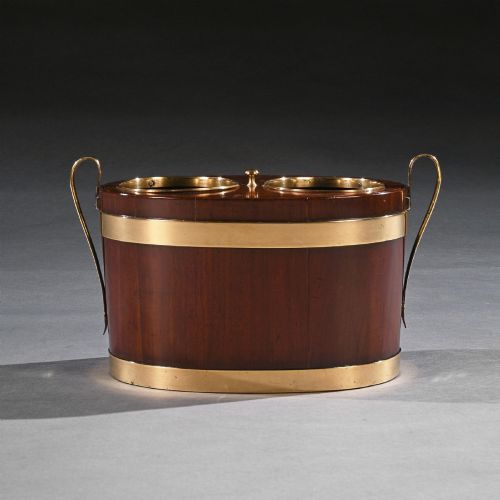
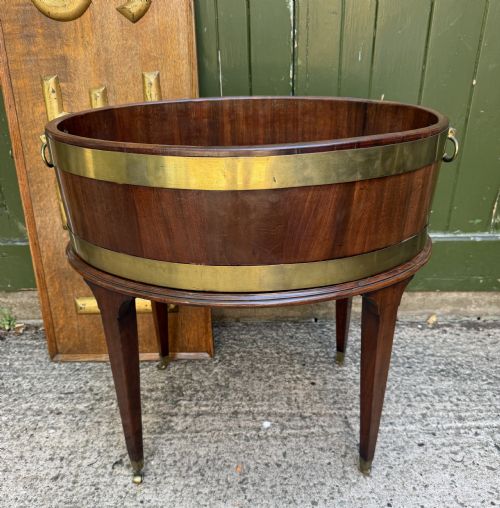
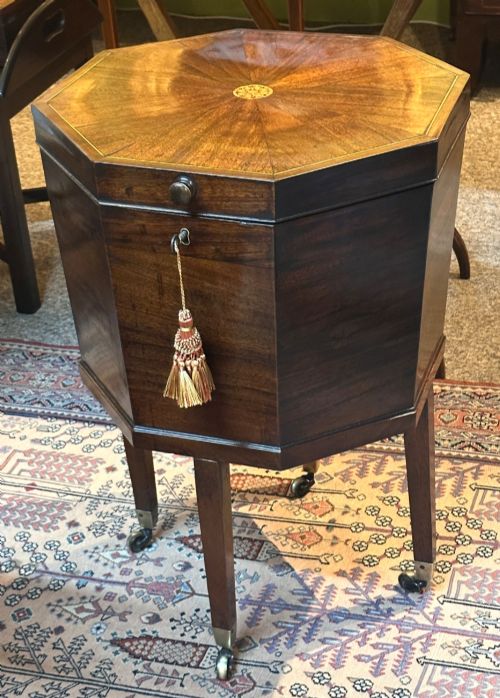
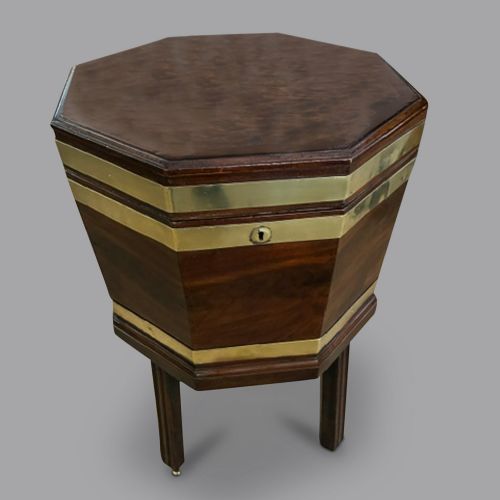
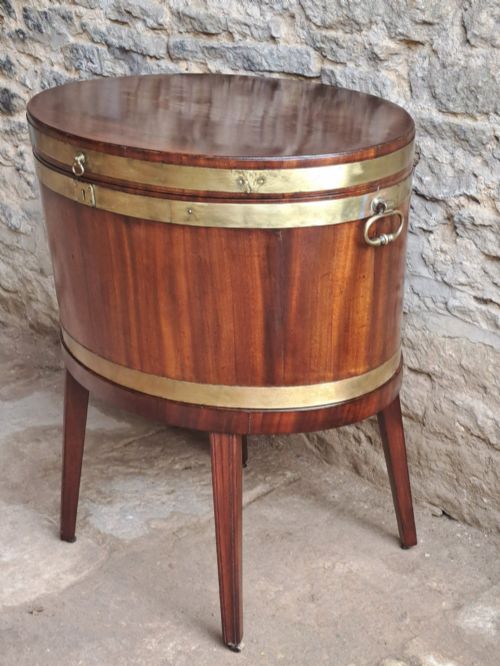
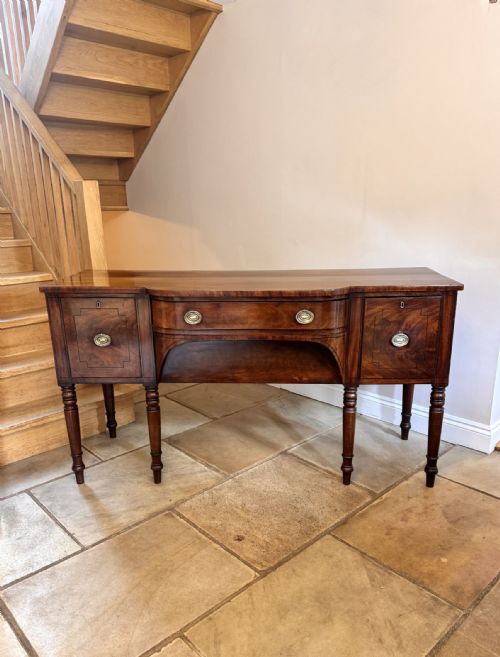
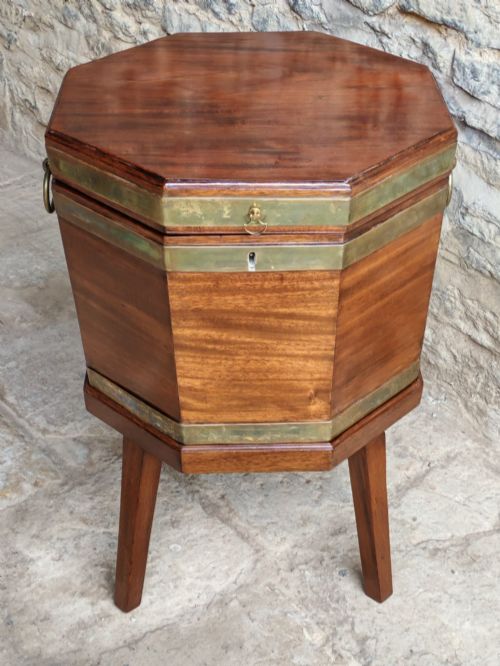
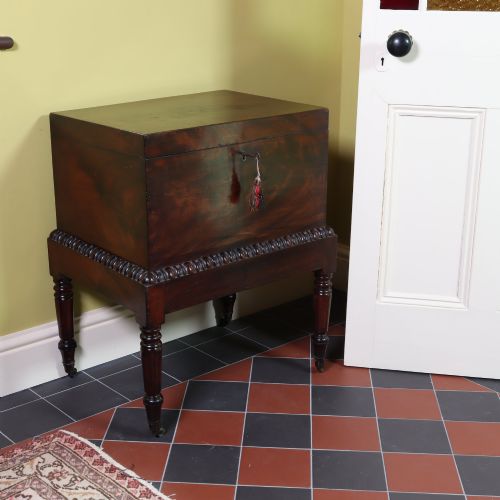
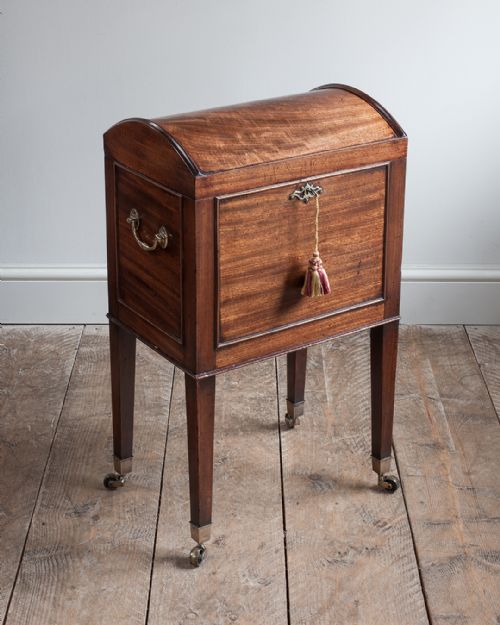
A george iii mahogany cellarette is a dedicated container built during the Georgian era to store wine bottles and ice within easy reach of the dining table. The pieces seen here appear primarily as octagonal or oval vessels, often bound in brass and fitted to stands, pedestals, or sideboards.
Makers of the period also produced variations such as wine urns, decanter boxes, and metamorphic tables that served the same function. The selection ranges from straightforward eighteenth-century boxes to later revival pieces from the Victorian period.
Materials and construction
Cabinet makers utilised solid mahogany and flame mahogany veneers for the main bodies, frequently selecting timber with deep grain patterns. Structural strength and decorative contrast came from secondary woods, boxwood inlay, and satinwood banding.
Many vessels incorporated metal elements, using brass bands and mountings to reinforce the stave construction similar to coopered buckets. Linings of zinc or metal were also fitted internally to hold ice and water for chilling wine.
Materials across the listings include solid mahogany, flame mahogany, satinwood, boxwood inlay, zinc, and brass.
Assessing quality
Quality rests heavily on the selection of timber, particularly where figured flame mahogany or fine satinwood and boxwood inlay are employed. The crispness of the brass bindings and the retention of original stands or pedestals elevate certain examples significantly.
Proportion and joinery define the better pieces, distinguishing workshop productions from simpler utilitarian boxes. The presence of an original interior lining or fitted partitions also separates standard vessels from finer survivals.
Samual Norman
The George III Mahogany Cellarette Glossary
- Cellarette
- A freestanding or floor-standing box designed to hold wine bottles near the dining table. They frequently featured internal divisions and metal linings for ice.
- Brass bound
- The technique of securing wooden staves with flat metal bands fastened by pins or screws. This construction method echoes the craft of the cooper.
- Flame mahogany
- A veneer cut from the fork of the mahogany tree where the grain twists and creates a flame-like pattern. Cabinet makers used this on prominent exterior surfaces for visual impact.
- Satinwood
- A pale, hard wood imported from the tropics and used for contrasting stringing, bands, and marquetry in late eighteenth-century furniture.
George III Mahogany Cellarette: Frequently Asked Questions
What is a george iii mahogany cellarette?
A george iii mahogany cellarette is a large, box-like container produced in the eighteenth century to hold wine bottles and ice during formal meals. They stood on the floor beside the dining table or sideboard for convenient access.
These pieces typically feature hinged lids and internal compartments lined with metal to keep bottles cool. Their exterior designs range from simple octagonal staves with brass bands to inlaid neoclassical forms.
How were they used historically?
Dining customs of the period required wine to be served from bottles kept cool and close at hand rather than stored on the table. Servants placed ice and water inside the lined compartments to lower the temperature of the wine before pouring.
Because cellarettes were heavy when filled with glass and ice, many were built on stands with castors or designed as stationary floor units. They allowed hosts to manage the wine service without constant trips to the cellar.
Are all these pieces from the eighteenth century?
While the primary style dates to the reign of George III in the eighteenth century, the listings include later nineteenth-century revival pieces. Makers in the Victorian era and later periods frequently reproduced these classic forms.
Examining the construction methods, wood ageing, and hardware helps distinguish an original eighteenth-century piece from a later revival version.
How do I fit one into a modern room?
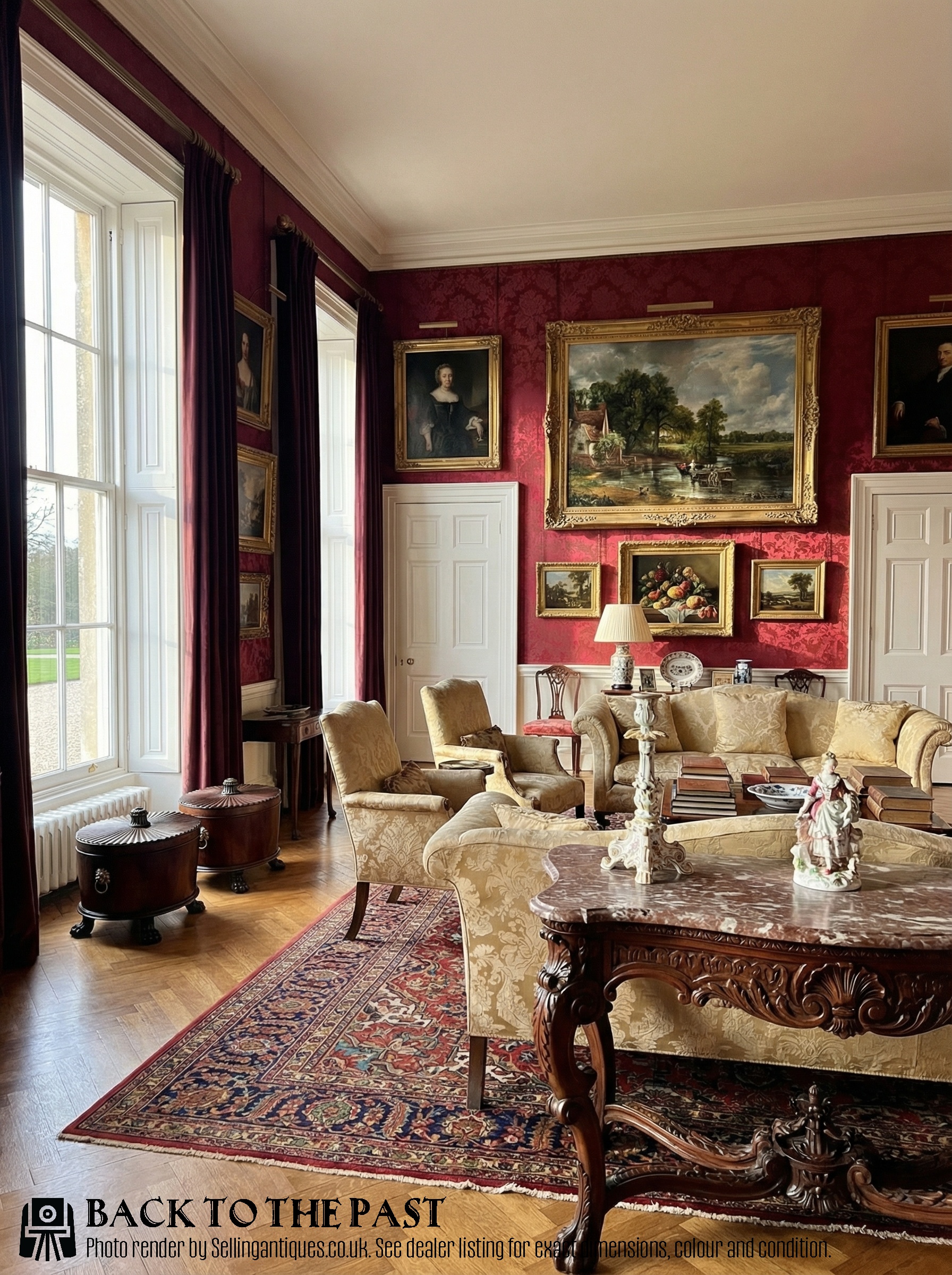
These vessels work well as freestanding accent pieces in a dining room, living space, or study. Their deep timber tones and brass details complement both traditional interiors and cleaner modern schemes.
Beyond their original purpose, they function effectively as storage containers for throws, magazines, or large plants when used as jardinières.