


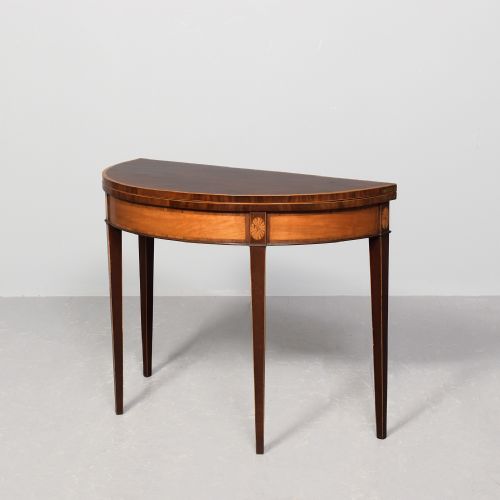
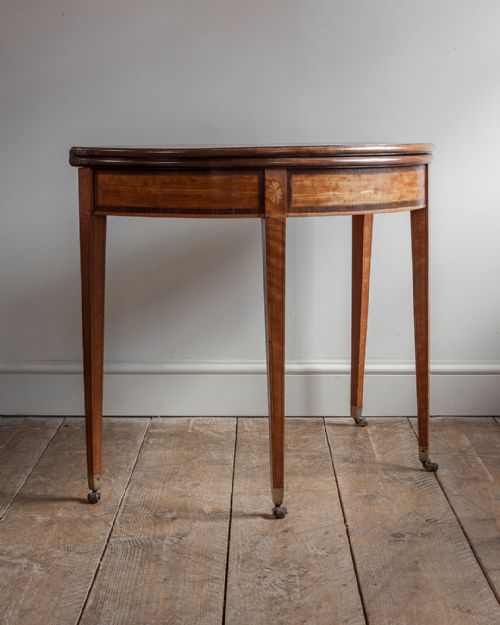
George III Folding Table
A george iii folding table brings eighteenth-century versatility into a modern room, offering a clever surface that opens from a compact console when required.
George III Folding Table
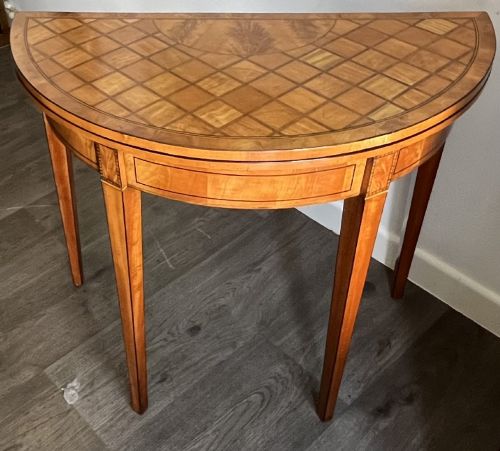
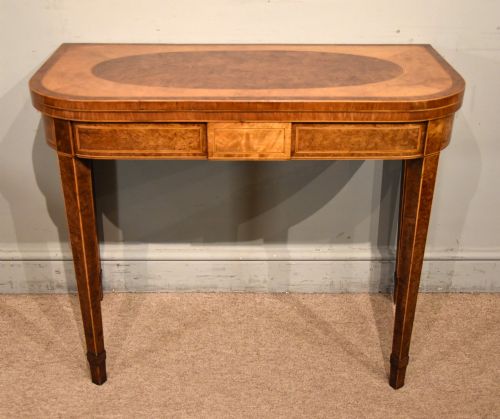
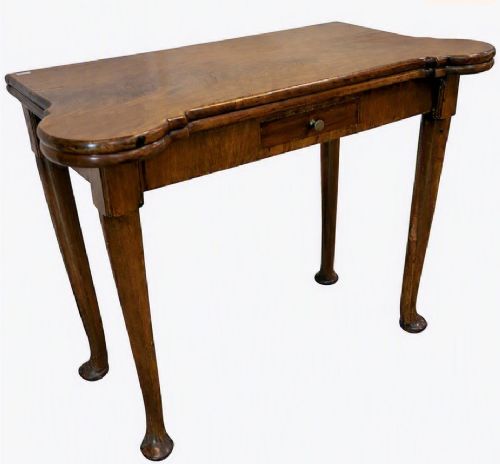
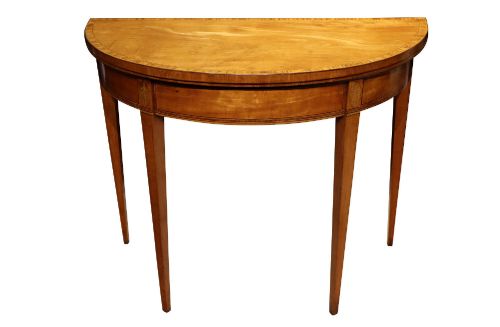
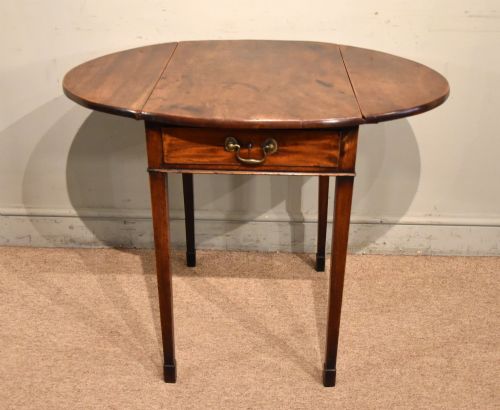
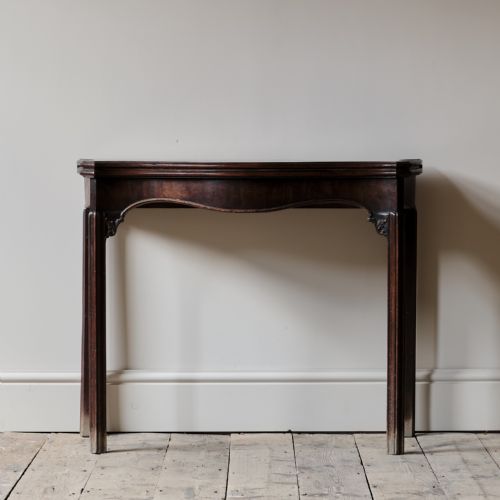
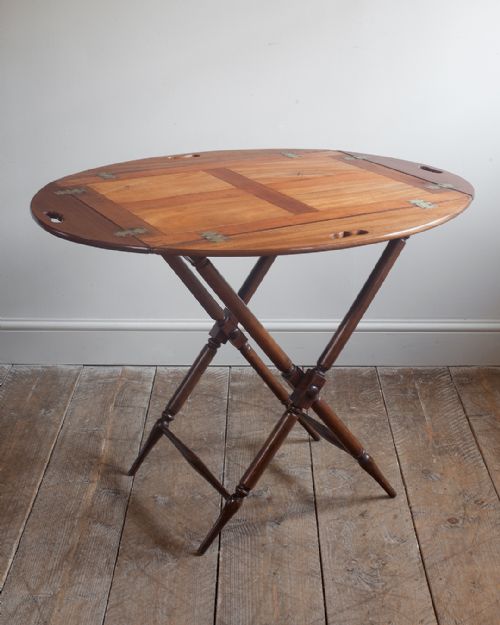
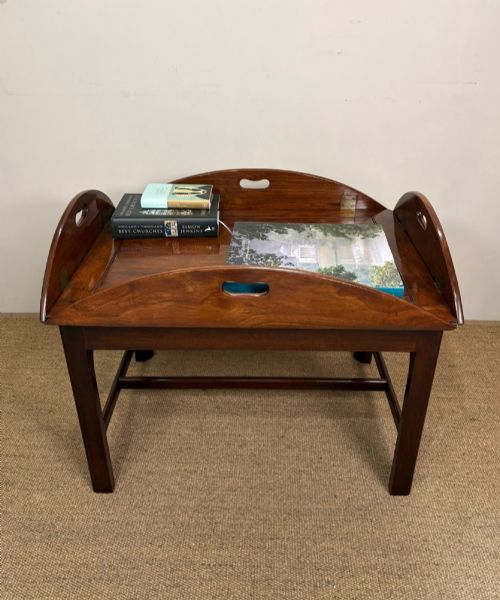
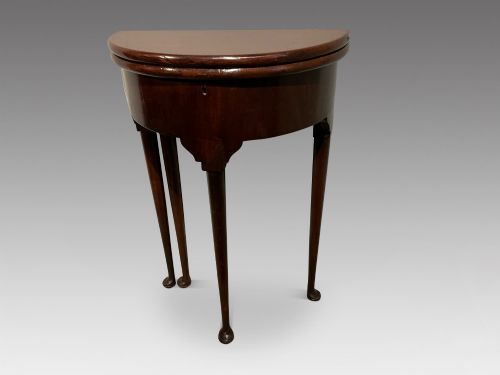
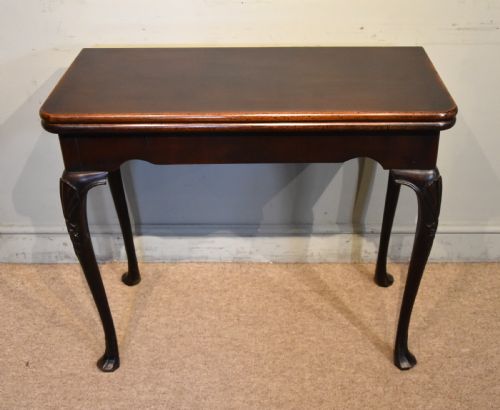
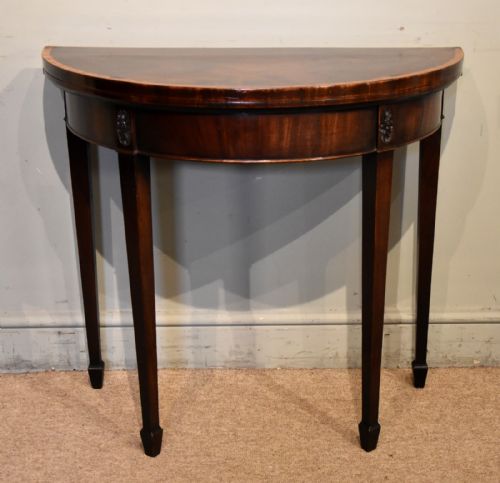
A george iii folding table encompasses a variety of clever designs intended for card games, tea service, and small-space living during the Georgian era. The listings here show card tables, tea tables, games tables, and demi-lune shapes alongside occasional folding and Pembroke tables.
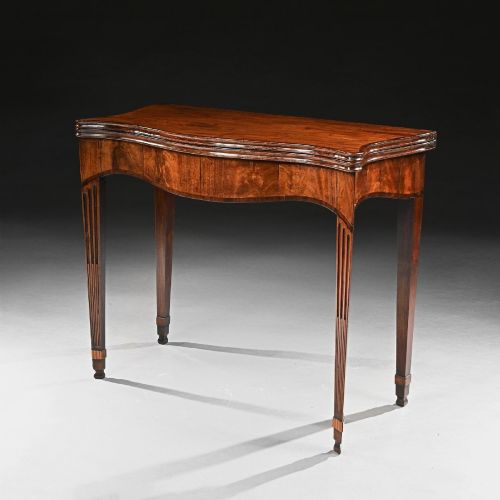
Mahogany predominates, frequently shaped into demi-lune, serpentine, or rectangular tops supported by folding mechanisms. Pieces span the eighteenth century, the regency transition, and later revivals, reflecting how makers adapted domestic furniture for changing social habits.
Materials and Construction
Makers utilised solid timbers like mahogany, walnut, and oak for structural integrity, often applying delicate veneers of satinwood, kingwood, rosewood, and burr yew across the top surfaces. Inlaid details in boxwood, ebony, and lighter woods create contrast along the edges and friezes.
Hinges, swing legs, and pivoting actions allow the top leaf to double the surface area when unfolded, revealing baize-lined playing surfaces or hidden wells beneath. Carved mahogany details, such as bracket feet or edge mouldings, complete the construction.
Several tables include hidden wells beneath the folding top, originally designed to stash guineas and playing cards safely out of sight.
Gradations of Craftsmanship
The distinction between standard and exceptional pieces rests on the choice of timber figure, the crispness of inlaid crossbanding, and the precision of the folding mechanism. Highly figured flame mahogany and finely painted satinwood demand greater skill from the cabinetmaker.
Proportion and structural integrity dictate value. Tables retaining original brass hardware, unwarped folding tops, and balanced serpentine or demi-lune outlines demonstrate superior workshop standards from the period.
George Bullock·Bruce & Burns of Edinburgh·Gillows
The George III Folding Table Glossary
- Demi-lune
- Half-moon shape. This curve allows the table to sit flat against a wall when folded.
- Crossbanding
- A strip of veneer run perpendicular to the grain of the main surface. It creates a contrasting border around the table top.
- Baize
- A coarse woollen fabric used to line gaming surfaces. It provides a soft texture for card play.
- Pembroke table
- A small rectangular table with hinged drop leaves on either side. These tables often include a single drawer.
- Serpentine
- A gently undulating curved line resembling a snake. This shape appears along the front edges of finer tables.
George III Folding Table: Frequently Asked Questions
What is a george iii folding table used for?
These tables served primarily for social gatherings, acting as compact console tables against a wall during the day and opening up for card games or tea service in the evening.
The clever hinged top doubles the surface area, concealing compartments or baize gaming surfaces underneath when expanded.
How do I identify a genuine period piece?
Look closely at the secondary timbers inside the frame, the hand-cut joinery, and the wear patterns on the folding hinges. Eighteenth-century pieces display timber shrinkage and hand-finished details that modern reproductions lack.
The quality of the mahogany figure and the precision of any wood inlay offer further clues to authentic period manufacture.
How should I care for a wood folding top?
Keep the timber away from direct heat sources and dramatic humidity changes to prevent the folding leaves from warping or splitting. Regular dusting with a dry cloth and occasional application of appropriate wax preserves the polished finish.
Support the swing leg properly whenever opening the table leaf to avoid stressing the original hinges.
What is the difference between a card table and a tea table?
Card tables typically feature a green baize or felt lining inside the fold-over leaf to facilitate playing card games. Tea tables usually present a polished wood surface inside, sometimes with small saucer depressions or a plain top designed for porcelain.
Both share similar folding mechanisms and proportions, but their interior surfaces reflect their distinct domestic uses.