
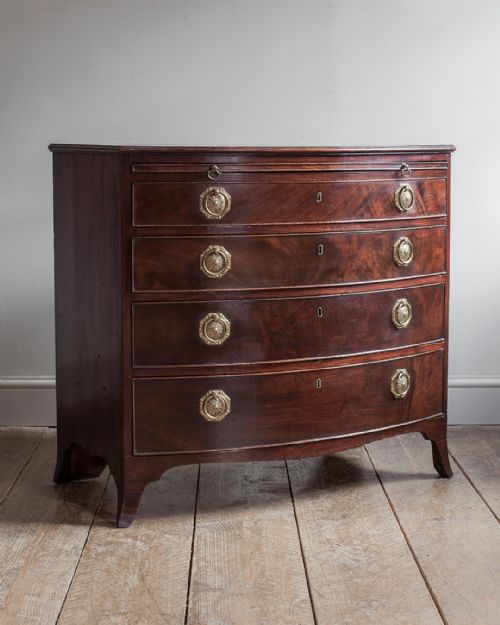
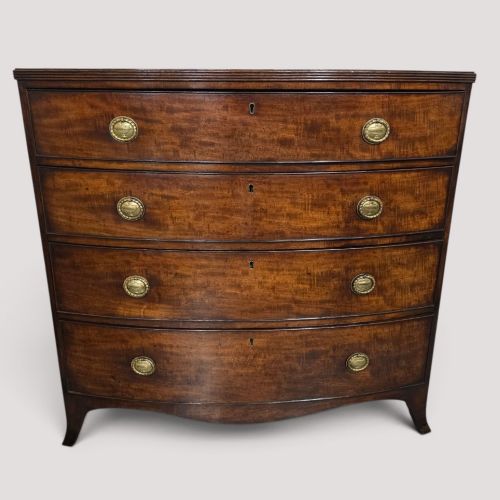
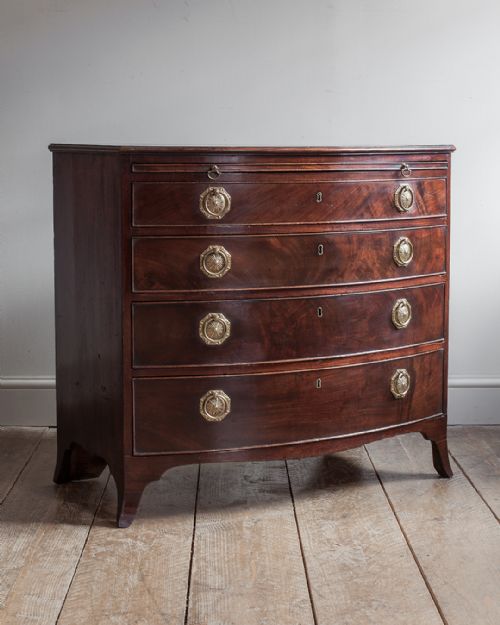
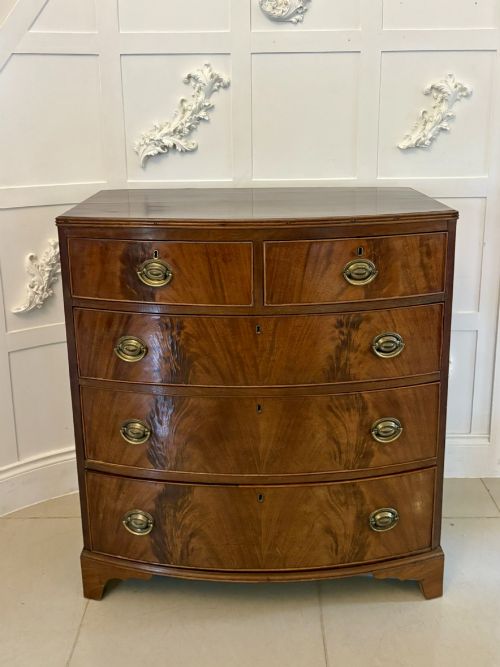
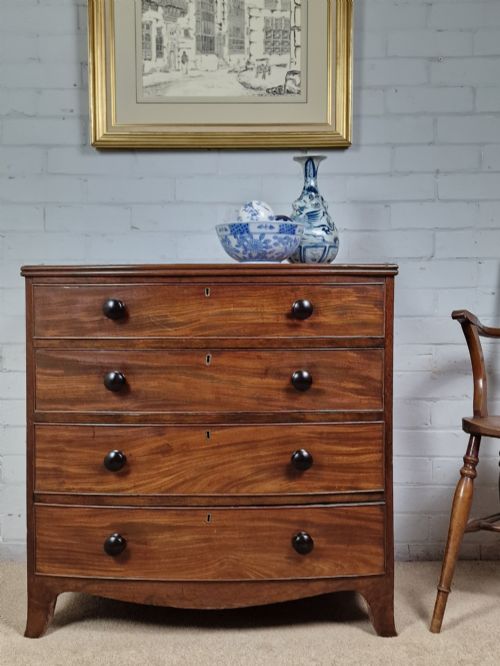
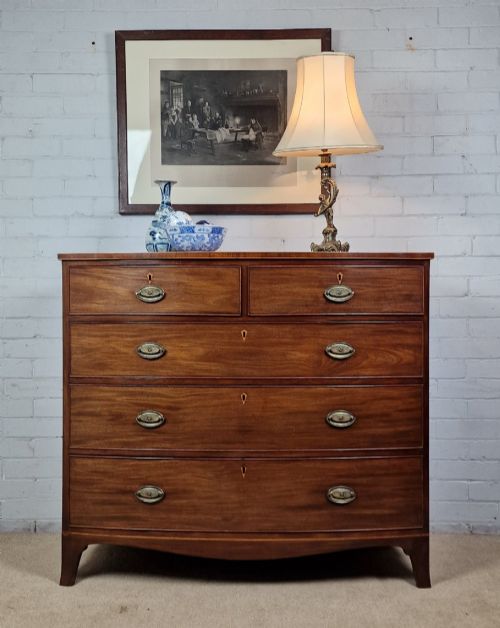

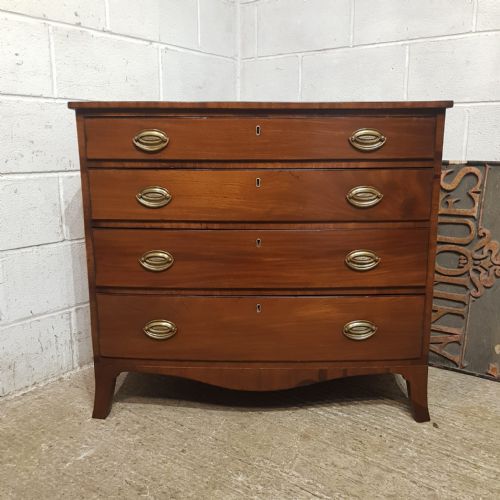
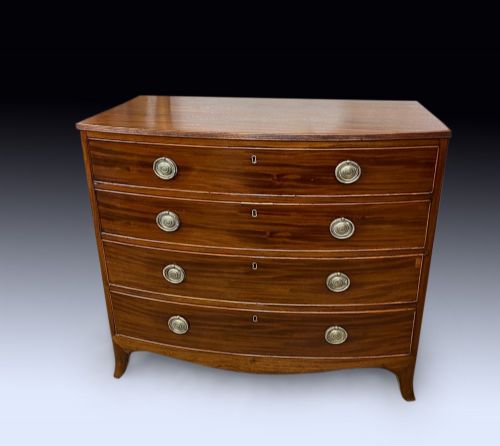


George III Bowfront Commode
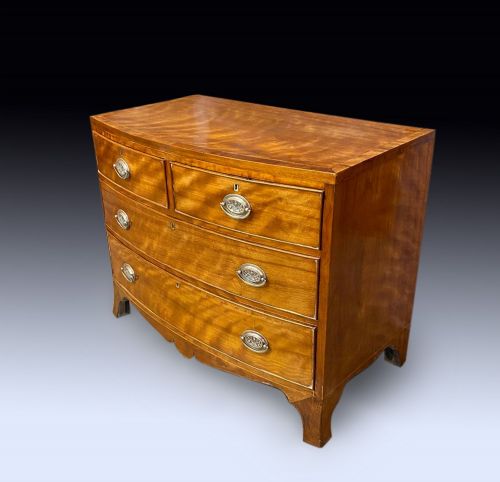
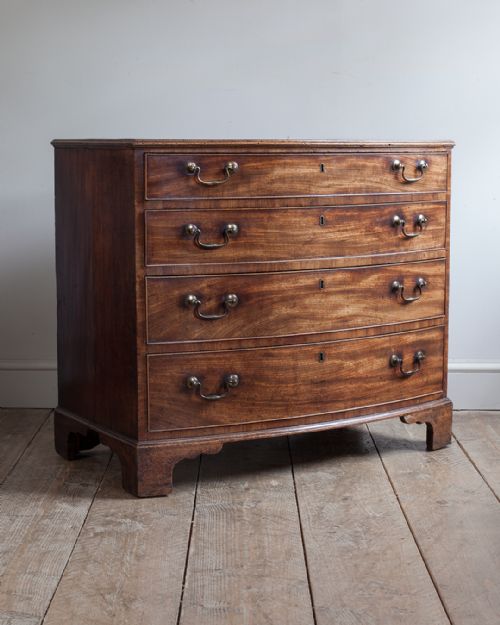
These George III bowfront commode pieces are desirable Georgian mahogany and satinwood chests offering curving drawer fronts and period craftsmanship.
George III Bowfront Commode
A george iii bowfront commode is fundamentally a chest of drawers or bedside cabinet defined by a convex curving front profile. The pieces on this page span the Georgian period, the 18th century, the 19th century, and the year 1800, capturing both standard bedroom chests and smaller bedside cabinets.
Mahogany dominates the listings, frequently figured, alongside satinwood and oak carcase elements. Most examples present as chests of drawers with stacked horizontal drawers, while smaller variants appear as bedside cupboards or cabinets.
Materials and construction
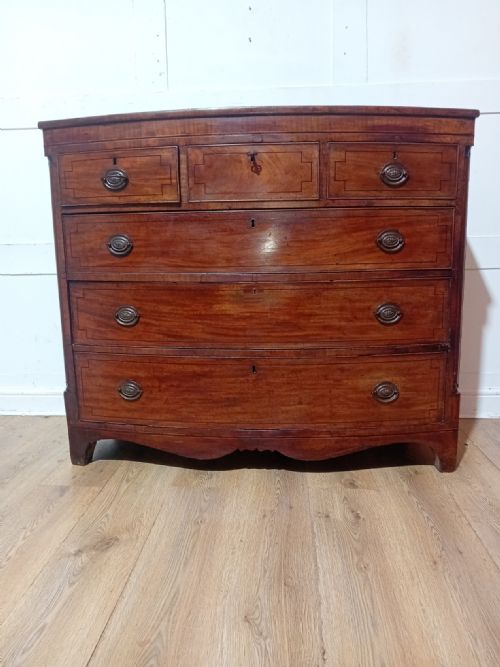
Cabinetmakers utilised solid timbers and wood veneers over secondary woods like oak, applying boxwood or other contrasting stringing to outline drawer fronts and top edges. Brass hardware, including swing handles and key escutcheons, secures the drawer storage.
The curved bowfront shape required precise timber bending or shaping of the frame and drawer fronts to maintain alignment across multiple stacked drawers.
Listings feature mahogany, satinwood, and oak timbers across pieces dated to the Georgian period and the early 19th century.
Distinctions in quality
Quality rests upon the choice of timber figure, such as highly figured mahogany or contrasting satinwood veneers, and the crispness of the inlaid boxwood stringing. Superior examples exhibit finer proportions and integrated fittings like fitted interior compartments.
Construction integrity, from the dovetail joints of the drawers to the preservation of the original brass hardware and timber surfaces, separates standard pieces from finer cabinetwork.
Gillows
The George III Bowfront Commode Glossary
- Bowfront
- A convex curving front contour typical of these chests that softens the rectangular silhouette. This shape requires specialised joinery for the drawers and frame.
- Satinwood
- A pale, lustrous hardwood utilised for decorative veneer work and fine surface details during the period. It often provides sharp contrast against darker mahogany.
- Stringing
- Thin inlaid lines of contrasting timber, such as boxwood, set into the surface to frame drawer edges and panels. It defines the geometric decoration of the facade.
- Dovetail
- A traditional interlocking joint utilised in drawer construction for strength and durability. Its fineness often indicates the skill of the cabinetmaker.
George III Bowfront Commode: Frequently Asked Questions
What is a bowfront chest?
A bowfront chest is a storage piece featuring a rounded, convex front profile rather than a flat facade. This design softens the room presence while offering deep central drawer storage.
Most examples in this category provide four or five horizontal drawers framed by the characteristic curved outline.
How do I date a Georgian chest?
Dating relies on timber choice, construction methods like hand-cut dovetails, and secondary woods such as oak. Hardware style and the presence of satinwood veneer also indicate the period.
Pieces span the late eighteenth century into the early nineteenth century, showing gradual shifts in proportion and decorative inlay.
Were these used as commodes?
In period terminology, commode often referred to decorative chests of drawers or cabinets rather than sanitary plumbing furniture. These forms served primary storage roles in bedrooms and dressing rooms.
Smaller variants functioned specifically as bedside cabinets or cupboards.
What woods were used?
Mahogany is the primary timber seen across these pieces, frequently selected for its rich grain and figure. Satinwood and boxwood appear as decorative veneers and inlay.
Secondary structural timbers like oak commonly form the internal drawer linings and carcase frames.