





George III Bookcase Desk
A george iii bookcase desk combines a working surface with upper shelving, built for storing volumes and writing letters in the Georgian period.
George III Bookcase Desk
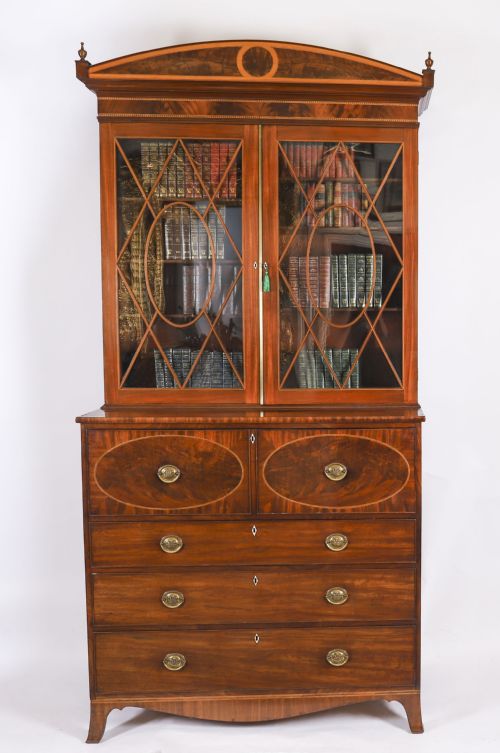
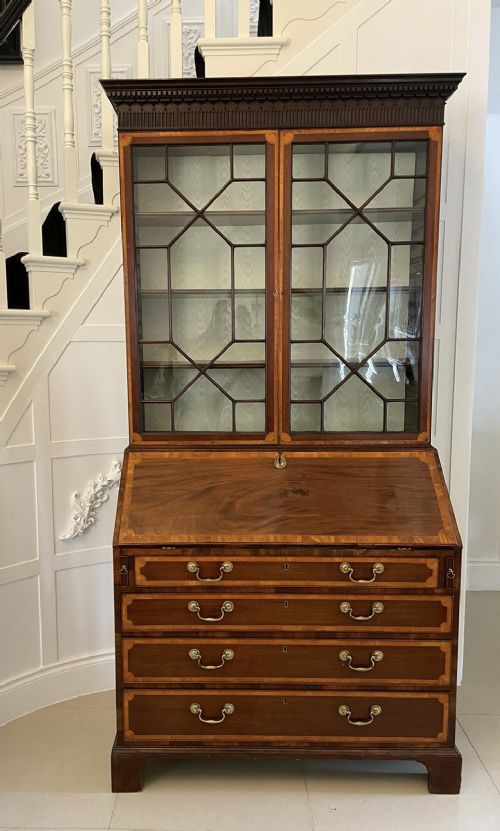
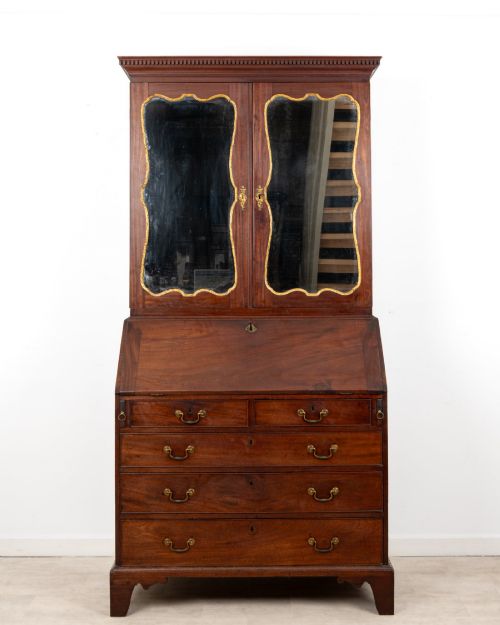
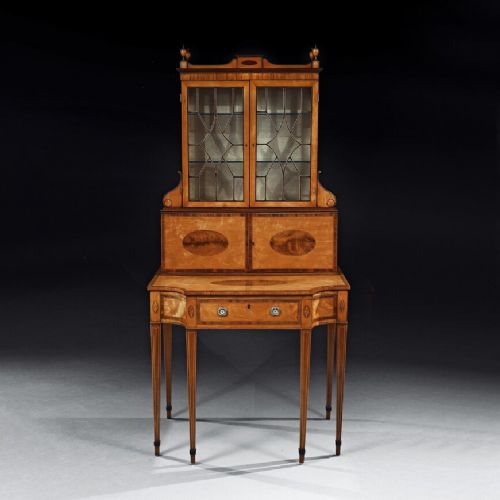
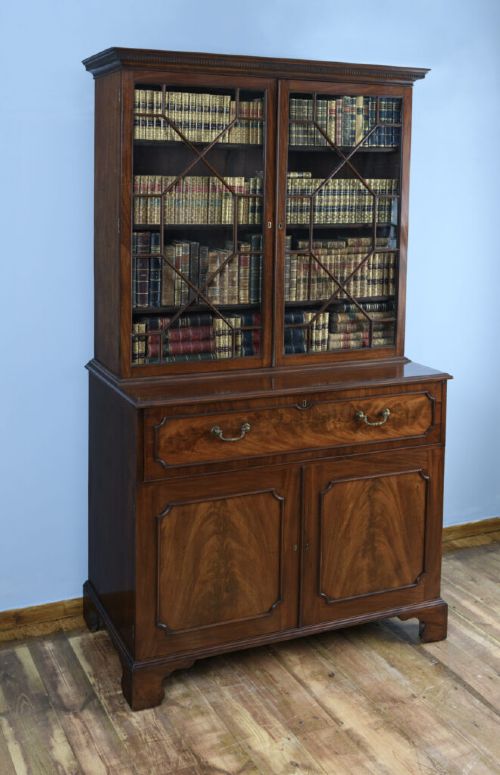
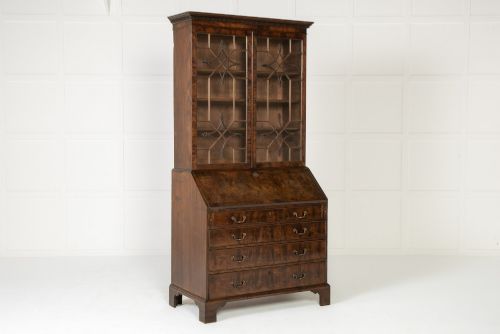
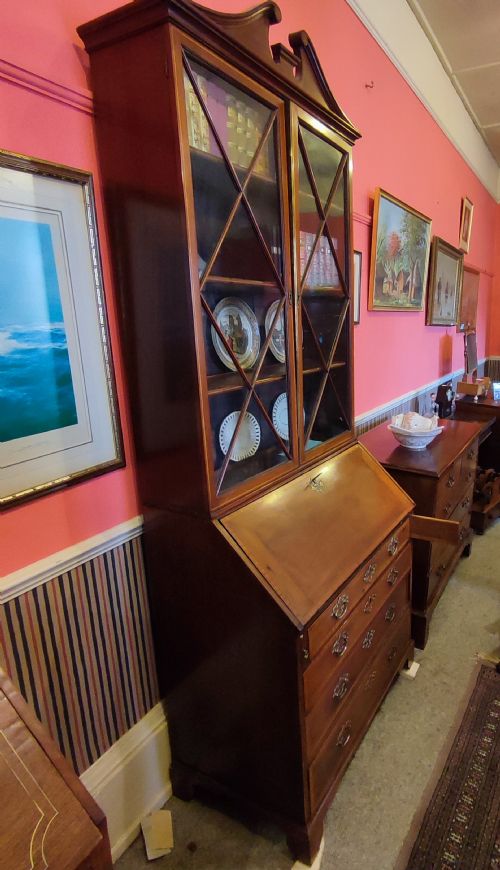
A george iii bookcase desk typically takes the form of a bureau bookcase, secretaire bookcase, or writing cabinet, combining a glazed upper cabinet with a lower desk section. These dual-purpose pieces appear frequently in mahogany and satinwood across eighteenth-century and early nineteenth-century periods.
The lower section generally houses drawers behind a fall-front writing flap or a pull-out secretaire drawer fitted with small compartments and pigeonholes. The upper section contains adjustable wooden shelves enclosed by glazed doors, often with astragal bars arranged in geometric patterns.
Most examples date from the Georgian era, running from the mid-eighteenth century into the early nineteenth century. Collectors encounter variations ranging from simple oak and mahogany uprights to breakfront formats and elaborate satinwood pieces with marquetry or contrasting stringing.
Materials and construction methods
Cabinetmakers relied heavily on solid timber and carefully selected veneers, using mahogany, flame mahogany, and satinwood for visible surfaces, alongside oak for internal drawer linings and secondary framing. Brass hardware, including drop handles, escutcheons, and hinges, secures the doors and drawers while adding structural contrast.
Glazing bars in the upper cabinet require precise joinery to hold individual panes of glass securely within the door frames. Cabinetmakers often incorporated stringing, inlay, and crossbanding using lighter woods such as satinwood to frame darker mahogany panels on the fall fronts and drawer facades.
Object forms span bureau bookcases, secretaire bookcases, writing cabinets, and breakfront designs with glazed upper shelving.
Judging execution and materials
The selection of timber dictates much of the visual appeal, separating standard mahogany carcasses from those utilising highly figured flame mahogany or richly contrasted satinwood and sabicu veneers. Grain alignment across drawer fronts and the crispness of inlaid stringing reflect the skill of the original workshop.
Interior secondary woods and the hand-cut dovetails on drawer construction reveal the standard of internal carpentry. The delicacy of the astragal bars on the glass doors and the complexity of the fitted pigeonholes and small drawers inside the secretaire section also indicate higher craftsmanship.
Gillows
The George III Bookcase Desk Glossary
- Secretaire
- A writing drawer with a drop-down front that conceals small drawers and pigeonholes. This feature allows the cabinet to function as a desk without requiring a sloping fall-front.
- Astragal
- Moulding profiles used to divide glass panes within the upper bookcase doors. These wooden bars form geometric or intersecting patterns across the glass.
- Flame mahogany
- Timber cut from the fork of the mahogany tree to produce a distinctive rippled, flame-like grain pattern. Cabinetmakers reserved this veneer for prominent surfaces like drawer fronts and fall flaps.
- Breakfront
- A cabinet design where the central section projects forward from the flanking outer wings. This architectural arrangement creates depth and visual weight.
- Sabicu
- A dense tropical hardwood prized for its durability and rich dark tone. Makers utilised this material in select writing cabinets alongside satinwood.
George III Bookcase Desk: Frequently Asked Questions
How do I date a george iii bookcase desk?
Dating relies on observing changes in timber choice, hardware style, and leg or base construction across the Georgian period. Mid-eighteenth-century pieces often employ heavy solid mahogany, while late-eighteenth and early nineteenth-century examples frequently feature lighter satinwood veneers and delicate stringing.
Internal construction details, such as hand-cut dovetails and secondary woods like oak or pine, also provide clues to the exact manufacturing decade.
Where were these pieces used?
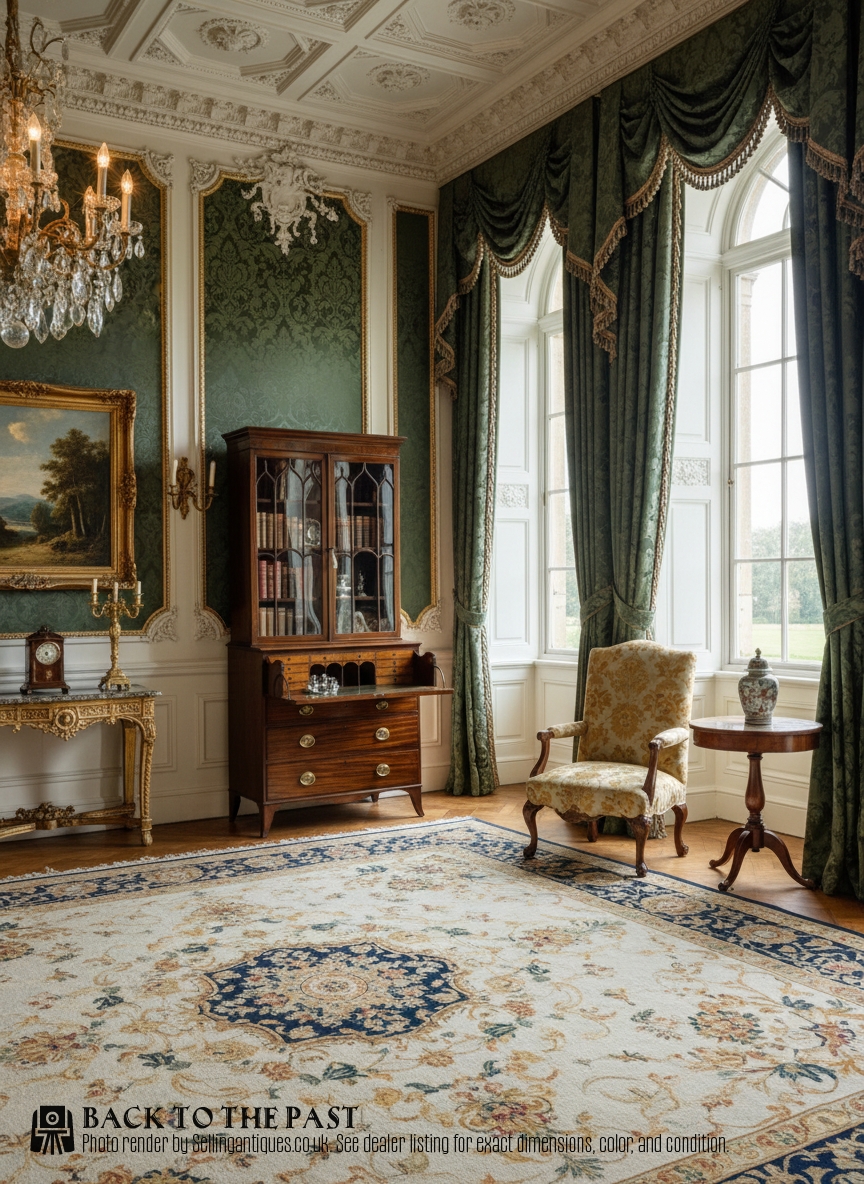
These cabinets served primarily in libraries, studies, and formal reception rooms of large Georgian houses. They provided a centralized location for managing household accounts, writing letters, and storing a private book collection.
The upper glass doors protected valuable leather-bound volumes from dust while allowing titles to be easily viewed.
How do I care for antique mahogany and satinwood?
Maintain stable humidity and temperature levels in the room to prevent wood and veneer from warping or splitting. Avoid placing the cabinet in direct sunlight to protect the natural tones of the mahogany and satinwood from fading.
Apply traditional wax polish sparingly to nourish the timber and maintain the surface sheen without building up heavy residues.