


Sheraton Writing Cabinet
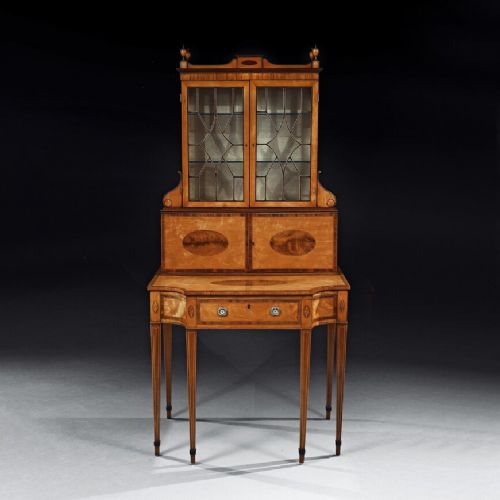
A sheraton writing cabinet brings together refined geometry and hidden drawers, offering an elegant surface for correspondence.
Sheraton Writing Cabinet
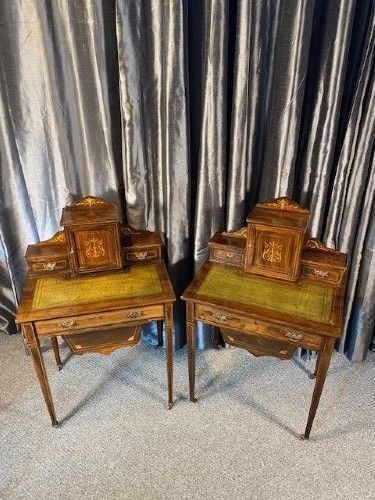
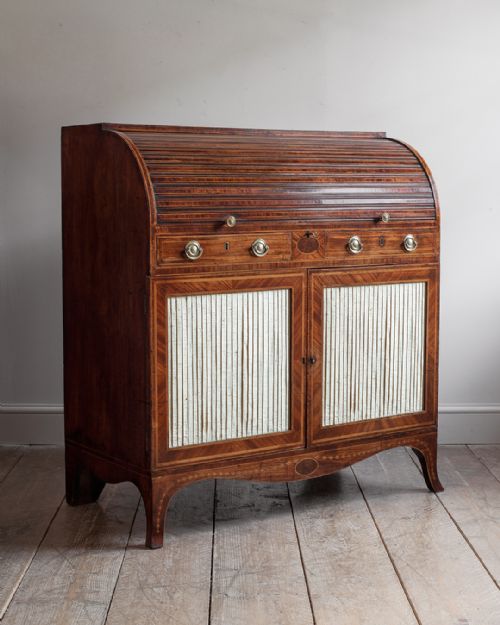
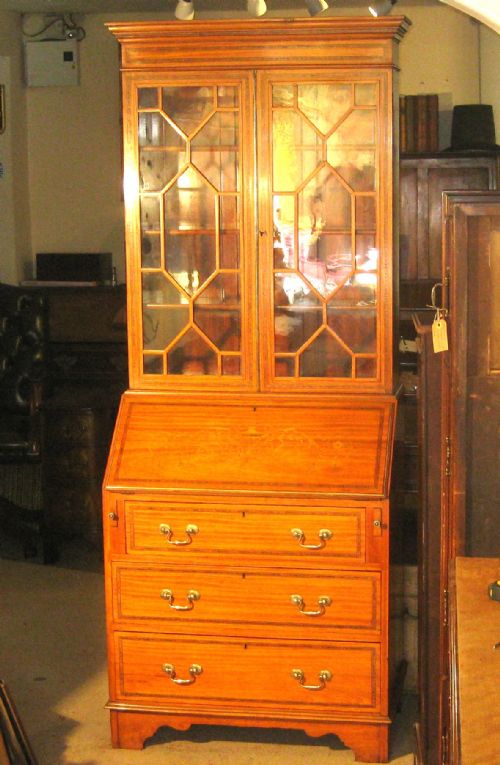
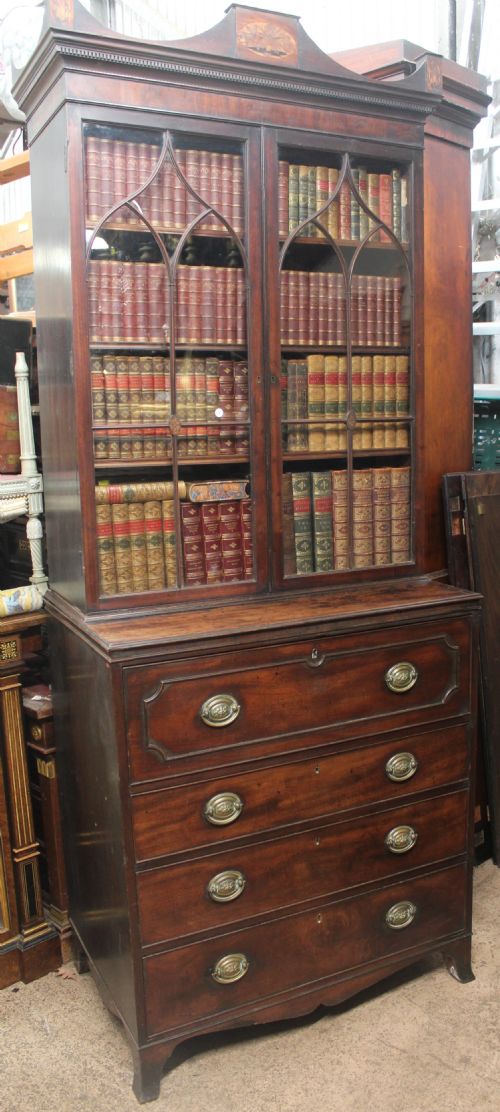
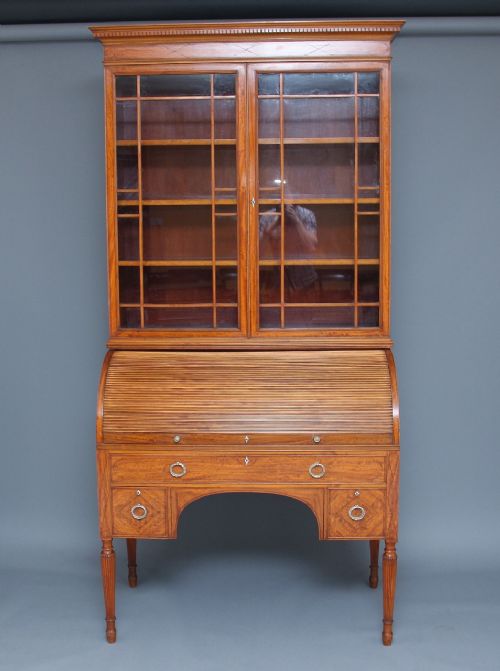
A sheraton writing cabinet represents the lighter, neoclassical forms of the late eighteenth century alongside later revival pieces. When buyers search for a sheraton writing cabinet, they encounter multifaceted pieces including bureau bookcases, cylinder desks, and compact bonheur du jour tables.
The pieces appearing on this page span the eighteenth, nineteenth, and early twentieth centuries, capturing original Georgian craftsmanship as well as Edwardian Sheraton Revival interpretations. Bureau bookcases and cylinder cabinets dominate the selection, offering fitted writing interiors paired with upper shelving or display space.
Materials and construction
Cabinetmakers relied heavily on rich mahogany and pale satinwood, frequently enhancing surfaces with delicate boxwood and contrasting inlay. These woods provided a stable foundation for intricate marquetry and fine banded borders.
Functional elements incorporated polished brass hardware, leather writing inserts, and glazed doors for upper bookcases. Structural joinery accommodated complex internal mechanisms like sliding cylinders, tambour shutters, and fold-down writing flaps.
Several miniature cylinder display desks prove that Georgian and Victorian cabinetmakers took immense joy in making small things perfectly.
Distinguishing finer examples
Quality rests in the precision of the timber selection, seen in well-figured mahogany and finely matched satinwood veneers. The crispness of the marquetry and the delicacy of the inlay work distinguish standard production from exceptional pieces.
Internal complexity dictates the upper tier of execution, particularly the clever arrangement of secret compartments, small drawers, and fitted pigeonholes within cylinder or secretaire sections.
Edwards & Roberts·Shoolbred of London
The Sheraton Writing Cabinet Glossary
- Satinwood
- A lustrous tropical hardwood native to Ceylon and India, prized for its golden colour and satiny sheen. It became the signature timber for high-status neoclassical furniture.
- Secretaire
- A desk or cabinet featuring a drawer or fall-front panel that pulls down to reveal a writing surface and fitted interior. It cleverly conceals workspace within the guise of a chest or bookcase.
- Cylinder
- A curved, quarter-circle wooden shutter that slides backward into the body of a desk to open the writing area. This mechanism protects the interior fittings when closed.
- Marquetry
- The art of forming decorative patterns using thin veneers of different coloured woods, shells, or ivory. Craftsmen assemble these pieces meticulously onto the furniture carcass.
- Bonheur du jour
- A light lady's writing desk featuring a small cabinet or set of drawers on top of the writing surface. This delicate form emerged in France before becoming popular in English neoclassical design.
Sheraton Writing Cabinet: Frequently Asked Questions
What is a sheraton writing cabinet?
A sheraton writing cabinet is a sophisticated piece of furniture designed for correspondence, featuring refined neoclassical proportions and often incorporating concealed writing surfaces.
These pieces typically date from the late eighteenth century or the Edwardian revival period, utilising fine timbers like satinwood and mahogany.
How do cylinder desks work?
A cylinder desk uses a quarter-circle wooden shutter that slides smoothly back into the carcass to reveal a pull-out leather-lined writing slide.
This mechanism conceals pigeonholes and small drawers, allowing the owner to secure their correspondence simply by pulling the cylinder forward.
Where should I place a bonheur du jour?
A bonheur du jour suits a drawing room, study, or bedroom where its refined proportions and decorative satinwood inlay can be appreciated from multiple angles.
Because these ladies' writing desks are compact and finished on all sides, they sit comfortably away from walls in lighter living spaces.
How do I identify a revival piece?
Edwardian revival pieces often display lighter construction, machine-cut inlay, and distinctive twentieth-century secondary timbers beneath polished mahogany or satinwood surfaces.
Comparing the internal drawer linings and the crispness of the marquetry helps distinguish nineteenth and twentieth-century interpretations from original eighteenth-century Georgian examples.