
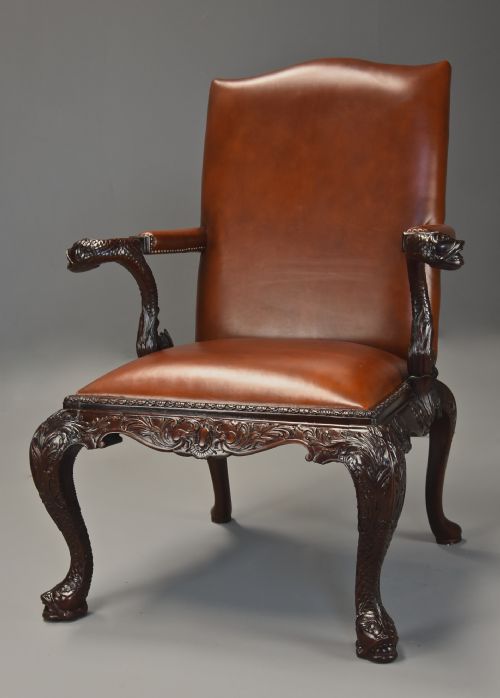


George II Style Chair
These pieces recall the robust proportions and carved ornament of mid-eighteenth-century seating, built for domestic comfort and reception rooms.

George II Style Chair
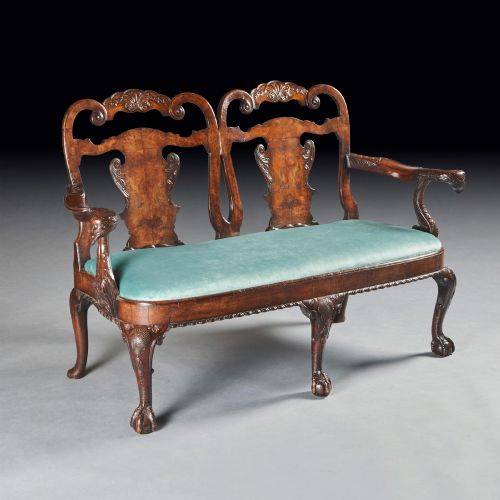
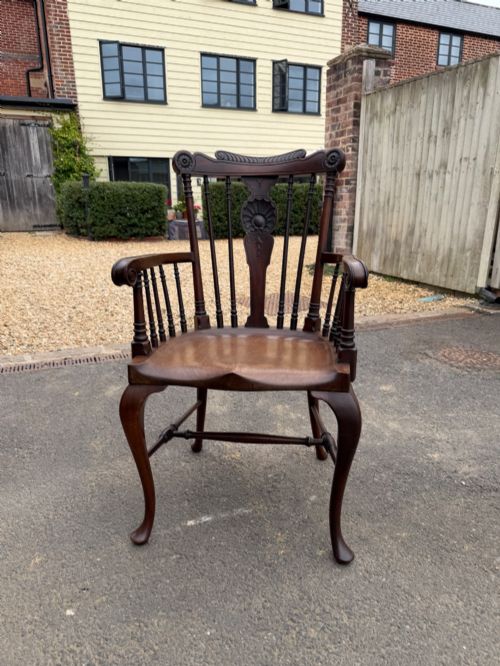
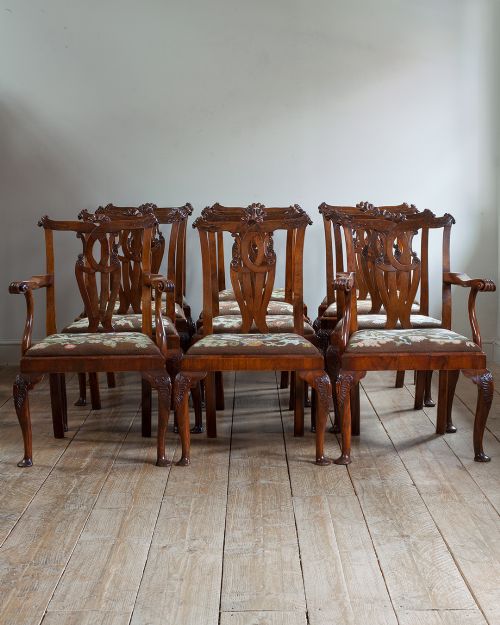
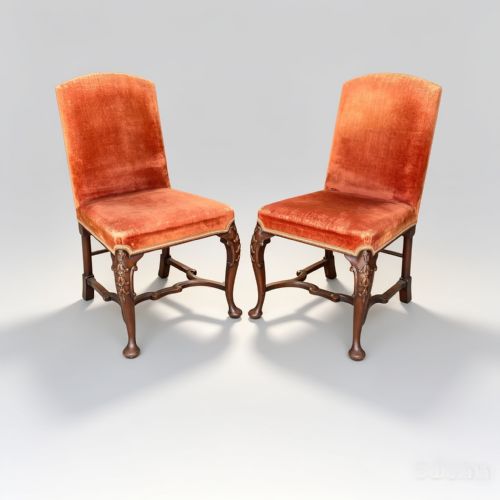
A george ii style chair typically adopts the heavy cabriole legs, pad or claw-and-ball feet, and shaped splats characteristic of the mid-eighteenth century. Buyers will find that the majority of examples on this page date from the nineteenth and early twentieth centuries rather than the original Georgian period.
Forms range from single side chairs and sets of dining chairs to expansive Gainsborough armchairs, wing chairs, and multiple-back settees. Mahogany and walnut dominate the surviving output, often accompanied by period-appropriate upholstery such as leather, velvet, and tapestry.
Materials and construction
Cabinetmakers relied heavily on solid mahogany and walnut to achieve the sturdy frames required for carved cabriole legs and scrolled armrests. Timber selection determined how deeply carvers could undercut motifs like acanthus leaves and shells without compromising structural integrity.
Upholstery methods varied from drop-in seats webbing-fixed to the frame to fully padded Gainsborough and wingback variants covered in leather, velvet, or textile. Traditional joinery such as mortise and tenon secured the back posts to the seat rails, sustaining heavy daily use over generations.
George II Style Chair Retail Price Guide 2026
Typical asking prices for george ii style chair among the pieces listed under this phrase on Sellingantiques today, from the lower quarter to the upper quarter. They describe what is for sale here now, not the wider market.
Listings span several eras, recording walnut and mahogany frames alongside upholstery in velvet, leather, and tapestry across armchair and dining chair forms.
Judging execution and finish
The distinction between standard commercial seating and top-tier workshop production lies in the crispness of the hand-carving and the thickness of the timber. Finer examples display deeply modeled relief work on the knees and crest rails rather than shallow, mechanically assisted cuts.
Proportion and stance dictate visual success, with better pieces maintaining a balanced weight between the carved splat and the supporting legs. The integration of secondary woods and the quality of the finish further separate routine revival items from accomplished interpretations.
Robert Strahan Dublin·Alex Campbell
The George II Style Chair Glossary
- Cabriole leg
- A furniture leg that curves out in a convex arc at the top and dips inward in a concave arc below, imitating animal limbs. This form is central to mid-eighteenth-century design.
- Gainsborough chair
- A wide, open-armed easy chair with a padded seat and upholstered back, designed for writing desks or reading. These typically feature open wooden arms and square or cabriole legs.
- Claw-and-ball foot
- A furniture foot carved to represent a bird's talon clutching a ball, commonly found on mahogany furniture of this aesthetic.
- Chair-back settee
- A multi-seated bench whose backrest is constructed like a row of conjoined chair backs with individual splats. These often accommodate two or three back divisions.
- Splat
- The vertical wooden strip down the centre of a chair back, often shaped into vases or interlaced ribbons. It provides central back support while displaying decorative grain.
George II Style Chair: Frequently Asked Questions
Are these chairs original eighteenth-century pieces?
Most options available on the market belong to the nineteenth and early twentieth centuries, created during revivals of earlier aesthetics.
Craftsmen during those later periods reproduced the proportions and carvings of the mid-eighteenth century for contemporary homes.
What is a Gainsborough armchair?
A Gainsborough chair is a wide, open-armed seat designed for writing desks or parlours, featuring upholstered backrests and padded armrests.
These pieces allow comfortable movement while maintaining formal proportions suited to reception rooms.
How do walnut and mahogany pieces differ?
Walnut was favoured earlier in the century for its rich grain, while mahogany gained prominence for its strength and suitability for deep carving.
Both timbers were used extensively by later revival makers depending on the specific period aesthetic they chose to copy.
How should I care for leather upholstery?
Leather surfaces benefit from regular dusting and occasional conditioning to maintain their suppleness and prevent drying out over time.
Keeping these chairs away from direct heat sources preserves both the hide and the underlying timber frame.