




George II Hall Chairs
George ii hall chairs are sturdy timber seats designed for passage spaces, built to display heraldry or family crests while welcoming visitors.
George II Hall Chairs
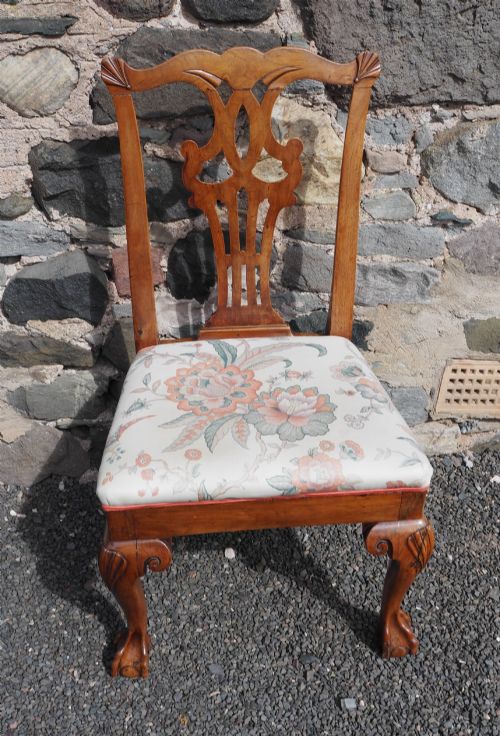
George ii hall chairs are seating forms originating in the Georgian era, created for grand entrances and transitional spaces. These chairs often take the form of side chairs or sgabello designs, presenting upright timber frames intended for momentary resting rather than long comfort.
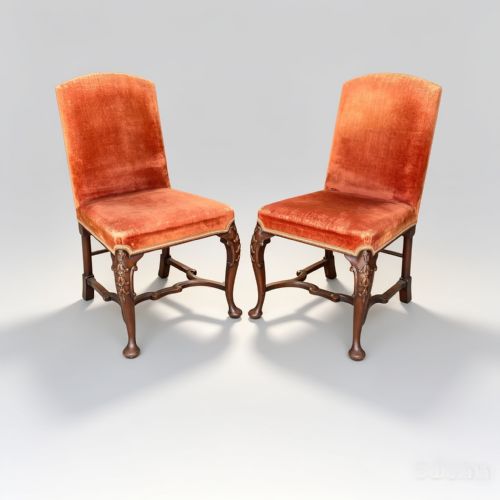
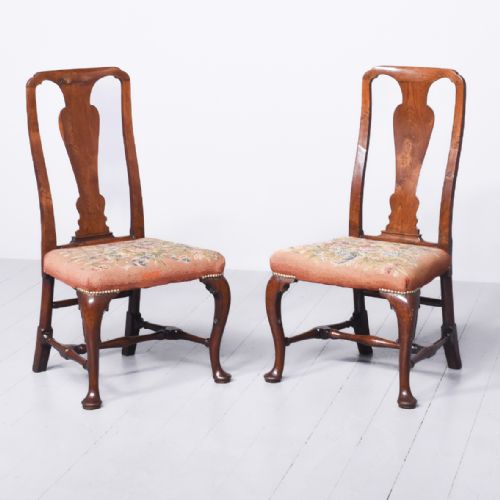
The version most frequently met on this page combines mahogany or walnut construction with distinctive cabriole legs or rigid upright panels. Examples span both period pieces and later nineteenth-century revivals executed in the George ii style.
Makers occasionally shaped these seats from fruitwood, oak, or elm, offering country interpretations alongside sophisticated urban designs. The selection moves between individual side chairs, matched pairs, and larger sets designed for substantial halls.
What varies in quality
Quality in george ii hall chairs rests in the crispness of the timber carving and the selection of the primary wood. Dense mahogany and figured walnut with strong grain patterns elevate a piece above simpler fruitwood or provincial elm alternatives.
The sophistication of the silhouette defines the upper tier of the range, particularly the fluidity of the cabriole legs and the proportion of the backrest. Original period construction commands greater appreciation than later nineteenth-century revival interpretations.
Listings feature mahogany, walnut, oak, and elm, spanning both mid-eighteenth-century Georgian pieces and late-nineteenth-century revivals.
John Gee
The George II Hall Chairs Glossary
- Cabriole leg
- A furniture leg that curves outward at the knee and tapers inward toward the foot, often finishing in a pad or claw shape. This form was widely adopted during the Georgian period.
- Sgabello
- A light wooden chair originating from the Italian Renaissance, characterised by a high back and a solid panel base or trestle supports rather than four legs. These appear in hallway settings.
- Side chair
- A chair without arms, designed to stand against a wall or to be pulled up to a dining table.
- Settee
- A long wooden or upholstered seat with a back and arms, accommodating more than one person.
- Splat
- The vertical central strip of wood in the back of a chair, often shaped or pierced for decoration.
George II Hall Chairs: Frequently Asked Questions
Where were george ii hall chairs placed?
These chairs stood in entrance halls and corridors rather than private living rooms. They served as formal seating for visitors waiting to be received by the household.
Because hallways were drafty and high-traffic areas, the furniture placed in them was built heavy and unyielding. Upholstery was less common here than in parlours, keeping the focus on exposed timber and carved crests.
How do I spot a later revival copy?
Nineteenth-century makers frequently produced george ii style seating, copying the proportions and carved details of the earlier Georgian era. Examining the underside and the seasoning of the timber helps reveal the true age of the piece.
Tool marks left by modern saws differ visibly from the hand-adzed surfaces found on mid-eighteenth-century examples. Hardware, screw types, and timber shrinkage patterns also guide the eye in separating 1750 production from 1890 revivals.
What is the difference between walnut and mahogany examples?
Walnut was the favoured timber for finer British furniture during the earlier part of the eighteenth century, offering rich figuring and warm dark tones. As trade routes expanded, mahogany superseded walnut for its superior strength and resistance to warping.
Mahogany chairs often display sharper carved details because the dense grain holds a crisp edge under the chisel. Walnut pieces from the mid-eighteenth century tend to have softer, more fluid curves.