

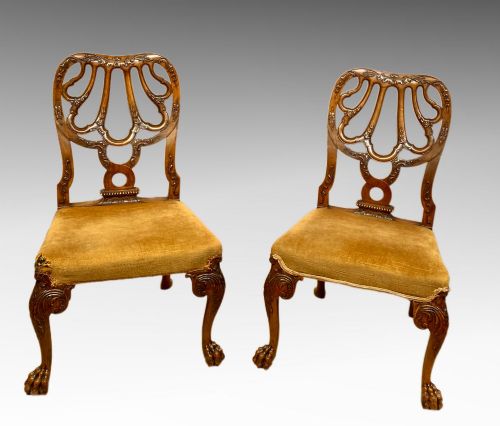
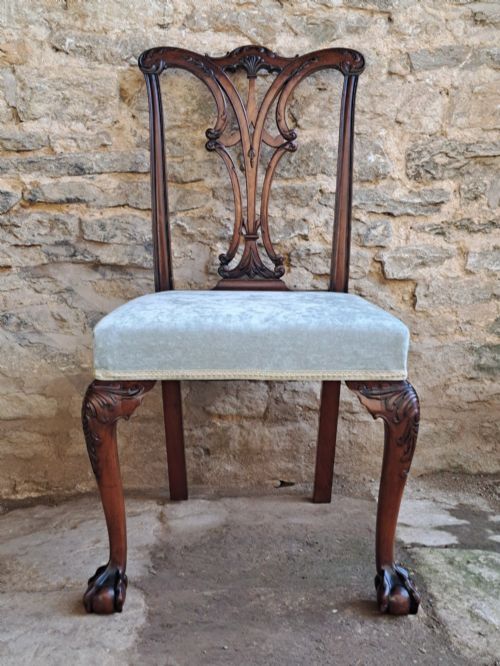
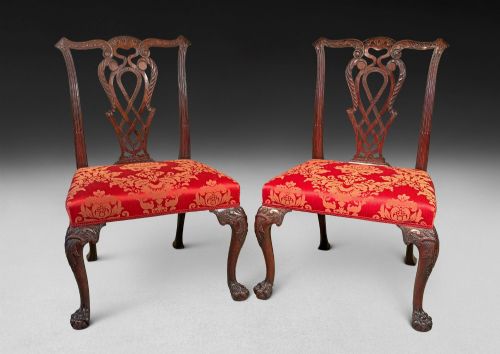
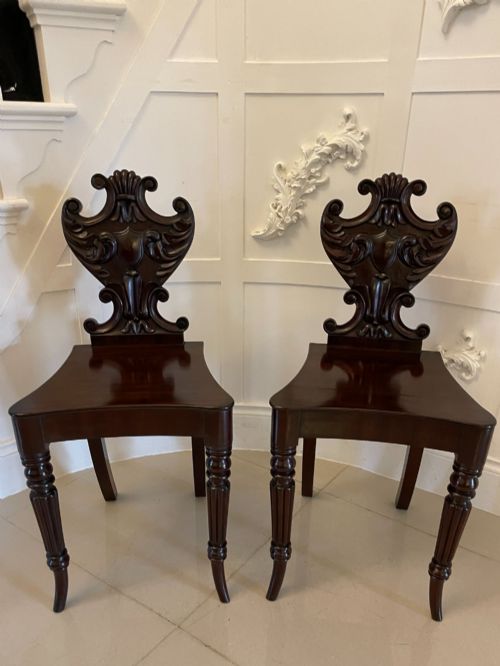
Georgian Carved Hall Chairs
Georgian carved hall chairs are striking wooden seats designed for grand entryways, offering a sculptural statement and a tangible link to 18th-century domestic life.
Georgian Carved Hall Chairs
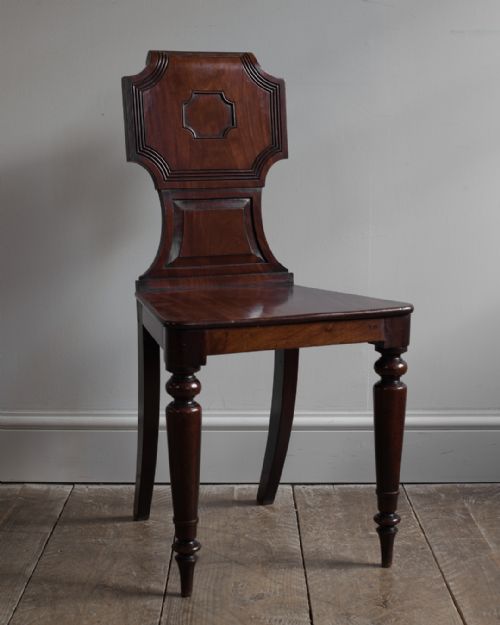
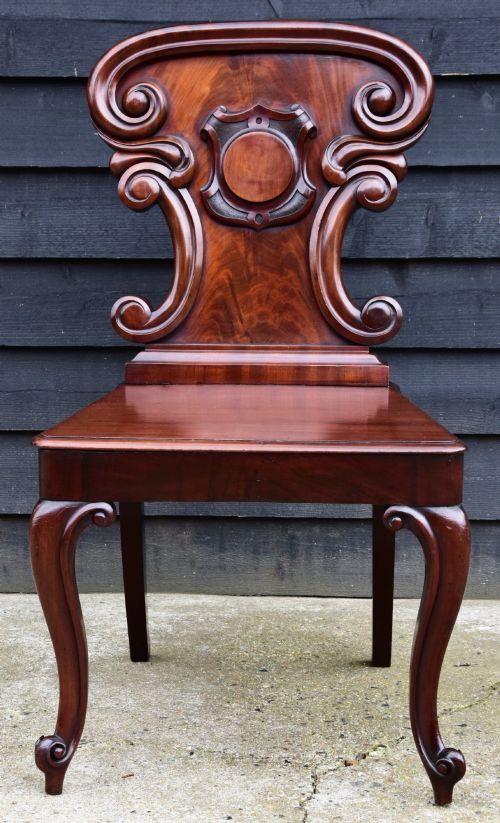
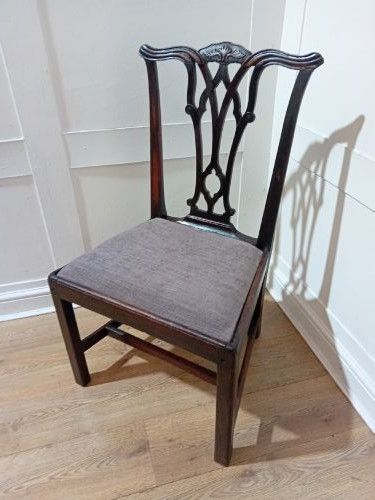
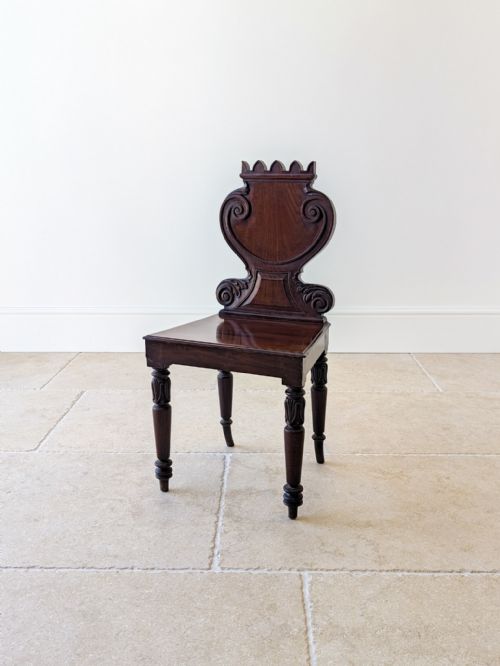
When you search for georgian carved hall chairs, you encounter sturdy wooden seating built primarily for use in the entrance halls of large country houses and town residences. These pieces often feature solid timber seats and high, intricately carved backs that display family crests, coats of arms, or classical motifs.
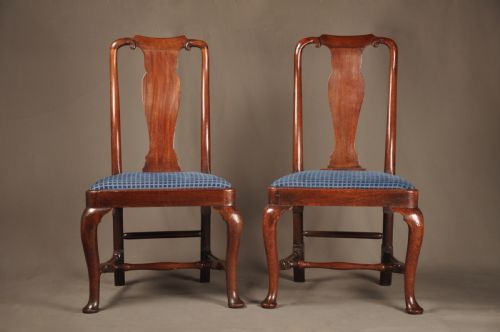
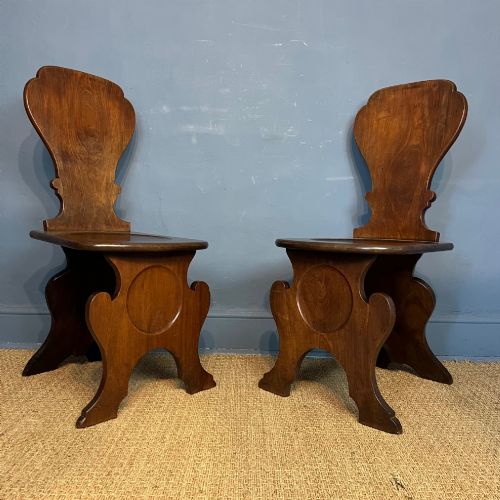
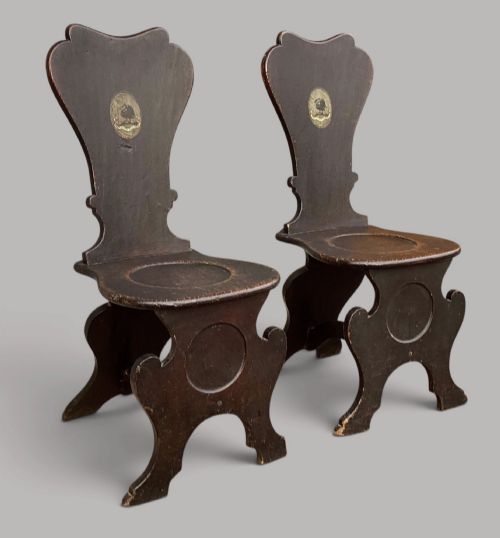
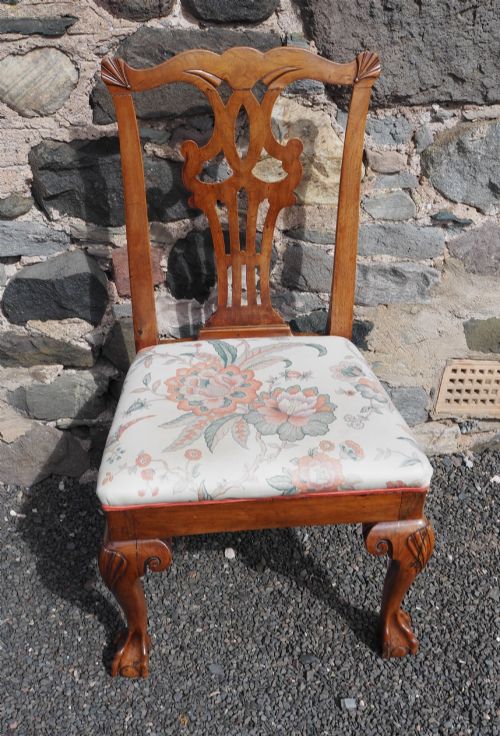
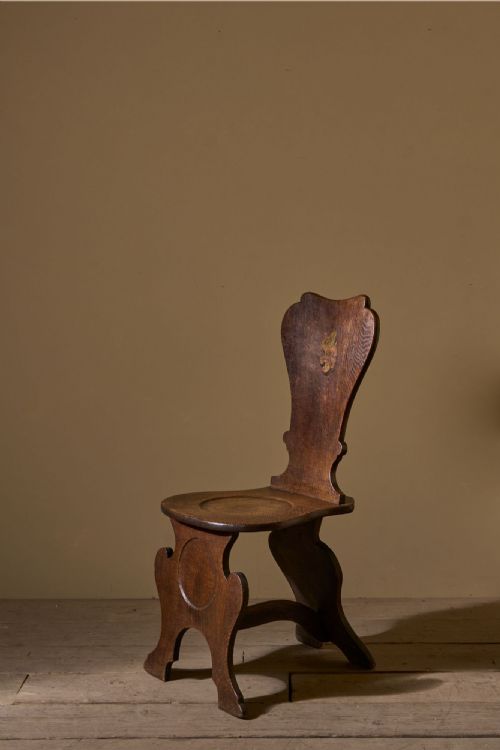
The selections on this page span the 18th and 19th centuries, incorporating revival pieces alongside original period examples. Alongside traditional hall chairs, the evidence includes related forms such as oak sgabello chairs, side chairs, and hall benches.
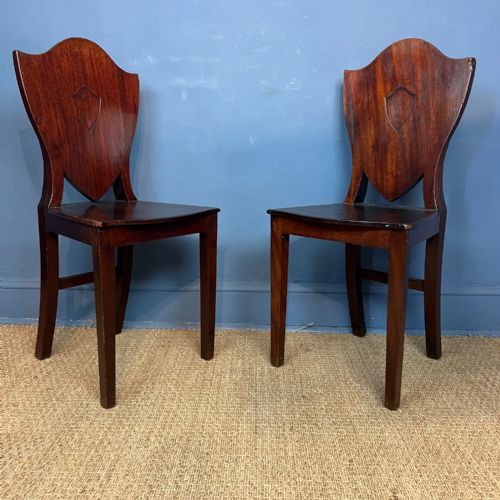
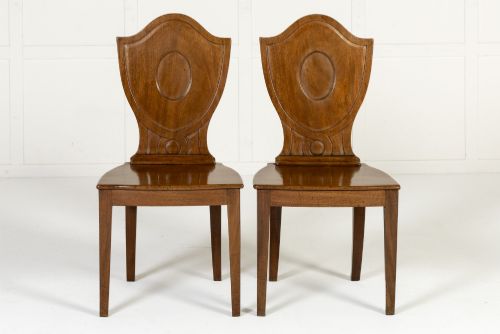
Most examples rely on robust timbers designed to withstand heavy daily use rather than deep upholstery. The backs frequently incorporate shield shapes, pelta designs, or solid carved panels intended to impress arriving guests.
Materials and Construction Techniques
Cabinetmakers relied heavily on dense hardwoods, utilising mahogany, walnut, and oak to construct these robust items. Mahogany and walnut provided the fine grain necessary for crisp surface carving, while oak served for earlier or more rustic regional forms.
Carving was executed entirely by hand, shaping shield backs, crests, and armorial details directly into the solid timber. Joinery relied on traditional mortise and tenon joints to ensure the rigid stability required for upright hallway seating.
Georgian Carved Hall Chairs Retail Price Guide 2026
Typical asking prices for georgian carved hall chairs among the pieces listed under this phrase on Sellingantiques today, from the lower quarter to the upper quarter. They describe what is for sale here now, not the wider market.
Listings for georgian carved hall chairs feature dense hardwoods like mahogany and walnut alongside structural oak.
Markers of Quality and Distinction
Superior examples distinguish themselves through the depth, sharpness, and confidence of the hand carving on the backrest. A master carver achieved clean, undercut details on crests and shield motifs that catch the light, whereas lesser pieces display flat, mechanical execution.
The choice of timber heavily dictates the refinement of the object. Figured mahogany or rich Virginia walnut with strong natural grain elevates a chair far above plain, utility-grade equivalents produced for secondary spaces.
Gillows·Thomas Chippendale·Giles Grendey
The Georgian Carved Hall Chairs Glossary
- Armorial
- Bearing a coat of arms or family crest. These painted or carved heraldic symbols were central to the identity of grand hall chairs.
- Sgabello
- An early Italianate wooden chair style with solid trestle supports and a high back. These form an uncommon variant within early walnut listings.
- Shield back
- A chair back shaped in the outline of a heraldic shield. This profile gained immense popularity during the late 18th century.
- Pelta back
- A chair back designed in the shape of an ancient Greek crescent-shaped shield. This distinctive classical silhouette appears on specific Regency examples.
- Saber leg
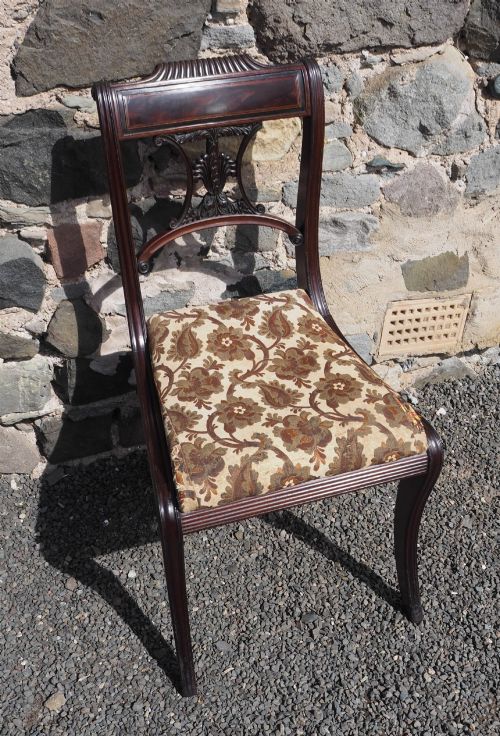
- A concave curved leg tapering toward the foot, mimicking the sweep of a cavalry sword. This form defines many Regency-period designs.
Georgian Carved Hall Chairs: Frequently Asked Questions
What is a hall chair?
A hall chair is a rigid wooden seat traditionally placed in the entrance hall of a large home. They were designed for brief seating rather than comfort.
These chairs often displayed the family crest or armorial bearings to impress visitors upon entry.
Were hall chairs used for dining?
Hall chairs were rarely used around a dining table due to their lack of upholstery and hard wooden seats. Their primary function was decorative and symbolic within the hallway.
Over time, some owners repurposed them as accent seating in studies or landings.
How do I date a hall chair?
Dating relies on examining the timber species, construction joints, and stylistic motifs such as shield backs or saber legs. 18th-century pieces often feature rich walnut or early mahogany, while later revival pieces show 19th-century workshop methods.
Comparing the carved details against known period patterns helps narrow the decade of origin.
How should I live with a hall chair?
Hall chairs function best as sculptural accent pieces against a wall in an entryway, hallway, or landing. Their slim profiles mean they occupy minimal floor space while adding strong architectural interest.
Keep them away from direct heat sources and sunlight to protect the aged timber and any original painted armorial details.