





George I Serving Spoon
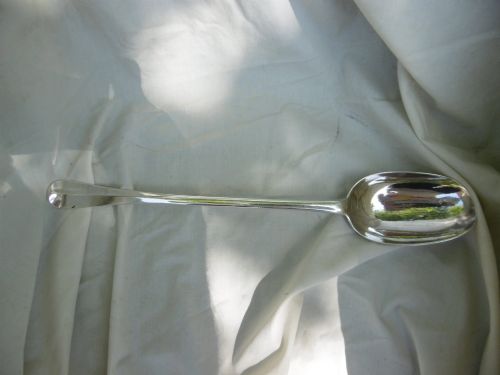
A george i serving spoon is a substantial piece of early silver, offering a deep bowl and long handle made to serve meat at a Georgian table.
George I Serving Spoon
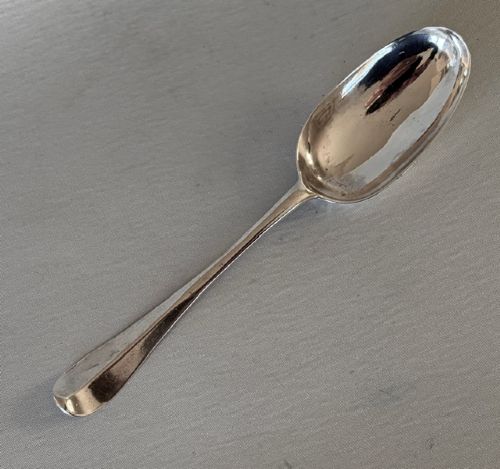
A george i serving spoon takes the form of a large flatware piece, commonly seen as a rat-tail serving spoon, hash spoon, or basting spoon originating in the eighteenth century. These substantial utensils were designed for the dining table, often measuring significant lengths to serve large joints or portions.
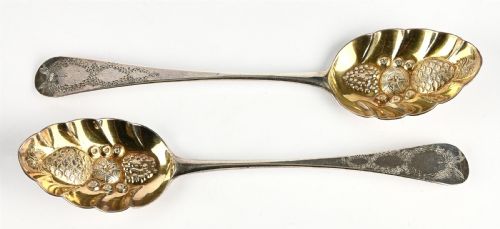
While the search specifies early eighteenth-century work, the listings also encompass related Georgian items such as table spoons, sauce ladles, and gravy straining spoons from later reigns. Makers working in sterling silver and Britannia silver produced these forms across English, Scottish, and Irish provincial centres.
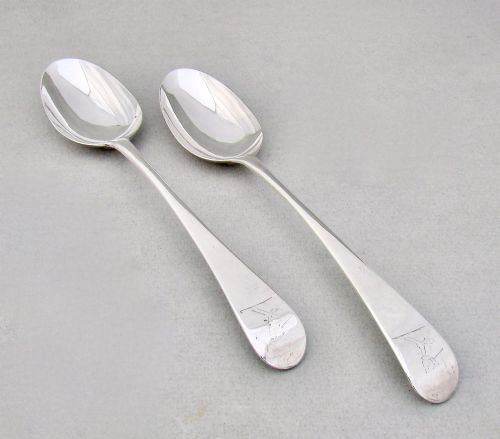
Collectors will encounter these large spoons alongside boxed pairs and associated cutlery, reflecting the domestic habits of the period. The material spans standard sterling and the higher-purity Britannia standard typical of the early seventeen-hundreds.
Evaluating early serving silver
Quality rests in the crispness of the hallmarks, the retention of original bowl shape without excessive wear from polishing, and the clarity of any rat-tail attachment. Early examples made in Britannia silver or bearing clear maker's marks demonstrate superior craftsmanship.
The weight and balance of the spoon also determine its standing, with heavier hash and basting spoons commanding attention for their substantial metal content. Surviving pairs or sets matched by maker and date add notable cohesion compared to single assembled pieces.
George I Serving Spoon Retail Price Guide 2026
Typical asking prices for george i serving spoon among the pieces listed under this phrase on Sellingantiques today, from the lower quarter to the upper quarter. They describe what is for sale here now, not the wider market.
Makers from London, York, Exeter, and Scottish provincial towns are represented across the historic flatware and cutlery selections.
Andrew Archer·William Scarlett·James Tait·Walter Tweedie·Peter and Anne Bateman·Alexander Henderson·Jabez Daniell
The George I Serving Spoon Glossary
- Britannia silver
- A standard of silver finer than sterling, introduced by Act of Parliament in 1697 to discourage the melting of coinage. It contains ninety-five point eight percent pure silver.
- Rat-tail
- A tapered tongue of metal extending from the base of the handle down the back of the bowl. It provides structural reinforcement to the joint.
- Hash spoon
- An exceptionally large serving spoon used in the eighteenth century for serving meat hashes and stews. They often measure well over thirty centimetres in length.
- Basting spoon
- A large spoon utilised in the kitchen or at table for ladling juices over roasting meat. Many double as serving implements in eighteenth-century dining.
- Hallmark
- A series of official stamps applied to precious metals indicating the maker, place of assay, date letter, and standard of purity. These marks confirm the silver's official testing.
George I Serving Spoon: Frequently Asked Questions
What is a rat-tail serving spoon?
A rat-tail serving spoon is an eighteenth-century silver utensil featuring a distinctive narrow tongue of metal down the back of the bowl. This feature strengthens the connection between the bowl and the handle.
Such spoons were produced in larger sizes than standard eating spoons to serve food at the table.
What is the difference between a basting spoon and a table spoon?
A basting spoon is substantially larger than a standard table spoon, built to handle heavy culinary tasks and service. They often measure thirty centimetres or more in length to reach deep into serving vessels.
Table spoons of the same era are smaller and intended for individual dining use rather than general serving.
Why are some early spoons made of Britannia silver?
Britannia silver was a legal requirement for all plate between 1697 and 1719 to prevent the melting down of silver coins. This alloy contains a higher percentage of pure silver than standard sterling.
Spoons bearing these specific marks date precisely to that strict legislative window.