

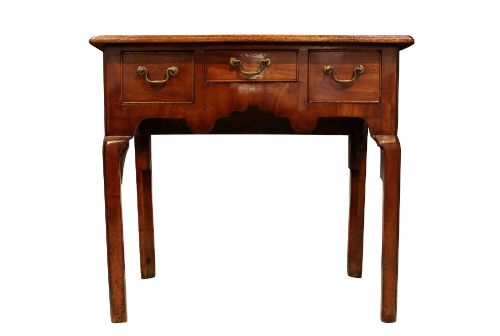
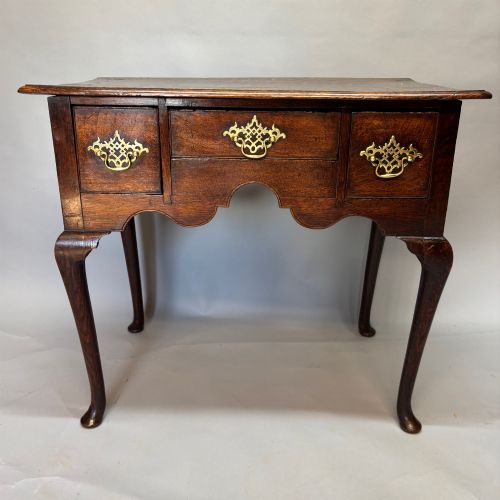
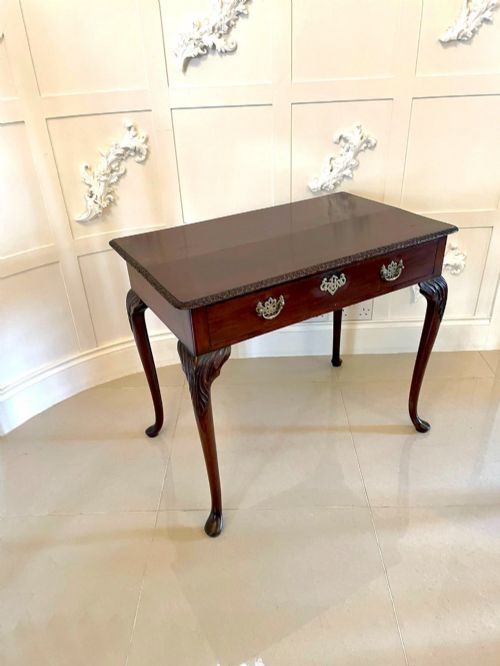
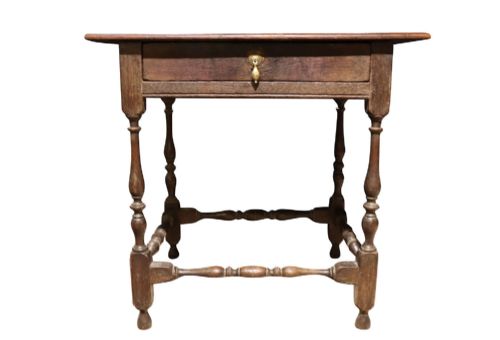
George I Lowboy Table
When you search for a george i lowboy table, you seek an adaptable low table with drawers crafted for domestic service.
George I Lowboy Table
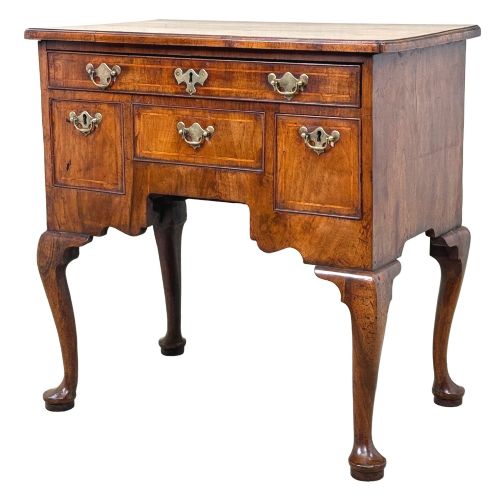
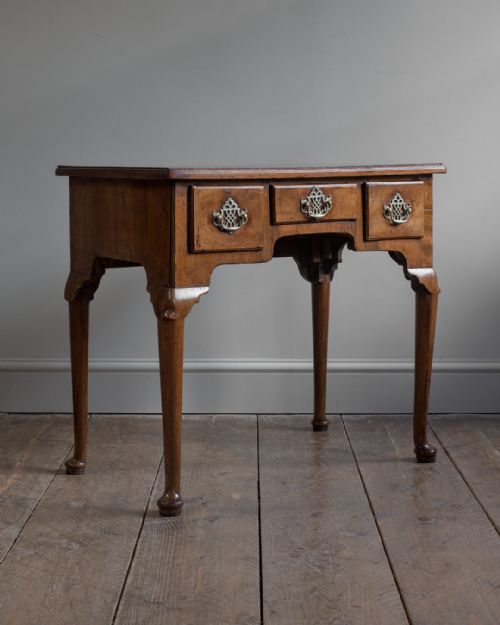
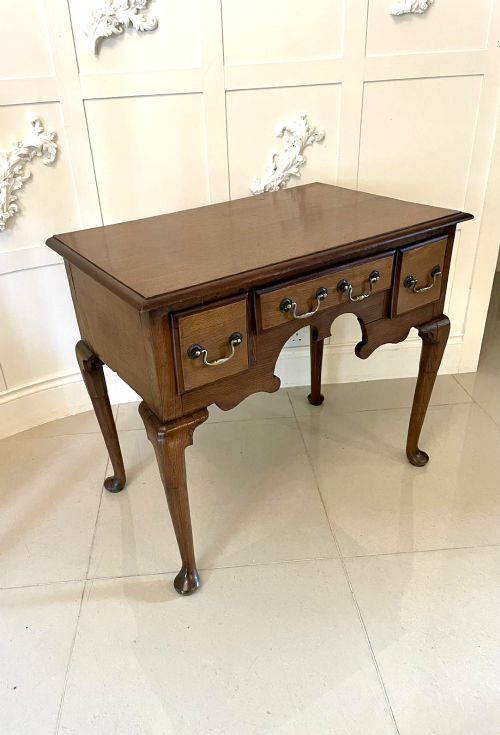
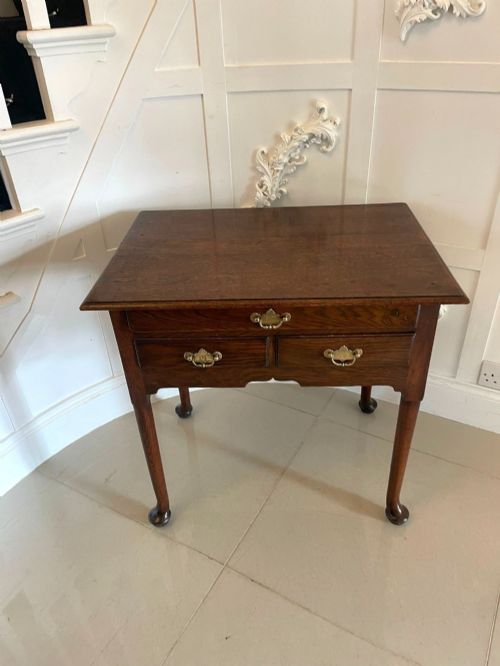
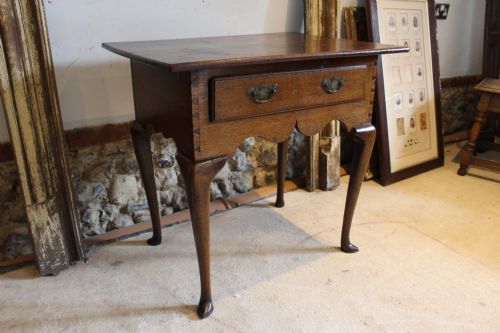
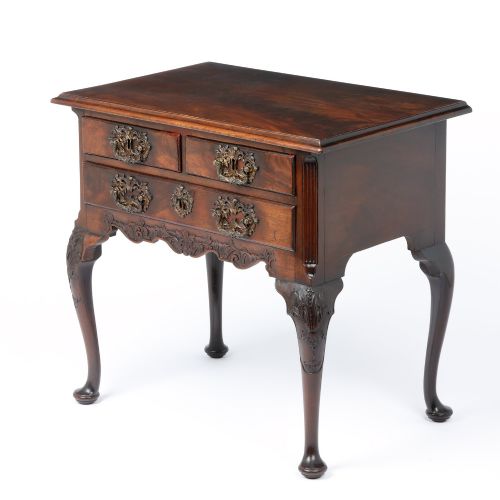
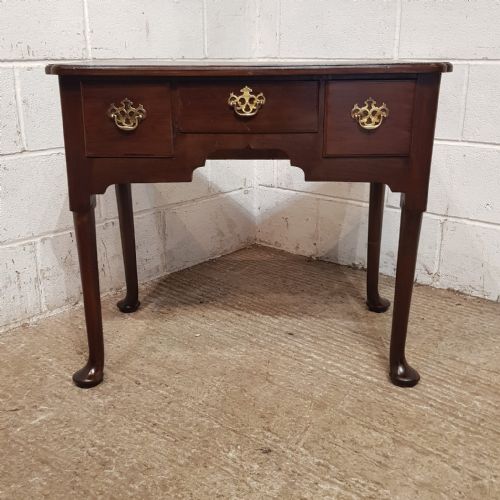
A george i lowboy table represents a compact domestic table fitted with one or more drawers, standing on slender legs designed for dressing or writing in early eighteenth-century interiors. The pieces on this page span the George I, George II, and George III periods alongside later revivals, reflecting a continuous tradition of low table making.
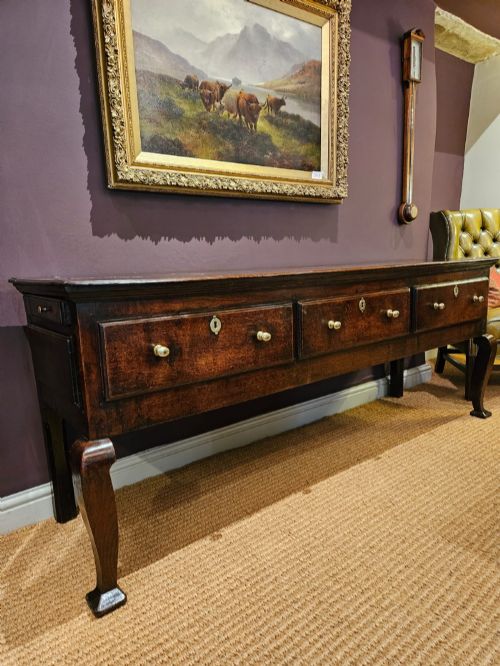
Most examples appear in native timbers such as oak and walnut, often functioning as dressing tables or side tables in chambers and hallways. Their low proportions and drawer configurations separate them from larger desks and standard tables.
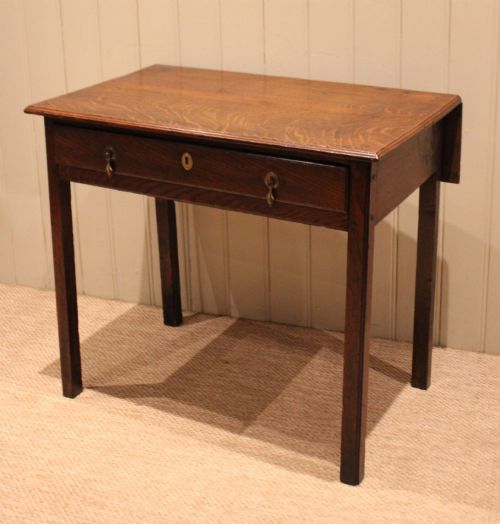
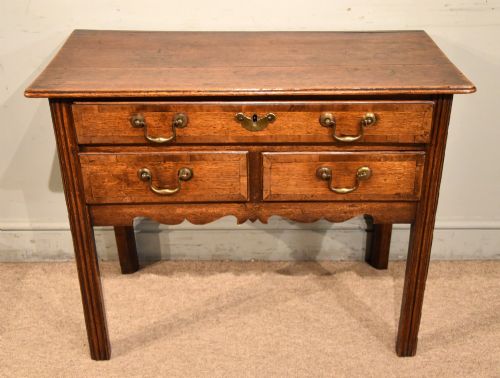
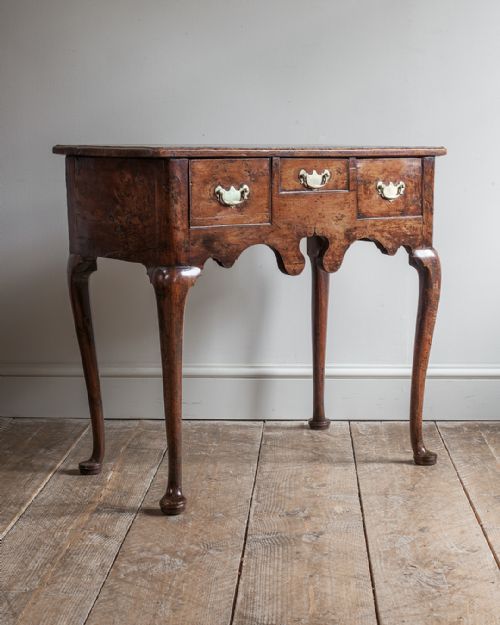
The form adapts across the eighteenth century from walnut pieces with cabriole legs to later mahogany and oak versions with straight or square legs. Regional pieces in cherry wood, yew wood, and burr elm also emerge frequently within these listings.
Construction and materials
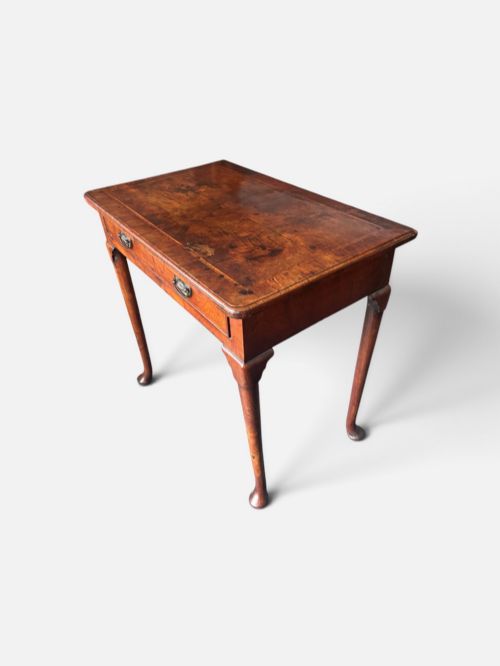
Cabinetmakers constructed these tables using solid native timbers like oak, walnut, and mahogany, frequently employing burr veneers and feather banding on drawer fronts to add decorative contrast. Secondary woods such as pine or oak appear in drawer linings and internal framing.
Joinery methods include hand-cut dovetails for the drawer boxes and pegged mortise and tenon joints for the underframes. Brass drop handles and escutcheons secure to the drawer faces with pins or wire loops.
Legs are either turned, carved into cabriole shapes ending in pad or slipper feet, or fashioned as straight square supports. Timber surfaces receive polish or wax finishes that highlight the natural grain patterns of walnut and oak.
George I Lowboy Table Retail Price Guide 2026
Typical asking prices for george i lowboy table among the pieces listed under this phrase on Sellingantiques today, from the lower quarter to the upper quarter. They describe what is for sale here now, not the wider market.
Plum wood occasionally hides beneath the polish of mid-eighteenth-century tables, offering a dense, purplish-brown grain reserved for resourceful country makers.
Distinctions in quality
Quality rests upon the selection of timber and the intricacy of veneer work, where quarter-matched walnut and burr elm command higher regard than plain planking. The crispness of hand-carved cabriole legs and moulded drawer edges further separates standard regional items from finer urban examples.
Survival of original brass hardware and untouched surface patination elevate a piece significantly above examples with replaced fittings or stripped timber. The harmony of proportions between the drawer apron and the height of the legs determines visual balance.
The George I Lowboy Table Glossary
- Lowboy
- A small kneehole-free table with one or more drawers, originating in the late seventeenth century and remaining popular throughout the Georgian era. They served variously as dressing tables, side tables, or writing desks.
- Cabriole leg
- A furniture leg that curves outward at the knee and tapers inward toward the ankle, finishing in a pad or foot. This form derives from Chinese furniture designs imported via Dutch trade routes.
- Feather banding
- A decorative inlay technique utilising small strips of veneer cut diagonally to form a herringbone pattern around drawer perimeters. It appears frequently on walnut furniture from the early eighteenth century.
- Quarter veneered
- A method of arranging four matching slices of veneer cut from the same section of timber to create a symmetrical pattern. This technique displays the grain of walnut or burr elm across drawer fronts.
- Geometric moulded
- A style of drawer framing featuring raised wooden moulding profiles applied in rectilinear patterns. This detail marks pieces made during the transition from seventeenth-century joined furniture to eighteenth-century cabinetwork.
George I Lowboy Table: Frequently Asked Questions
What is a lowboy used for?
These tables served primarily as dressing tables for personal grooming or as small side tables in bedchambers and hallways. Their drawers held small valuables, documents, or accessories.
In modern rooms, they function effectively as writing desks, hallway consoles, or lamp tables beneath mirrors.
How do I date a lowboy?
Dating relies on timber choices, leg styles, and drawer construction methods. Walnut and feather banding point toward the early eighteenth century, while mahogany and straight square legs suggest later decades.
Secondary woods inside the drawers and the style of brass handles provide additional clues to the period of manufacture.
Are all lowboys made of oak?
Oak appears frequently, particularly in regional English and Welsh pieces made throughout the eighteenth century. However, cabinetmakers also utilised walnut, mahogany, cherry wood, yew, and burr elm.
Finer urban examples often feature walnut or mahogany veneers over oak or pine carcases.
What is the difference between a lowboy and a side table?
A lowboy is distinguished by its low height and the inclusion of one to three working drawers integrated into the frieze. Standard side tables occasionally lack drawers entirely or stand at taller dimensions.
Many historic listings use both terms interchangeably because lowboys functioned as side tables in domestic interiors.