




Georgian Kneehole Side Table
A georgian kneehole side table provides compact storage and a fitted writing surface, combining practical drawers with a central recessed recess.
Georgian Kneehole Side Table
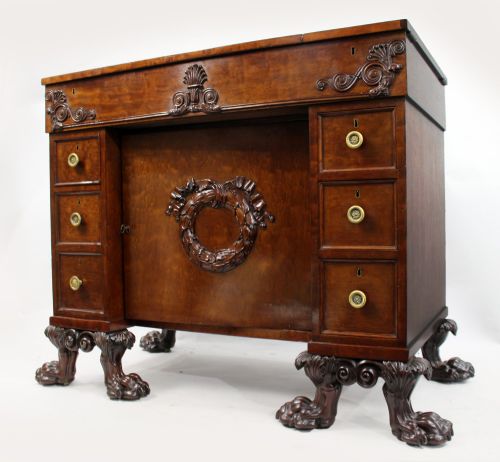
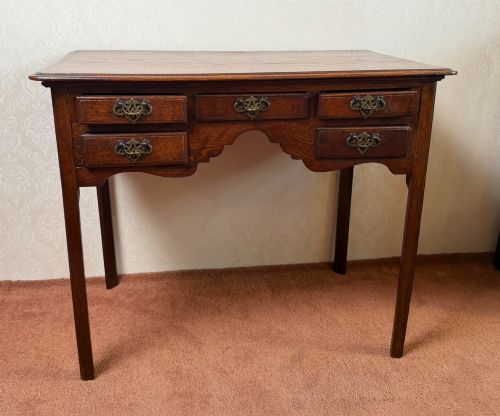
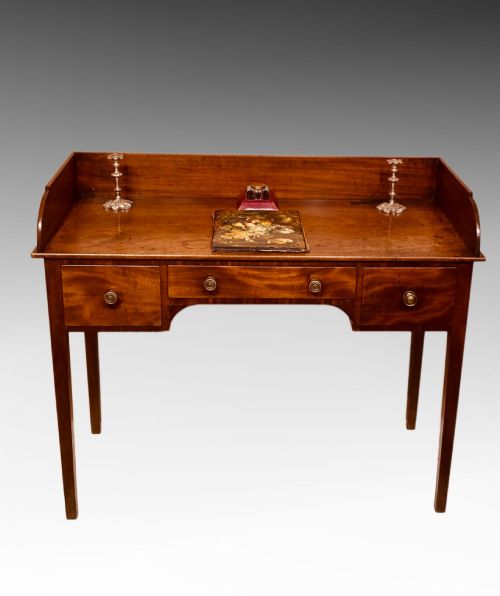
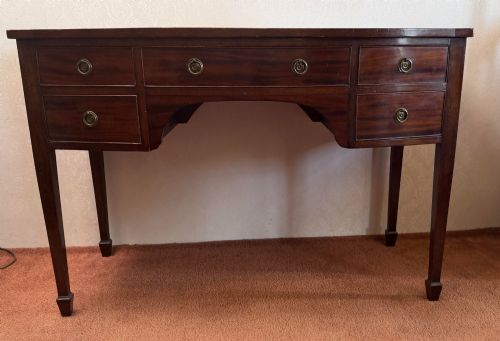
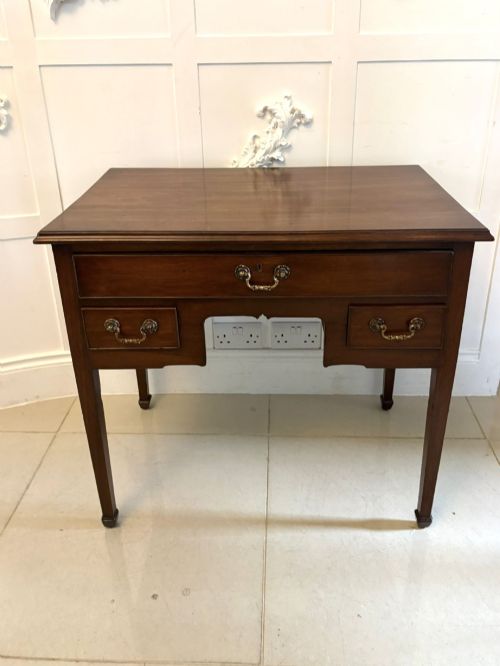
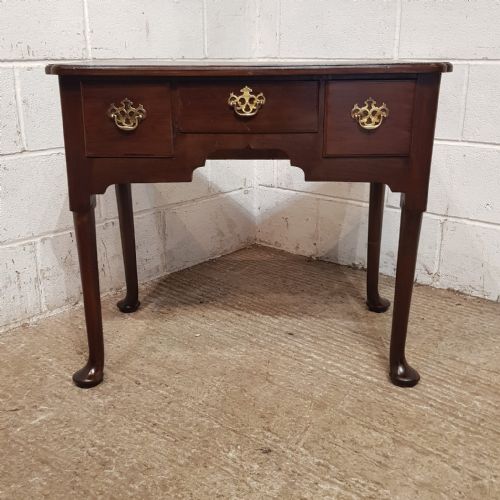
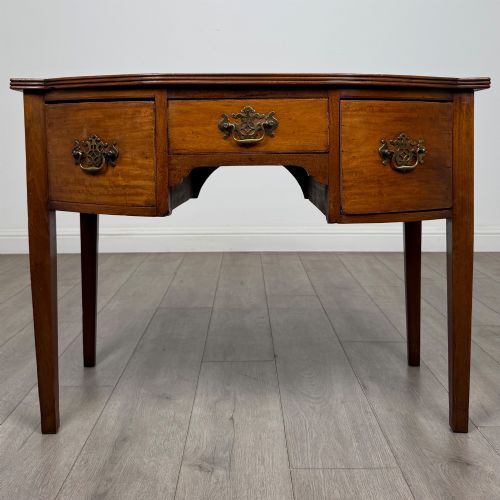
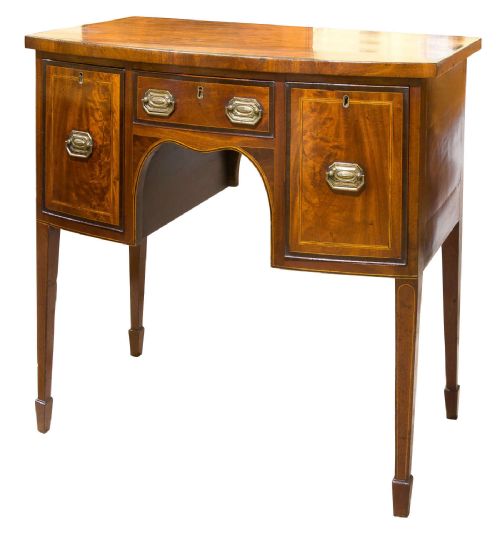
A georgian kneehole side table brings together centuries of cabinet making, appearing most frequently in eighteenth century mahogany and oak variations across this selection. These pieces function as lowboys, writing tables, and dressing surfaces featuring multiple small drawers arranged around a central recessed space. Buyers encounter examples spanning the georgian, regency, and nineteenth century eras, alongside later revival pieces.
The form bridges the gap between a chest of drawers and a writing desk, offering surface space above tiered banks of drawers. Oak and country made pieces exist alongside formal mahogany and burr walnut versions. The evidence shows variations from simple three drawer layouts up to larger five drawer bowfront configurations.
Character and Proportion
Quality rests in the harmony of proportion between the central kneehole recess and the surrounding banks of drawers. Finer examples display carefully selected timber veneers and restrained inlay that enhance the architectural lines of the piece rather than crowd them. The handling of the drawer arrangement, whether three, four, or five drawers, dictates the visual weight.
The distinction between country made oak lowboys and formal urban mahogany desks lies in the crispness of execution and timber selection. Refined mouldings, well-turned legs, and original brass hardware elevate certain examples. Untouched surfaces with deep patination hold greater appeal than overly restored timber.
Georgian Kneehole Side Table Retail Price Guide 2026
Typical asking prices for georgian kneehole side table among the pieces listed under this phrase on Sellingantiques today, from the lower quarter to the upper quarter. They describe what is for sale here now, not the wider market.
Listings feature eighteenth century and nineteenth century pieces alongside regency, nineteen tens, and nineteen twenties revival items.
The Georgian Kneehole Side Table Glossary
- Lowboy
- A small dressing table or side table featuring one or more rows of drawers raised on four legs. This form frequently predates or parallels the development of dedicated kneehole desks.
- Kneehole
- The recessed central space beneath a desk or dressing table designed to accommodate the user's knees while seated. It is flanked by vertical banks of drawers.
- Serpentine
- A furniture front or tabletop shaped with a central convex curve flanked by concave curves. This contour requires skilled woodworking to achieve fluid movement across the timber.
- Bowfront
- A convex curved cabinet front that swells outward toward the viewer. This shape softens the rectangular silhouette of the table.
- Stringing
- Thin inlaid lines of contrasting wood, such as boxwood, used to outline drawer fronts and tabletops. It provides a sharp linear border to the main timber.
Georgian Kneehole Side Table: Frequently Asked Questions
What is a kneehole side table?
A compact desk or dressing surface featuring a central recess for the legs, flanked by vertical banks of drawers.
These pieces combine the utility of a chest of drawers with a surface for writing or grooming.
How do I date a georgian table?
Dating relies on timber selection, structural joinery, handle hardware, and stylistic traits associated with specific reigns.
Earlier eighteenth century pieces often utilise oak or solid mahogany, while later revival models from the nineteenth and twentieth centuries adopt specific period characteristics.
Where were these tables used?
They served primarily in bedrooms as dressing tables or in parlours and halls as writing surfaces.
The modest footprint allowed them to fit neatly into smaller spaces within country houses and town residences.