
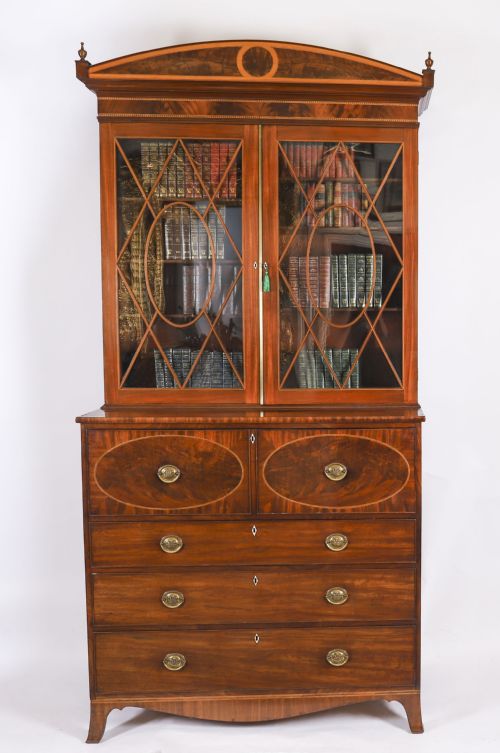
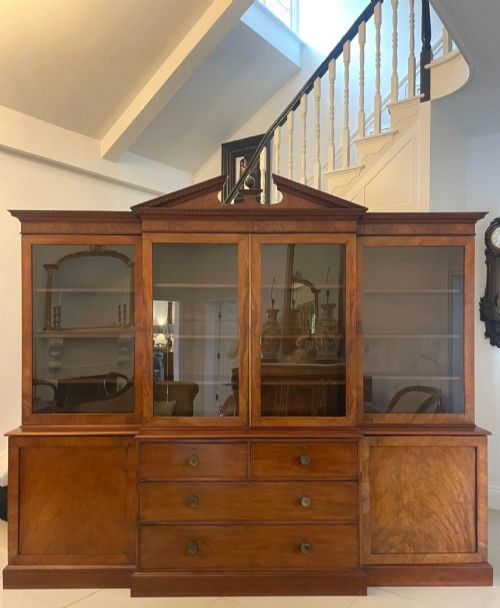
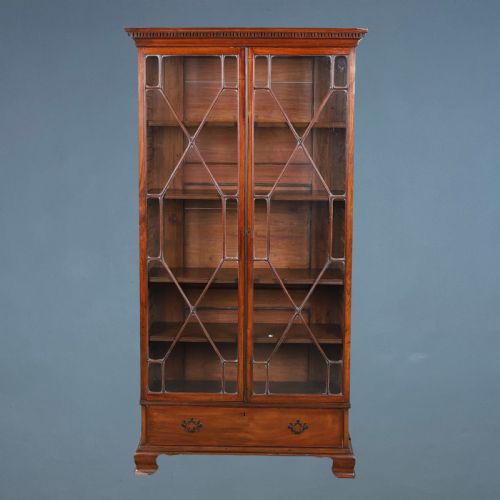
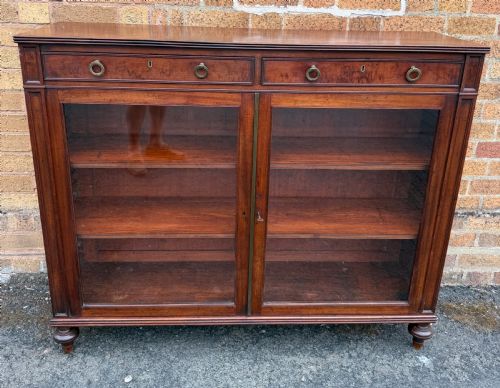

George I Display Cabinet
A george i display cabinet represents the height of early eighteenth-century timber work, designed to showcase precious objects behind glazed timber frames.
George I Display Cabinet
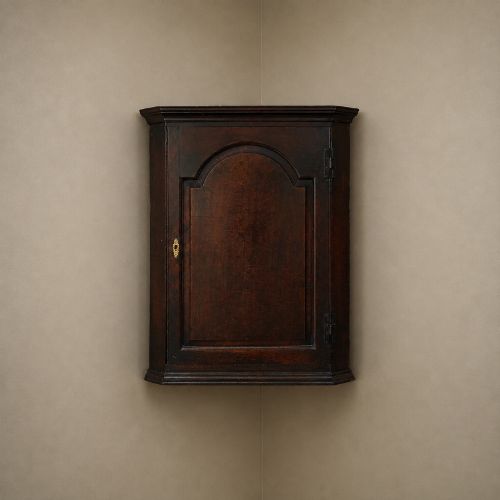
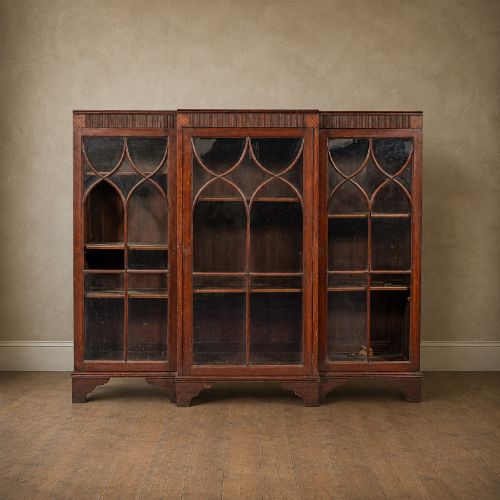
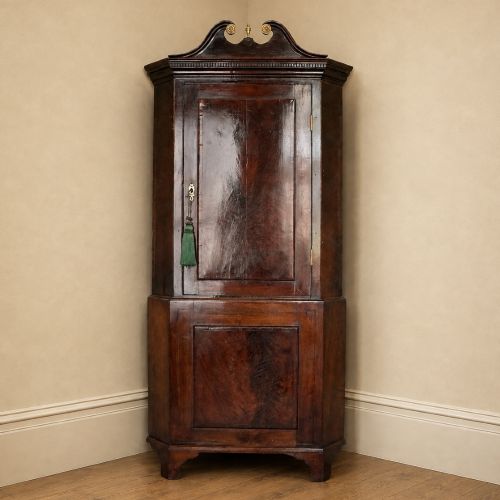
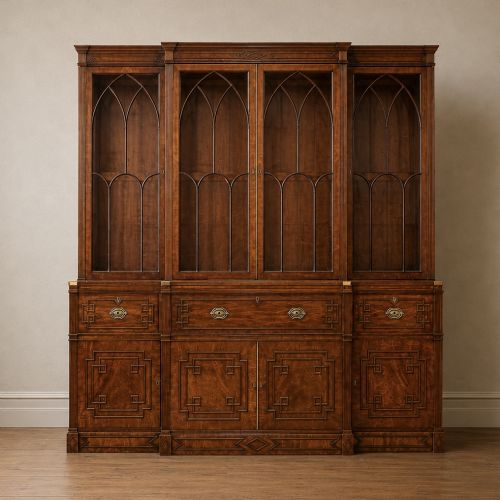
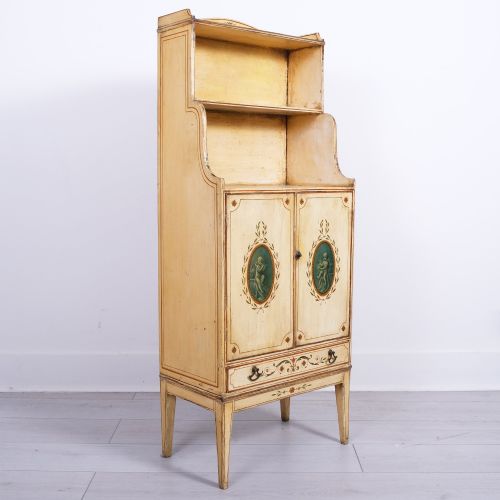
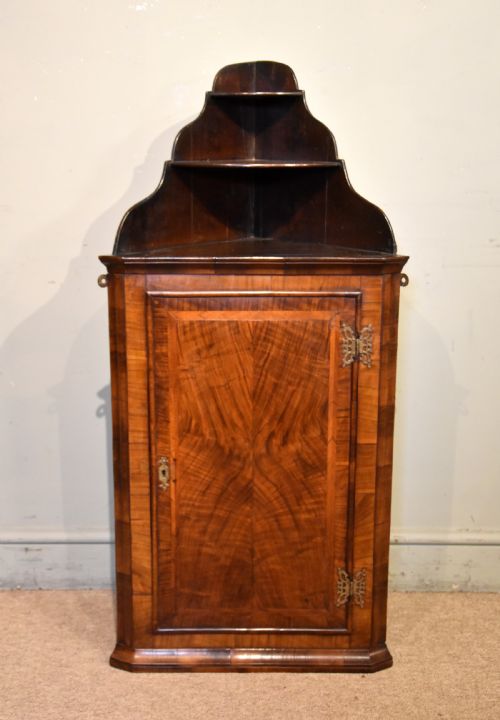
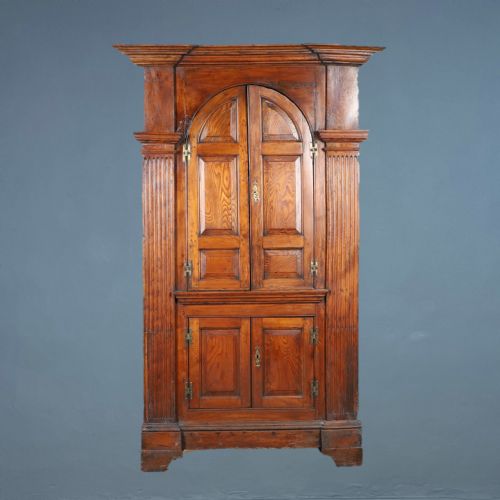
When searching for a george i display cabinet, collectors encounter early forms alongside later interpretations spanning the Georgian, Victorian, and Regency periods. The selection encompasses hanging corner cupboards, standing cabinets, and breakfront libraries that serve both storage and display functions.
Most items meeting this description originate from the 18th century, though subsequent revival styles from the 19th and 20th centuries appear frequently in walnut, mahogany, and oak.
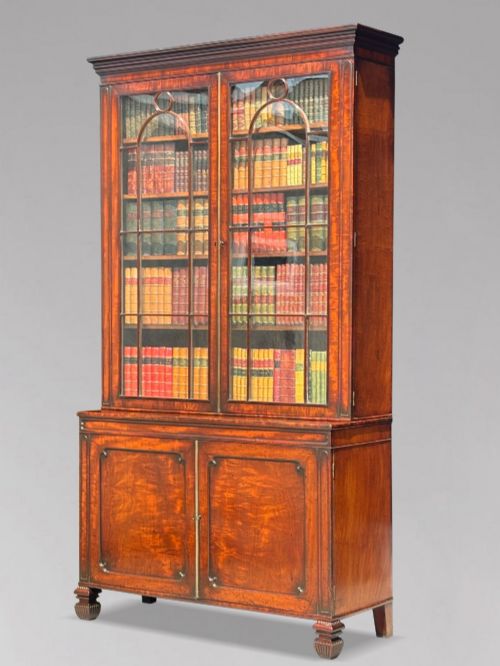
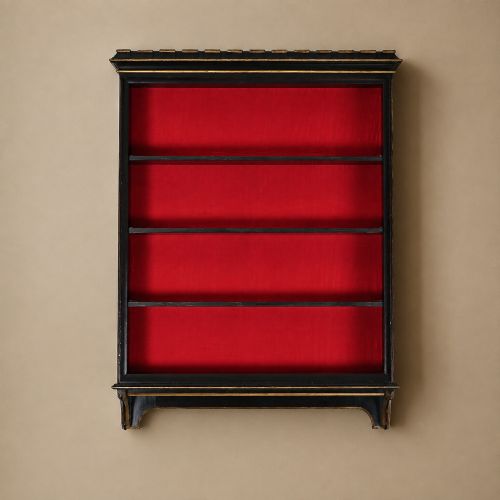
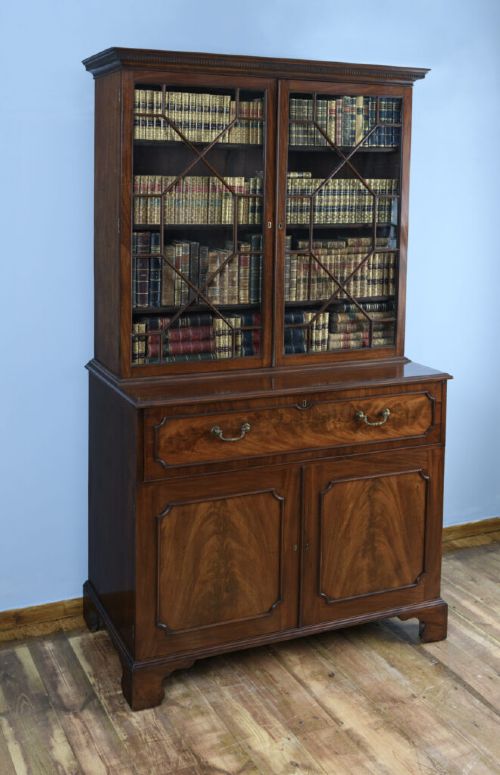
Forms vary from modest wall-mounted units to large breakfront library bookcases fitted with glazed doors and internal shelving.
Materials and Construction
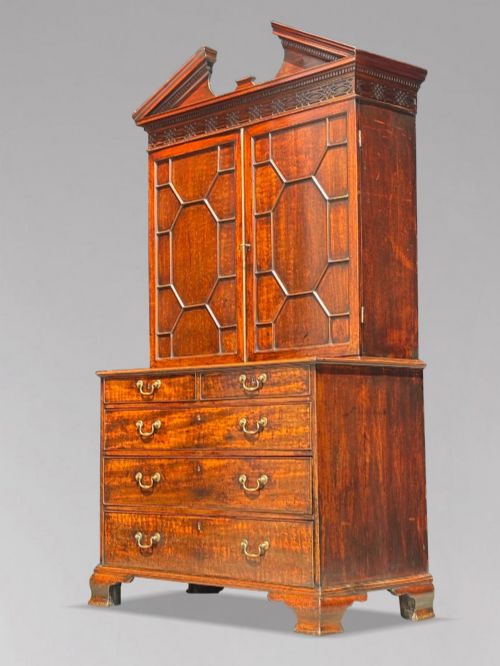
Cabinet makers utilised dense hardwoods including mahogany, walnut, and oak, often applying flame mahogany veneer or satinwood crossbanding to principal surfaces. Brass fittings, glass panes, and occasionally fabric linings complete the construction of these storage pieces.
Joinery techniques involve traditional framing for glazed doors and dovetailed joints within drawer construction, supporting heavy timber carcases across centuries of use.
Some corner cupboards fit so snugly into 18th-century rooms they retain the exact dust patterns of three different monarchies.
Evaluating Quality
Superior examples distinguish themselves through the choice of timber, where well-figured flame mahogany or rich walnut veneer displays deliberate grain matching across the front elevation. The finesse of carved detailing, such as astragal mouldings on glazed doors and proportions within the architectural cornice, marks the distinction between standard workshop production and exceptional cabinet work.
Thomas Chippendale·Gillows·George Edmund Street·Morris & Co·George W Jack·William Kent
The George I Display Cabinet Glossary
- Breakfront
- A cabinet design where the central section projects forward from the flanking wings. This architectural layout creates depth and prominence in large library bookcases.
- Astragal
- Moulding profiles used to hold panes of glass within a glazed door. These timber strips form geometric patterns across cabinet fronts.
- Crossbanding
- A strip of veneer laid perpendicular to the surrounding grain along the border of a panel. This technique frames the primary timber surface.
- Secretaire
- A cabinet incorporating a pull-down writing drawer fitted with small pigeonholes and drawers. It combines desk functionality with upper bookcase storage.
- Cornice
- The decorative mouldings capping the top of a cabinet. It provides an architectural finish derived from classical building design.
George I Display Cabinet: Frequently Asked Questions
How do I identify a true period piece?
Examine the timber shrinkage, secondary woods used in internal framing, and hand-cut joinery details that correspond to 18th or 19th-century workshop practices.
Compare the glass panes for irregularities and check the cabinet construction methods against known regional styles of the era.
Where should I place a corner cabinet?
Corner cupboards and standing corner units suit unused room angles, turning dead space into functional display areas for ceramics or glassware.
Ensure the wall angles match the cabinet back and allow sufficient clearance for opening glazed doors without obstruction.
Can these cabinets hold heavy books?
Large breakfront library bookcases and sturdy mahogany cabinets were originally built to support substantial collections of bound volumes on adjustable timber shelving.
Check shelf thickness and internal support cleats before loading heavy items into older display furniture.
What is the difference between a bookcase and a display cabinet?
Display cabinets typically feature glazed doors and glass sides specifically intended for exhibiting decorative objects, whereas bookcases focus on shelf storage for books.
Many Georgian designs combine both functions by pairing upper display shelves with lower cupboard bases or secretaire desks.