

George I Desk Cabinet
A george i desk cabinet provides a fitted workspace and upper storage in figured walnut or mahogany.
George I Desk Cabinet
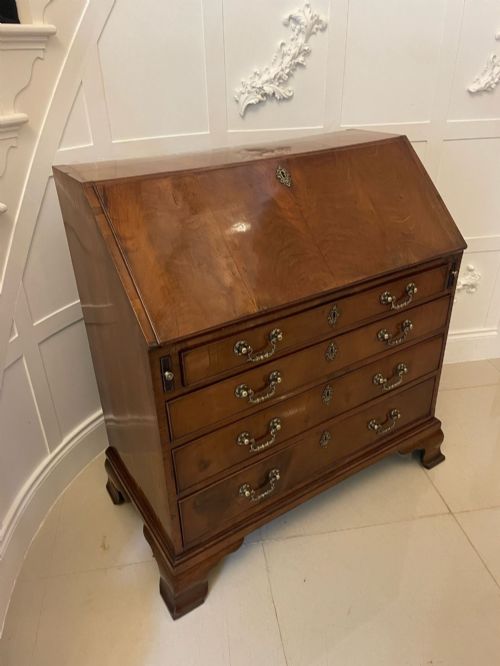
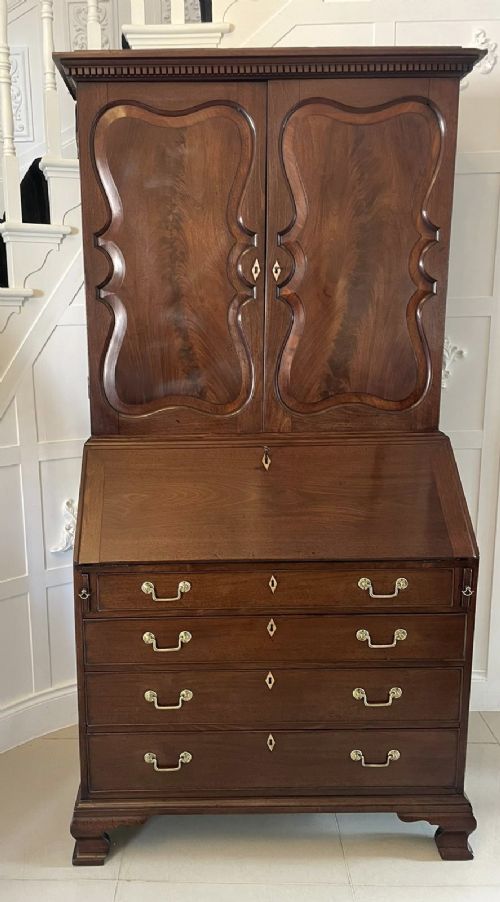
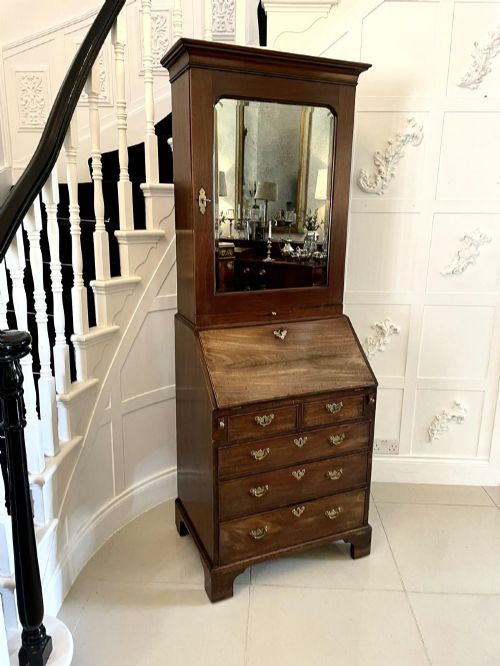
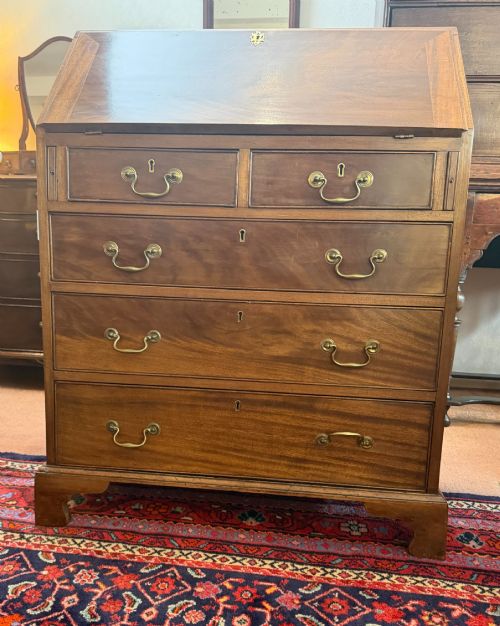
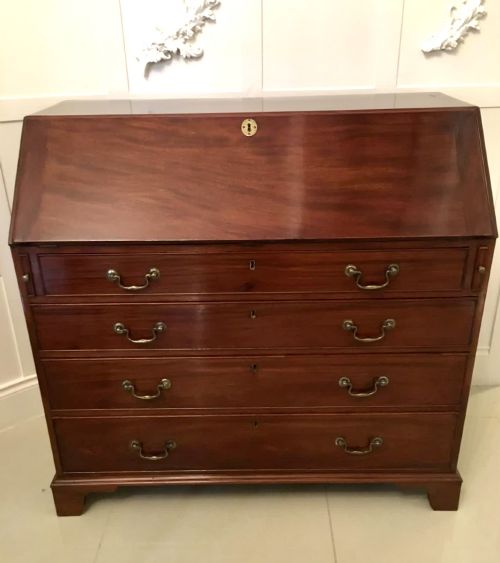
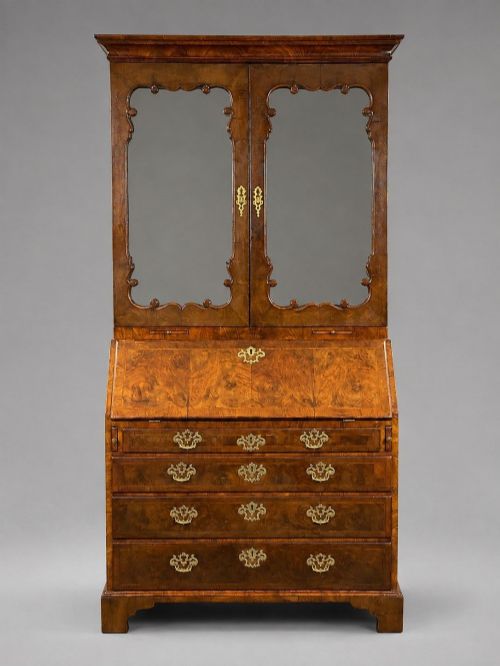
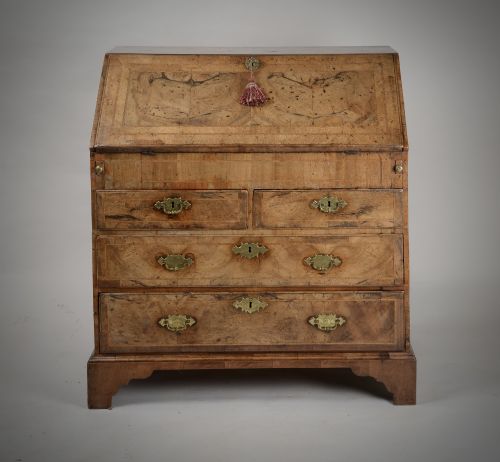
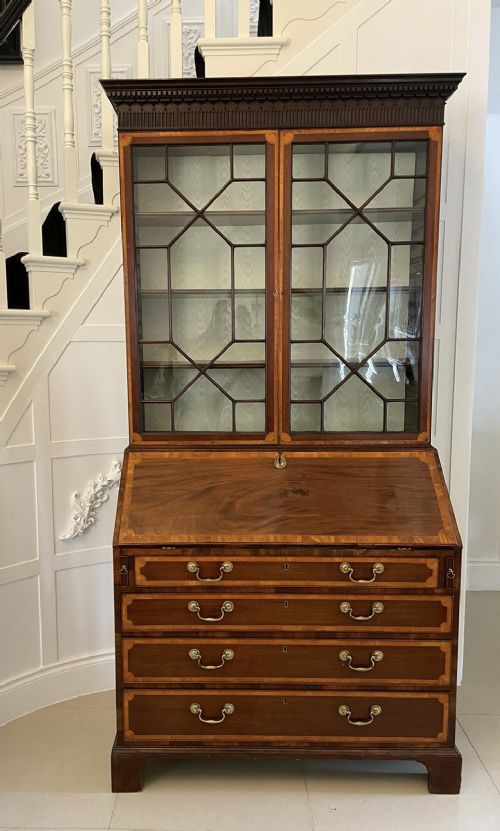
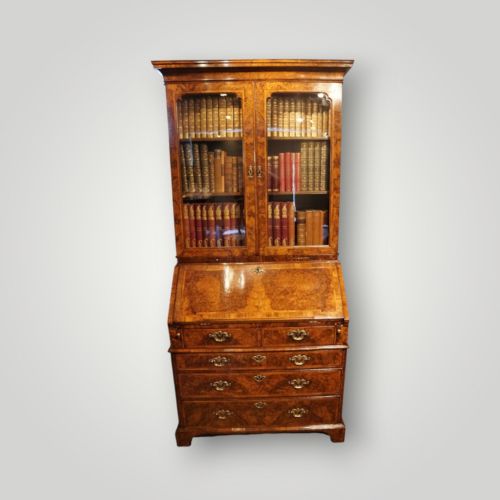
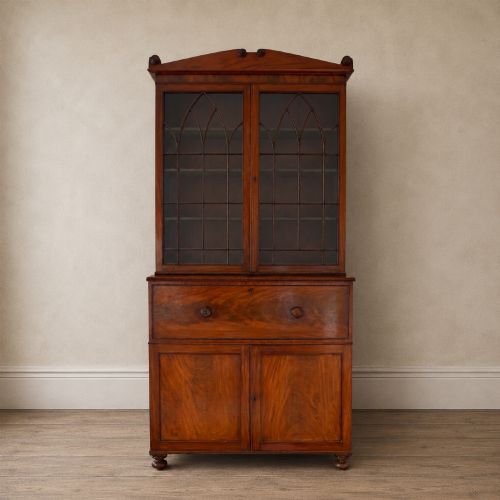
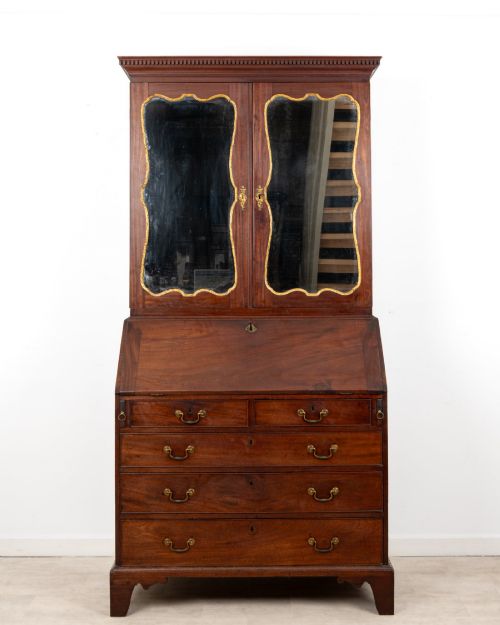
A george i desk cabinet combines a lower writing compartment with an upper bookcase or storage section, typically dating from the eighteenth century. These pieces include bureau bookcases and secretaire cabinets constructed in distinct sections for ease of transport.
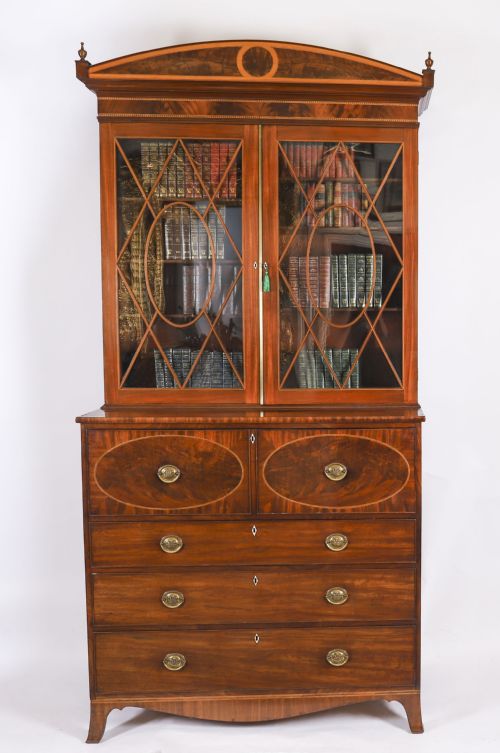
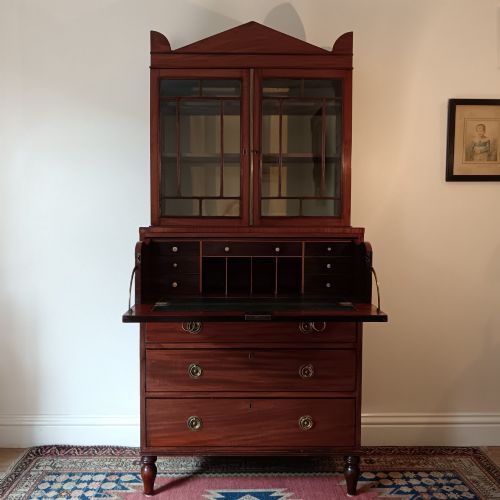
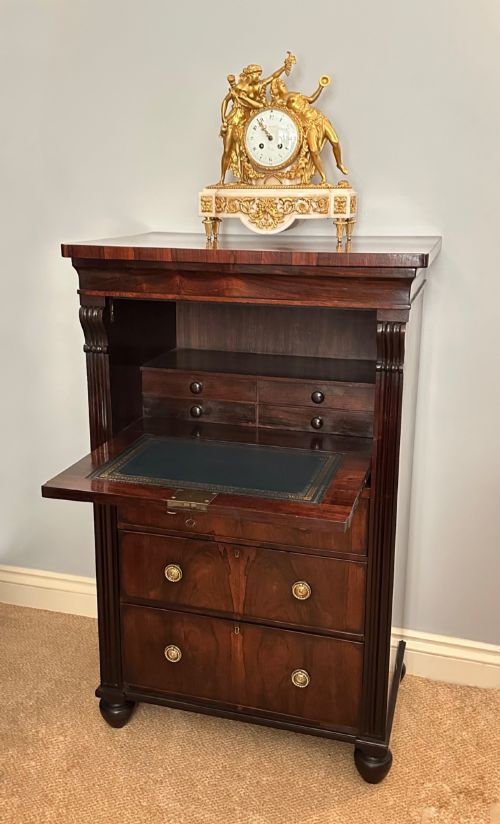
The walnut and mahogany variants dominate the forms seen, often featuring glazed upper doors, candle slides, and fitted internal compartments with small drawers and pigeonholes. The proportions remain tall and architectural, designed for domestic studies and reception rooms.
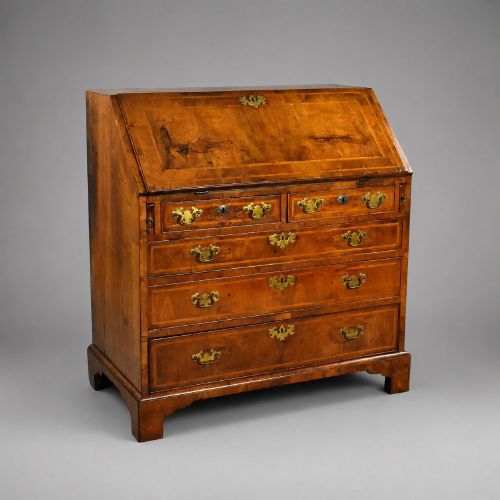
Buyers encounter examples spanning the early georgian period through to later georgian interpretations, though true george i pieces display specific walnut figure and section construction. The writing surface drops down on hinges to reveal the internal compartments.
How they were made
Cabinet makers utilised dense hardwoods such as walnut, burr walnut, and mahogany, often applied as fine veneers over oak or pine secondary timbers. Feather banding and inlay provide decorative borders around drawer fronts and panel edges.
Brass hardware including drop handles, escutcheons, and hinges secure the doors and drawers, while glass is set into wooden frames for the upper bookcase sections. Candle slides pull out beneath the upper doors to illuminate the workspace.
Bureau bookcases appear in multi-section formats with glazed upper doors.
What varies in quality
The choice of timber figure significantly dictates the visual impact, particularly where highly figured burr walnut or flame mahogany veneers match symmetrically across drawer fronts and fall-front panels. Grain selection and matching show the cabinet maker's skill.
Internal complexity and secondary details, such as secret compartments, finely turned pigeonhole dividers, and original brasses, separate standard utilitarian pieces from exceptional commissions. The structural integrity of the three-section carcass and the clarity of the glass panes also influence the standard.
George Oakley·Gillows
The George I Desk Cabinet Glossary
- Bureau bookcase
- A combination furniture form with a sloping writing flap above drawers and an enclosed shelving section on top. This piece served dual purposes for correspondence and library storage.
- Burr walnut
- A prized timber harvested from walnut tree growths that produces intricate, swirling grain patterns. Cabinet makers applied it as a veneer on high-status case furniture.
- Candle slide
- A pull-out wooden board mounted beneath the upper cabinet doors. It held candleholders to light the writing surface before artificial illumination.
- Secretaire
- A desk or cabinet containing a concealed writing drawer or drop-front flap. The fitted interior organises stationery and documents.
- Feather banding
- A decorative inlay technique using thin strips of wood arranged in a herringbone pattern. It frames drawer perimeters and cabinet doors.
George I Desk Cabinet: Frequently Asked Questions
How do I use a george i desk cabinet?
Lower the hinged writing flap to utilise the internal surface for correspondence and paperwork. The upper glazed section stores books and display items.
Store documents within the internal small drawers and pigeonholes. Pull out the candle slides when working in low light.
What woods are used in george i desk cabinet pieces?
Walnut and burr walnut dominate the earliest examples from the early eighteenth century. Mahogany becomes prevalent in subsequent georgian iterations.
Secondary timbers such as oak support the primary veneer surfaces. Inlays utilise satinwood and other contrasting decorative woods.
How are these pieces constructed?
Many examples are built in distinct sections, such as a separate upper bookcase resting on a lower bureau base. This modular construction aided historical transport.
Internal fittings are handmade with dove-tailed joints on the drawers. The fall-front mechanism relies on sturdy hinges and internal support brackets.
Where should I place a george i desk cabinet?
Position the piece against a sturdy interior wall away from direct sunlight and heat sources. These environments protect vulnerable walnut and mahogany veneers.
Allow adequate clearance in front of the cabinet for the fall-front flap to open fully. Ensure the floor is level to support the heavy timber carcass.