


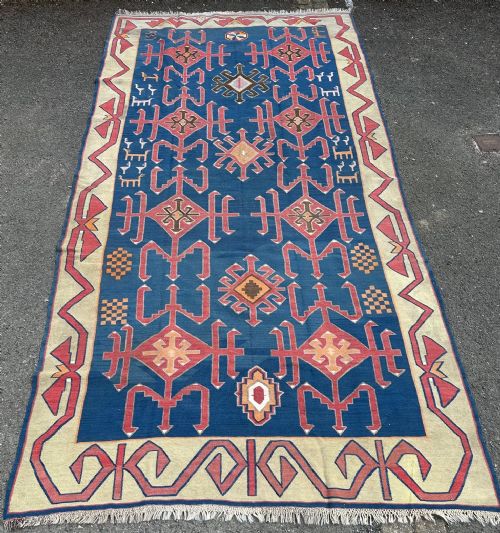


Geometric Wool Kilim
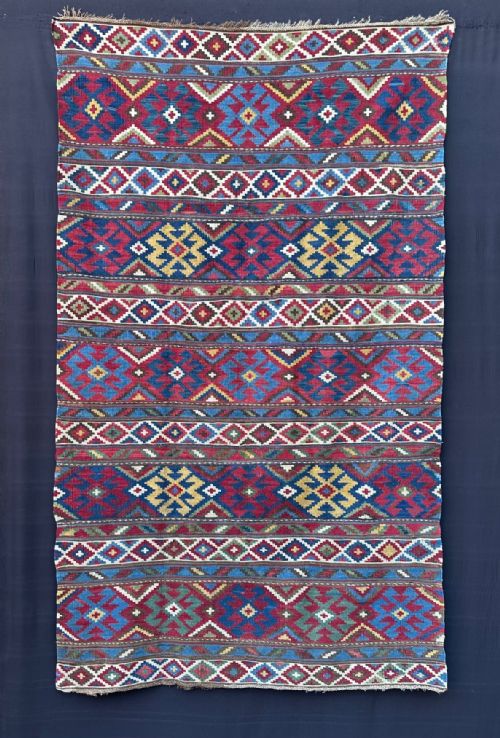
These geometric wool kilim examples are flatweave textiles created by nomadic and village makers across Anatolia, Persia, the Caucasus and Central Asia.
Geometric Wool Kilim
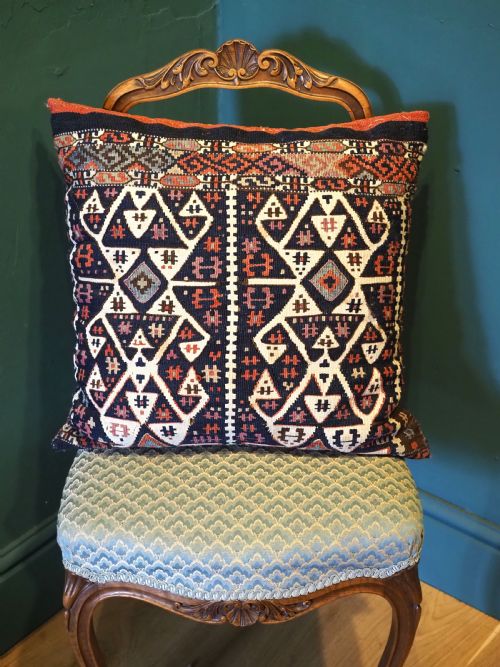
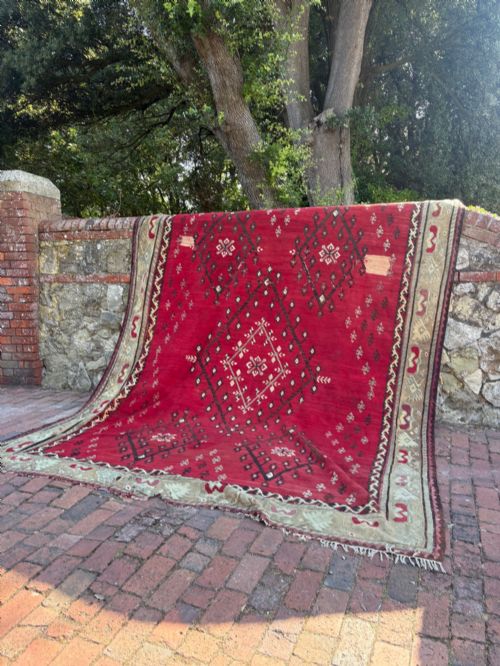
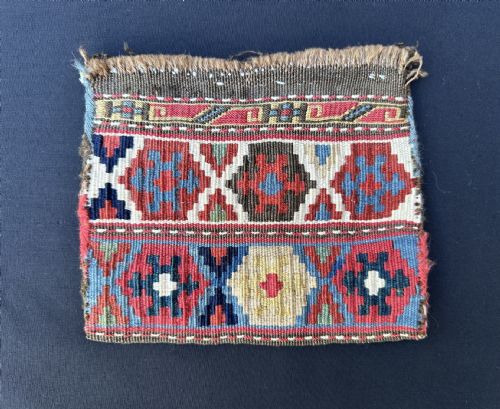
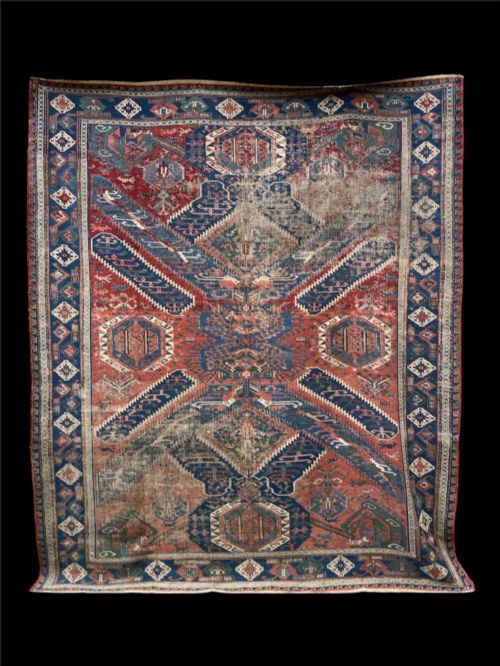
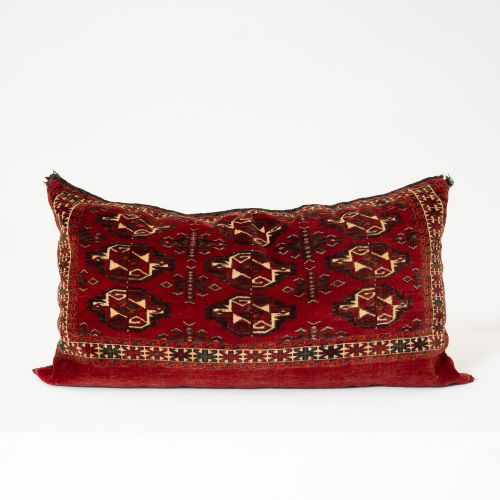
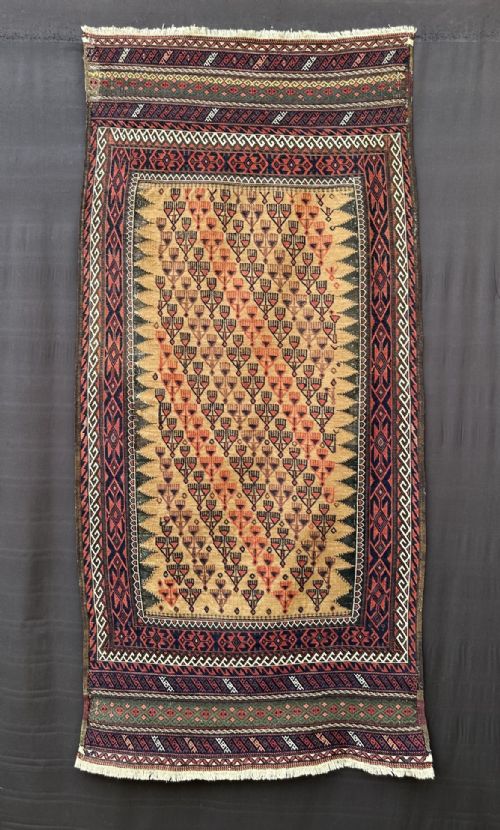
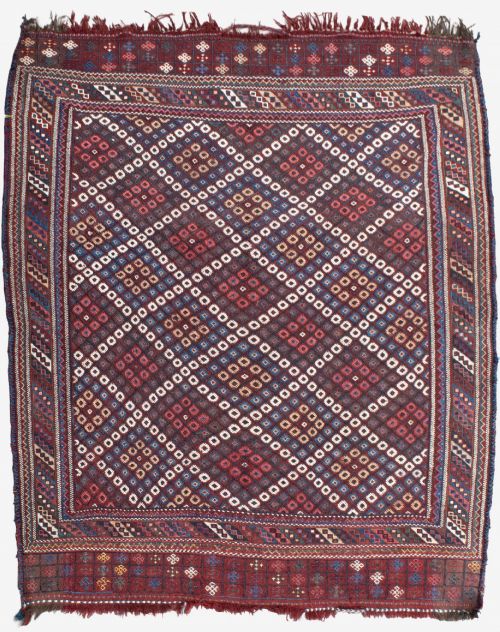
A geometric wool kilim sits among floor coverings, wall hangings and domestic furnishings produced by tribal groups. The pieces take the form of rugs, runners, cushions, saddle bags and dining sofreh cloths.
Anatolian and Persian village pieces dominate the selections on this page, alongside Caucasian and Central Asian examples. Makers structured these textiles with repeating medallions, stripes and angular motifs.
The objects served practical household roles for nomadic tribes before entering the decorative market. Surviving examples range from small bag faces to room-size carpets woven in the nineteenth and early twentieth centuries.
Materials and construction
Weavers relied on hand-spun wool for the foundation and surface patterns, sometimes combining cotton for structure. Natural dyes provided the palette before synthetic colours entered regional production.
The flatweave technique involves interlocking weft threads tightly across the warp yarns to build sharp graphic patterns without a pile. Artisans completed these textiles on portable vertical or horizontal looms.
Geometric Wool Kilim Retail Price Guide 2026
Typical asking prices for geometric wool kilim among the pieces listed under this phrase on Sellingantiques today, from the lower quarter to the upper quarter. They describe what is for sale here now, not the wider market.
Current listings span the nineteenth and twentieth centuries, incorporating materials like natural dyes and hand-spun wool across tribal styles.
Judging the weave and materials
Quality rests on the tightness of the weave and the crispness of the geometric design. Tighter structures utilise finer hand-spun wool that holds rigid lines over decades of use.
The depth and consistency of natural dyes separate standard village pieces from finer tribal work. Well-preserved dye lots and balanced proportions indicate greater skill in the original workshop.
The Geometric Wool Kilim Glossary
- Kilim
- A flatweave textile made without a pile by tightly interweaving warp and weft threads. These pieces function as rugs, wall hangings and covers.
- Sofreh
- A flatweave cloth used historically for dining, food preparation or bread storage within nomadic communities. These textiles often feature elongated proportions and bold tribal borders.
- Warp
- The stationary vertical threads stretched across a loom that receive the interwoven weft. Warp yarns provide the structural foundation for the entire textile.
- Weft
- The horizontal threads passed through the warp to build the visible pattern and colour fields. In flatweaves, the weft completely conceals the warp structure.
- Sumak
- A brocading technique where supplementary weft threads wrap around the warp yarns to create a textured surface. This method produces raised geometric patterns distinct from standard flatweaves.
Geometric Wool Kilim: Frequently Asked Questions
What is a geometric wool kilim?
A geometric wool kilim is a pileless textile woven by hand using wool yarns dyed with natural or traditional colourants. These items display angular motifs, triangles and medallions originating from tribal traditions.
Nomads and villagers utilised them as floor coverings, blankets and storage bags. Today, they serve primarily as decorative rugs and cushions in modern interiors.
How do I care for a vintage kilim?
Protect the textile by vacuuming gently without a rotating brush bar and keeping the piece out of direct sunlight. Professional cleaning suited for flatweave rugs preserves the wool fibres and dyes.
Rotate the rug periodically to ensure even wear across high-traffic areas. Using a proper underlay prevents slipping and reduces friction against the floor.
Where were these textiles made?
The pieces originate from nomadic and sedentary tribal groups across Anatolia, Persia, the Caucasus and Central Asia. Specific regions include Shirvan, Daghestan, Fars and various borderlands.
Different tribes developed distinct geometric vocabularies and colour palettes. These regional traits help identify the origin of individual flatweaves.
How are kilims different from rugs?
Kilims are flatwoven without any raised pile, whereas standard rugs possess a cut or looped pile standing above the foundation. This structural difference makes kilims thinner and lighter.
Because they lack a pile, flatweaves display patterns with sharp geometric clarity on both sides. They function well in spaces where a low profile is required.