



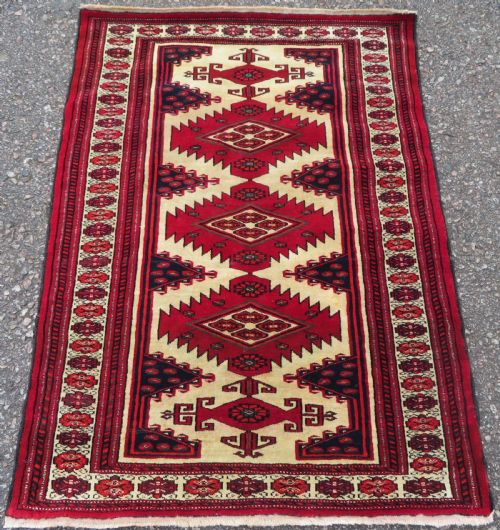
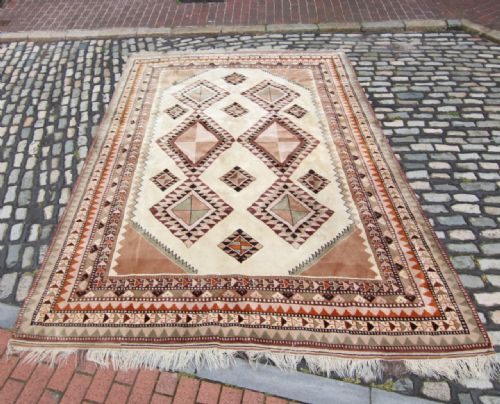
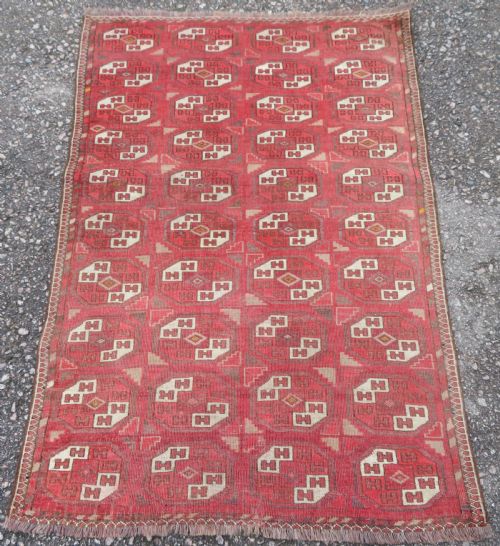
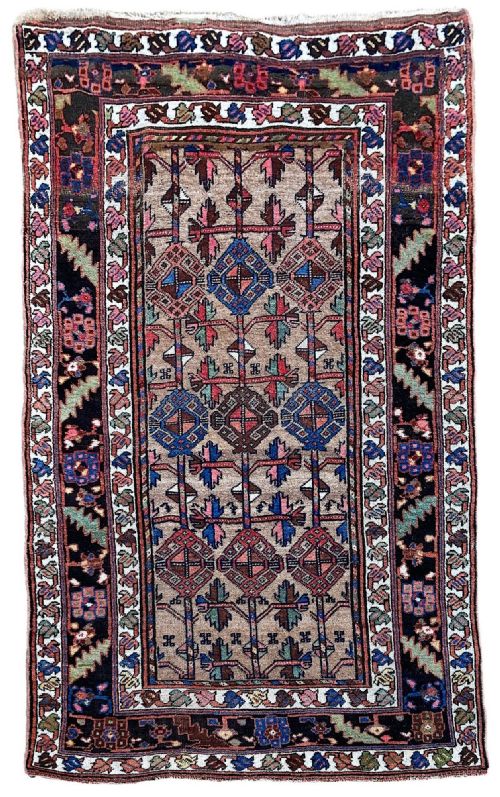
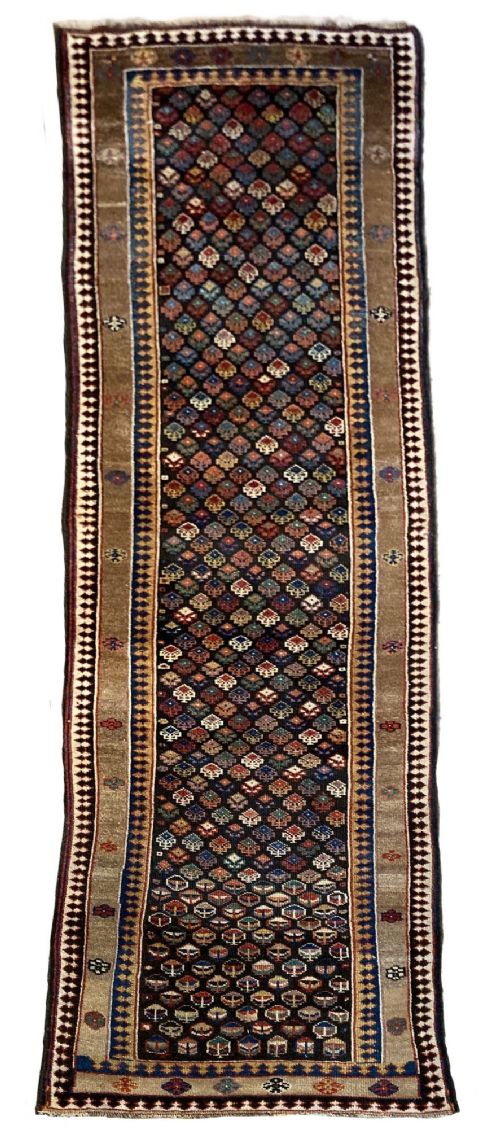
Geometric Tribal Pattern Rug
These pieces are a geometric tribal pattern rug, offering structured motifs and ancient symbolism suited to grounding a modern room.
Geometric Tribal Pattern Rug
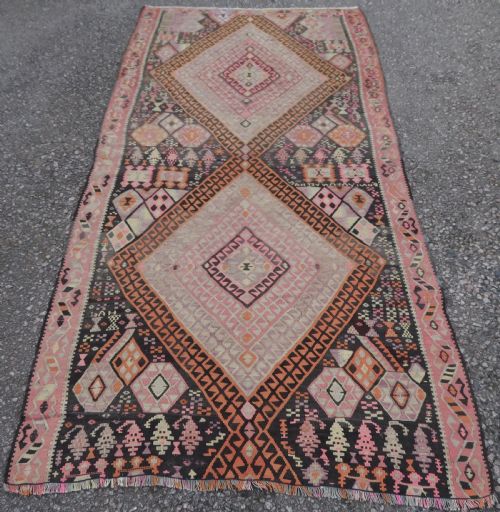
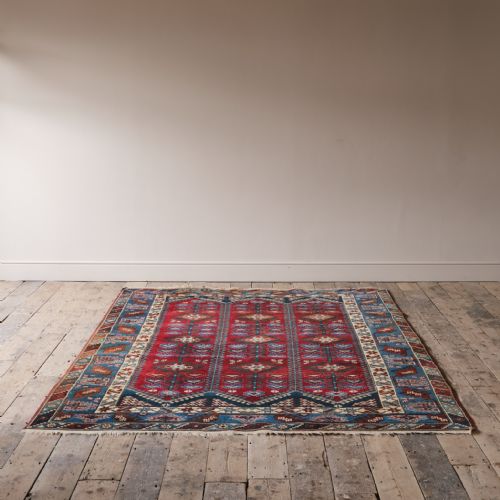
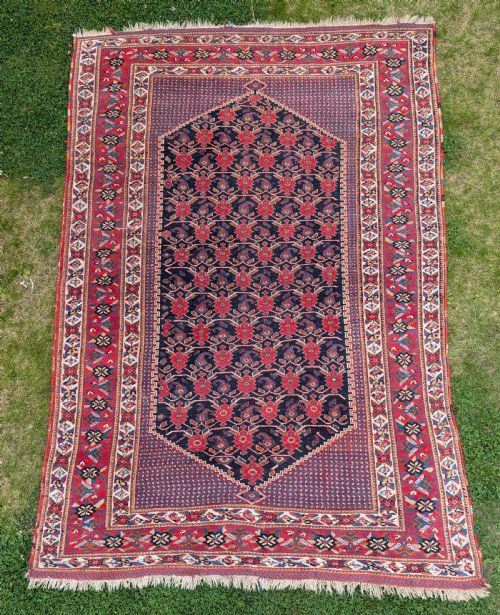
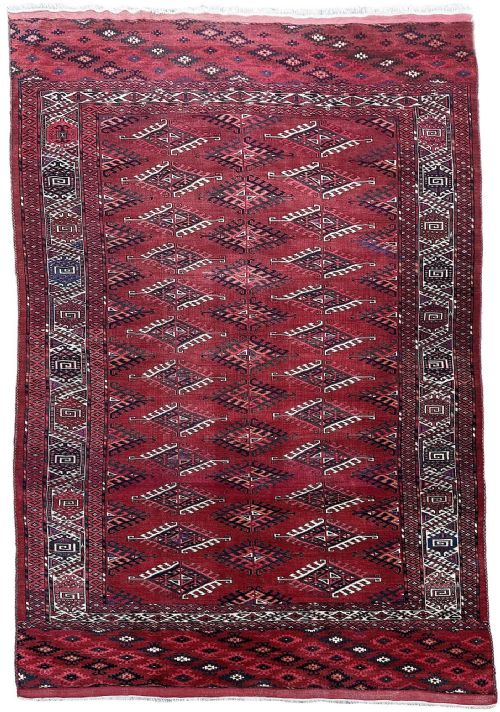
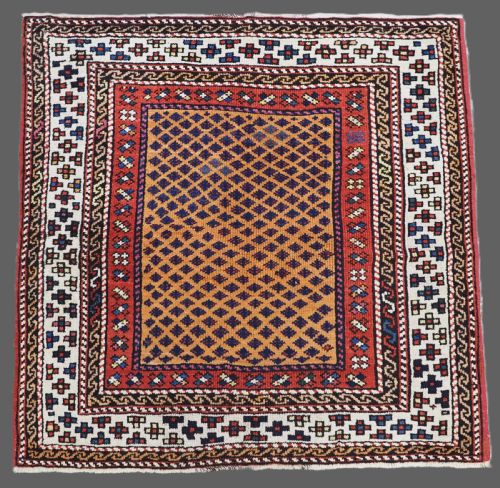
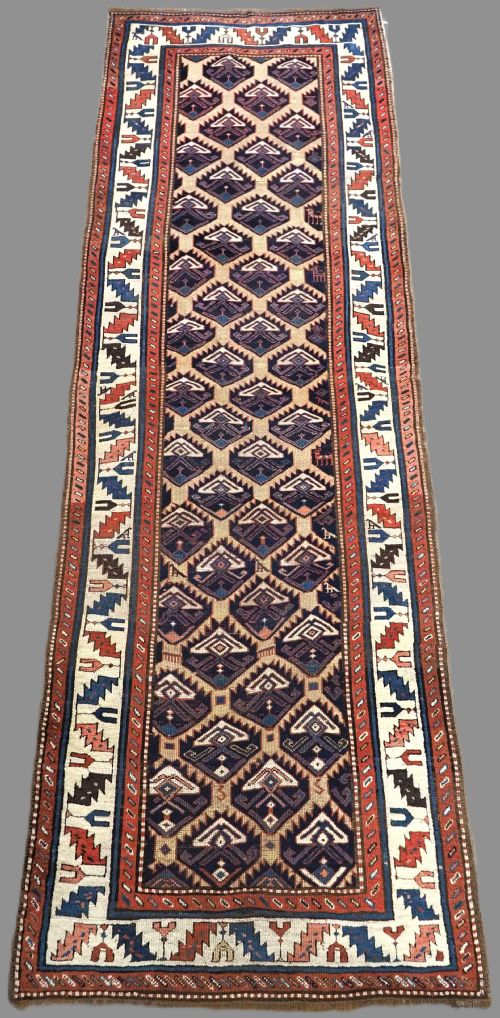
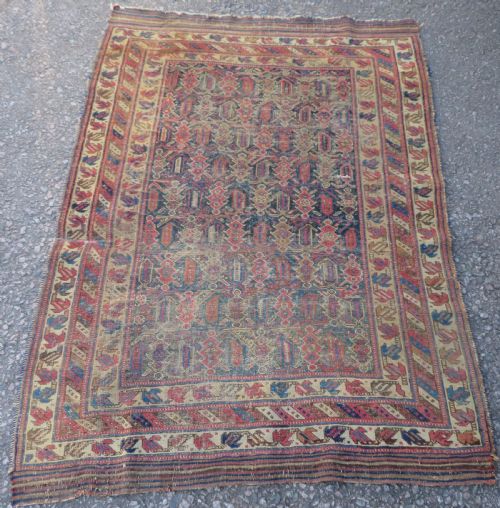
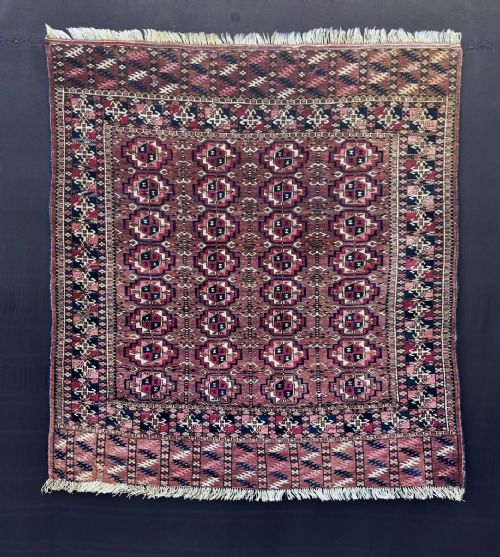
A geometric tribal pattern rug brings together structured motifs, repeat lattices, and regional designs originating from communities across Central Asia, the Caucasus, and Persia. These textiles encompass varied formats, ranging from square chamber pieces and wide carpets down to long hallway runners and tent door hangings.
The items seen on this page span from the nineteenth century into the early twentieth century, capturing decades of nomadic and village weaving traditions. Buyers frequently encounter regional classifications such as Turkmen, Caucasian, Kurdish, and Afshar, each carrying distinct local patterns.
The physical build ranges from heavy piled floor coverings to flat-woven kilims and cushions. Every format demonstrates the practical utility required by nomadic and village makers who needed durable textiles for daily living.
Materials and Construction
Makers relied primarily on wool and hand-spun wool for the foundation and pile, ensuring a resilient structure capable of withstanding heavy foot traffic. Cotton also appears in the foundational warps and wefts of certain village and regional pieces.
Natural dyes provide the characteristic colour palette found across these carpets, yielding deep tones that soften gracefully over time. Hand-knotting and flat-weaving techniques tie the wool securely to the warp threads, creating dense surfaces and crisp geometric lines.
The listings span the nineteenth century up to the 1930s, featuring wool, cotton, and natural dyes.
Evaluating the Weaving
Quality rests in the precision of the knotting, the crispness of the lattice or gul design, and the integrity of the wool. Finer knot counts allow complex geometric motifs to remain sharp and legible across the surface of the rug.
The depth and complexity of the natural dye palette contribute significantly to the distinction of an individual piece. Subtle variations in hue resulting from natural dyeing methods give the wool a luminous quality that uniform chemical dyes cannot replicate.
The Geometric Tribal Pattern Rug Glossary
- Gul
- A medallion or repeat octagonal motif frequently found in Turkmen tribal weaving. These designs often signify specific tribal lineages.
- Kilim
- A flat-woven carpet or rug produced without a pile by tightly interweaving warp and weft strands. This technique creates a lightweight, reversible textile.
- Warp
- The vertical threads stretched tightly on the loom that form the structural skeleton of the rug. All knots and wefts are built around this foundational grid.
- Weft
- The horizontal threads passed across the warp strands to lock the knots and rows securely in place. Wefts contribute to the overall rigidity and thickness of the textile.
Geometric Tribal Pattern Rug: Frequently Asked Questions
What is a geometric tribal pattern rug?
It is a hand-woven textile created by nomadic or village weavers featuring repeating angles, lattices, and tribal motifs rather than curvilinear court designs.
These pieces originate from regions including the Caucasus, Persia, and Central Asia, reflecting the cultural heritage of specific tribes.
How were these rugs used originally?
Nomadic and village communities utilised them as floor coverings, tent door hangings, bedding carriers, and durable surfaces for daily camp life.
Their robust construction of wool and natural dyes was intended to withstand demanding physical environments and heavy daily wear.
How do I place a runner rug?
Runners fit well in narrow transitional areas such as hallways, corridors, and galley kitchens where length and durability are required.
Their linear formats help guide movement through a home while adding warmth and texture to timber or stone flooring.
How do I care for an old wool rug?
Gentle regular vacuuming without a rotating brush roll helps remove grit from the wool pile without damaging the hand-knotted structure.
Professional cleaning tailored to antique textiles preserves the natural dyes and prevents the fibres from becoming brittle over time.