




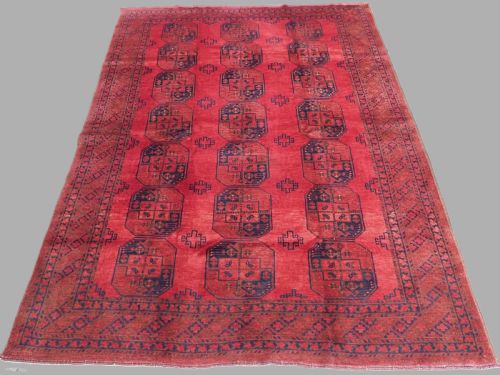
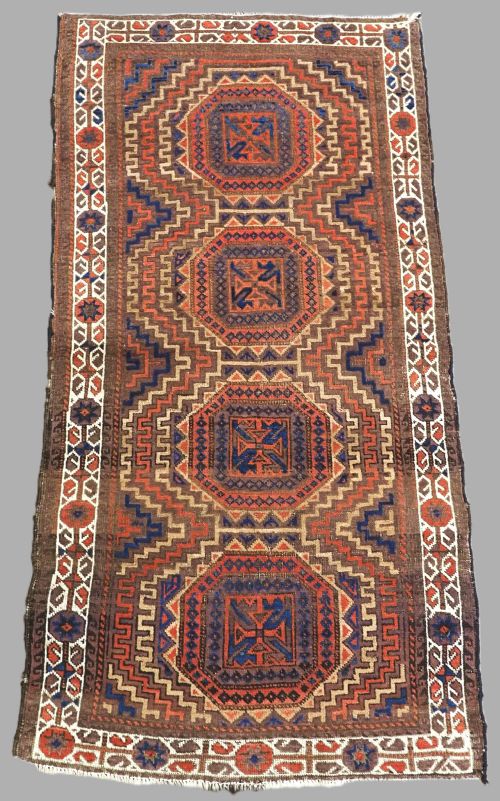
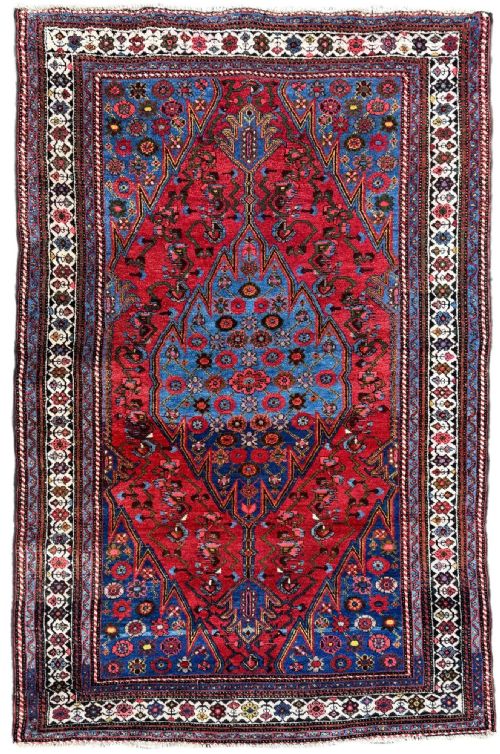
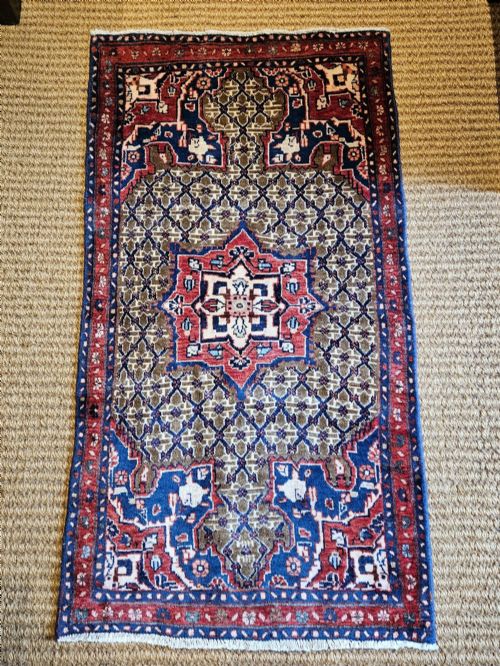

Geometric Persian Floor Rug
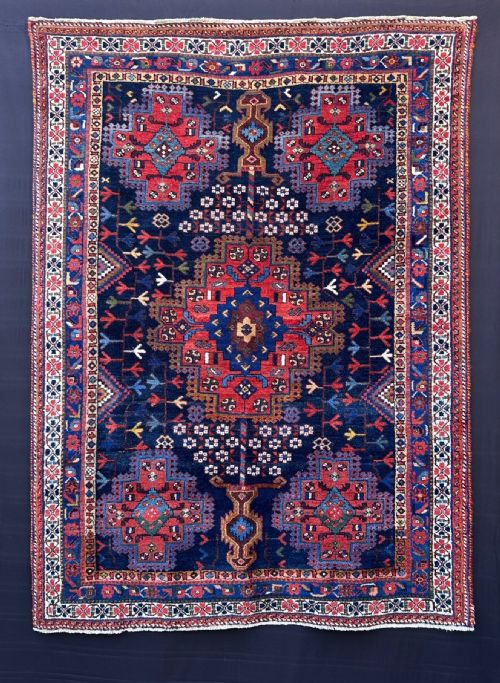
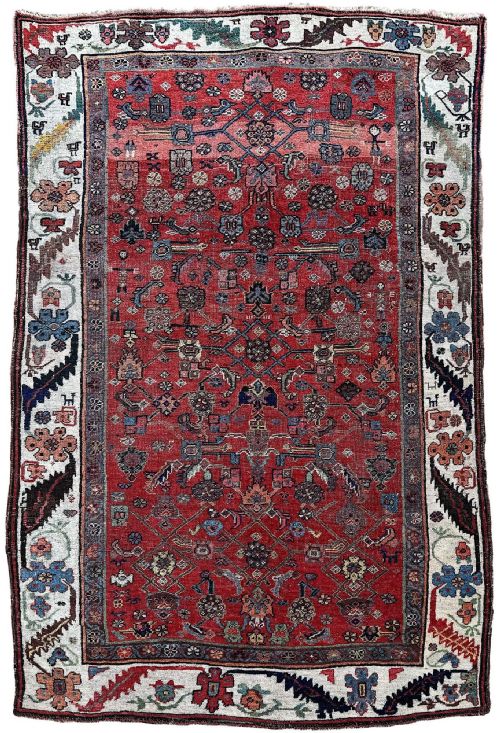
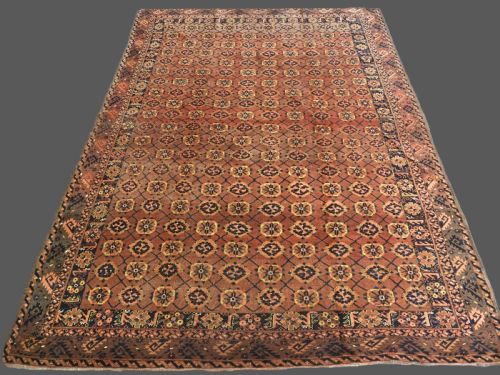
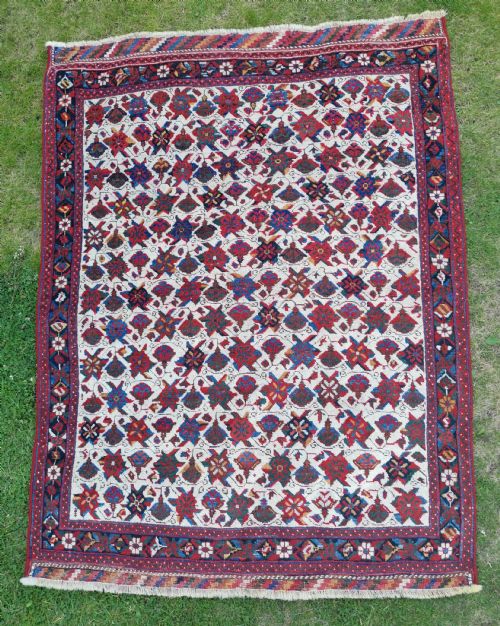
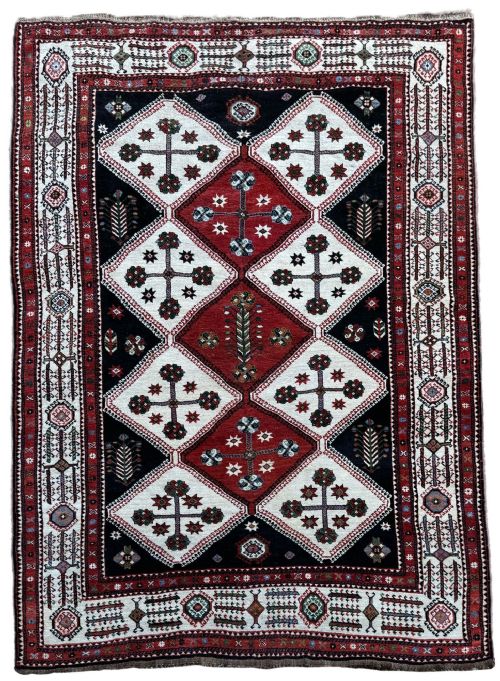
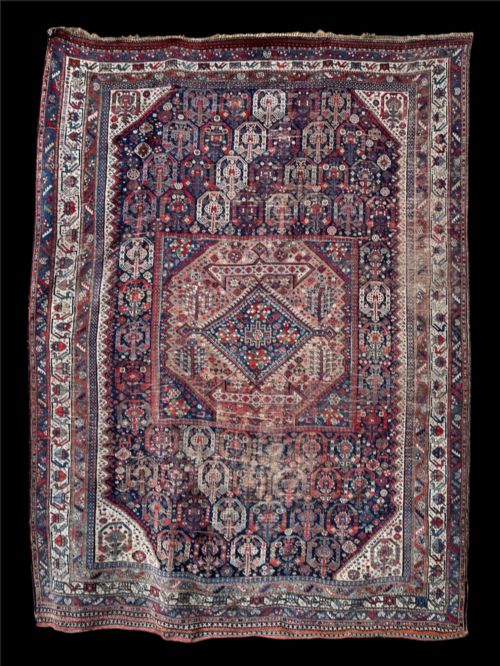
A geometric persian floor rug brings pattern and colour to a room through traditional woven designs from nineteenth and early twentieth century villages and towns.
Geometric Persian Floor Rug
A geometric persian floor rug represents hand-knotted village and tribal weaving traditions from across Persia and surrounding regions, dating from the nineteenth century into the twentieth century. These floor coverings appear in various formats, ranging from small hearth rugs and area rugs to long hallway runners and large carpets.
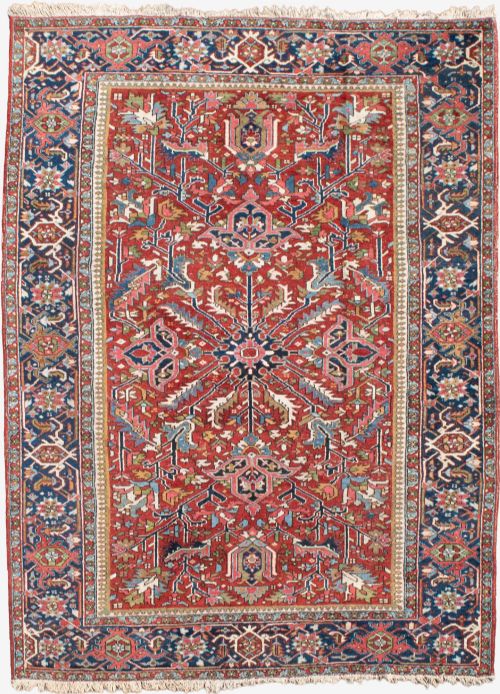
Buyers will most frequently encounter Heriz carpets, Afshar tribal rugs, and Hamadan pieces amongst the selection available. Village workshops and nomadic groups produced these items for practical domestic use, resulting in sturdy floor coverings with distinctive angular motifs.
The selection encompasses diverse regional styles, including BakhtIari, Khamseh, Qashqai, and Kurdish weaves. Each grouping displays specific regional drawing styles and palette choices rooted in local heritage.
How they were made
These textiles rely on wool for the pile, combined with cotton foundations for stability in the larger formats. Weavers utilised natural dyes to colour the wool, creating rich shades of red, navy blue, sky blue, and ivory that soften gracefully over time.
Maker hands knotted the wool yarns onto warp and weft threads by hand, producing dense and durable surfaces intended for heavy foot traffic. The resulting hand-knotted construction gives each rug its specific weight and structural rigidity.
Listings feature items dated from the nineteenth century through to the 1940s, utilising wool, cotton, and natural dyes.
What varies in quality
The precision of the drawing and the complexity of the geometric medallion or repeat pattern dictate the visual success of the weaving. Finer knots per square inch allow for crisper outlines in medallions and more intricate secondary motifs.
The depth and clarity of the natural dyes distinguish superior examples from standard production, as well-managed dye baths produce vibrant colour variation across the field. The handling of the wool quality and the integrity of the original outer borders also influence the overall character of the piece.
The Geometric Persian Floor Rug Glossary
- Gul
- A repeating medallion or octagonal design motif frequently found in tribal rugs. This ornamental emblem often serves to identify specific weaving groups or confederacies.
- Medallion
- A large central decorative design element positioned in the middle of the rug field. Weavers often construct complex geometric layers around this focal point.
- Runner
- A long, narrow carpet format designed specifically for corridors, hallways, and staircases. These pieces provide linear pattern along transitional spaces.
- Warp
- The vertical foundation threads stretched lengthwise on the loom before knotting begins. The visible fringes at either end of the rug are extensions of these structural threads.
- Weft
- The horizontal threads passed alternately over and under the warp threads between rows of knots. This yarn secures the pile firmly in place.
- Pile
- The dense surface layer of upright wool ends formed by individual knots. The height and tightness of this woven wool surface determine the tactile feel underfoot.
Geometric Persian Floor Rug: Frequently Asked Questions
How do I clean an antique rug?
Professional specialist cleaning is essential to protect natural dyes and wool fibres from damage during maintenance. Regular gentle vacuuming without a rotating brush helps remove embedded dust.
Avoid using domestic washing detergents or excess water on older textiles. Consult a specialist familiar with hand-knotted Persian carpets for advice on upkeep.
Can I place these rugs in high traffic areas?
Traditional village and tribal carpets were constructed for daily domestic use and handle normal foot traffic well. Wool pile combined with cotton foundations provides durable resilience.
Using a suitable underlay helps prevent slipping and reduces friction against hard flooring. This simple addition extends the working life of older floor coverings.
How do I identify different regional styles?
Regional styles appear through characteristic drawing habits, colour palettes, and structural proportions. Heriz carpets frequently display bold geometric medallions, whilst Afshar pieces often feature intricate all-over geometric patterns.
Examining the border arrangements and secondary motifs provides further clues to origin. Comparing piece structures helps differentiate between specific village and tribal workshops.
What is the difference between a rug and a carpet?
Terminology often depends on physical scale and intended placement within a domestic interior. Smaller formats are usually termed rugs or area rugs, whilst larger room-sized textiles are designated as carpets.
Both categories utilise the same hand-knotted construction techniques and material components. The distinction relates primarily to overall dimensions rather than method of manufacture.