
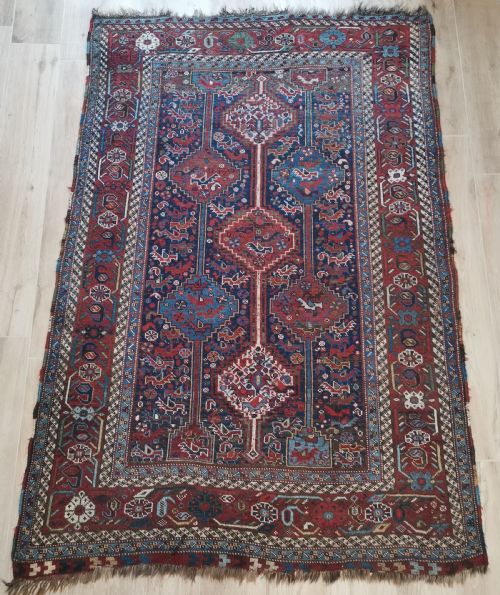


Khamseh Bird Motif Rug
A khamseh bird motif rug brings South Persian nomadic craftsmanship into the home, prized for expressive tribal artistry and rich wool textures.
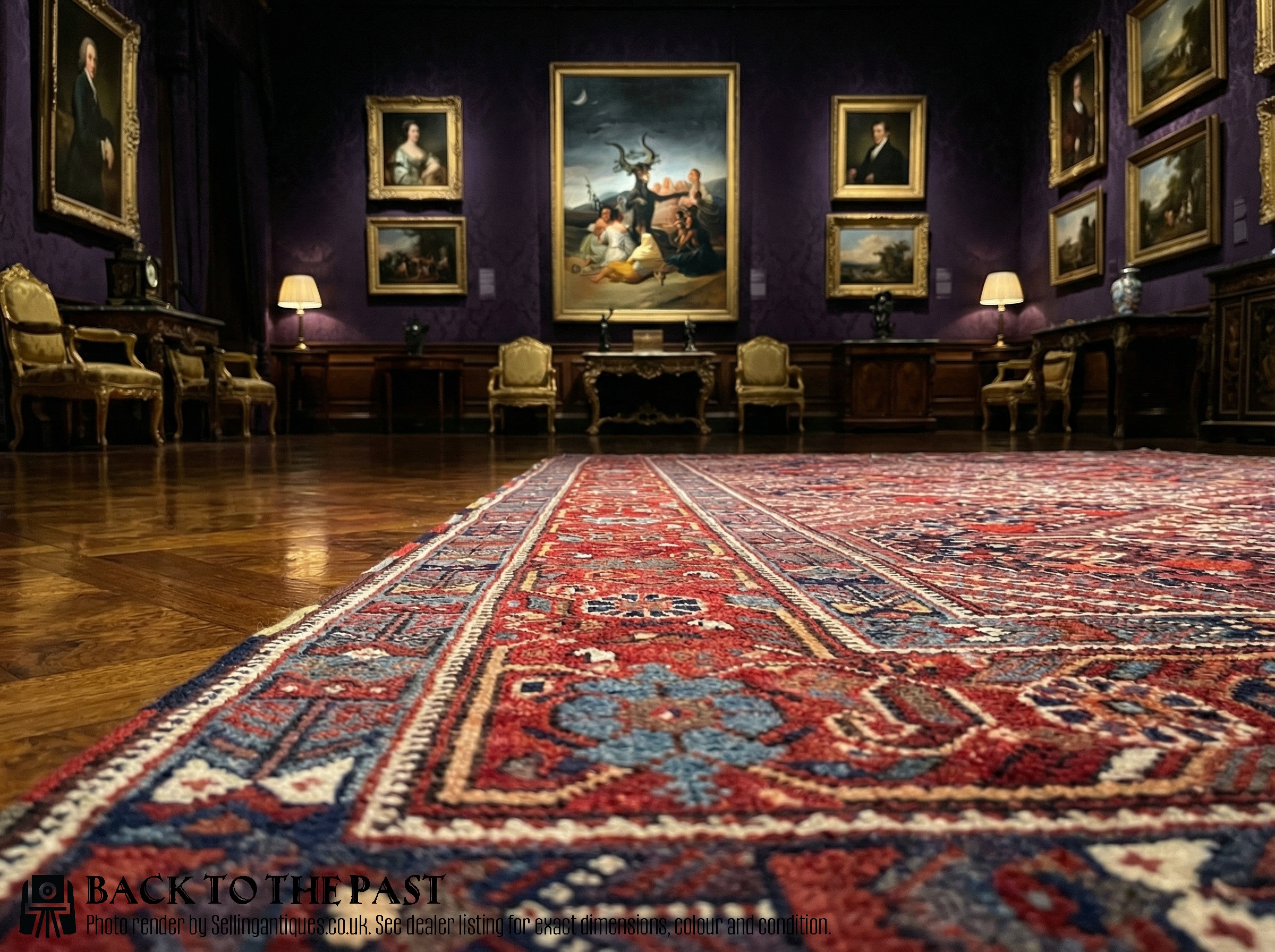
Khamseh Bird Motif Rug
A khamseh bird motif rug is a woven textile originating from South West Persia, associated with tribal and nomadic traditions. Buyers searching this phrase encounter floor coverings and smaller bag faces that capture centuries of regional weaving history.
The pieces available span from the late nineteenth century into the early twentieth century, specifically between 1870 and 1910. Forms range from compact area rugs and saddle bag faces to large tribal main carpets.
Stylistically, these works fall under Persian tribal, South Persian nomadic, and South Persian tribal classifications. The defining characteristic across the group is the inclusion of bird motifs, frequently described as pecking chickens and animals.
Materials and Construction
These rugs are constructed using wool and cotton, materials selected for resilience and structural stability by nomadic weavers. Natural dyes provide the palette, yielding vibrant colours that age with depth across the surface of the pile.
The manufacture relies on traditional hand-knotting techniques executed on upright looms. Artisans integrated structural cotton foundations with thick wool to handle daily wear in tribal camps and settlements.
Look closely for the lively chickens pecking away across the wool pile, immortalised by nomadic weavers over a century ago.
Judging Quality in Weaving
Quality rests upon the fineness of the knotting and the clarity of the tribal designs. Denser foundations allow intricate avian and animal motifs to maintain crisp outlines against the background field.
The vitality of the natural dyes dictates visual success. Superior examples display harmonious colour saturation and balanced proportions across main carpets and smaller bag faces alike.
The Khamseh Bird Motif Rug Glossary
- Khorjin
- A traditional saddle bag woven by nomadic groups for transport and storage. These textile pieces are often separated from their original pairs to survive as small wall hangings or collector items.
- Bag face
- The decorative front panel of a nomadic storage sack. Surviving examples preserve the intricate knotting and primary iconography intended to be seen on pack animals.
- Main carpet
- A large-format floor covering designed for principal residential spaces within a tribal or village setting. These substantial pieces require extended labour and complex compositional planning.
- Nomadic
- Pertaining to pastoral communities who move seasonally with their flocks. The textiles produced reflect portability, resourcefulness, and traditional tribal motifs passed down through generations.
- Natural dye
- Colouring matter derived from plants, roots, and insects rather than synthetic chemicals. These substances produce nuanced tones that soften harmoniously over time.
Khamseh Bird Motif Rug: Frequently Asked Questions
What is a khamseh bird motif rug?
A khamseh bird motif rug is a South Persian tribal weaving distinguished by stylized avian figures, animals, and pecking chickens.
These textiles were produced by nomadic and confederated tribes using local wool and natural dyes on cotton foundations during the late nineteenth and early twentieth centuries.
How were these rugs used originally?
Nomadic weavers utilised these pieces as floor coverings, bedding borders, and functional storage containers within tents and temporary dwellings.
Larger formats served as main carpets for sitting and gathering, while smaller items like saddle bag faces functioned as transport gear.
How do I date a khamseh rug?
Dating relies on structural analysis, wool quality, and the specific characteristics of the natural palette. Pieces seen here span from the 1870s through 1910, showing shifts in scale and design.
Earlier examples often exhibit finer knotting densities and distinct regional iconography tied directly to South West Persian tribal traditions.
How do I care for an antique rug?
Preserving these textiles involves gentle vacuuming without rotating brushes and keeping them away from direct, prolonged sunlight. Professional cleaning tailored to antique wool is recommended.
Using a breathable underlay helps prevent slipping and reduces friction between the wool pile and hard flooring.