

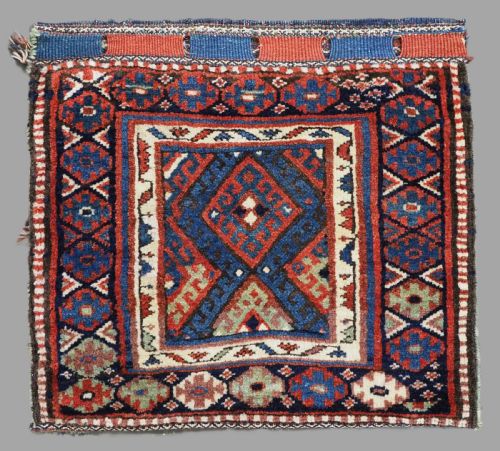

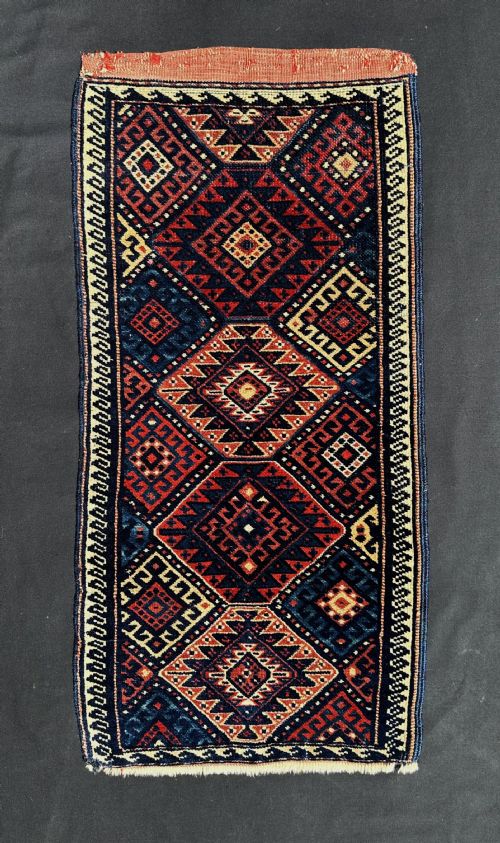
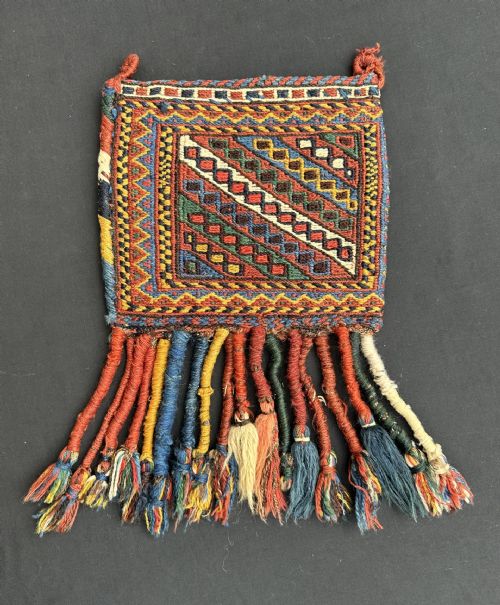


Geometric Persian Bag
A geometric persian bag brings the bold, structured artistry of nomadic weaving into a compact format.
Geometric Persian Bag
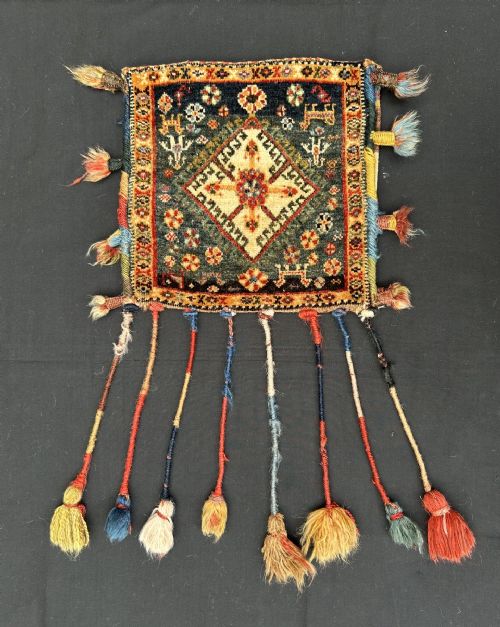
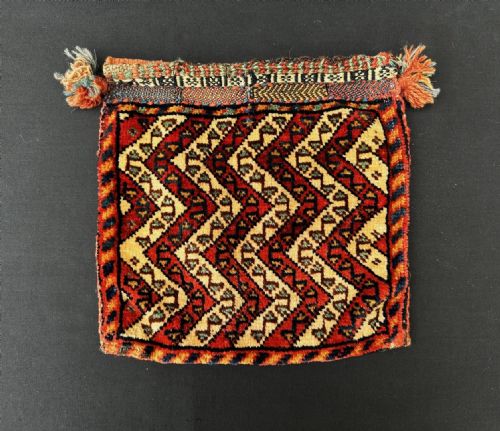
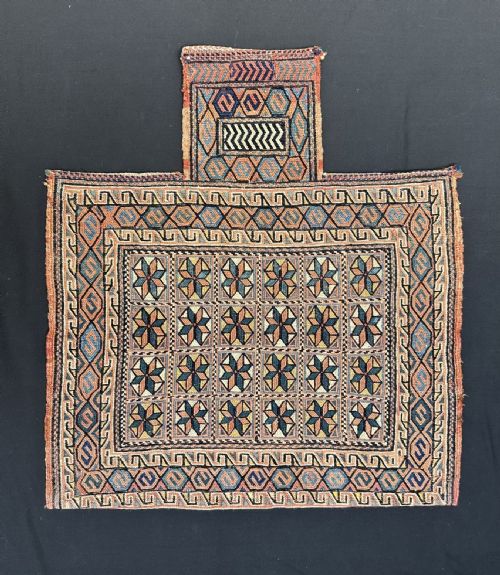
A geometric persian bag is a woven textile created by nomadic and tribal groups across Iran, primarily functioning as utilitarian container work such as saddlebags, salt bags, and storage receptacles. These pieces display distinct patterns rooted in tribal heritage, dominated by medallions, latch-hooks, and repeated geometric motifs.
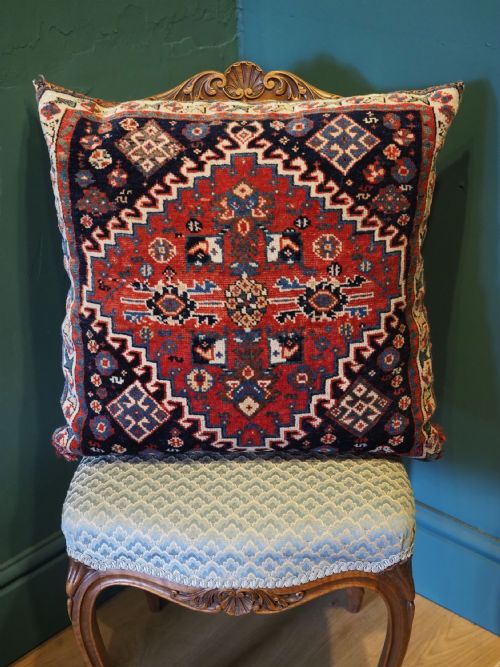
The format ranges from complete double-sided saddlebags with their original plain-weave backs to single bag faces later adapted into cushions and pillows. Examples stem from various confederations and tribes, including the Qashqai, Shahsavan, Afshar, Baluch, and Kurdish groups, each bringing regional colour palettes and structural habits to the work.
Buyers encounter items originating predominantly from the late nineteenth century and the early decades of the twentieth century. These textiles were produced for daily domestic and pastoral utility by nomadic weavers rather than for urban export markets.
How they were made
The foundation relies on hand-spun wool for both the pile and the structural warps and wefts, providing a resilient substance that absorbs natural dyes with deep saturation. Weavers utilised traditional techniques such as symmetrical knotting alongside flatweave soumak work to build crisp, geometric outlines.
Natural dyestuffs impart the characteristic palette, yielding tones that age gracefully through exposure and use. The interplay between cotton and wool structural elements often defines the handling weight and durability of individual examples.
Nomadic weavers packed everything from salt to pipes into these bags, turning practical transit gear into enduring geometric art.
What varies in quality
Quality rests upon the crispness of the geometry, the handle of the wool, and the purity of the dyestuffs utilised across the surface. Finer examples display meticulous execution in soumak work or tight knot density, achieving sharp definition within medallions and borders.
The survival of original elements, such as complete backs, closure loops, and untouched selvedges, elevates an item's documentary value. Handling qualities also depend on the natural lanolin retained in hand-spun wool, which lends a lustrous appearance to superior pieces.
The Geometric Persian Bag Glossary
- Soumak
- A brocade-like flatweaving technique that wraps supplementary weft threads over and under the warps, creating a textured, durable surface without pile. This method allows weavers to produce exceptionally sharp diagonal lines and intricate geometric patterns.
- Khorjin
- The Persian term for a double-sided saddlebag designed for transport on pack animals during nomadic migrations. These items feature two main pouches connected by a central web.
- Balisht
- A traditional nomadic pillow or small cushion, often formed from a repurposed bag face. These pieces preserve tribal weaving in domestic settings.
- Tubreh
- A generic term for a small bag or feed bag used in daily pastoral life. They display compact geometric compositions suited to narrow formats.
- Medallion
- A central ornamental motif dominating the field of the textile. Tribal weavers construct these figures using symmetrical geometric steps and hooked polygons.
Geometric Persian Bag: Frequently Asked Questions
What is a geometric persian bag?
These items are traditional woven containers made by nomadic and tribal groups in Iran for utilitarian storage and transport during seasonal migrations.
They encompass saddlebags, salt bags, and vanity bags featuring structured, pattern-based designs composed of wool and natural dyes.
How were these bags used originally?
Nomadic families loaded these containers onto horses, camels, or donkeys to carry personal possessions, salt, tobacco, and household goods across the terrain.
Smaller pouches also served domestic storage functions within tribal tents before surviving examples were preserved as decorative textile art.
How do I live with a tribal bag face?
Many collectors mount these textile faces on walls or display them as flat surfaces on tables and benches to showcase the wool work.
Single bag faces are also frequently converted into small cushions and pillows for domestic seating use.
How can I tell different tribal styles apart?
Distinct groups utilised specific colour palettes, structural techniques, and drawing styles unique to their regional territories in Persia.
For instance, Shahsavan weaving often highlights precise soumak work, while Afshar and Qashqai pieces display distinct medallion configurations and regional wool characteristics.