






Geometric Pattern Kilim
These pieces of geometric pattern kilim bring flat-woven textile traditions from Persian, Anatolian, and Balkan regions into modern interiors.
Geometric Pattern Kilim
A geometric pattern kilim is a flat-woven textile created by tribal and nomadic makers across regions such as Persia, Anatolia, and Central Asia. Buyers searching this phrase will find a diverse selection ranging from large carpets and long runner rugs to smaller bag faces, bread sofreh, and scatter cushions. Many examples date from the Victorian and Edwardian eras through to the early decades of the twentieth century, displaying traditional motifs tied to specific weaving groups.
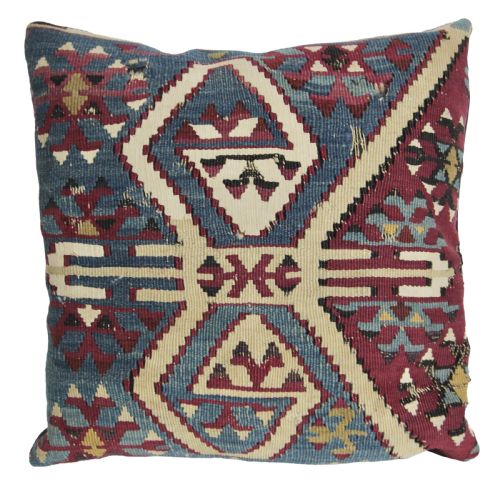
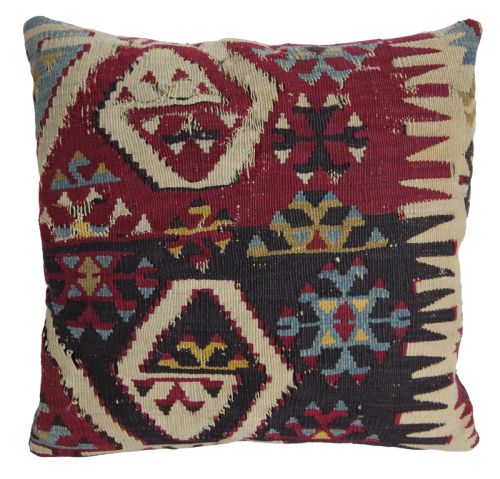
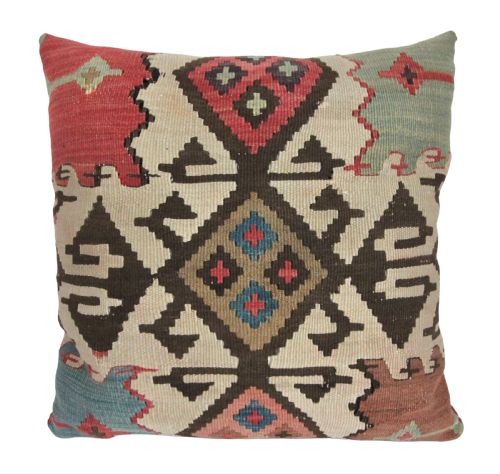
The most common formats met on this page include antique kilim rugs and decorative cushions fashioned from older flat-weave fragments. Pieces originate from distinct locales like Qashqa'i territories, the Mianeh district, and the towns of Pirot and Sarkoy. These textiles combine utilitarian function with strong visual structures, serving historically as floor coverings, storage sacks, or soft furnishings.
How They Were Made
These flat-weave textiles rely on wool and cotton foundations, frequently employing natural dyes to achieve deep and enduring colour palettes. The weaving technique uses slit-tapestry construction, where horizontal weft threads are looped back at the boundary of each colour block, creating sharp geometric edges and patterns.
Certain examples incorporate supplementary techniques like soumak wrapping alongside standard flat-weaving to build raised surface textures. Larger carpets and multi-part kelims are sometimes constructed in separate sections and joined together to create expansive formats suitable for domestic use.
Materials recorded across the selection include hand-spun wool, cotton foundations, and natural dyes alongside hardwood and brass fittings.
What Varies in Quality
Quality in these flat-weaves rests upon the precision of the slit-tapestry execution and the integrity of the wool. Tighter, finer weaves maintain structural stability and keep geometric lines crisp, whereas looser structures show more flexibility and wear.
The depth and harmony of the palette set finer examples apart, particularly where natural dyes have matured gracefully over decades. Original lengths, intact kilim ends, and structural completeness heavily influence the standing of an individual piece.
The Geometric Pattern Kilim Glossary
- Kilim
- A flat-woven carpet or rug produced without a pile by tightly packing the weft threads over the warp. This technique creates a lightweight textile that is reversible and flat.
- Soumak
- A brocading technique where supplementary weft threads are wrapped around the warp threads in various patterns. This method adds structural thickness and texture to the flat surface.
- Sofreh
- A textile used traditionally for wrapping bread or placing food upon during meals. These pieces often feature specific tribal motifs distinct from standard floor rugs.
- Bag Face
- The front panel of a nomadic storage sack that has been removed and preserved as a decorative textile. They frequently display concentrated geometric compositions.
- Slit-Tapestry
- A weaving method where the colour areas meet along a vertical edge without interlocking the weft threads, leaving small slits between design blocks.
Geometric Pattern Kilim: Frequently Asked Questions
What is a kilim rug?
A kilim rug is a flat-woven textile made without a pile by interlocking coloured wefts and warps. These pieces rely on woven geometric motifs rather than knotted tufts.
Historically utilised by nomadic and village weavers across the Middle East and Eastern Europe, they serve as versatile floor coverings and wall hangings.
How are old kilims cleaned?
Old kilims require gentle care to protect natural wool fibres and traditional dyes from bleeding or shrinkage. Regular light vacuuming without a rotating brush helps remove embedded dust.
Professional specialist cleaning remains the safest method for addressing deep soil or historic stains on antique flat-weaves.
Where were these textiles made?
These textiles originate from diverse regions including Persian provinces, Anatolian villages, and Balkan centres such as Pirot and Sarkoy. Specific tribes and nomadic groups developed distinct geometric vocabularies.
Local materials and regional dyeing traditions heavily influenced the appearance and structure of each woven piece.
Can kilims be used on furniture?
Kilims are frequently utilised as upholstery on armchairs, sofas, and as decorative scatter cushions. Durable flat-weave structures adapt well to heavy daily use when properly lined and fitted.
Cushions often repurpose smaller antique fragments or bag faces into functional home accessories.