





Geometric Panel Rug
A geometric panel rug brings structured tribal artistry and precise repeating motifs straight into a room.
Geometric Panel Rug
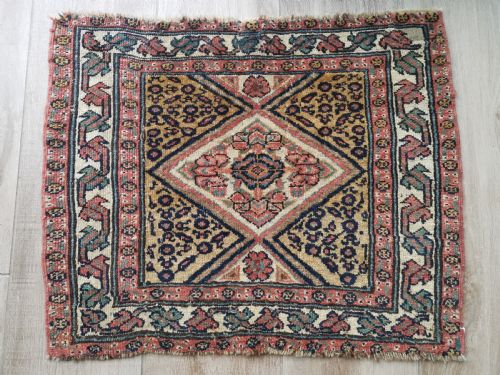
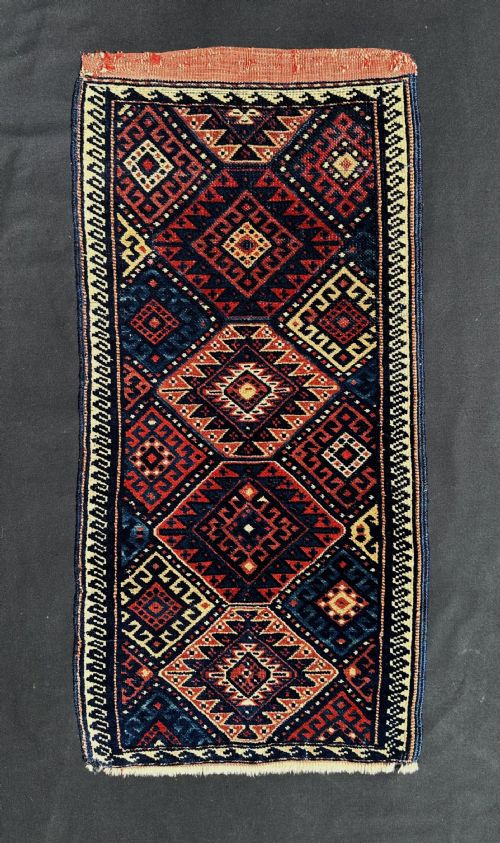
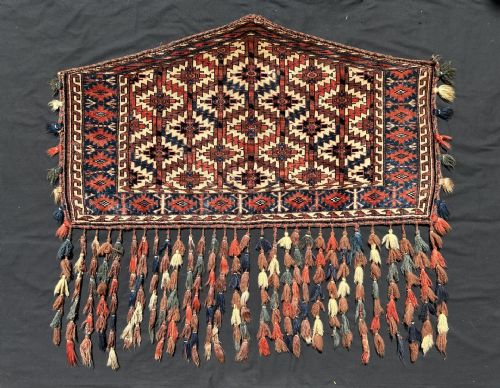
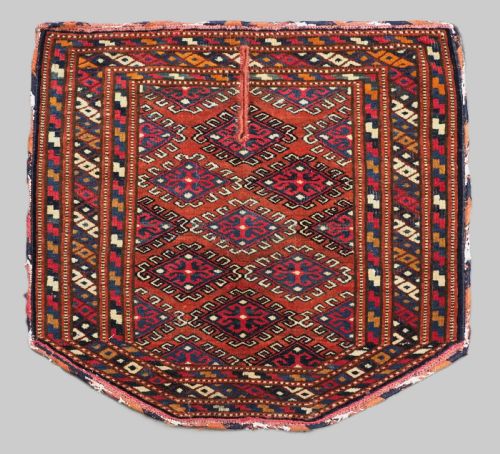
A geometric panel rug encompasses woven tribal textiles from Persia, the Caucasus, and Central Asia, often appearing as fragments, bag faces, and storage sacks rather than large floor coverings. These pieces showcase compartments, guls, and banded designs created by nomadic and village weavers across the nineteenth and early twentieth centuries.
The selections on this page lean heavily towards regional tribal weavings such as Yomut, Shahsavan, and Uzbek panels, alongside saddle covers and balisht faces. Buyers encounter structured grid systems and repeating compartmentalised layouts that reflect the practical traditions of nomadic life.
Materials and construction
These textiles rely primarily on hand-spun wool and natural dyes, combined with cotton foundations in specific regional works. Weavers utilised flatweave techniques like kilim and soumac, alongside pile knotting, to build crisp linear compartments and robust structural surfaces.
The reliance on natural dyes produces deep, stable colour variations across individual wool panels, while structural methods such as multi-strip joining and soumak wrapping provide the distinct raised geometric edges characteristic of these tribal items.
Geometric Panel Rug Retail Price Guide 2026
Typical asking prices for geometric panel rug among the pieces listed under this phrase on Sellingantiques today, from the lower quarter to the upper quarter. They describe what is for sale here now, not the wider market.
The listings span from the mid-nineteenth century to the 1920s, concentrating on wool, natural dyes, and cotton across Turkmen, Persian, and Caucasian tribal traditions.
What separates examples
Quality rests in the precision of the tribal motif execution and the integrity of the natural dyes used across the wool. Pieces that maintain sharp graphic definition and balanced colour saturation display a higher tier of nomadic craftsmanship.
The handling of structural joins and the complexity of the compartment design also dictate the standard of the weaving. Intricate soumak work and well-preserved wool pile indicate superior execution by the original maker.
The Geometric Panel Rug Glossary
- Gul
- A medallion motif commonly found in Central Asian tribal weavings. These repeating octagonal or gabled forms identify specific tribal groups.
- Soumac
- A flatweave technique involving coloured wool wrapped over warp threads in horizontal rows. This method creates a textured, durable surface with a braided appearance on the face.
- Torba
- A small storage bag produced by Turkmen and other nomadic tribes for domestic use inside tents. They frequently feature detailed panel or gul layouts.
- Kilim
- A tapestry-woven flat textile made without a pile. These pieces rely on interlocking weft threads to form sharp geometric patterns.
- Mafrash
- A large rectangular storage bag or hamper panel used in nomadic households for bedding and clothing. They are often worked in soumak technique with compartment designs.
Geometric Panel Rug: Frequently Asked Questions
How were these tribal panels originally used?
Nomadic groups utilised these woven pieces as functional storage containers, saddle bags, and animal trappings within daily camp life.
Items such as torbas and chuvals held household goods, while smaller bag faces served practical transport functions across regions from Persia to the Caucasus.
How do I care for an antique woven textile?
Protect the wool and natural dyes by keeping the textile away from direct sunlight and damp environments. Regular gentle vacuuming without a beater bar removes surface dust safely.
Professional cleaning tailored to antique carpets remains essential for maintaining the integrity of hand-spun wool and historic dye structures.
How can I tell different tribal designs apart?
Distinctions emerge through specific structural techniques, colour palettes, and repeating motif shapes like guls or compartmental grids. Turkmen weaving often employs deep reds with octagonal gulls, whereas Shahsavan and Caucasian pieces frequently show soumak panel structures.
Examining the edge finishes and wool preparation helps isolate regional origins across Central Asia and Persia.
Are these pieces complete rugs or fragments?
Many listings comprise bag faces, storage sacks, or individual panels rather than full floor rugs. These surviving sections frequently originate from larger nomadic furnishings that were separated over time.
Collectors often mount these durable textile fragments as wall hangings to display the geometric layout clearly.