


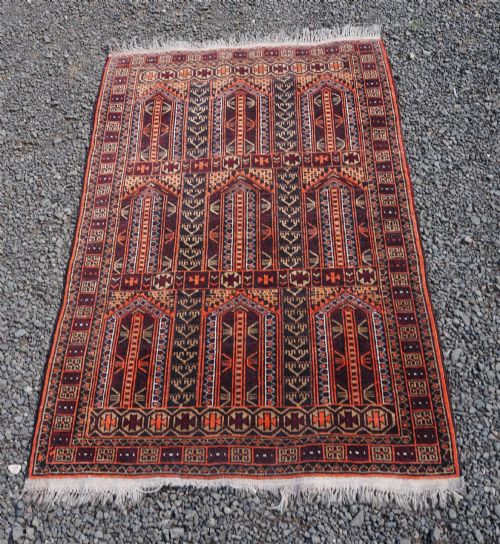


Geometric Mihrab Prayer Rug
A geometric mihrab prayer rug brings angular discipline and rich regional weaving traditions directly into modern domestic spaces.
Geometric Mihrab Prayer Rug
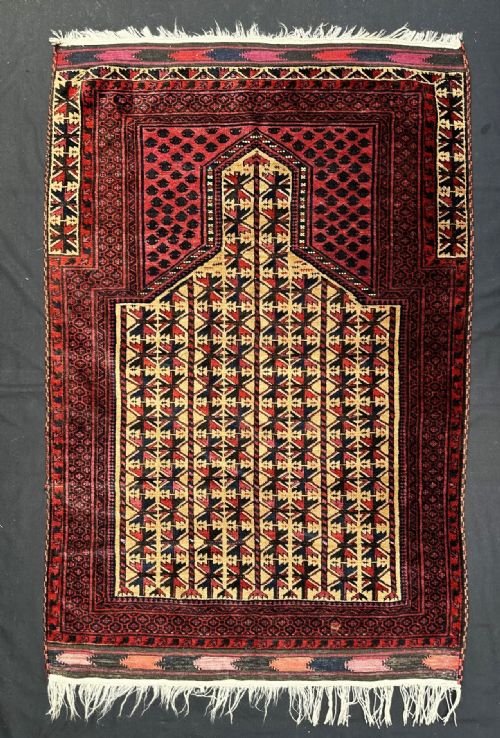
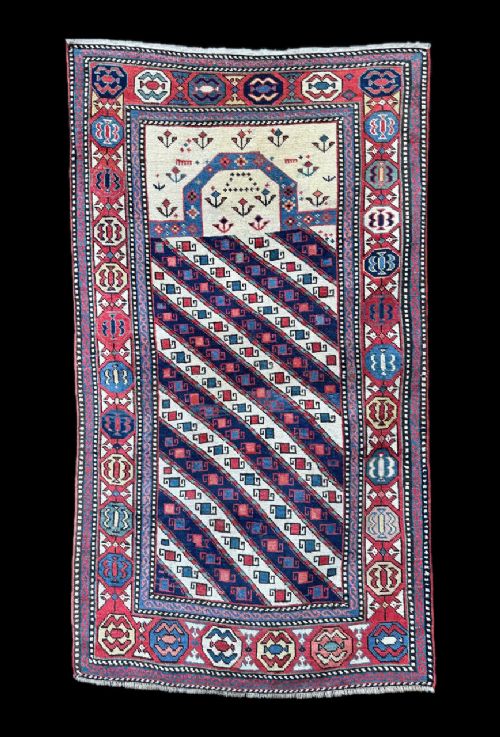
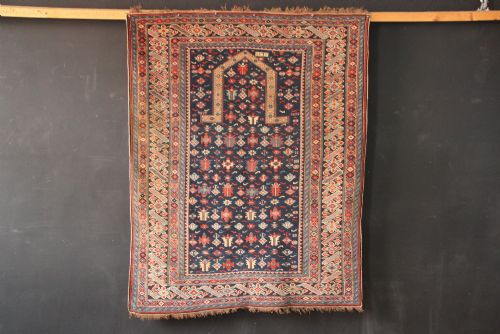
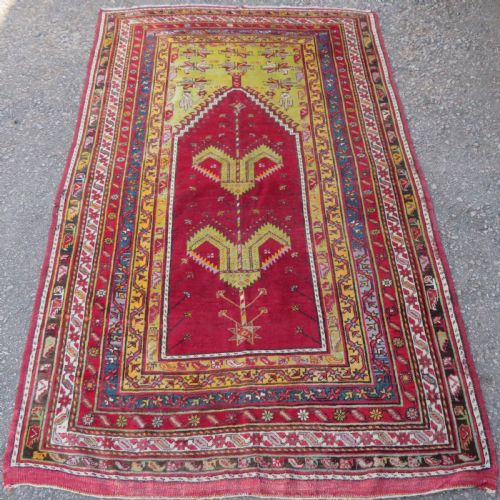
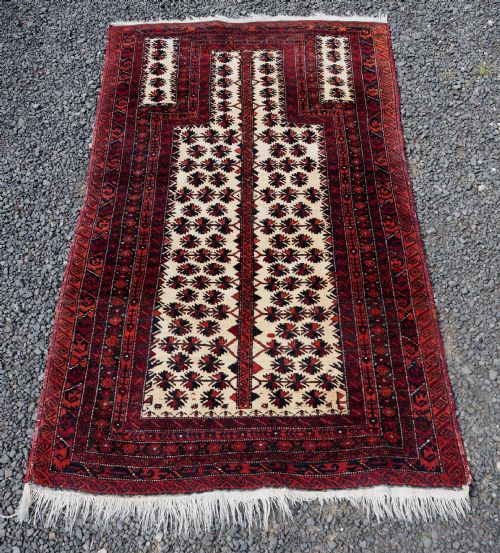
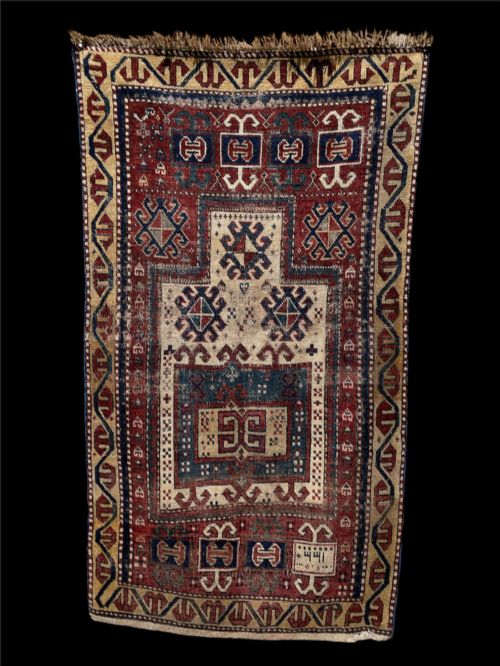
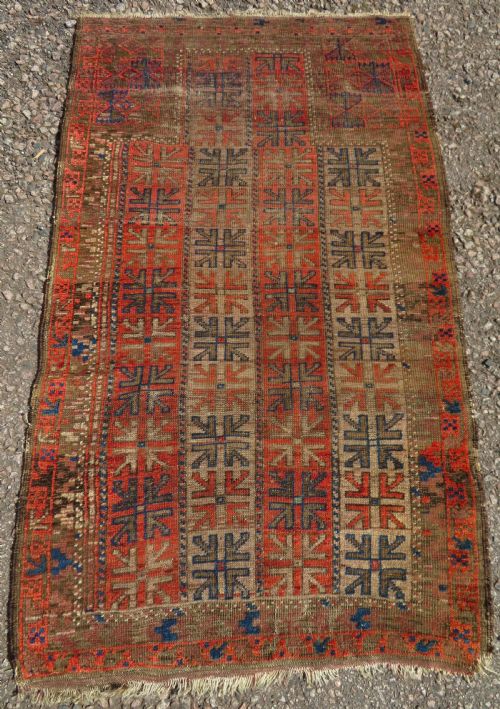
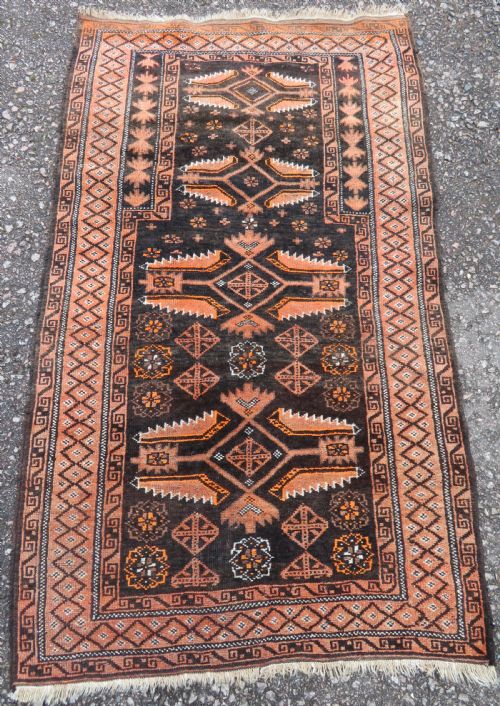
A geometric mihrab prayer rug is a portable textile designed for daily devotion, featuring a distinct architectural arch motif rendered in straight lines and sharp angles. These pieces originate primarily from tribal and village workshops across Afghanistan, the Caucasus, Persia, and Anatolia during the nineteenth and early twentieth centuries.
The format centres on the niche, often repeated in multiple formats such as double or triple arches, accompanied by subsidiary motifs like stars, rams' horns, and floral lattices. Buyers encounter regional variants ranging from Baluch and Taimani tribal works to Caucasian Gendje, Kazak, and Shirvan pieces.
Village and nomadic weavers constructed these floor coverings to serve functional spiritual needs while expressing distinct community aesthetics. The survival of these works provides a tangible link to historical weaving centres across Western and Central Asia.
Materials and construction
Weavers relied principally on hand-spun wool and cotton foundations, occasionally incorporating goat hair and camel hair for structural durability and textural contrast. Natural dyes provided the palette, producing deep blues, ivories, and yellows that developed distinct patinas over decades of use.
The construction involves hand-knotted pile tied firmly onto warp and weft foundations, often finished with kilim ends at the terminals. These traditional methods resulted in resilient textiles capable of withstanding generations of practical application.
Geometric Mihrab Prayer Rug Retail Price Guide 2026
Typical asking prices for geometric mihrab prayer rug among the pieces listed under this phrase on Sellingantiques today, from the lower quarter to the upper quarter. They describe what is for sale here now, not the wider market.
Listings feature prayer rugs spanning the mid-nineteenth century to the 1930s, constructed with wool, cotton, camel hair, and natural dyes.
Elements of quality
Quality in a geometric mihrab prayer rug rests on the precision of the knotting, the crispness of the angular drawing, and the depth of the natural dye palette. Superior examples display balanced proportions within the arch and clear delineation of internal symbols.
The handling of the wool foundation and the integrity of the pile density further differentiate standard village output from exceptional tribal weaving. Material selection, such as the use of soft camel hair or lustrous hand-spun wool, elevates the tactile presence of the textile.
The Geometric Mihrab Prayer Rug Glossary
- Mihrab
- The architectural arch or niche design element at the top of a prayer rug, pointing toward Mecca during worship. In tribal weaving, this arch is frequently rendered with straight, geometric boundaries rather than curves.
- Seh Mihrab
- A design configuration featuring three distinct prayer arches grouped across the upper field. This format appears frequently in Afghan and Baluch tribal weaving traditions.
- Kilim end
- The flat-woven section extending beyond the knotted pile at the top and bottom of a rug. These protective ends prevent the pile from unravelling.
- Warp
- The vertical threads stretched lengthwise on the loom before knotting begins. These foundational threads support the entire structure of the textile.
- Weft
- The horizontal threads passed alternately over and under the warp threads to lock the knots in place. Proper beat-down of the weft creates a tight, durable fabric.
Geometric Mihrab Prayer Rug: Frequently Asked Questions
How do I care for an antique prayer rug?
Vacuum gently using suction only, avoiding rotating brush heads that can damage the antique wool pile. Keep the textile out of direct sunlight to protect natural dye colours from fading.
Rotate the rug periodically to ensure even wear patterns across high-traffic areas. Professional cleaning should be undertaken sparingly and exclusively by specialists in historic oriental textiles.
Where were these rugs used originally?
These textiles served primarily as personal mats for daily Islamic prayers within homes, tents, and village mosques. Their portable nature allowed owners to roll them up easily for travel or storage between prayer times.
Over generations, many transitioned from sacred utility into domestic floor coverings valued for their artistic and historical significance.
How can I identify a Baluch prayer rug?
Baluch prayer rugs typically display deep, saturated colour palettes dominated by dark indigos, browns, and reds. They frequently incorporate geometric motifs, camel hair details, and characteristic flat-woven kilim ends.
These pieces originate from nomadic and semi-nomadic groups inhabiting the borderlands between Persia and Afghanistan.