
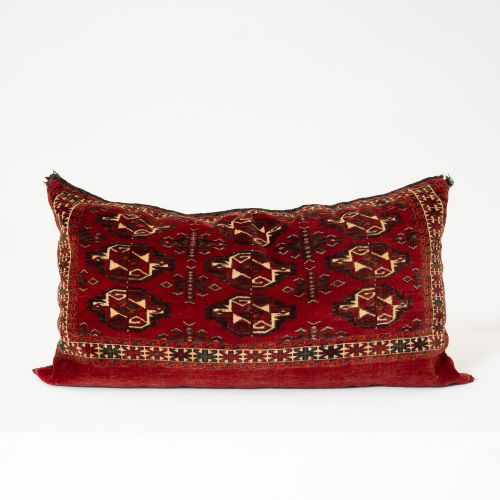

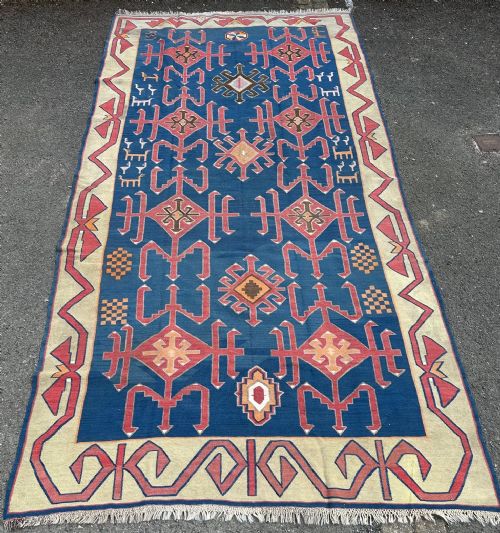


Geometric Kilim Carpet
When you search for a geometric kilim carpet, you are looking at flat-woven textiles carrying centuries of tribal tradition from Anatolia, the Caucasus, and Central Asia.
Geometric Kilim Carpet
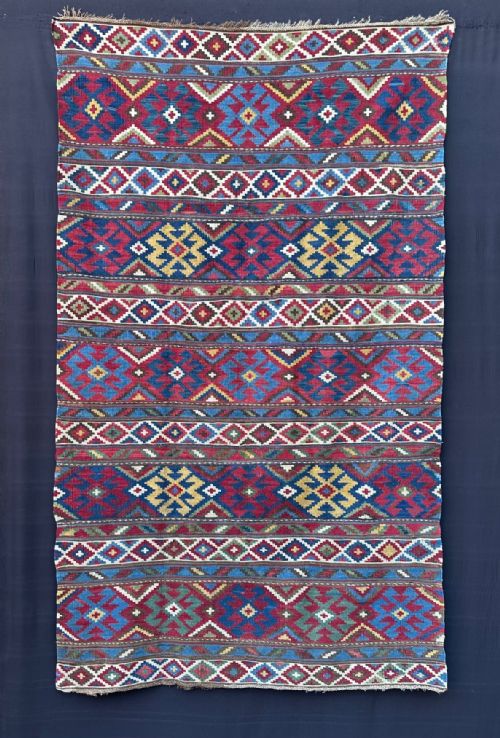
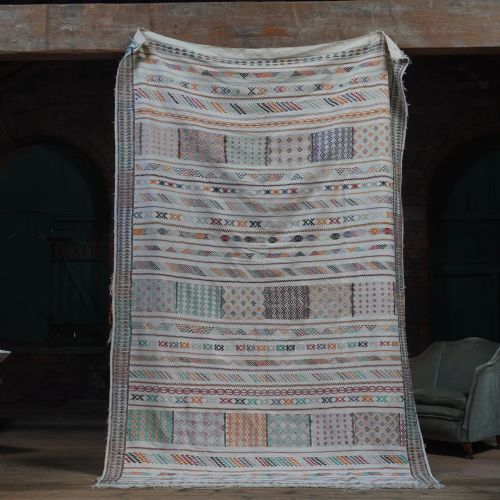
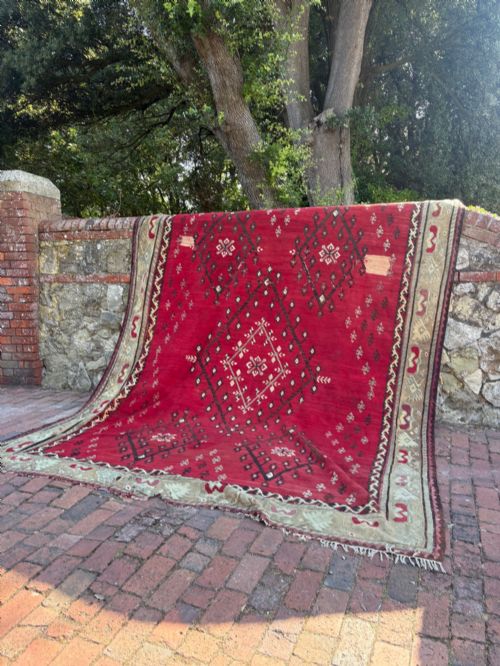
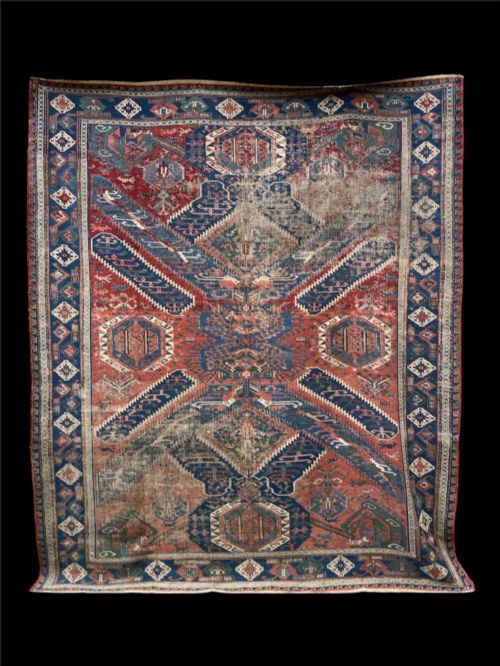
A geometric kilim carpet represents a flat-woven textile tradition spanning from the nineteenth century into the mid-twentieth century, originating primarily from tribal and village weavers across Anatolia, the Caucasus, and Central Asia.
The pieces on this page appear in various forms including room-sized carpets, long runners, narrow fragments, and storage bag panels, reflecting the diverse domestic and nomadic functions these textiles originally served.
Makers from regions such as Shirvan, Qashqai, and Uzbekistan utilised distinct tribal iconography, resulting in bold graphical layouts dominated by medallions, bands, and repeating motifs.
How they were made
Weavers constructed these flat-weave textiles primarily using hand-spun wool and cotton, occasionally incorporating camel hair or natural silk alternatives like sabra cactus fibre.
The distinct patterns rely on slit-weave techniques where colour changes are created by wrapping the weft threads back around warp threads, leaving small vertical openings between contrasting colour blocks.
Listings feature wool, cotton, and camel hair materials woven across Anatolian, Caucasian, and Central Asian tribal traditions.
What varies in quality
Quality in these flat-weaves rests on the density of the weave and the precision of the geometric lines, where tighter construction yields greater durability and sharper graphic definition.
The source and application of the dyes also dictate value, with older pieces deriving character from natural colour palettes that mellow evenly across the textile surface.
The Geometric Kilim Carpet Glossary
- Kilim
- A flat-woven textile lacking a piled nap, produced by tightly interweaving warp and weft threads. This technique results in a lighter, reversible fabric suited for both floor covering and wall hanging.
- Warp
- The stationary lengthwise threads stretched across a loom that form the structural foundation of the textile. Weft threads are subsequently passed over and under these foundational strands.
- Weft
- The transverse threads carried across the loom by hand or shuttle, packed tightly down to conceal the warp and form the visible pattern. In flat-weaves, these coloured threads create the surface design.
- Sumak
- A supplementary weft-wrapping technique that creates a braided texture on the face of the textile while leaving floating threads on the reverse. It adds structural weight and distinct linear definition.
- Sofreh
- A woven spread or cloth traditionally used in nomadic households for dining or food preparation. These domestic textiles often feature bold, functional geometric bands.
Geometric Kilim Carpet: Frequently Asked Questions
How do I clean a flat-weave carpet?
Regular gentle vacuuming without a rotating brush helps prevent dust accumulation within the flat weave. Professional specialist cleaning is recommended for heavier maintenance to protect the wool and natural dyes.
Avoid soaking the textile or using harsh chemical detergents, as these can weaken the historical fibres and cause colour bleeding across the geometric patterns.
Can I use these textiles on the floor?
Many of these pieces were historically made as floor coverings or utility cloths and withstand moderate foot traffic when paired with a quality rug underlay. The underlay prevents slipping and reduces friction between the flat weave and the hard floor.
Frail or fragmentary pieces, such as narrow storage bag panels or delicate wall-hanging strips, benefit from placement in low-traffic areas or display as mounted textiles.
How do I identify Caucasian designs?
Caucasian pieces frequently feature crisp, highly structured geometric medallions, hooked polygons, and sharp diagonal lines rendered in saturated primary colours. Regional variations like Shirvan or Daghestan tend to present orderly banded layouts and precise star motifs.
Examining the tightness of the weave and the specific handling of the wool helps distinguish these northern mountain styles from softer Anatolian or Central Asian village work.
Why do some pieces show two parts joined together?
Nomadic horizontal looms possessed limited width capabilities, requiring weavers to produce large carpets in separate narrow panels that were subsequently stitched together down the middle. This structural method allowed communities to create room-sized floor coverings on portable looms.
These historic joins remain a standard characteristic of authentic village production rather than a modern alteration.