

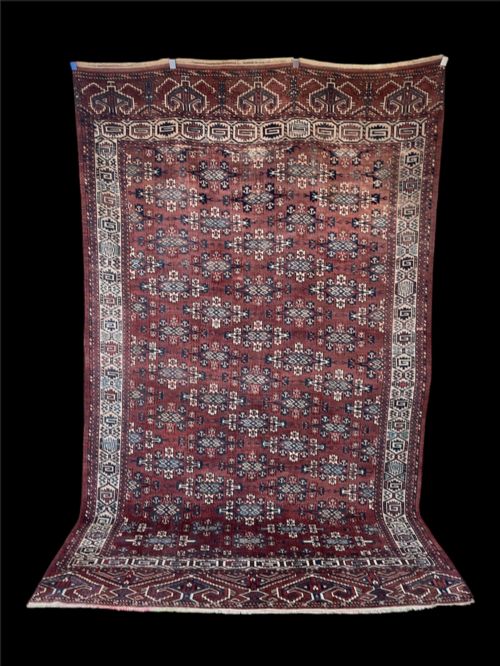


Geometric Gul Carpet
When you select a geometric gul carpet, you acquire a woven archive of tribal identity from Central Asia.
Geometric Gul Carpet
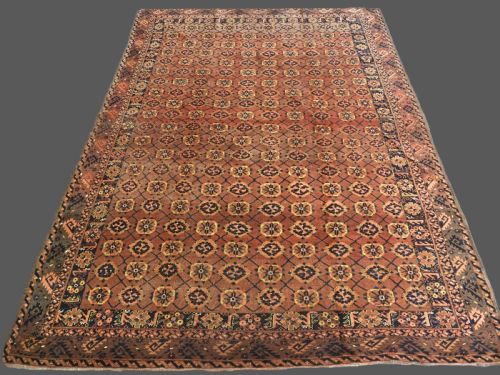
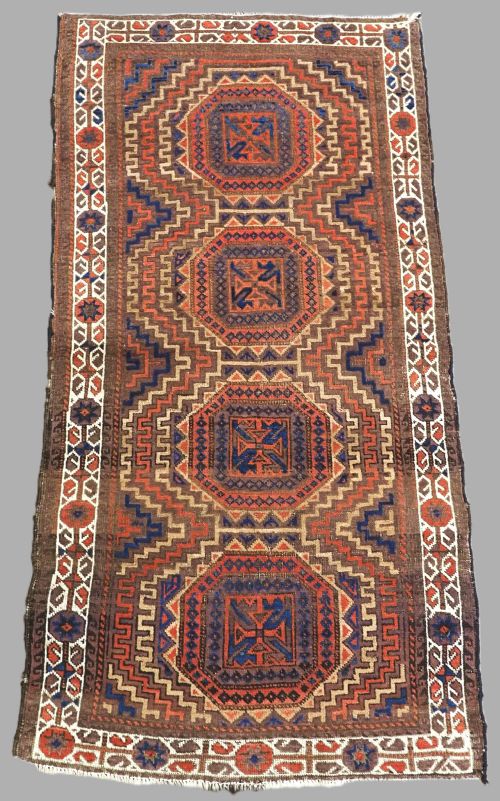
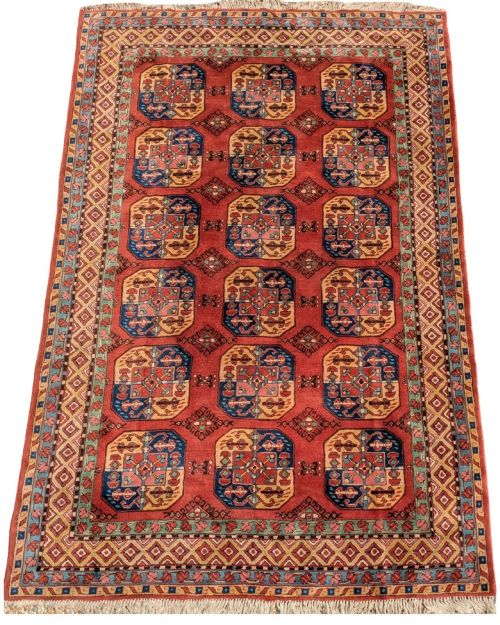
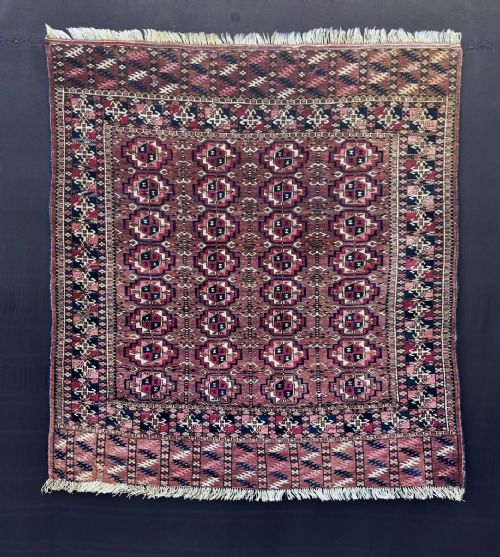
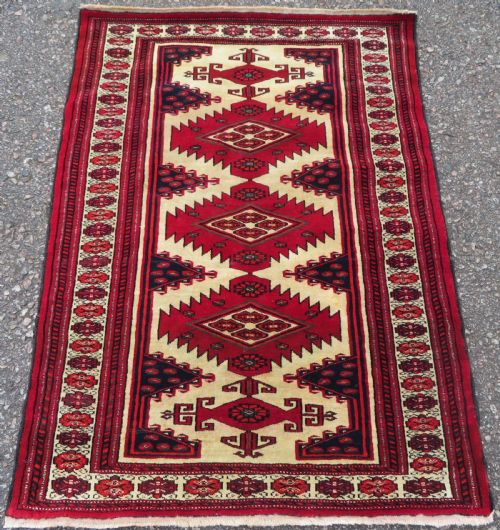
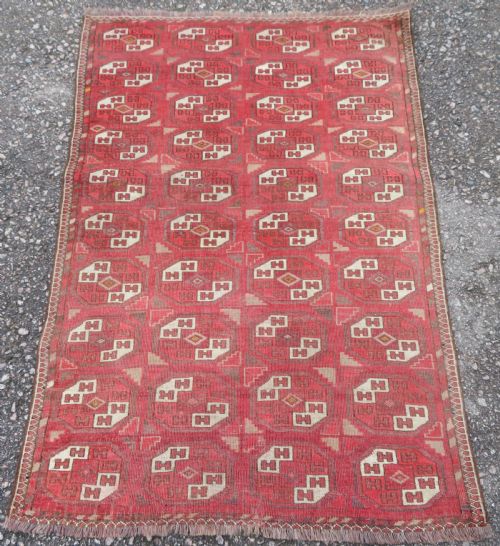
A geometric gul carpet presents repeating medallion motifs known as guls, which historically identified specific nomadic or village groups across Central Asia and the Caucasus. These woven pieces emerge from traditions associated with Turkmen, Afghan, Baluch, and Kurdish weavers, manifesting in formats ranging from large main carpets to smaller domestic bags.
The selections available here span from the mid-nineteenth century through the early twentieth century, capturing a period when natural dyes and tribal patterns remained standard practice. Buyers encounter regional variations such as Ersari, Yomut, Tekke, and Saryk structures, each bearing distinct structural proportions and border arrangements.
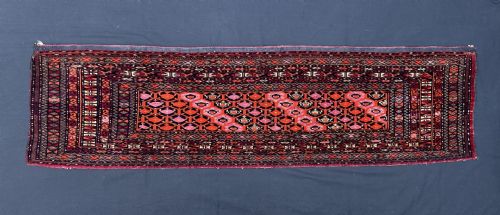
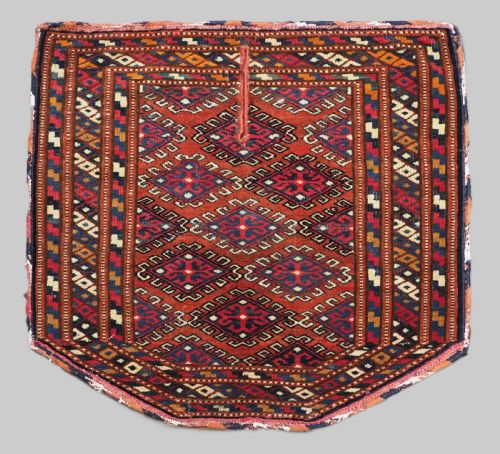
Forms include large floor carpets suited for country house interiors alongside functional tribal items like torbas, jollas, and chuvals. These utilitarian items demonstrate how geometric guls functioned both as decorative floor coverings and as essential elements of nomadic architecture.
Evaluating quality and execution
Quality in these tribal textiles rests on the precision of the knotting and the complexity of the gul design layout. Tighter pile density and crisp geometry separate standard village utility pieces from masterworks created by specific tribal groups.
The depth and clarity of the natural dye palette also dictate the standing of a piece, particularly where cochineal highlights or unusual secondary colours remain vibrant. Structural integrity, including the survival of original borders and pile depth, completes the assessment.
Nomadic weavers frequently embedded small protective amulets directly into the wool pile to ward off the evil eye.
The Geometric Gul Carpet Glossary
- Gul
- A repeating medallion or octagonal motif traditionally used by Central Asian weavers to denote tribal affiliation.
- Chuval
- A large storage bag face produced by Turkmen tribes, highly collectible for its concentrated design format.
- Torba
- A smaller wall-hanging storage bag featuring horizontal proportions and distinct primary guls.
- Cochineal
- A natural red insect dye utilised to impart vivid highlights and rich secondary tones to the wool pile.
- Jollar
- A small tent bag or trapping associated with Turkmen domestic furnishings and camel adornments.
Geometric Gul Carpet: Frequently Asked Questions
What is a gul motif?
A gul is an octagonal or medallion-like design motif repeated across the field of tribal carpets. These shapes served as visual markers for specific nomadic groups and lineages.
Weavers arranged these symbols in precise rows to create the characteristic geometric rhythm seen in Central Asian weaving.
How do I care for an old wool rug?
Maintain these textiles by vacuuming gently without a rotating brush roll to protect the historic pile. Professional cleaning is recommended when necessary to preserve natural dyes.
Keep the rug away from prolonged direct sunlight to prevent fading of the saturated wool colours.
Where were these tribal pieces made?
These carpets originate primarily from Turkmenistan, northern Afghanistan, and surrounding regions influenced by Turkmen, Baluch, and Kurdish traditions. Nomadic and village weavers produced them within local encampments and regional trade hubs.
Production methods remained tied to pastoral lifestyles well into the twentieth century.
How are different tribes identified?
Tribal attribution relies on the specific drawing of the gul, the border arrangements, and the structure of the wool foundation. Groups such as the Yomut, Tekke, Ersari, and Saryk each employed distinct palettes and structural nuances.
Comparing secondary motifs helps collectors distinguish between village and nomadic workshop origins.