
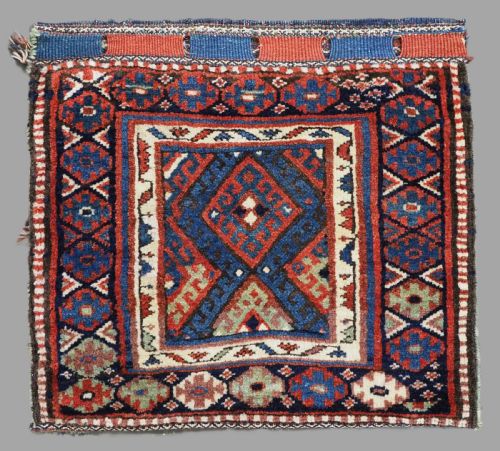
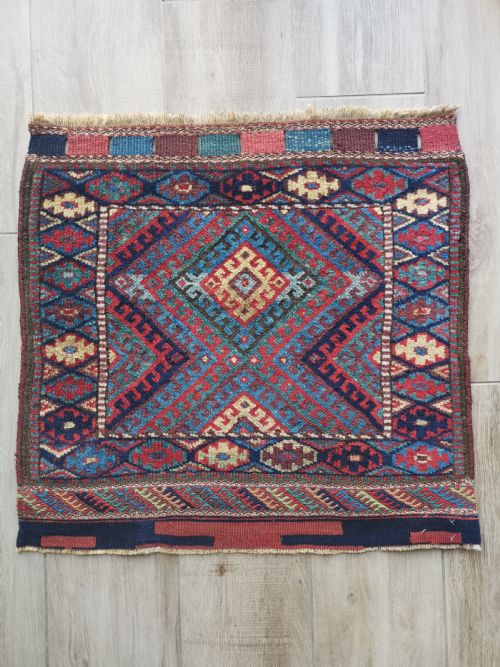
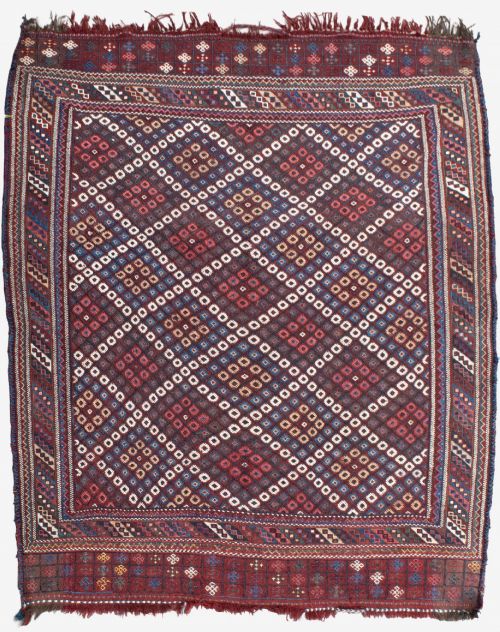
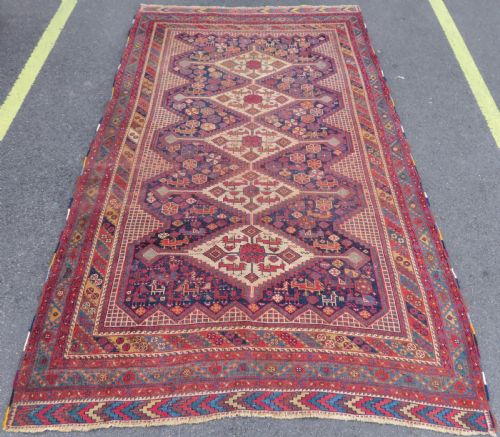
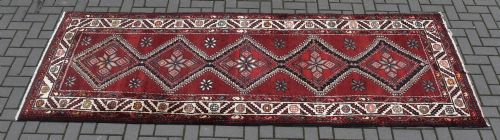


Geometric Diamond Tribal Rug
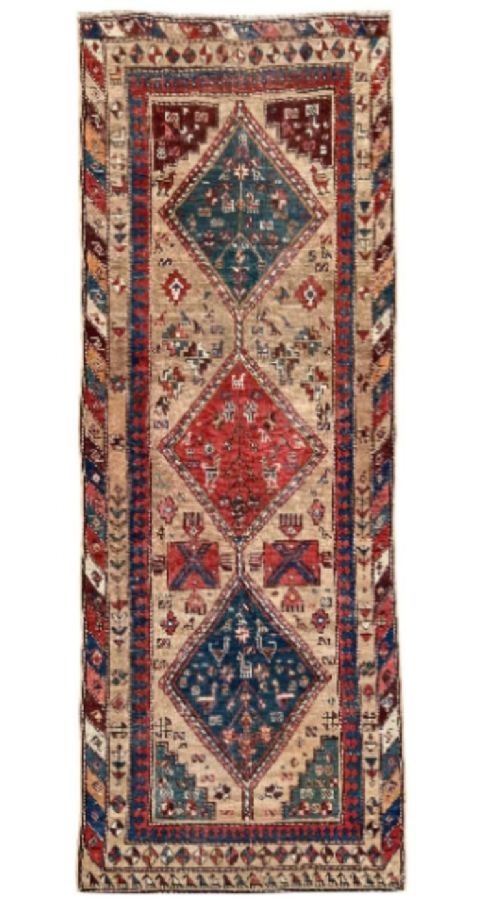
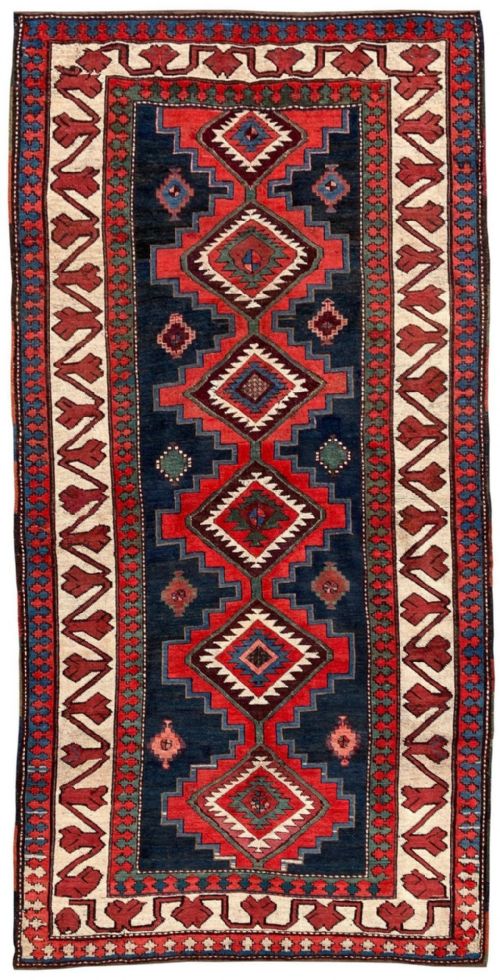
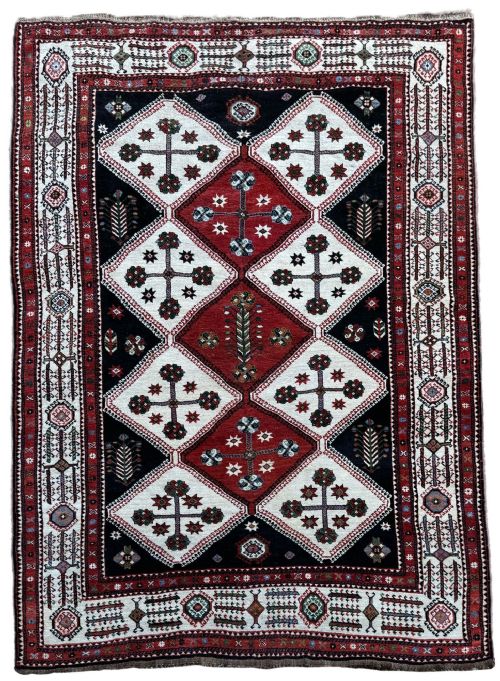
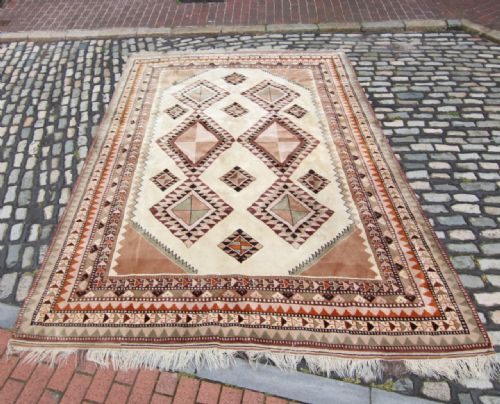
A geometric diamond tribal rug delivers village woolwork into modern rooms through repeating medallion motifs and saturated natural dyes.
Geometric Diamond Tribal Rug
A geometric diamond tribal rug encompasses handwoven village and nomad floor coverings originating across Persia, the Caucasus, Anatolia, and Central Asia during the nineteenth and early twentieth centuries. These pieces span formats from small saddlebag faces and kilims to room-sized carpets and elongated hallway runners.
The most common examples on this page belong to regional tribal groups including the Qashqai, Khamseh, Jaf Kurd, and various Caucasian weavers. Their surfaces display characteristic lozenge and polygon formations worked in wool across formats ranging from compact mats to substantial carpets.
How they were made
These textiles rely on hand-spun wool foundations paired with natural dyes extracted from local plants and minerals. Artisans knot the wool onto cotton or wool warps, utilising traditional upright looms set up in nomadic camps or village homes.
Certain examples incorporate flat-weave soumak or kilim techniques alongside pile knotting, producing structural variation within single pieces like saddlebags and covers.
Several small surviving fragments preserve the homely backs of working nomad saddlebags.
What varies in quality
Quality rests upon the handled density of the wool and the depth achieved by natural dyestuffs across the pile. Tightly beaten foundation rows and crisp drawing in the medallions indicate superior loom control by the weaver.
Condition and completeness also govern the standing of individual specimens, particularly with utilitarian items such as saddlebag faces retaining original plain-weave backs or complete borders.
The Geometric Diamond Tribal Rug Glossary
- Soumak
- A flat-weave technique where coloured weft threads wrap around the warp threads in a herringbone pattern. This method creates a sturdy, non-pile textile with a smooth face and floating threads on the reverse.
- Sofreh
- A flat-woven spread or cloth used during meals or for processing flour. These textiles often feature bold central fields flanked by protective tribal borders.
- Kilim
- A tapestry-woven carpet or rug produced without a pile. The weaver passes coloured wefts back and forth across the warps to form sharp geometric patterns.
- Kazak
- A term applied to rugs woven in the southern Caucasus region. They typically display bold primary colours and large geometric medallions.
- Warp
- The stationary vertical threads stretched tightly on a loom. Weft threads intersect these to form the structural grid of the rug.
Geometric Diamond Tribal Rug: Frequently Asked Questions
Where were these rugs made?
These textiles originate from nomadic and village weaving traditions across regions such as Persia, the Caucasus, Anatolia, and Central Asia.
Tribal groups including the Qashqai, Khamseh, and various Kurdish communities produced them for domestic use and local exchange.
How do I care for a wool rug?
Regular gentle vacuuming without a beater bar removes surface grit from the wool pile. Professional cleaning suited for antique textiles preserves the natural dyes and fibres.
Keep the rug out of direct sunlight to prevent fading of the natural tones.
What is a saddlebag face?
Nomads originally wove paired storage sacks to transport belongings on animals during seasonal migrations. The face represents the decorative front panel of the split bag.
These pieces survive today as small, highly concentrated examples of tribal design.
How do I identify different tribal styles?
Regional identities emerge through specific colour palettes, border arrangements, and structural motifs. Caucasian pieces favour bright primary hues and stark polygons, whereas Persian tribal works often employ softer madder reds and intricate geometric lattices.
Comparing knot counts and material preparation further clarifies the origin.