
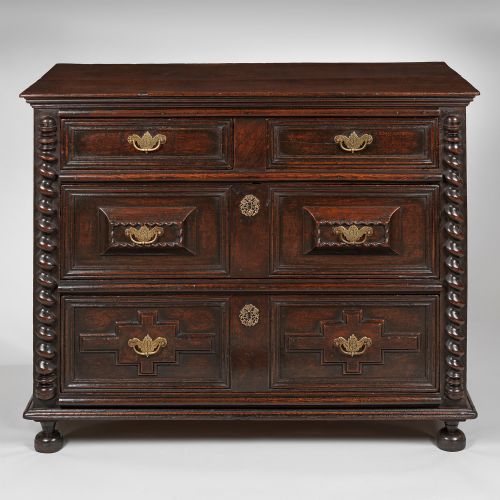


Geometric Carved Coffer
A geometric carved coffer is a sturdy storage chest defined by recessed panel moulding, offering practical space and authentic period character.

Geometric Carved Coffer
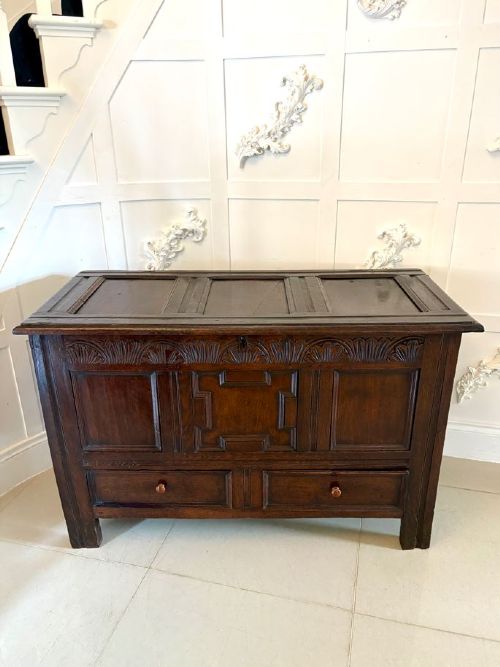
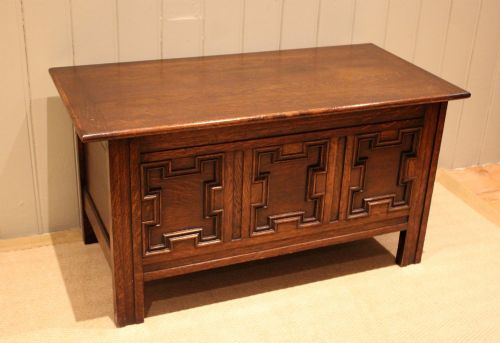
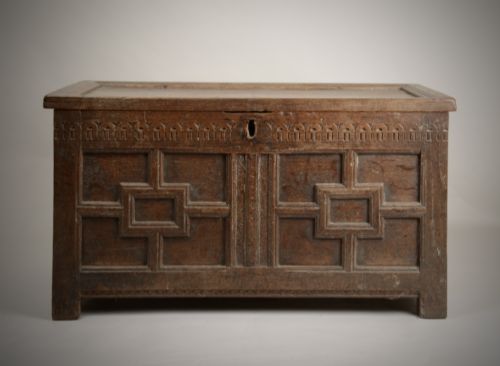
A geometric carved coffer is a solid storage chest designed for domestic linen and valuables, commonly appearing in dark native timber. These pieces range from authentic sixteenth and seventeenth century examples to later revival interpretations made in the early twentieth century.
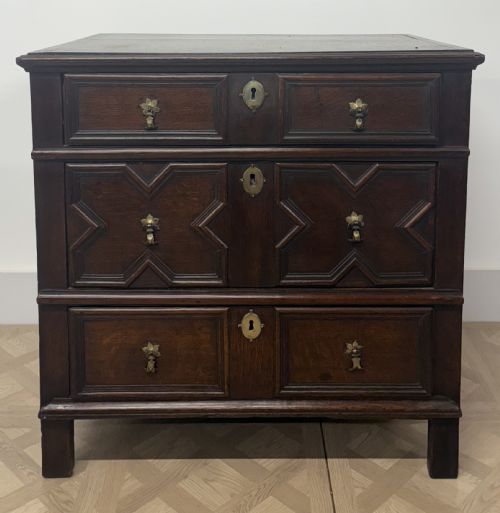
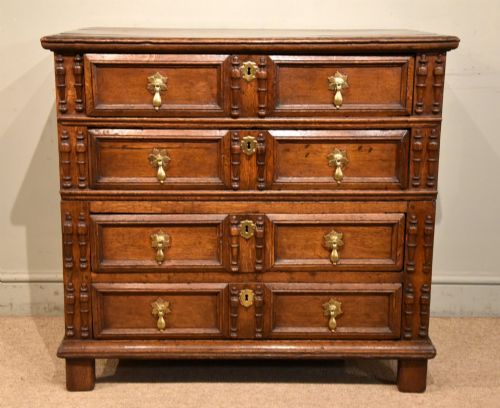
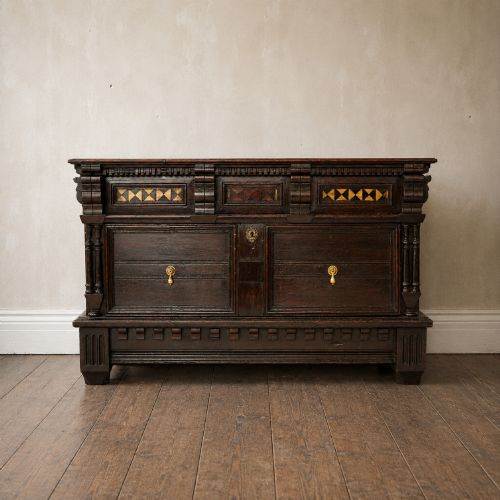
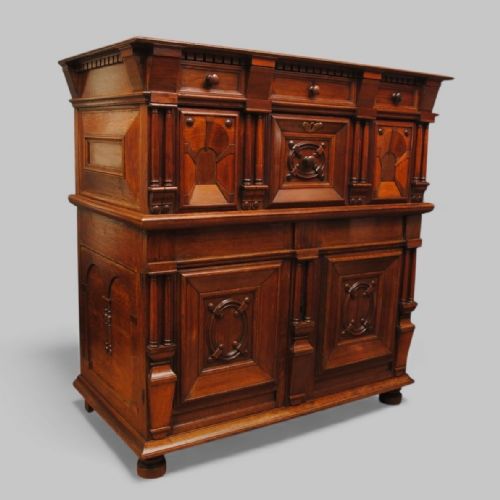
Most items on this page take the form of heavy oak coffers or chests of drawers carrying panelled fronts and applied mouldings. Buyers also encounter related mule chests and smaller chip carved boxes from the same eras.
How they were made
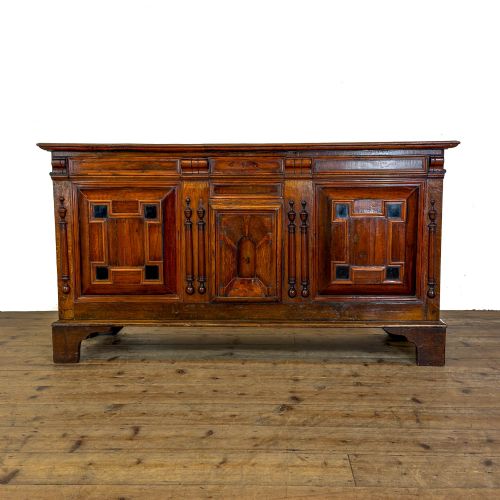
Joinery relies on heavy oak boards joined with traditional peg construction and framed panels. Secondary timbers such as walnut, fruitwood, cedar, and ebonised wood appear alongside primary oak structures.
Surface ornamentation is achieved through chiselled chip carving, applied geometric mouldings, and occasional wood inlay. Hardware incorporates hand-beaten brass drop handles and iron hinges suited to heavy lids.
Listings span periods from the 16th century through to 1930, uniting early oak and walnut items with later Jacobean revival pieces.
What varies in quality
Quality rests upon the crispness of the geometric mouldings and the integrity of the timber frame. Pieces retaining their original brasses and unblemished board tops command greater interest than heavily restored examples.
The sophistication of the surface carving and the balance of the proportions distinguish superior workshop output from simpler vernacular work.
The Geometric Carved Coffer Glossary
- Geometric moulding
- Raised wooden strips applied in repeating geometric patterns to drawer fronts and panels. This technique defines the visual style of late seventeenth century cabinetry.
- Mule chest
- A storage chest featuring one or more drawers beneath the main internal compartment. It bridges the transition between traditional blanket chests and modern drawer units.
- Chip carving
- A primitive method of ornamentation where small chips are carved away from a solid wooden block to form geometric designs. It appears on early boxes and coffer lids.
- Two-part chest
- A chest of drawers constructed in separate upper and lower sections to ease transport. This form frequently incorporates panelled geometric decoration across the front.
Geometric Carved Coffer: Frequently Asked Questions
What is a geometric carved coffer?
A geometric carved coffer is a wooden storage chest ornamented with applied mouldings arranged in geometric patterns. These pieces date primarily from the seventeenth century and later revival periods.
They served originally to store household linens, documents, and valuable possessions securely. Today they function as practical blanket boxes or coffee tables in traditional and modern interiors.
How do I date a carved coffer?
Dating relies on examining the timber species, construction joints, and moulding profiles. Seventeenth century pieces utilise pegged oak frames and hand-cut panels.
Revival pieces from the twentieth century often display softer edges, lighter secondary woods, and modern fixings behind the decorative surface.
Where should I place a coffer at home?
A coffer sits well at the foot of a bed for storing extra blankets or in a hallway as a striking focal point. Its flat top also allows it to double as a low surface in a living room.
Keep wooden chests away from direct heat sources and radiators to prevent the dry timber from cracking.
What is the difference between a coffer and a mule chest?
A coffer is a deep box with a hinged lid for top access only. A mule chest includes one or more drawers built into the base beneath the main compartment.
This drawer addition makes items more accessible without needing to clear objects off the top lid.