


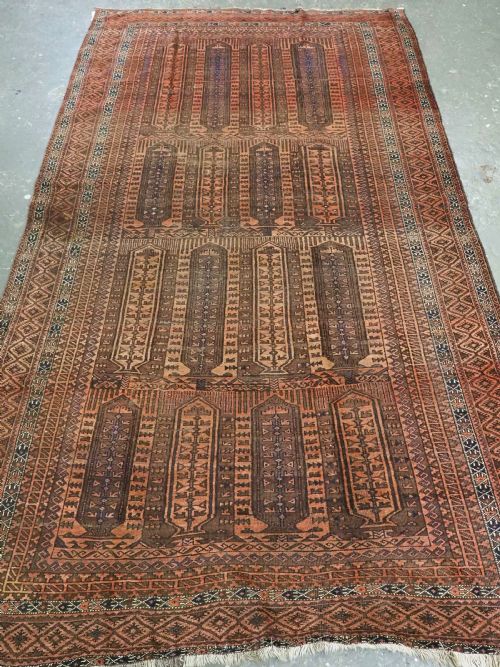
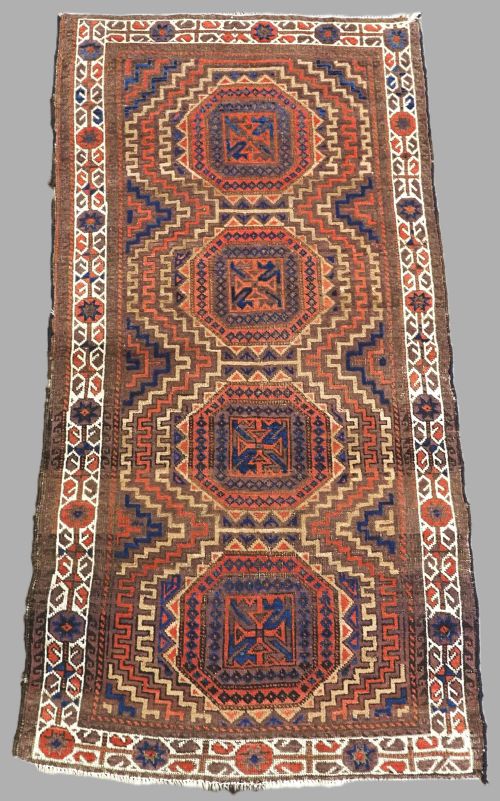
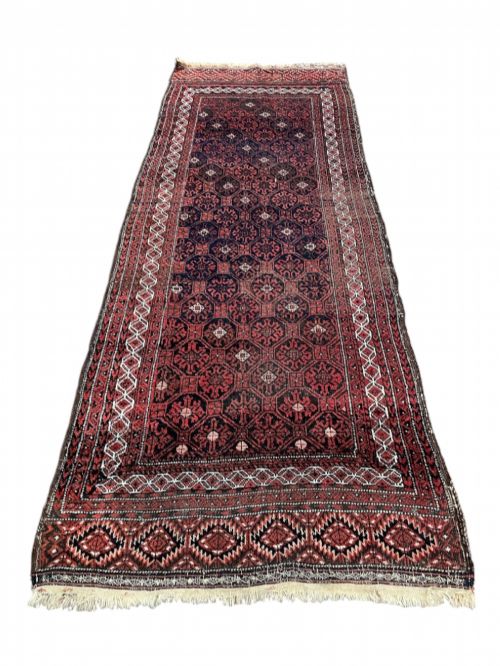
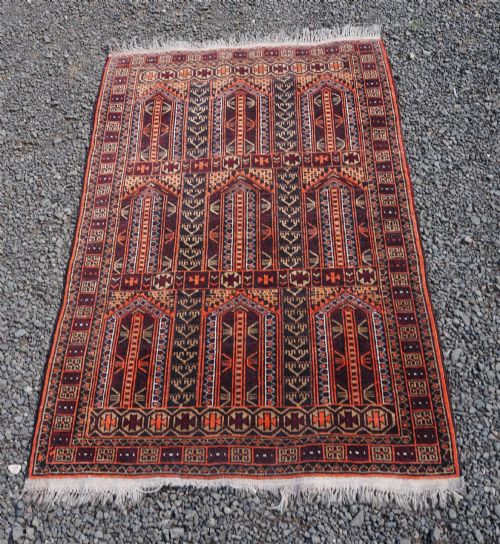
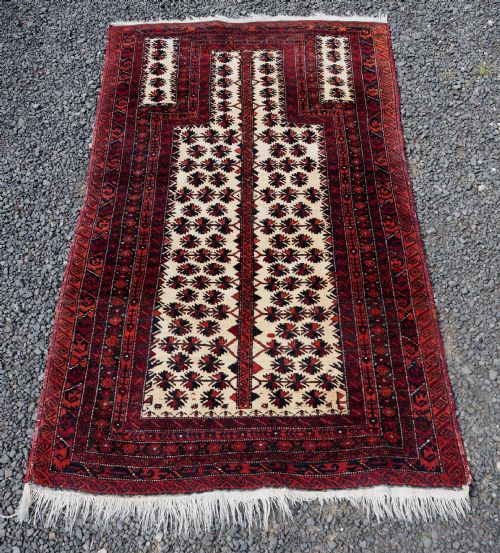
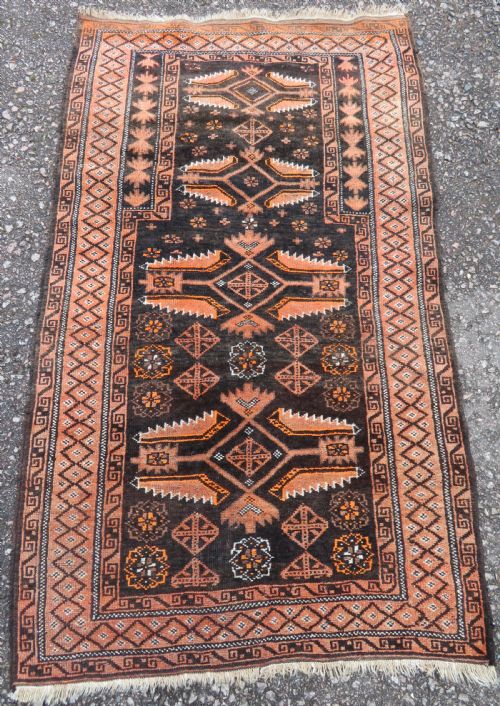
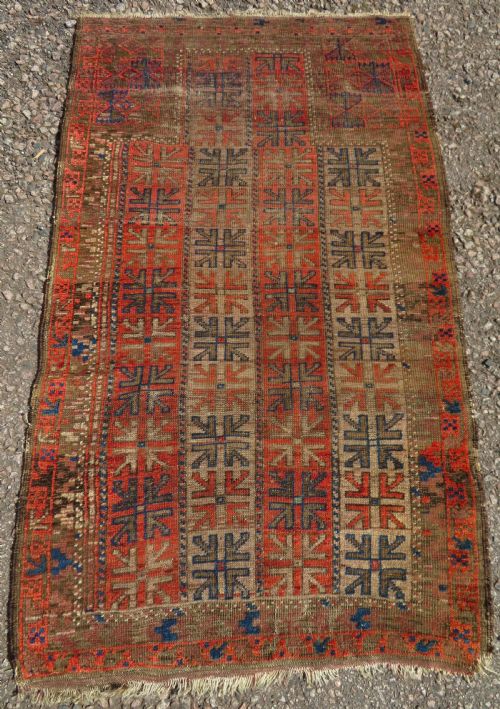


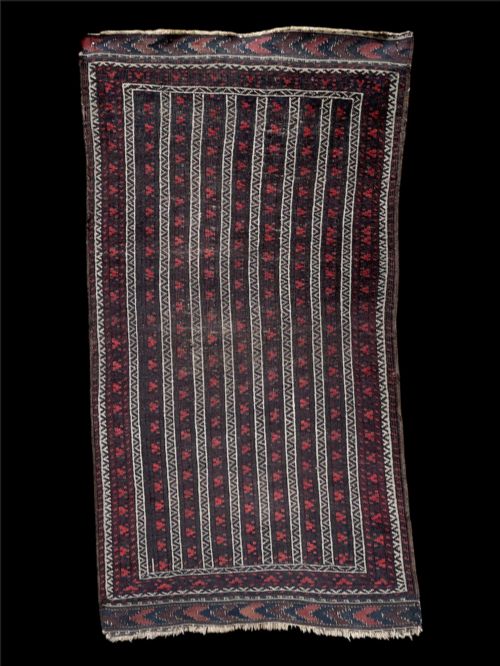
Geometric Baluch Carpet
A geometric baluch carpet brings tribal heritage into a room through repeated motifs and rich wool.
Geometric Baluch Carpet
A geometric baluch carpet is a tribal textile originating from nomadic and village weavers across regions spanning Afghanistan, Persia, and Khorasan. These floor coverings and wall pieces typically date from the late nineteenth century through to the early decades of the twentieth century.
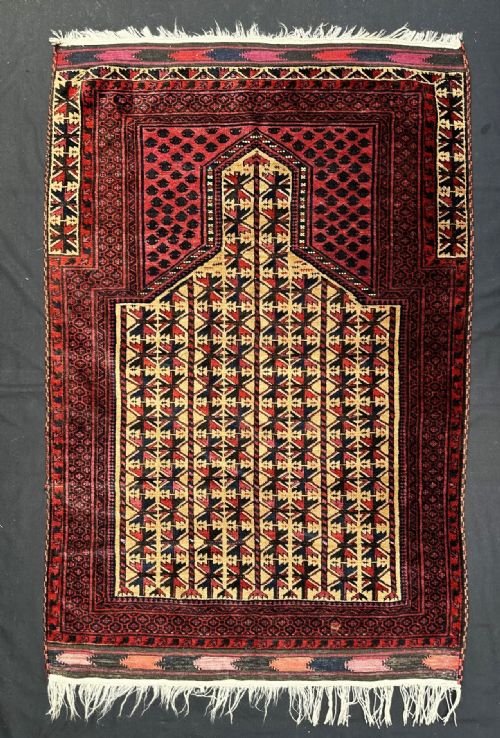
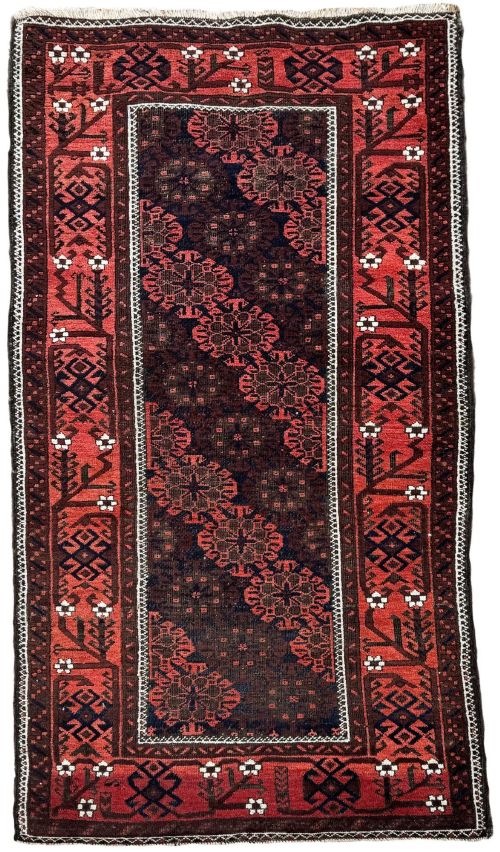
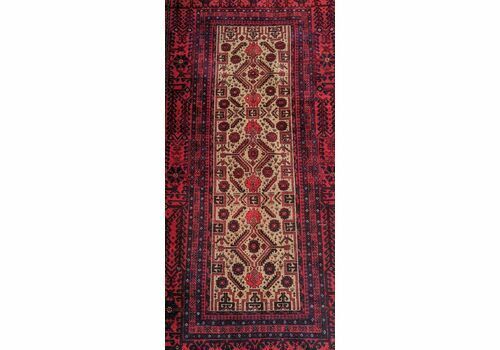
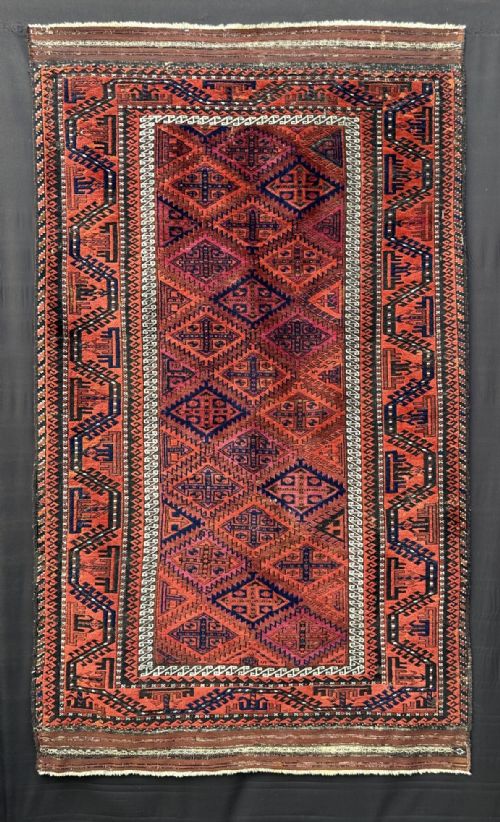
The geometric baluch carpet often appears in formats such as small rugs, long runners, square prayer mats, and utility cloths known as sofreh. Collectors most frequently encounter examples featuring repeat patterns, prayer arches, and boxed medallions.
Tribal styles within this group draw heavily on local weaving traditions, incorporating motifs like guls, shrubs, and lotus leaves. The structure reflects the practical needs of village life combined with symbolic tribal imagery.
Materials and construction
Makers utilised hand-spun wool and pure wool for the pile, often supplemented by cotton foundations and occasional touches of goat hair for durability. These natural fibres were combined on simple vertical looms set up in nomadic camps and rural villages.
Natural dyes provided the deep palette characteristic of these textiles, producing saturated reds, blues, browns, and dark neutrals that mellow gracefully over time. The weaving technique encompasses standard pile knotting alongside flatweave kilim bands and weftwork decoration.
Geometric Baluch Carpet Retail Price Guide 2026
Typical asking prices for geometric baluch carpet among the pieces listed under this phrase on Sellingantiques today, from the lower quarter to the upper quarter. They describe what is for sale here now, not the wider market.
Some eating cloths double as storage wrappers, carrying crumbs of nomadic life across the centuries.
Assessing quality and character
Quality in these tribal textiles rests on the handling of the wool, the clarity of the natural dyes, and the precision of the geometric design. Tightly beaten foundations and secure knotting separate robust examples from looser, more fragile weaves.
The visual impact depends on the balance of the repeat motifs, the crispness of the border guards, and the depth achieved by the dye palette. Subtle variations in tone across the field indicate hand-dyeing processes that add considerable character to the piece.
The Geometric Baluch Carpet Glossary
- Mihrab
- An arched niche design derived from Islamic architecture, frequently repeated in multiple tiers on prayer rugs.
- Gul
- A medallion or floral octagonal motif used as a primary repeat pattern across tribal carpets.
- Sofreh
- A flatwoven or piled cloth traditionally utilised for communal eating or food preparation within nomadic households.
- Kilim
- A flatwoven textile produced by tightly interweaving warp and weft strands without creating a pile.
- Seh mihrab
- A triple arch design format commonly found on prayer rugs originating from Afghan and village workshops.
Geometric Baluch Carpet: Frequently Asked Questions
How do I clean a wool rug?
Vacuum gently without a rotating brush to prevent pulling the pile fibres.
Professional specialist cleaning is recommended for antique wool textiles to protect natural dyes.
Can I use a runner on stairs?
Runners work well in hallways and landings where foot traffic is moderate.
Place a suitable underlay beneath the textile to prevent slipping and reduce wear on the foundation.
How do I identify a prayer rug?
Prayer rugs feature a distinct pointed arch or mihrab shape at one end of the field.
This architectural motif directed the weaver or user toward Mecca during daily devotions.