
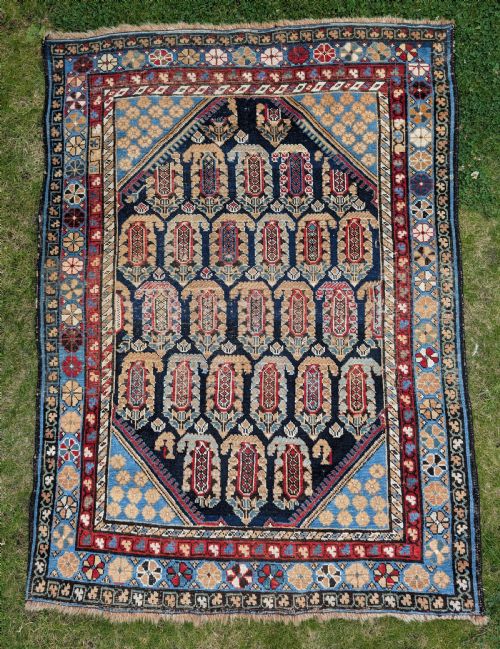
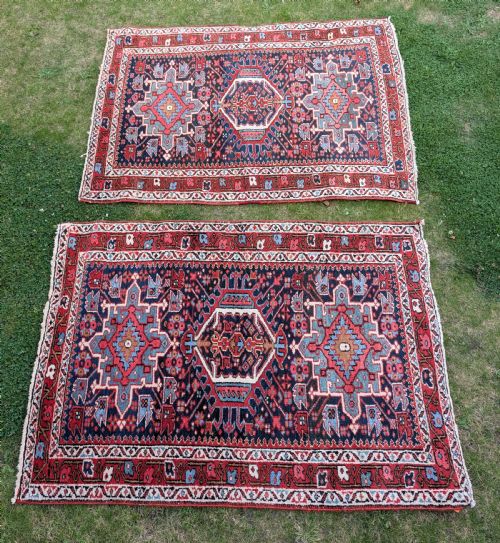
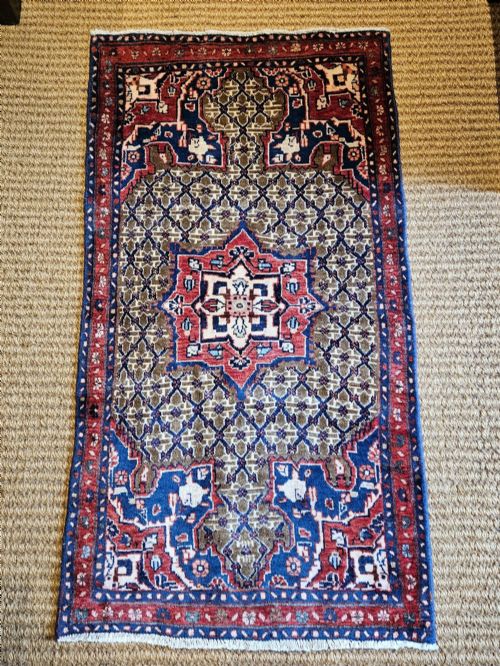
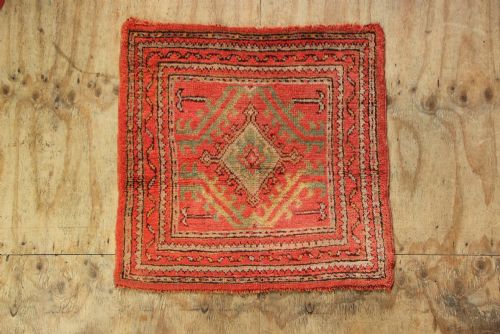
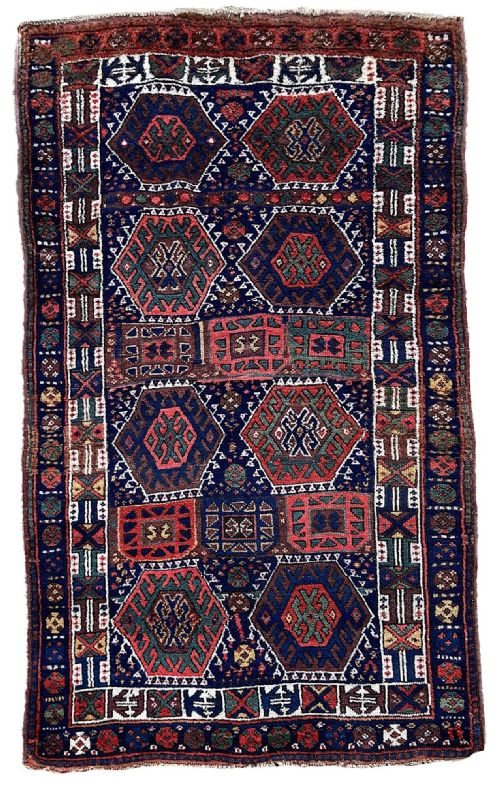


Geometric Accent Rug
A geometric accent rug brings the structured patterns of traditional village and tribal weaving directly into smaller interior spaces.
Geometric Accent Rug
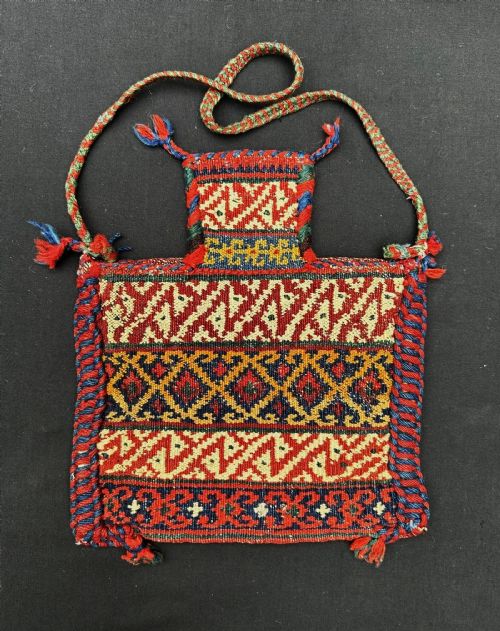
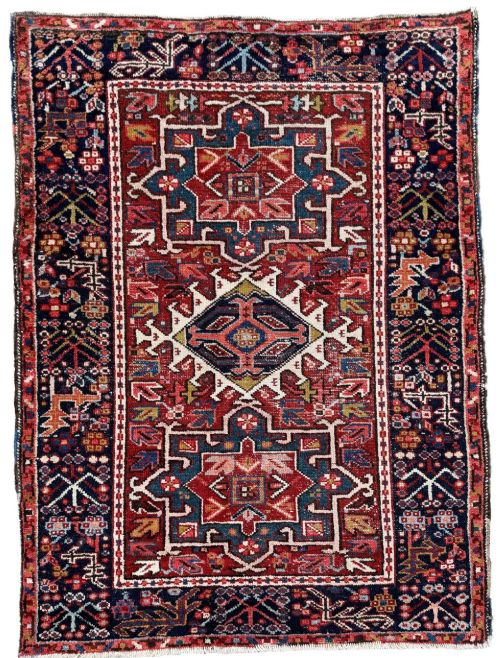
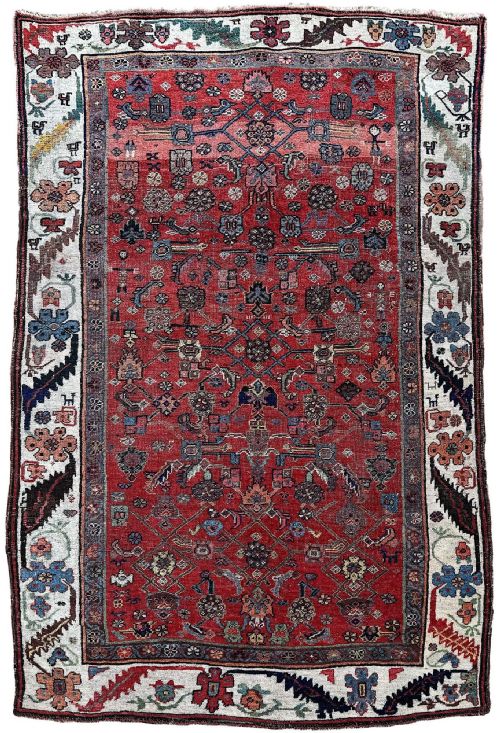
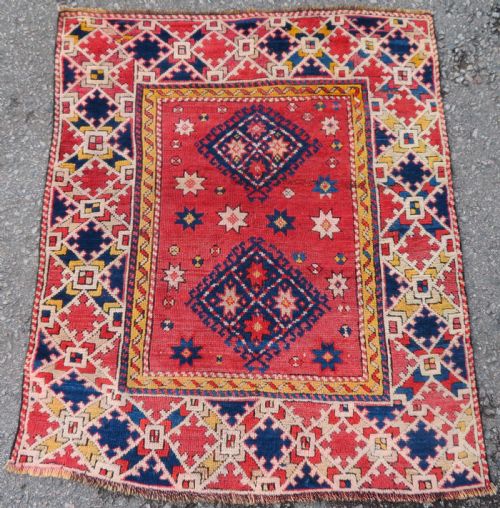
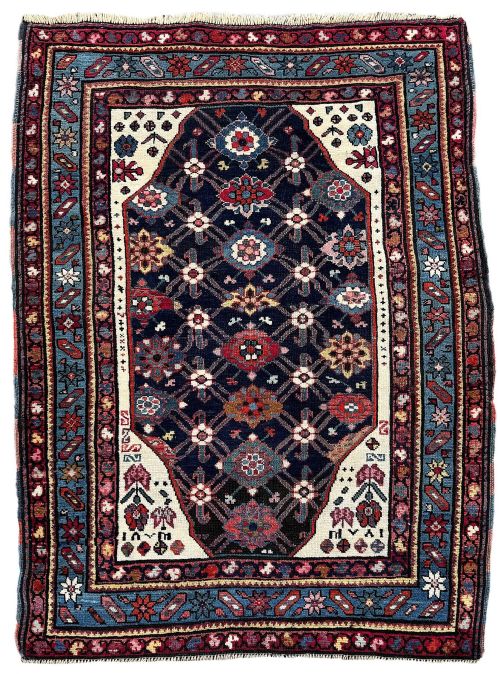
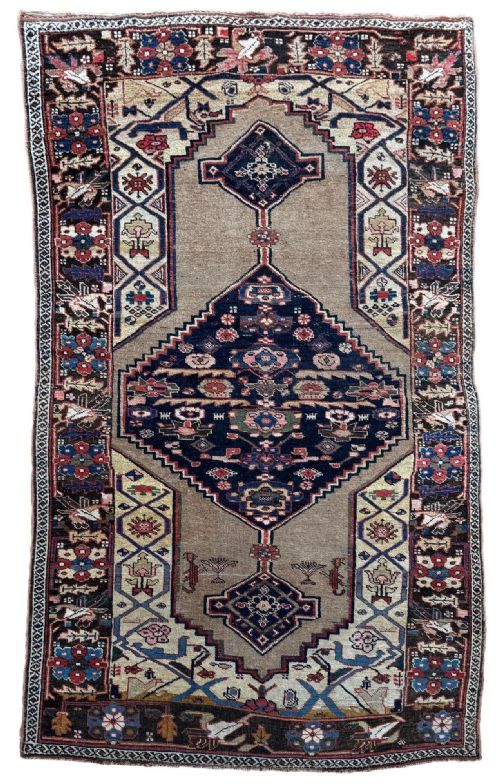
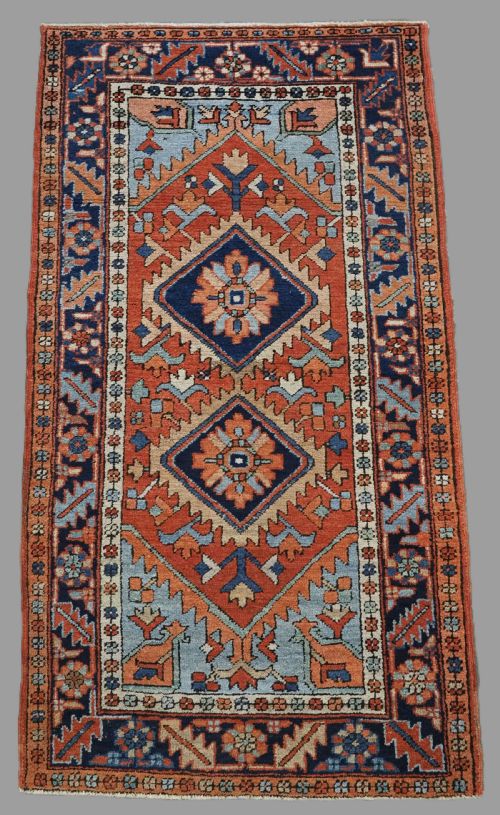
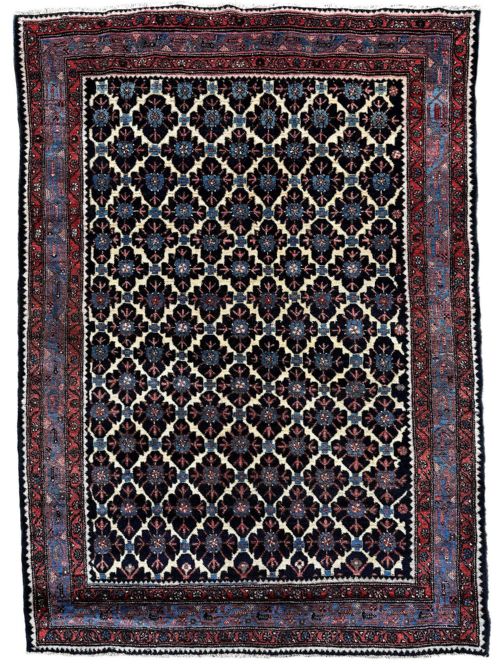
A geometric accent rug represents smaller format tribal and village floor coverings originating from Persia, the Caucasus, and Anatolia. These pieces typically measure under two metres in length, making them suitable for hearths, small rooms, and focused decorative spaces.
Village weavers constructed these smaller formats for domestic utility rather than commercial export, resulting in straightforward layouts and direct patterns. The smaller scale allows these textiles to function easily as accent pieces within contemporary or traditional rooms.
Materials and construction
Weavers utilised hand-spun wool for the pile and surface details, often supported by a sturdy cotton warp to maintain structural stability. Natural dyes provided the palette, yielding stable tones that settle into softer hues over decades of use.
Nomadic and village workshops produced these pieces on portable or floor looms, employing symmetrical or asymmetrical knotting techniques depending on the regional tradition. Edge finishes and ends received durable wool binding to withstand heavy foot traffic in domestic settings.
Listings span production periods from the 1850s through the 1930s, utilising hand-spun wool and natural dyes.
Assessing quality and execution
Quality in these woven pieces depends upon the precision of the knotting and the crispness of the drawn motif. Tighter knot density allows rectilinear patterns to maintain sharp lines across the field.
The choice and saturation of natural dyes distinguish finer examples from standard production. Pigments derived from local plants and minerals create depth and variation within the wool pile that chemical dyes do not replicate.
The Geometric Accent Rug Glossary
- Medallion
- A central ornamental motif placed in the middle of the rug field. This design element often anchors the surrounding geometric layout.
- Knot density
- The count of individual knots per square unit of surface area. Higher counts typically indicate greater time investment during production.
- Warp
- The longitudinal threads stretched vertically on the loom before weaving begins. These foundation threads provide the primary structural support for the pile.
- Natural dye
- Colouring matter derived from plants, insects, or minerals rather than synthetic compounds. These substances produce organic tonal variations across the wool.
- Prayer rug
- A format featuring a mihrab or arch design at one end, traditionally used for personal devotion. The layout directs the user's orientation during daily prayers.
Geometric Accent Rug: Frequently Asked Questions
Where should I place a small accent rug?
These compact pieces fit well in entryways, beside beds, or in front of fireplaces where larger carpets do not reach. Their manageable proportions allow them to define specific focal points in compact rooms.
Because the dimensions are modest, owners can easily move them between different spaces to test alternative interior arrangements without rearranging heavy furniture.
How do I care for antique wool rugs?
Regular gentle vacuuming without a rotating brush roll prevents dust accumulation in the wool pile. Professional cleaning is recommended when deeper maintenance becomes necessary.
Keeping the textile out of direct, prolonged sunlight preserves the natural dyes and prevents premature fading of the saturated wool colours.
What is the difference between village and tribal rugs?
Tribal rugs were woven by nomadic or semi-nomadic groups using memory patterns and portable looms. These designs often reflect specific clan traditions and local symbolism.
Village rugs originated in settled agricultural communities where weavers had access to stationary looms and shared design repertoires within regional workshops.
How do I identify a prayer rug?
Prayer rugs feature a distinctive arched shape, known as a mihrab, at one end of the field. This architectural motif points toward Mecca during ritual use.
The field beneath the arch is typically left uncluttered to provide a clean space for kneeling.