
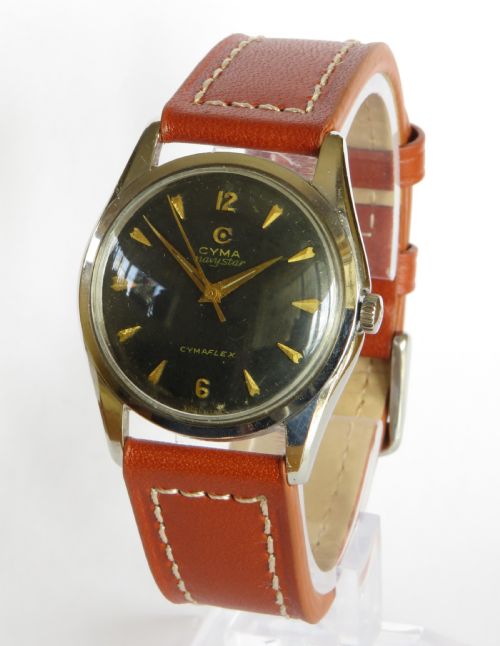
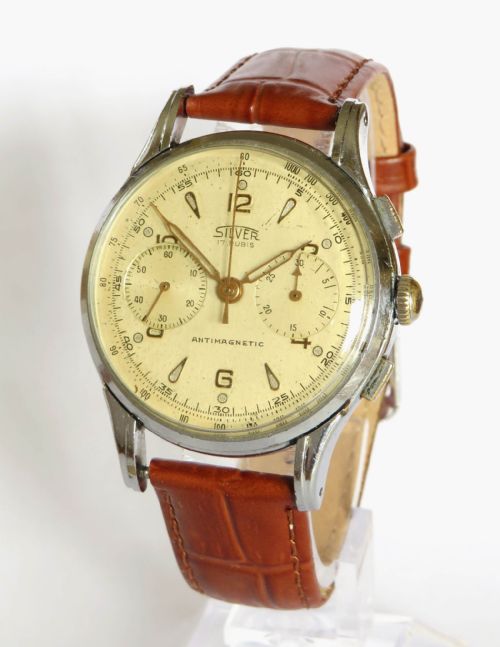
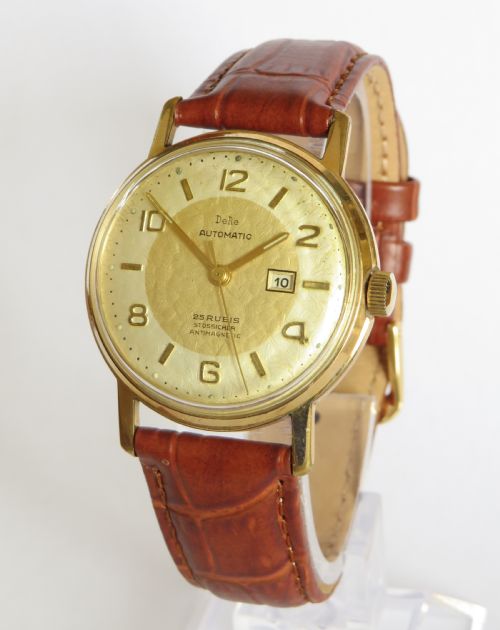
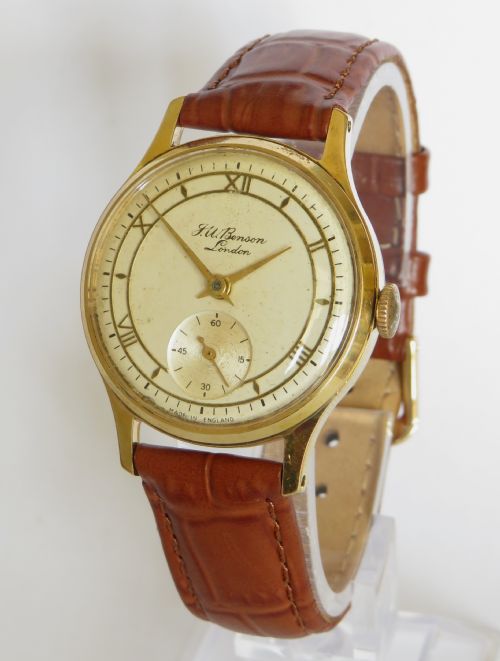
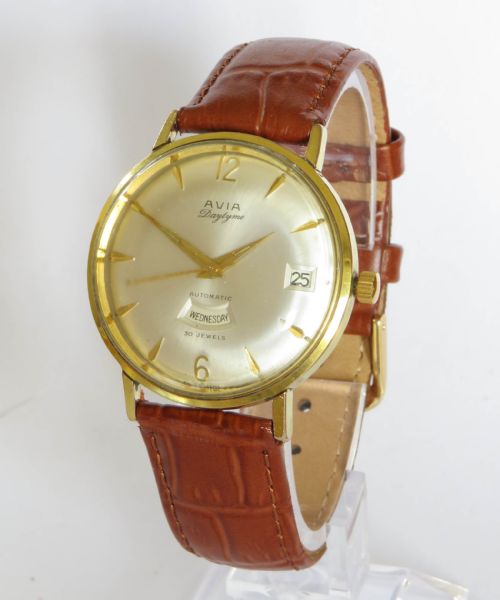
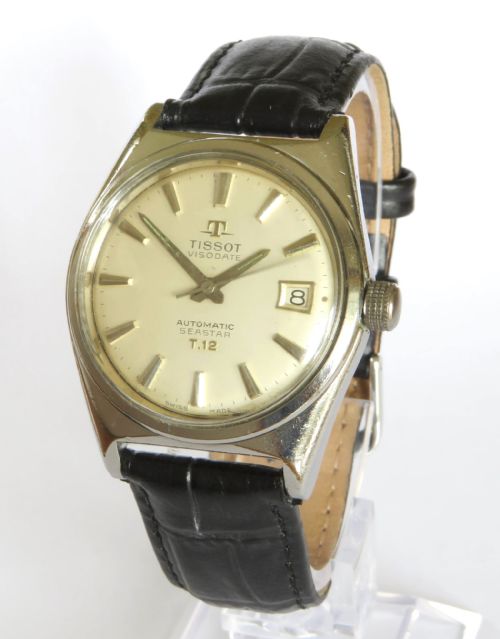
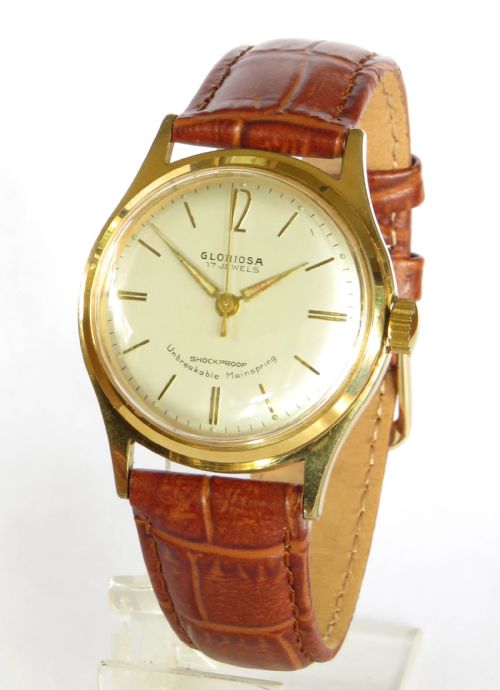
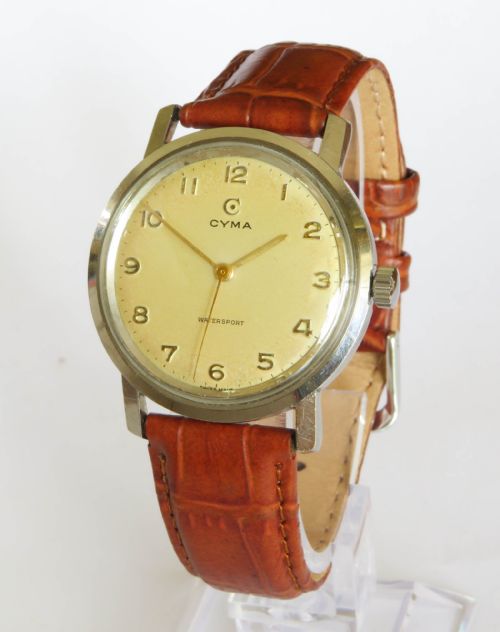
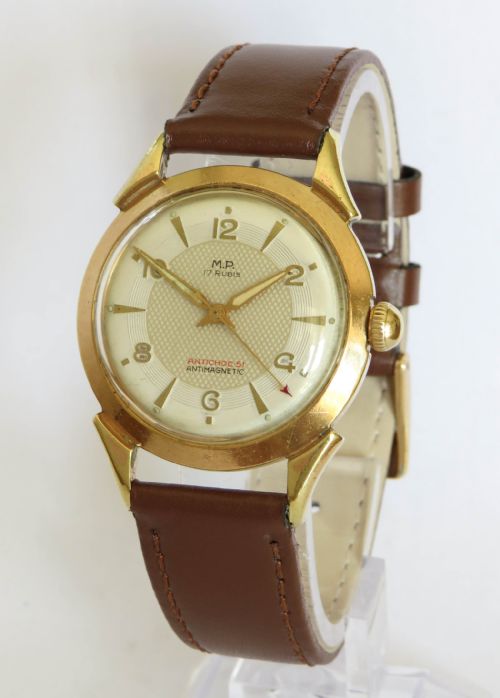
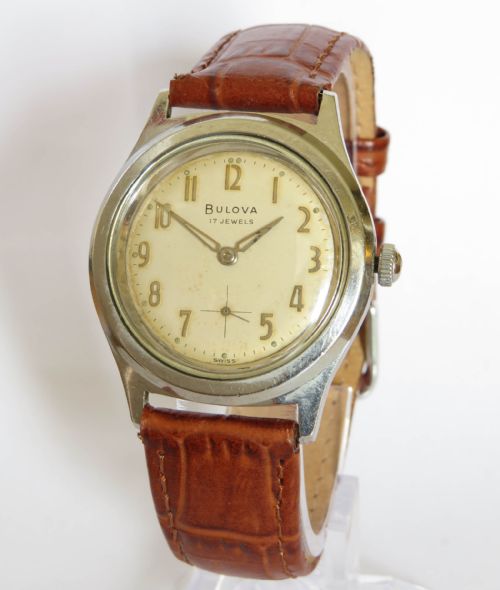
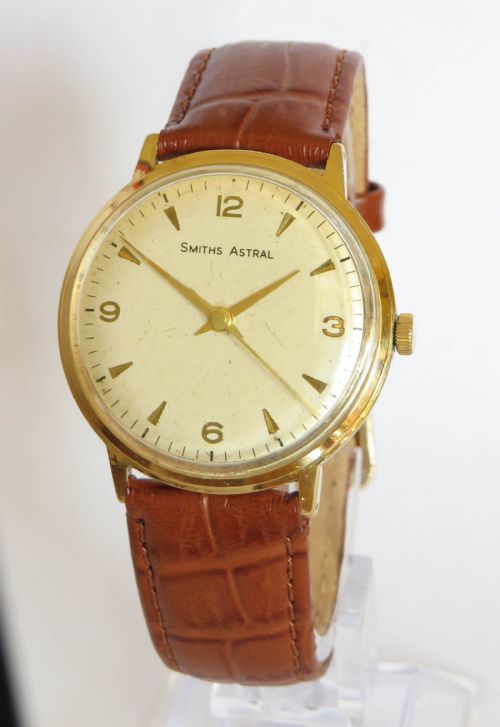


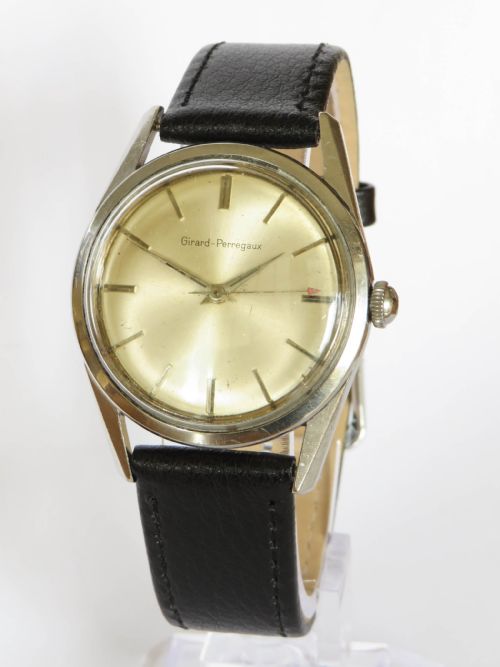
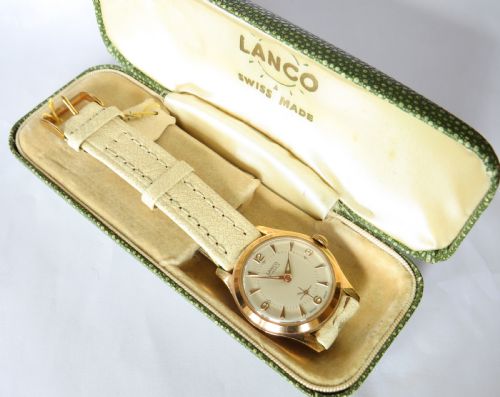
Gents Analogue Wristwatch
These gents analogue wristwatch examples span the Art Deco period through mid-century decades, offering mechanical timekeeping with character.
Gents Analogue Wristwatch
A gents analogue wristwatch is a timepiece displaying hours, minutes, and often seconds via hands on a dial, originating mainly from the 1940s, 1950s, and 1960s. These pieces reflect Mid-Century Modern and Art Deco design movements, capturing the industrial aesthetics of their respective eras.
Buyers encounter mechanical movements, including manual wind and automatic calibres, alongside chronograph and day-date complications. Originating from Swiss, British, and French workshops, these watches range from robust everyday models to refined dress pieces.
How they were made
Cases combine stainless steel, gold plate, chrome, and base metals, protecting delicate mechanical movements governed by jewelled pivots. Dials sit beneath clear covers formed from glass or acrylic glass.
Straps utilise leather to secure the watch to the wrist, complementing metal case constructions designed for daily wear.
Listings feature pieces spanning the 1940s, 1950s, and 1960s, utilising stainless steel, gold plate, leather, and acrylic glass.
What varies in quality
Quality rests in the precision of the movement, the finish of the dial, and the integrity of the case metals. Finer examples feature signed dials and sophisticated mechanical calibres from established makers.
Condition varies from unissued new old stock to pieces showing patination through decades of use. The execution of case polishing and the preservation of original dial printing distinguish standard models from superior specimens.
Cyma·Antoremi·Smiths·Avia·Tissot·Bulova·Ensign·Eterna·Prisma·Girard Perregaux·Lanco·Dogma Prima·Marvin·Felca·Consul·Longines
The Gents Analogue Wristwatch Glossary
- Analogue
- A watch displaying time with moving hands on a dial rather than digital digits. This traditional format defines the core of mechanical horology.
- Automatic
- A self-winding mechanical movement that uses the natural motion of the wearer's arm to tension the mainspring. This eliminates the need for manual daily winding.
- Chronograph
- A watch equipped with a stopwatch function alongside standard timekeeping displays. Independent sub-dials track elapsed minutes and seconds.
- Jewels
- Synthetic rubies or sapphires placed at pivot points within a mechanical movement to reduce friction and wear. Higher jewel counts generally indicate a more refined calibre.
- New Old Stock
- Unsold vintage items preserved in original condition, often retaining packaging or factory tags from their initial period of manufacture.
Gents Analogue Wristwatch: Frequently Asked Questions
How do I wind a manual vintage watch?
Rotate the crown clockwise between your thumb and forefinger until slight resistance is felt. Stop immediately to avoid over-winding and damaging the mainspring.
Wind the piece at approximately the same time each day to maintain consistent tension and accurate timekeeping.
Are these vintage watches waterproof?
Vintage timepieces lack modern rubber gasket seals and screw-down crowns. Exposure to moisture or humidity permits water ingress that damages delicate steel components.
Keep the watch away from rain, sinks, and swimming environments to preserve the internal mechanical movement.
How accurate are 1950s wristwatches?
Mechanical watches from this era operate within tolerances of a minute or two per day rather than quartz precision. Temperature fluctuations and wear affect the regulating spring.
Regular servicing by a horologist ensures the movement runs as closely to its original specification as possible.
Can I replace the leather strap?
Straps interchange easily using spring bar tools to release the pins between the case lugs. Standard sizing matches the gap width measured in millimetres.
Selecting appropriate leather replacements maintains the period aesthetic while ensuring secure daily wear.