




Gentlemans Shaving Stand
A gentlemans shaving stand is a dedicated grooming piece designed for the morning routine, combining mirrors and storage in mahogany, walnut, oak, and brass.
Gentlemans Shaving Stand
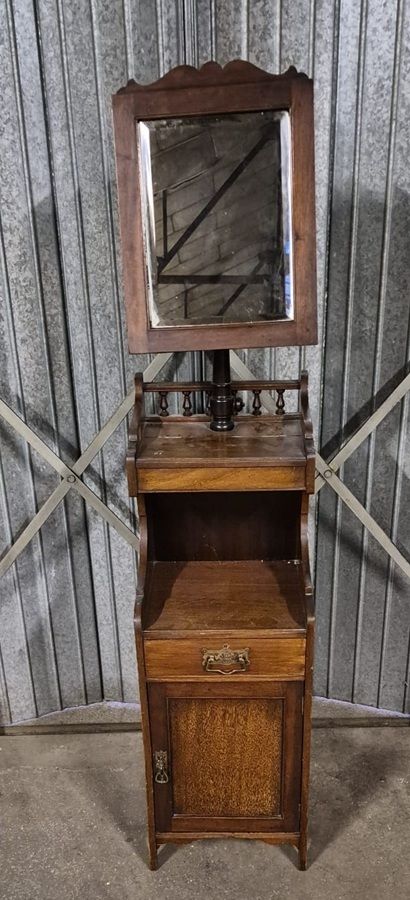
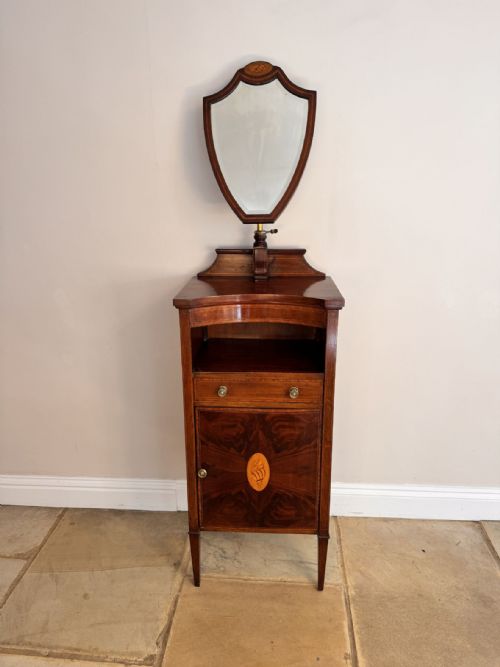
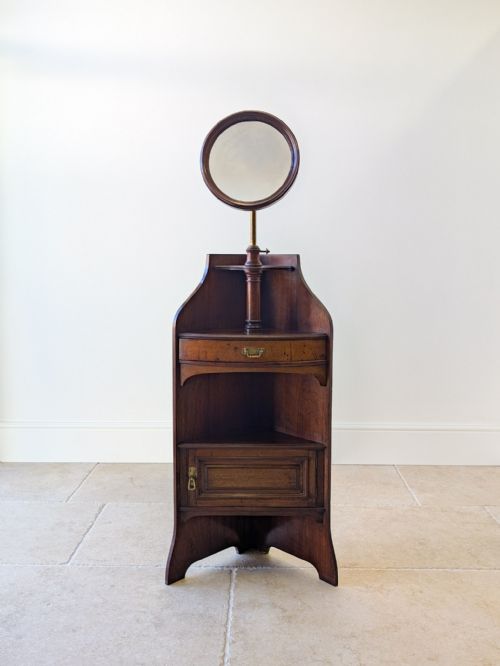
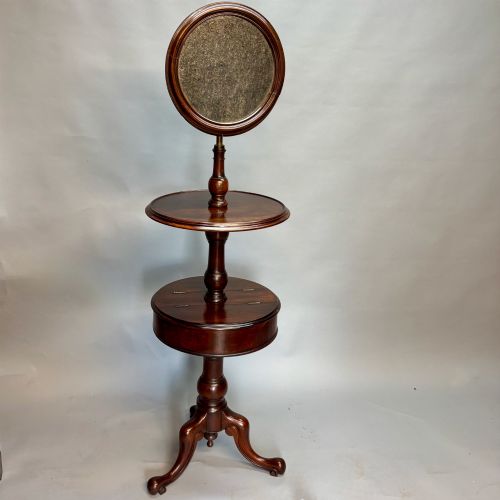
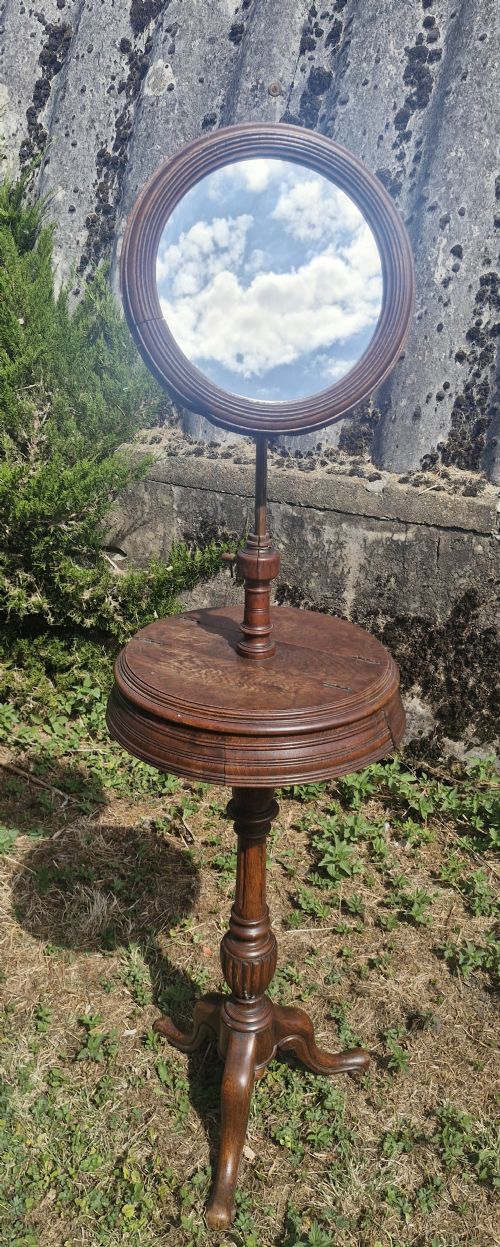
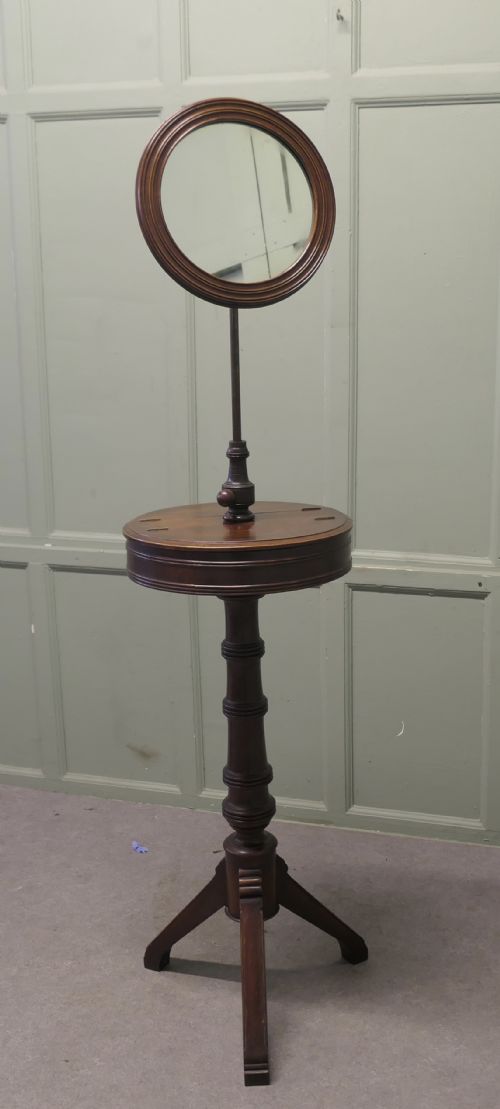
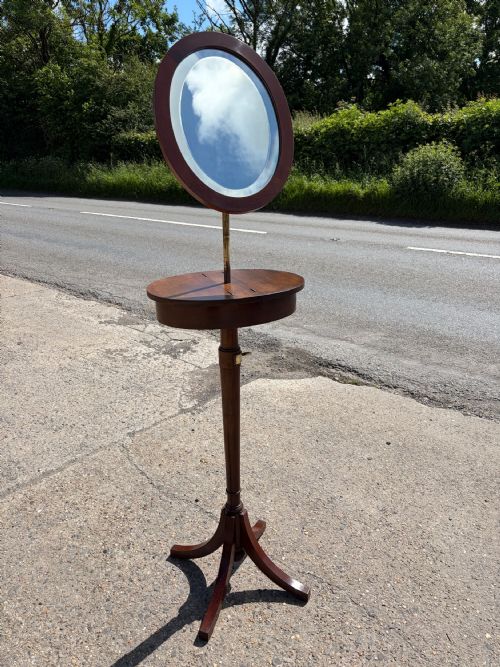
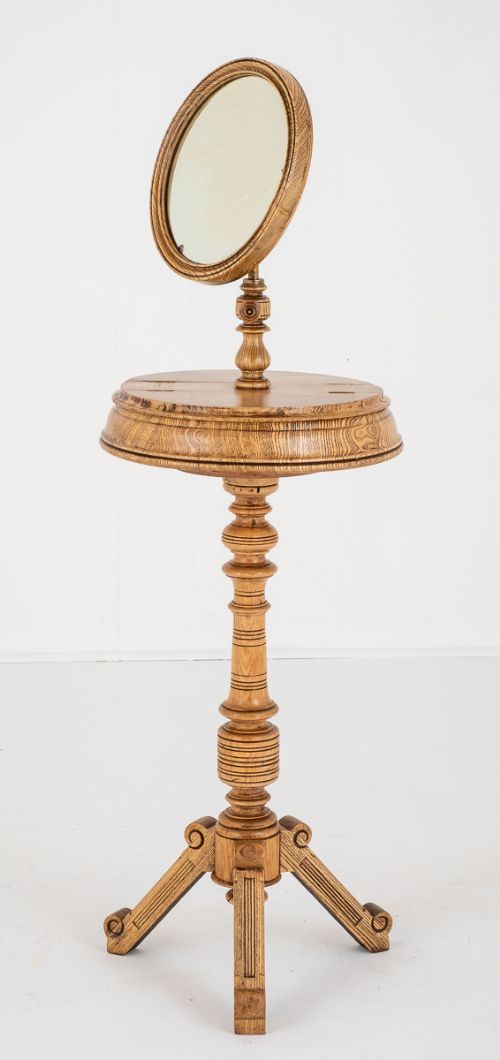
A gentlemans shaving stand provides a functional station for daily grooming, taking the form of a freestanding mirror, a tabletop glass piece, or a cabinet vanity. These pieces date across the nineteenth and early twentieth centuries, spanning Victorian, Edwardian, and Vienna Secession styles.
Materials and construction
Cabinetmakers built these pieces using dense hardwoods including mahogany, walnut, oak, and ash, often adding brass fittings and adjustable mechanisms. Mirror glass is a central component, frequently mounted to swivel or telescope.
Inlaid decoration and turned woodwork appear on Edwardian and Viennese examples, while functional brass brackets and telescopic shafts allow the glass height to be altered.
Gentlemans Shaving Stand Retail Price Guide 2026
Typical asking prices for gentlemans shaving stand among the pieces listed under this phrase on Sellingantiques today, from the lower quarter to the upper quarter. They describe what is for sale here now, not the wider market.
Listings feature woods including mahogany, walnut, oak, and ash, alongside brass fittings and mirror glass.
Judging quality and design
Quality rests in the smoothness of the adjustable mechanisms, the weight and grain of the timber, and the clarity of the mirror glass. Finer pieces demonstrate precise joinery on tripod bases and well-fitted shaving cupboards.
Makers such as James Shoolbred produced pieces with superior cabinetwork and refined brass hardware, distinguishing them from simpler utilitarian designs found in the period.
James Shoolbred
The Gentlemans Shaving Stand Glossary
- Telescopic
- A mechanism allowing the mirror height to be raised or lowered on a central brass or wooden shaft. This adjustment ensured the user could find the correct angle for grooming.
- Tripod base
- A three-legged support structure commonly found beneath nineteenth-century shaving mirrors. It provided stability on uneven floorboards.
- Vanity table
- A broader dressing surface that incorporates mirror glass and storage drawers or cupboards. These often double as shaving stands in Edwardian and Victorian bedrooms.
- Vienna Secession
- An artistic movement influencing early twentieth-century design, characterised by clean lines and inlaid details seen on continental pieces.
Gentlemans Shaving Stand: Frequently Asked Questions
How do I use a gentlemans shaving stand today?
These pieces function well in modern bathrooms or bedrooms as distinctive surfaces for daily toiletries or as accent furniture. Their adjustable mirrors remain practical for close-up grooming tasks.
They also serve as display stands for vintage accessories, bringing period character and warm mahogany or walnut tones into contemporary interiors.
What is the difference between a shaving mirror and a shaving stand?
A shaving mirror is typically a smaller glass piece designed to sit on a tabletop or chest of drawers, often featuring a telescopic brass or wooden support. A shaving stand is a larger freestanding piece that may incorporate a tripod base or a shaving cupboard.
Both forms belong to the same nineteenth and early twentieth-century grooming tradition, utilising similar woods like mahogany, oak, and walnut.
How do I date a Victorian shaving stand?
Dating relies on timber choices, hardware, and stylistic markers such as turned tripod legs or inlaid mahogany veneers. Victorian pieces generally date from the mid to late nineteenth century, while Edwardian examples show lighter woods and refined twentieth-century proportions.
Archival records and maker signatures, when present, help narrow the production period further.
Are these stands suitable for small rooms?
Many versions, particularly the tripod and tabletop mirror designs, occupy a very small footprint. They fit easily into corners or onto existing dressing surfaces without dominating a room.
Freestanding cupboard variants offer enclosed storage while maintaining relatively slender proportions compared to full-sized wardrobes.