
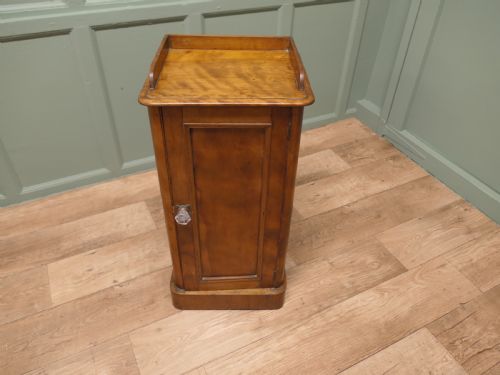
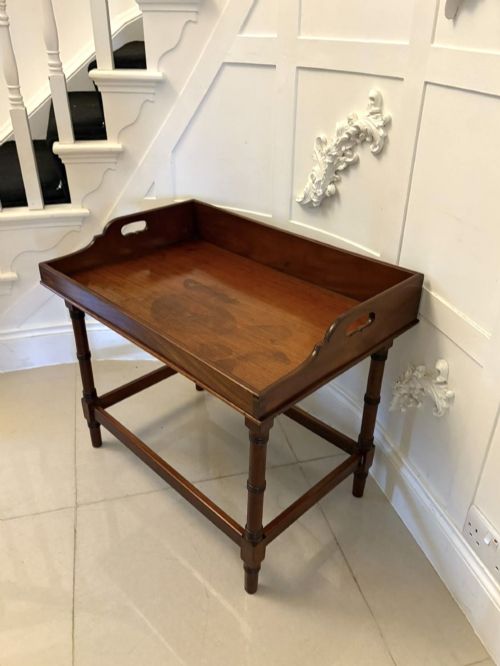

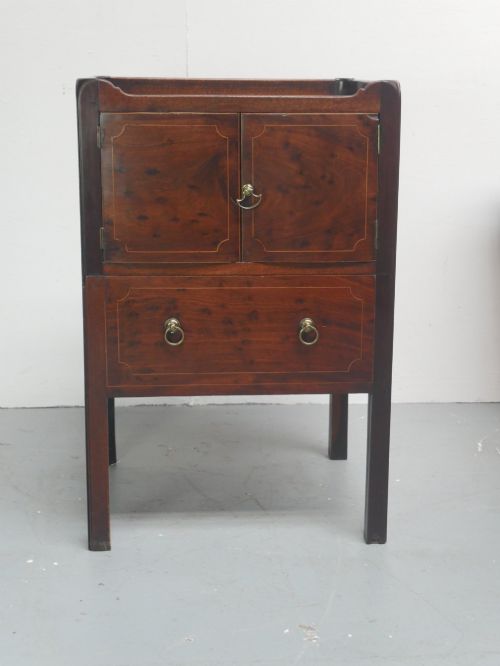
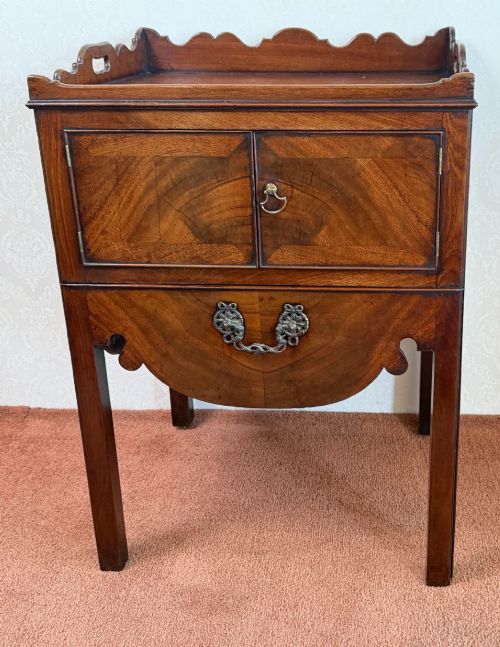
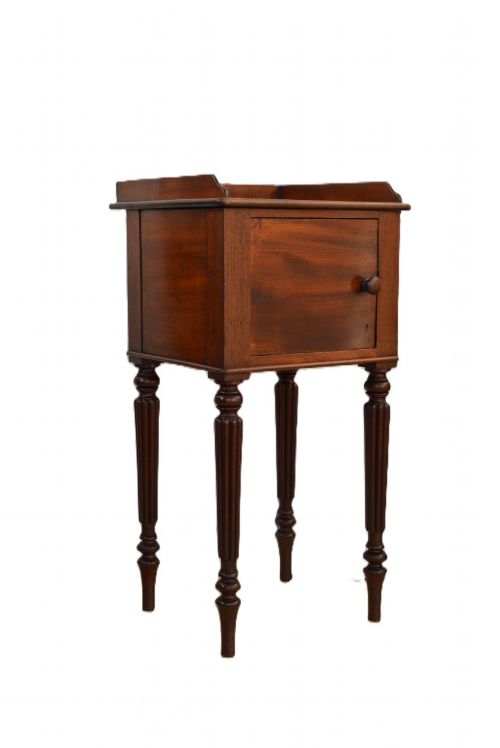

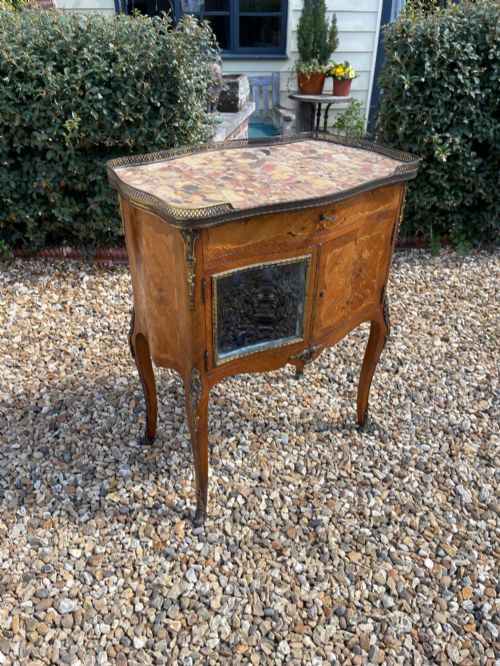

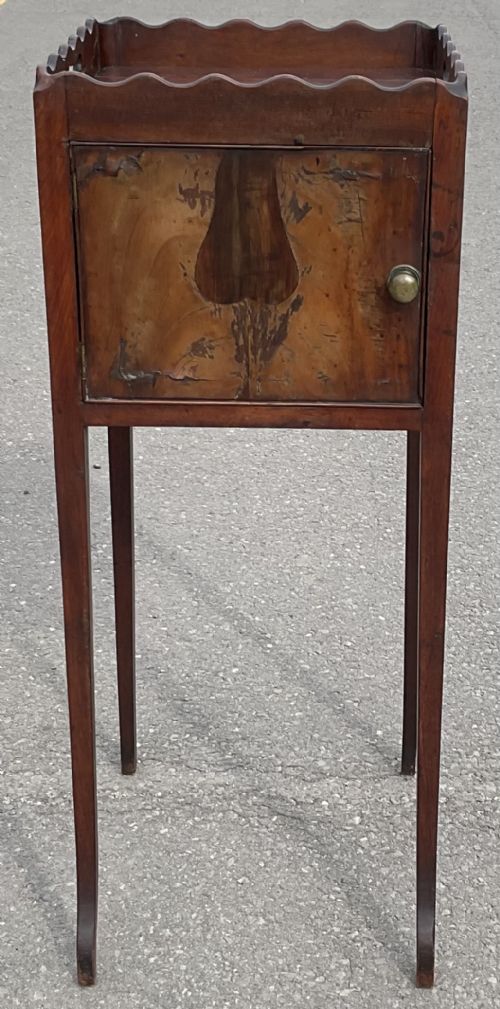


Gallery Top Nightstand
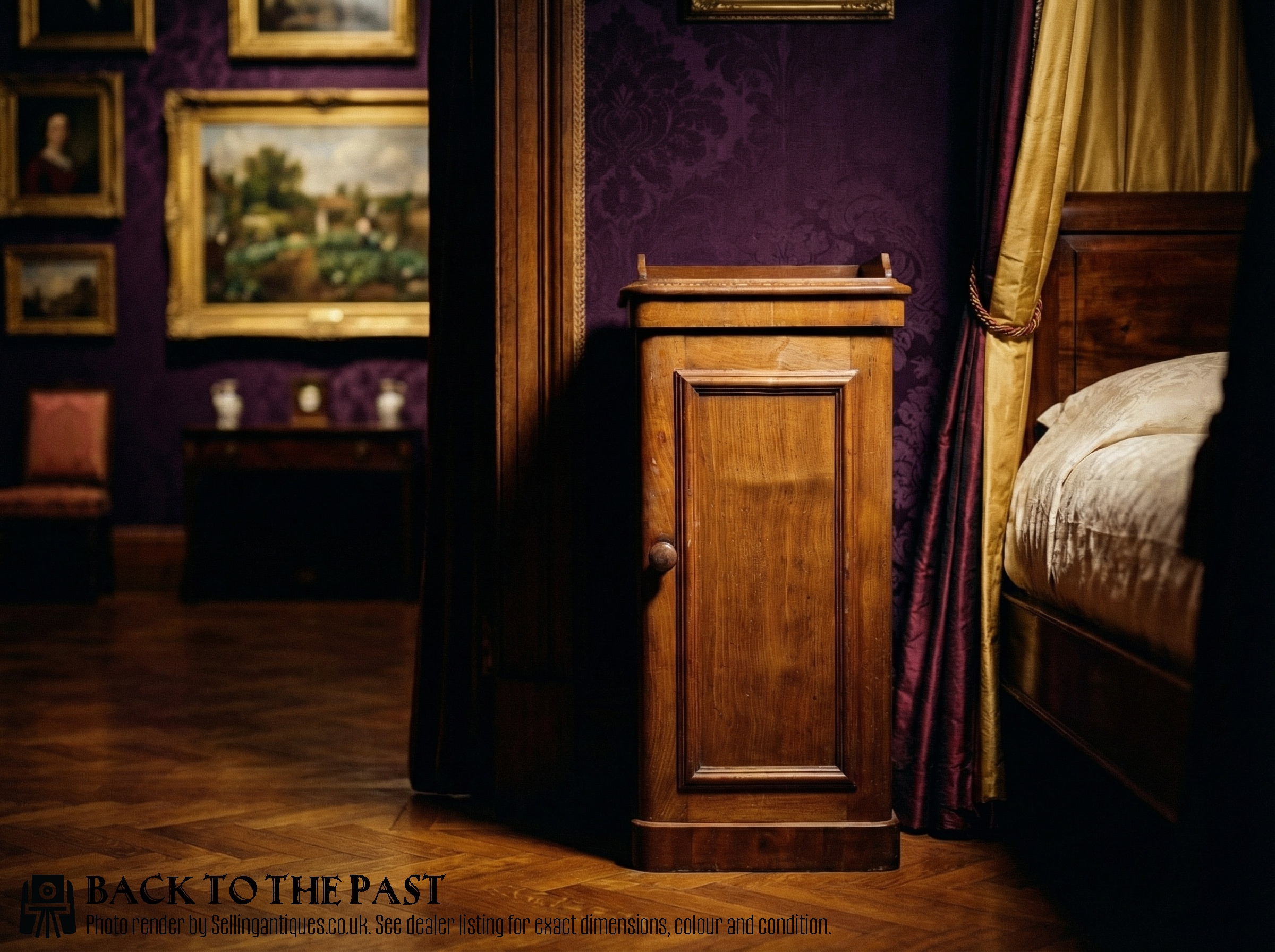
A gallery top nightstand brings practical surface space and period elegance to the bedside using fine mahogany, walnut, and marble.
Gallery Top Nightstand
When you search for a gallery top nightstand, you are looking at small tables and cabinets designed to sit beside a bed, often featuring a raised rim or tray edge to keep items secure.
The versions you are most likely to meet on this page hail from the Georgian and Victorian eras, alongside continental French pieces fashioned from mahogany, walnut, and kingwood.
Forms range from simple pot cupboards and bedside chests to commodes and lamp tables, reflecting the diverse domestic needs of past centuries.
How they were made
Cabinetmakers relied heavily on rich timbers such as mahogany, satinwood, and walnut, often applying delicate veneers and intricate inlay to enhance the visual depth of the grain.
Many continental examples incorporate decorative metalwork, mounting ormolu details onto the timber frames and topping surfaces with fitted slabs of marble.
Joinery techniques prioritised sturdy construction for daily use, incorporating drawers, cupboard doors, and panelled sides using traditional hand tools.
Gallery Top Nightstand Retail Price Guide 2026
Typical asking prices for gallery top nightstand among the pieces listed under this phrase on Sellingantiques today, from the lower quarter to the upper quarter. They describe what is for sale here now, not the wider market.
Look out for kidney-shaped bedside tables that bring a distinctly curved touch to the bedroom layout.
What varies in quality
Quality rests primarily in the selection of timber and the precision of the cabinetmaker's joinery, where tightly fitted drawers and smooth-running doors distinguish superior work.
The refinement of decorative elements, from the crisp casting of ormolu mounts to the delicacy of inlaid banding and the choice of marble tops, dictates the standing of a piece.
Proportion and structural integrity play a major role, as finer examples maintain balanced lines and original hardware without heavy alterations.
Gillows·Holland & Sons
The Gallery Top Nightstand Glossary
- Tray top
- A raised wooden edge or rim surrounding the upper surface of a table to prevent items from rolling off. This practical feature defines many Georgian lamp tables and commodes.
- Ormolu
- Gilded bronze ornamentation applied to furniture, frequently seen on French Empire and revival cabinets. It provides a bright metallic contrast against dark woods like mahogany.
- Pot cupboard
- A small bedside cabinet originally designed to house a chamber pot behind a single door. These compact units now function ideally as standard nightstands.
- Commode
- A low piece of furniture featuring drawers or doors, often topped with marble. In bedroom settings, it serves as a larger bedside chest.
- Inlay
- A decorative technique where contrasting pieces of wood or other materials are inserted into depressions in the base wood. It creates geometric patterns or floral motifs on tabletops.
Gallery Top Nightstand: Frequently Asked Questions
What is a gallery top nightstand?
A gallery top nightstand is a small bedside table or cabinet featuring a raised wooden edge around the surface. This rim prevents small items from slipping off the table during the night.
Such pieces date across the Georgian, Victorian, and early twentieth-century periods, appearing in woods like mahogany and walnut alongside French styles with marble tops.
How were these cabinets used originally?
These pieces served practical bedside functions in period bedchambers, holding chamber pots, oil lamps, or personal nighttime belongings. Cupboards and drawers kept necessary items neatly out of sight.
Today, they adapt easily to modern bedrooms as functional bedside tables that offer concealed storage space alongside surface area.
How do I distinguish Georgian from Victorian pieces?
Georgian pieces generally display cleaner lines, solid mahogany construction, and understated bracket feet or straight legs. They often feature simple tray tops designed for utility.
Victorian examples tend to be heavier, sometimes utilising bolder wood grains, turnings, or richer pedestal forms. French revival pieces from the nineteenth century often introduce marble tops and ormolu mounts.
Where does marble appear on these tables?
Marble appears as a fitted top slab on various French and continental bedside cabinets and commodes. It provided a durable, cool surface resistant to spills from water jugs or lamps.
These stone tops range from plain white marble to coloured varieties like breche d'alep, supported directly by the wooden carcase of the cabinet.