


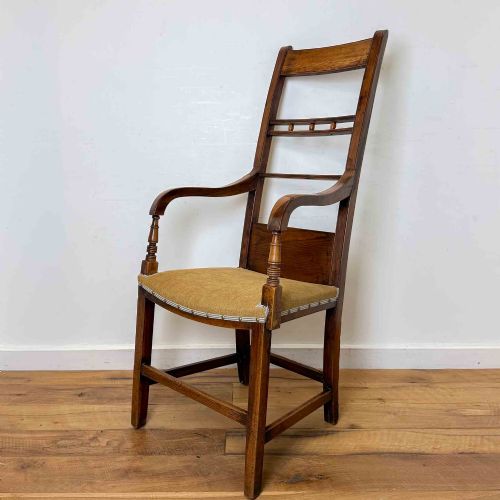

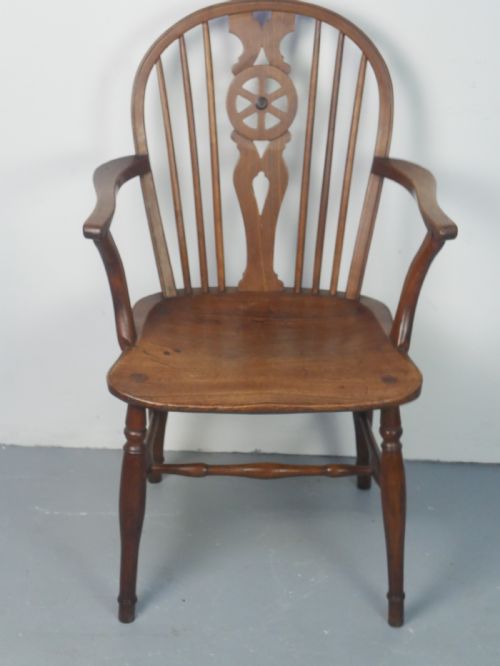


Fruitwood Country Armchair
A fruitwood country armchair brings tactile warmth and local character to an interior through honest regional craftsmanship and rich timber tones.
Fruitwood Country Armchair
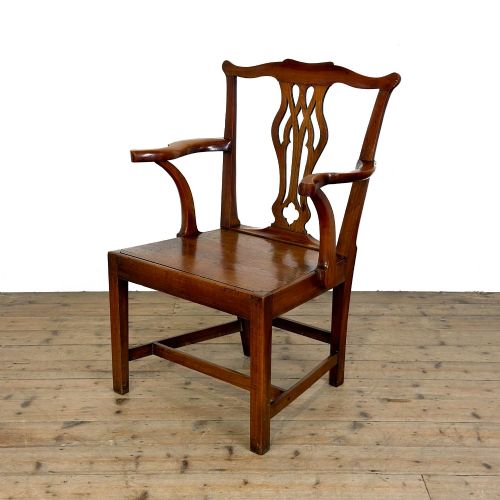
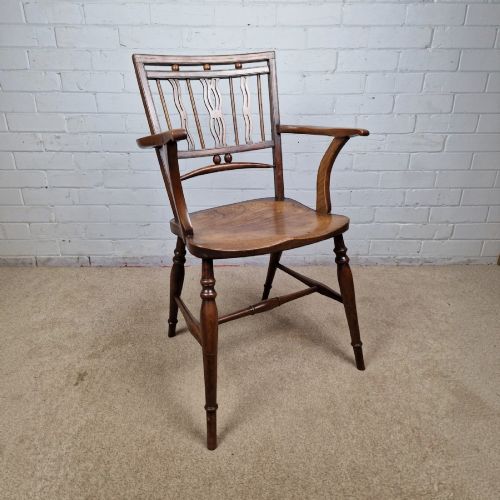
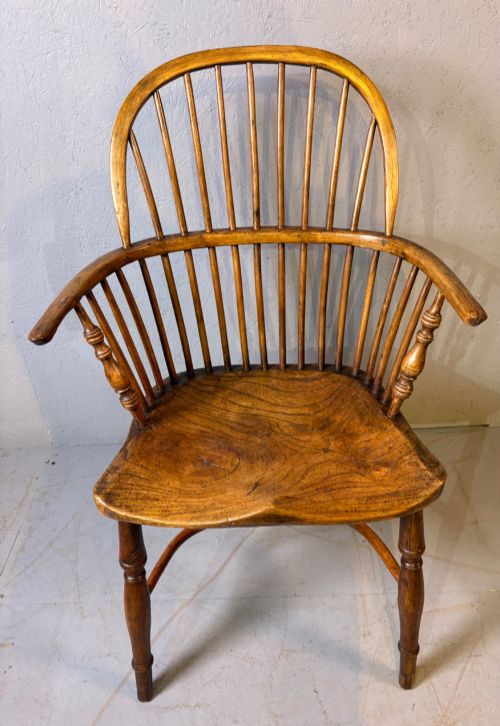
A fruitwood country armchair is a seating form shaped by regional makers from the seventeenth century through to the nineteenth century, utilising native woods rather than imported mahogany or walnut. These chairs appear in various vernacular styles, encompassing stick backs, Windsor forms, comb backs, and architectural regional designs like the Mendlesham chair.
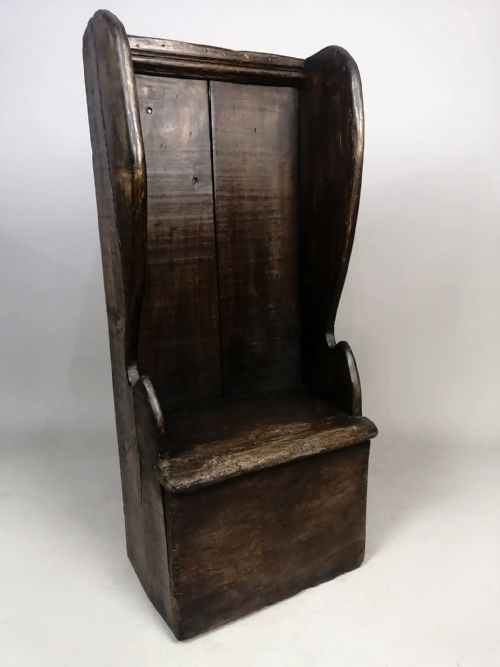
The materials reflect domestic woodland resources, combining fruitwood with elm, yew, ash, laburnum, and oak. You encounter forms ranging from child's lambing chairs to expansive farmhouse armchairs and high-backed Regency seating.
The aesthetic is distinctly provincial, moving from seventeenth-century vernacular pieces to Georgian carvers and Victorian regional interpretations. These armchairs served practical domestic roles in farmhouses and country houses, prioritising sturdy construction and comfortable proportions.
Construction and materials
Makers utilised native fruitwoods alongside complementary timbers such as elm for seats and ash or yew for spindles and bending parts. This mixed-timber construction harnessed the specific working properties of each wood, ensuring rigid frames and flexible components where needed.
Joinery methods combined traditional pegged joints, turned legs, and steam-bent elements, particularly in Windsor and stick-back varieties. Seats were frequently carved from solid elm blocks or fitted with rush inserts to provide durable daily support.
Surfaces were shaped using drawknives and spoke shaves, leaving subtle tool marks that demonstrate hand-tool proficiency. Finishing relied on natural oils and wax applications over centuries, developing deep patination on the fruitwood.
Early child's lambing chairs demonstrate that rural toddlers required draught-proof seating just as urgently as hardworking farmers.
Distinguishing quality in country seating
Quality rests in the harmony of the mixed timbers and the proportion of the turning and spindle work. A well-balanced frame maintains its structural integrity without clumsy replacement components or mismatched vernacular styles.
The depth of patination and the preservation of original surface texture separate superior examples from heavily stripped or over-restored pieces. Subtle tool marks and un-sanded transitions reveal the hand of the regional maker.
Sophistication of regional design, such as the refined back splats on Mendlesham chairs or the complex geometry of a Thames Valley comb back, elevates certain regional pieces above standard utility seating.
Mendlesham chair·Thames Valley Windsor·East Anglian Armchair·West Country Windsor
The Fruitwood Country Armchair Glossary
- Windsor chair
- A chair built with a solid wooden seat into which the legs and back spindles are separately inserted. This structural approach defines many heavy farmhouse armchairs.
- Rush seat
- A seating surface woven from dried marsh rushes, providing a resilient and textured platform. It appears frequently on regional rush-seated armchairs.
- Mendlesham chair
- A distinctive regional armchair originating from East Anglia, characterised by an inlaid back splat and upright proportions. These chairs often combine fruitwood and elm.
- Lambing chair
- A hooded or high-sided low armchair designed to shield the occupant from drafts in farmhouse interiors. Early examples are constructed from fruitwood and oak.
- Patination
- The lustrous surface sheen developed on timber over centuries through handling, waxing, and exposure to light. This quality indicates age and careful preservation.
- Spindle back
- A chair back constructed from a series of turned wooden rods or sticks. These elements provide lightweight yet robust support.
Fruitwood Country Armchair: Frequently Asked Questions
What woods were used in these chairs?
Makers constructed these chairs primarily from domestic fruitwoods, frequently pairing them with elm for solid seats and ash, yew, or laburnum for spindles and arms. This pragmatic combination utilised whatever tough native timber was locally accessible to the workshop.
Over time, these mixed timbers aged together under wax and friction, producing the varied surface tones characteristic of regional country furniture.
How do I identify a Windsor chair?
A Windsor chair is distinguished by its heavy solid wooden seat, which acts as the central anchor for both the turned legs beneath and the independent stick or spindle back above. Unlike framed upholstered chairs, every structural member fastens directly into this thick slab.
Regional variations further define them, such as the comb-back or bow-back configurations found in Thames Valley and West Country examples.
Where were these armchairs originally made?
These armchairs were produced by local village turners and regional workshops across English provinces, including East Anglia, Yorkshire, and the Thames Valley. Each district developed distinct regional traits, such as the upright lines of Mendlesham seating.
They served practical functions in farmhouses, cottages, and country houses throughout the eighteenth and nineteenth centuries.
How should I care for fruitwood furniture?
Maintenance requires keeping the timber away from direct heat sources and rapid humidity shifts to prevent wood shrinkage and joint movement. Regular application of a traditional beeswax polish preserves the surface sheen without building up heavy chemical layers.
Gentle dusting with a soft cloth protects the patination built up over generations of use.