





Carved Elm Elbow Chair
A carved elm elbow chair is a sturdy country seat built for comfort, prized for its tactile grain and honest joinery.
Carved Elm Elbow Chair
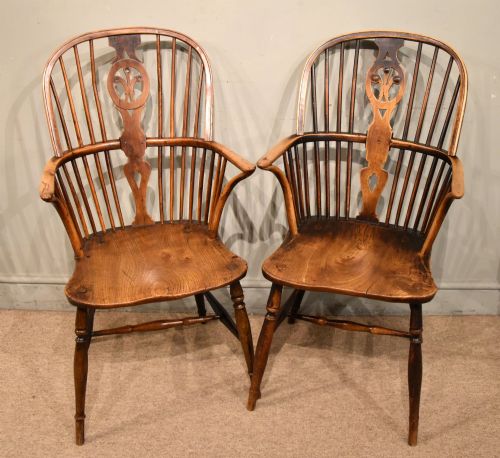
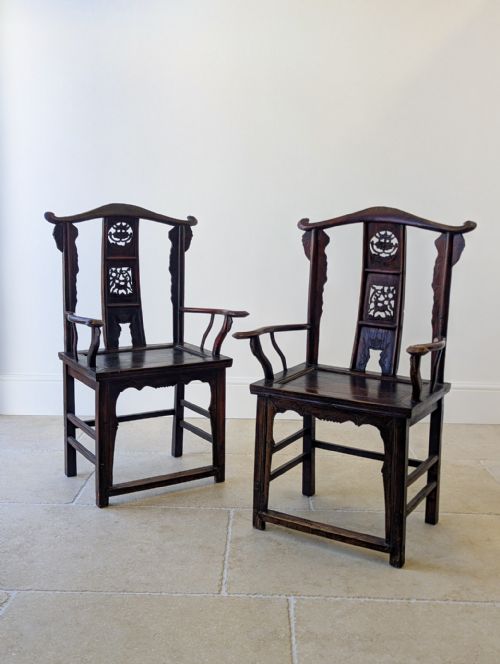
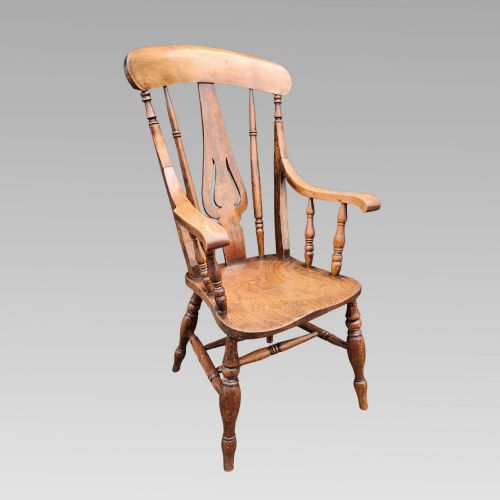
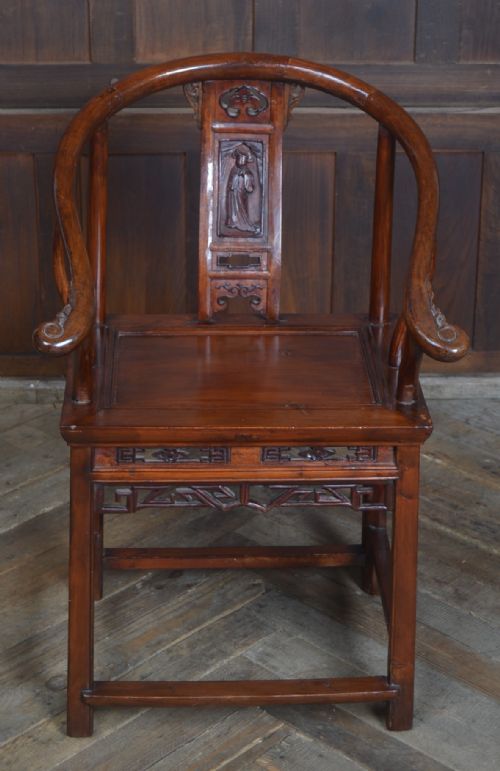
When you search for a carved elm elbow chair, you encounter a robust tradition of vernacular seating shaped by regional British and Chinese makers. These armchairs combine solid timber frames with supportive elbow rests, designed for daily use in farmhouses, cottages, and traditional parlours.
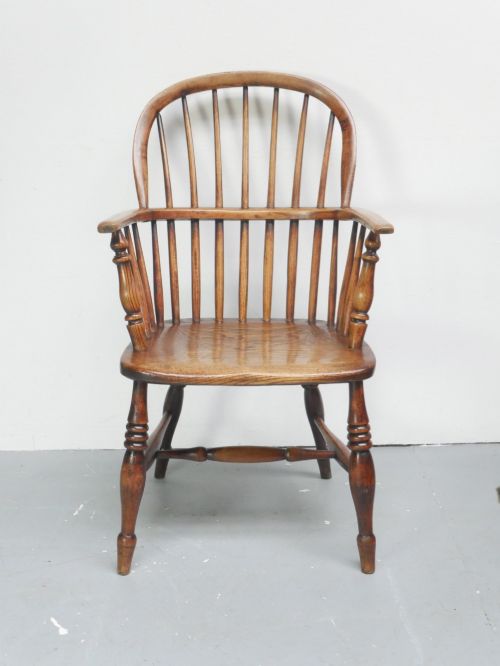
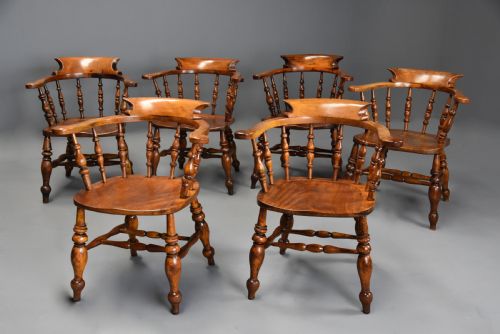
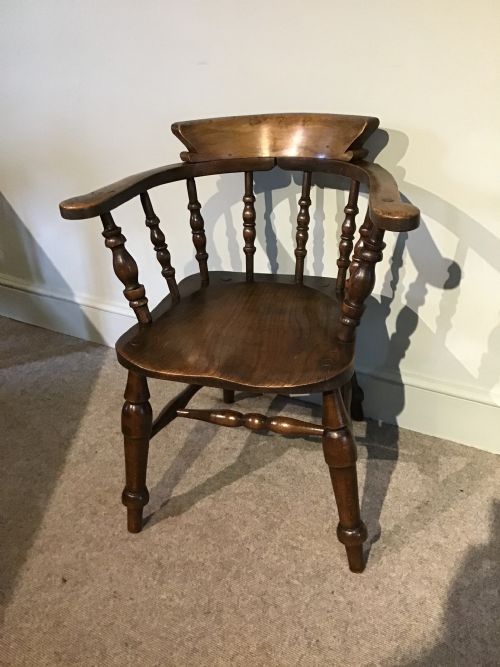
You are most likely to meet Windsor forms on this page, alongside vernacular country styles and Chinese export pieces. The periods span from the Georgian era through the Regency and Victorian years, encompassing mid-nineteenth-century smokers bows and high-backed Windsor designs.
The materials reflect a reliance on strong native timbers and exotic hardwoods, pairing elm seats with ash, yew, fruitwood, laburnum, beech, and occasional red lacquer. These pieces range from simple primitive armchairs to high-back spindle and lyre back farmhouse chairs.
How they were made
The construction relies on solid elm, often selected for seat planks due to its interlocking grain that resists splitting under stress. Makers combined this with ash, yew, fruitwood, and beech for spindles, legs, and bows, using contrasting timbers to give structure and visual depth.
Techniques centre on traditional green woodwork and spindle turning, embedding legs and spindles directly into thick carved saddle seats. Chinese export examples employ traditional joinery and rich red lacquer finishes, while British country makers used steam-bending for the continuous arm and back bows of Windsor chairs.
Materials recorded on this page include elm, ash, yew, oak, beech, lacquer, fruitwood, and laburnum.
What varies in quality
Quality rests in the balance of proportions and the integrity of the timber selection. A superior carved elm elbow chair shows thoughtful contrast between woods, such as a yew or ash hoop rising from a deeply dished elm seat, rather than a mismatched assembly of replacement parts.
The refinement of the carving and the shaping of the arms distinguish high workshop standards from basic utilitarian output. Subtle details like a well-sculpted dish seat, clean spindle turnings, and tight joints elevate an everyday farmhouse chair into a piece of accomplished vernacular design.
The Carved Elm Elbow Chair Glossary
- Elm
- A durable hardwood with a characteristic interlocking grain that makes it resistant to splitting, frequently used for solid chair seats.
- Windsor
- A chair style featuring a solid wooden seat into which the legs and back spindles are directly wedged and pegged.
- Smokers bow
- A low-backed Windsor variant with a rounded, continuous arm rail, often associated with pubs and smoking rooms.
- Comb back
- A Windsor chair design where the central vertical spindles extend upward to support a horizontal top rail resembling a comb.
- Dish seat
- A wooden seat carved into a shallow, concave depression to improve comfort for the sitter.
Carved Elm Elbow Chair: Frequently Asked Questions
What is a carved elm elbow chair?
A carved elm elbow chair is a traditional wooden armchair featuring supportive arms and a solid elm seat, typically built in regional British or Chinese workshops. These seats range from high-backed Windsor designs to low farmhouse smokers bows.
They combine practical domestic utility with distinctive vernacular character, utilising native timbers like ash, yew, and fruitwood alongside lacquered surfaces.
How were these armchairs used?
These armchairs served as principal seating in kitchens, farmhouses, drawing rooms, and communal spaces like country inns. The elbow rests provided extra comfort for prolonged sitting during meals, writing, or resting.
Their robust construction allowed them to withstand generations of daily family life and heavy domestic service.
How do I live with a country armchair?
Living with a wooden armchair involves placing it away from direct heat sources and sudden humidity changes to protect the timber and joints. Regular dusting and occasional feeding with appropriate wax maintain the finish of the elm and secondary woods.
These chairs blend easily into modern and traditional interiors alike, serving as functional reading seats or sculptural accents.
How do I tell periods apart?
Differentiating periods relies on observing stylistic markers, turning profiles, and construction methods. Georgian and Regency examples often display lighter frame proportions and refined spindle work, while Victorian pieces tend toward heavier farmhouse builds.
Chinese export items introduce distinct stylistic elements like yoke-backs and red lacquer finishes characteristic of nineteenth-century workshops.