

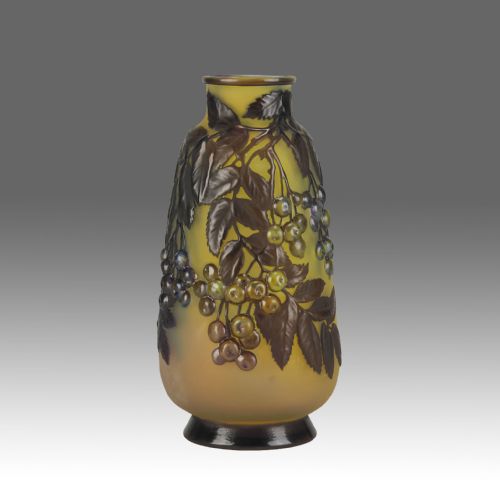


Frosted Cameo Glass Vase
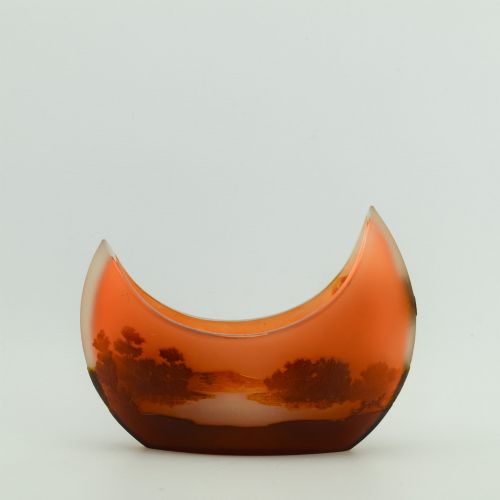
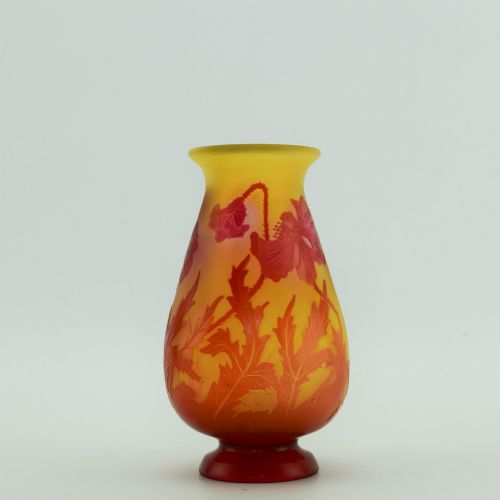
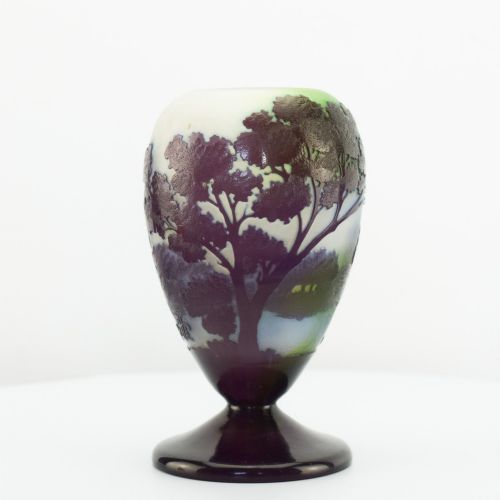
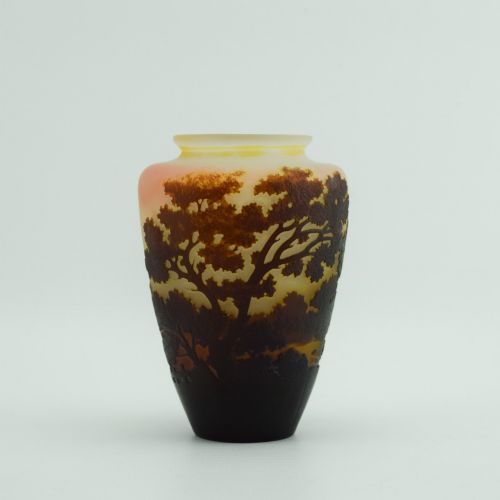
A frosted cameo glass vase brings rich floral and landscape motifs into a room through layered coloured glass.
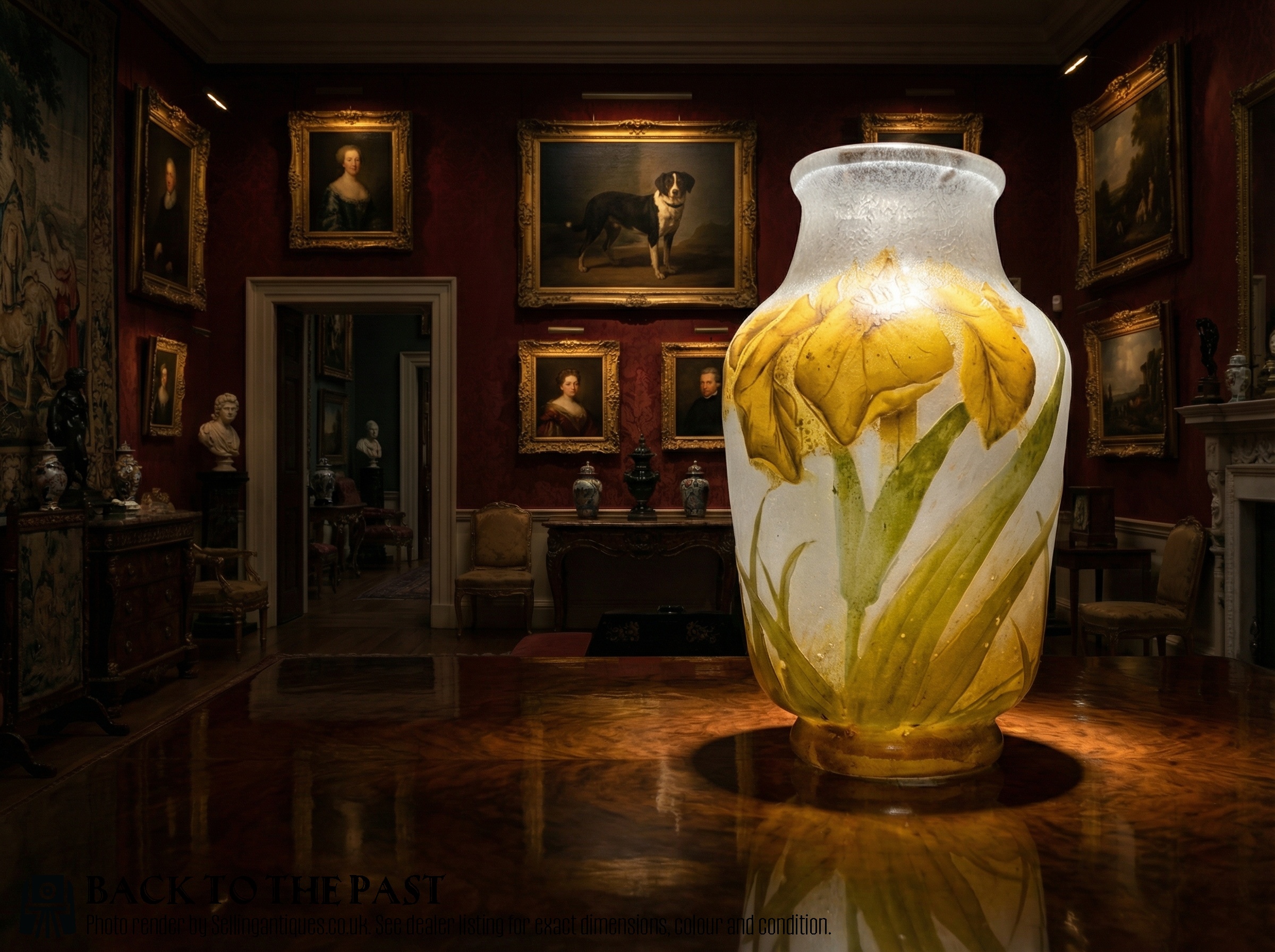
Frosted Cameo Glass Vase
When you examine a frosted cameo glass vase, you are looking at vessels originating primarily from the late nineteenth century and the early decades of the twentieth century. These pieces emerge from periods defined by the Art Nouveau and Art Deco movements, capturing botanical and natural scenes across various forms.
The version you are most likely to encounter on this page is an Art Nouveau piece featuring floral or landscape decoration. Makers utilised techniques of acid-etching and enamelling on blown glass to build distinct visual depth on each vase.
What varies in quality
Quality in these pieces rests upon the precision of the acid-etching and the crispness of the cameo relief. A finer vase displays subtle gradations of colour and clean separation between the background and the raised botanical design.
Materials recorded across the inventory include blown glass, acid-etched surfaces, applied enamel, and frosted finishes working in tandem.
Gallé·Daum Nancy·Thomas Webb and Sons·Legras·Paul Nicolas
The Frosted Cameo Glass Vase Glossary
- Cameo Glass
- Glass vessels formed with multiple layers of distinct colours, carved or acid-etched in relief to create a contrasting design. This method draws inspiration from ancient carved gemstone techniques.
- Acid-Etched Glass
- Glass decorated by applying hydrofluoric acid to eat away specific areas of the surface. This chemical process achieves precise control over the depth and texture of the carved design.
- Frosted Glass
- Glass treated to produce a textured, translucent surface that diffuses light softly. It is frequently used in cameo pieces to create a matte background that makes coloured motifs stand out.
- Soufflé
- A technique where glass is blown into a metal cage or mould during production to alter its shape and texture. This method results in an expanded, highly organic form.
- Art Nouveau
- An international style of art and architecture prevalent from the late nineteenth century until the First World War. It is characterised by intricate asymmetrical lines inspired by natural forms such as plants and flowers.
Frosted Cameo Glass Vase: Frequently Asked Questions
What is a cameo glass vase?
A cameo glass vase is a vessel formed from multiple fused layers of coloured glass. Artisans carve or etch away the outer layers to leave a raised design in relief.
These pieces often feature botanical or landscape scenes developed during the late nineteenth and early twentieth centuries. The resulting contrast gives the decoration a distinct sculptural quality.
How do I identify Art Nouveau glass?
Art Nouveau glass is recognised by its flowing, organic lines and motifs drawn directly from nature. You will frequently see depictions of flowers, ferns, and landscapes integrated into the form of the vase.
The colour palettes tend to reflect natural shades, and the surface textures often combine frosted finishes with glossy relief work. Signatures or atelier marks embedded in the cameo design also point to this period.
What does acid-etched mean?
Acid-etching is a manufacturing process where hydrofluoric acid is applied to glass to dissolve specific areas. This technique allows artisans to carve away outer layers of coloured glass with high precision.
By controlling the exposure to acid, makers create graduated depths and textured backgrounds that define the cameo effect. It replaced slower manual wheel-carving methods for many turn-of-the-century workshops.
How should I display my vase?
Display these vases in a secure location away from direct, harsh sunlight to protect any enamelled details. Placing them near a light source helps illuminate the translucent qualities of the frosted and layered glass.
Ensure the vessel sits on a stable, level surface where it cannot be easily knocked. Allowing adequate space around the piece lets the botanical or landscape motifs be viewed clearly from multiple angles.