






Fringed Tribal Wall Textile
A fringed tribal wall textile brings tactile depth and rich nomadic heritage to a room through authentic Central Asian weaving and embroidery.
Fringed Tribal Wall Textile
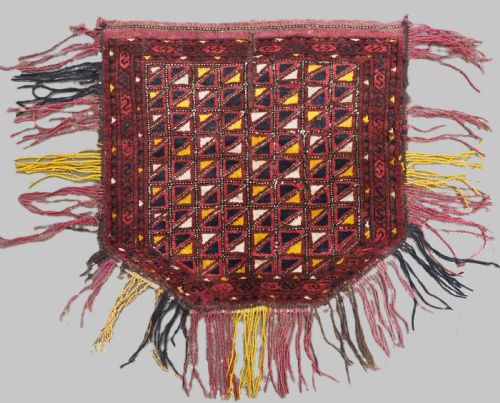
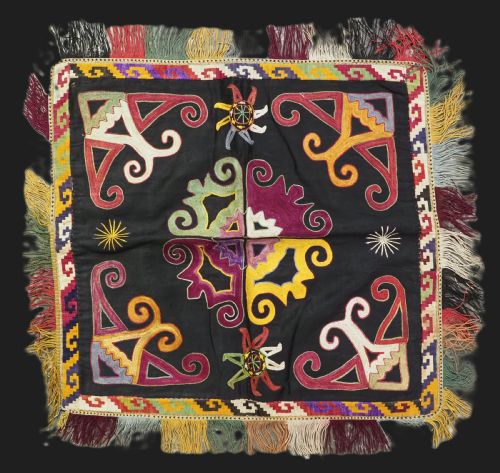
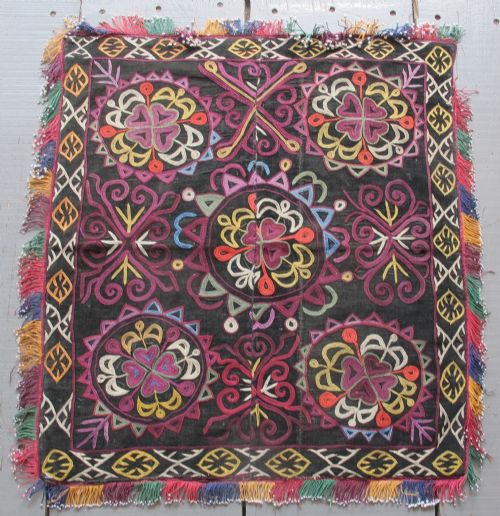
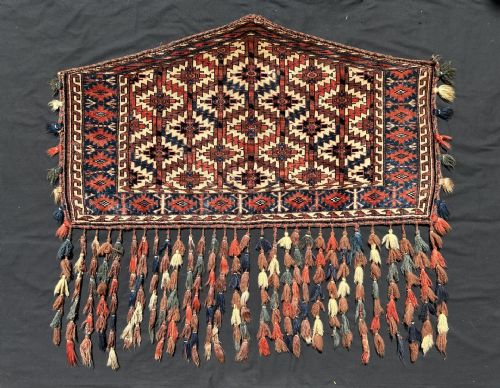
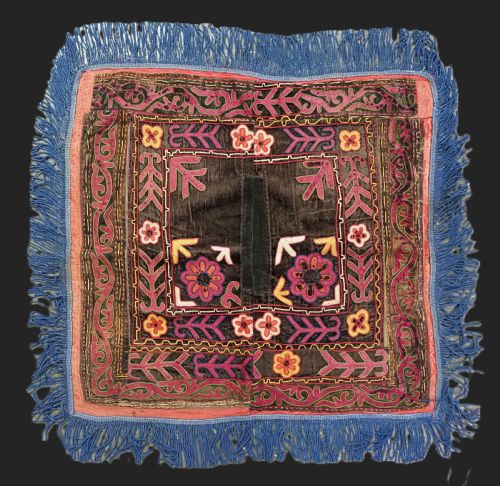
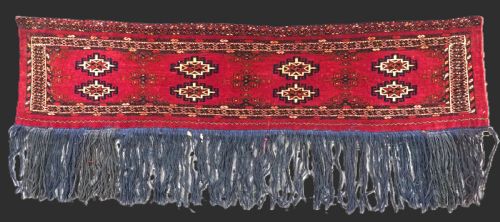
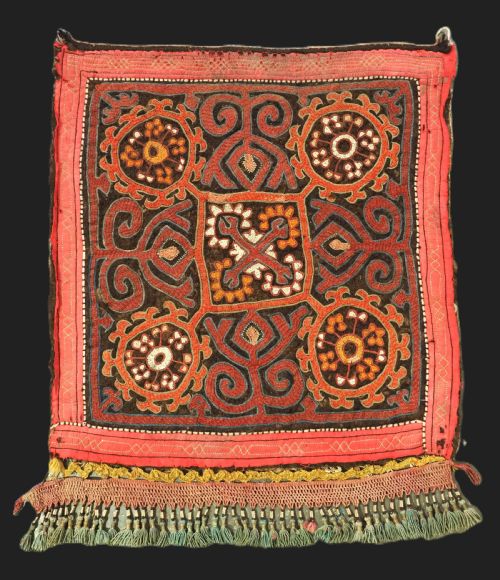
A fringed tribal wall textile encompasses various nomadic weavings, dowry embroideries, and animal trappings adapted for interior display. The selection on this page draws heavily from Central Asian and Persian tribal traditions, spanning the late nineteenth century into the early decades of the twentieth century.
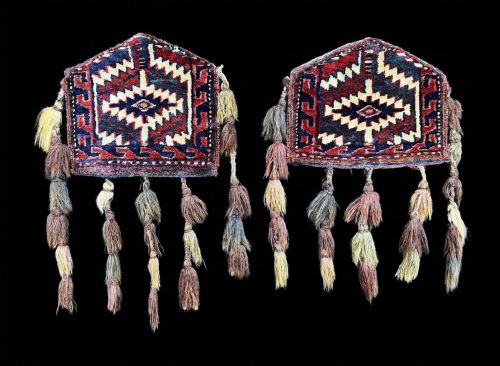
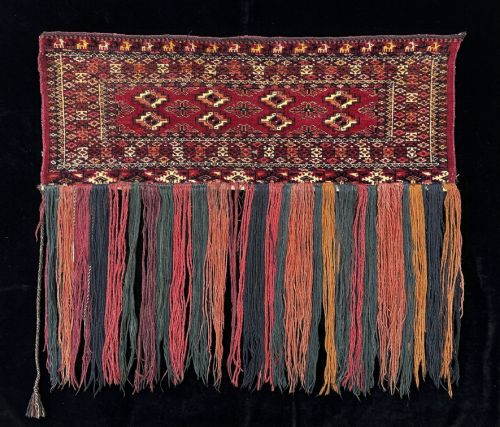
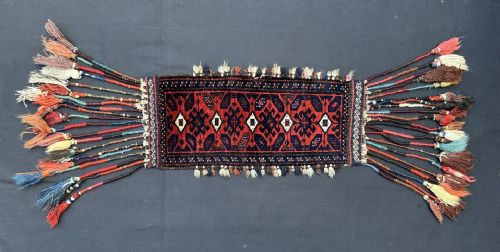
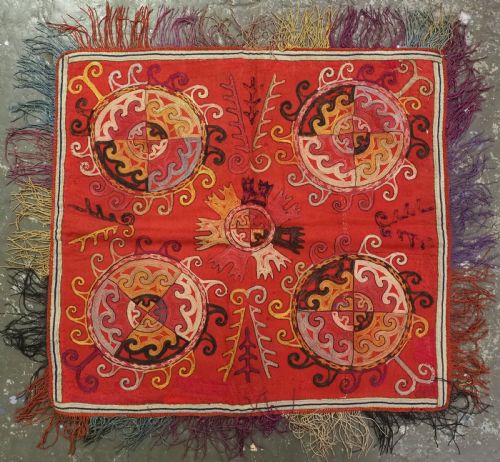
Buyers frequently encounter specific forms such as the Uzbek Lakai ilgich dowry embroidery, Turkmen torbas, and asmalyks. These pieces originate from distinct nomadic groups including the Tekke, Yomut, Ersari, and Saryk tribes across Turkmenistan, Afghanistan, and Uzbekistan.
Many of these works began life as functional domestic items, tent furnishings, or animal adornments before finding a second life as wall art. Their survival depends on durable wool and cotton foundations embellished with silk needlework, natural dyes, and applied fringes or tassels.
Materials and Technique
Makers relied primarily on wool, cotton, and silk foundations, often combining plain weave structures with intricate surface embroidery or flat-weave techniques. Natural dyes imparted deep, saturated tones to the wool and silk threads used across these textiles.
Artisans frequently enriched the compositions with tactile embellishments such as glass beads, cowrie shells, felted panels, and velvet sections. Applied fringes, tassels, and original plain-weave backs complete the construction of many surviving examples.
Fringed Tribal Wall Textile Retail Price Guide 2026
Typical asking prices for fringed tribal wall textile among the pieces listed under this phrase on Sellingantiques today, from the lower quarter to the upper quarter. They describe what is for sale here now, not the wider market.
Listings span the late nineteenth century through to the 1930s, featuring wool, cotton, silk, and felt substrates enhanced by natural dyes.
Factors of Quality
Quality rests upon the precision of the drawing, the crispness of tribal motifs such as gul patterns or curled leaf designs, and the depth of the natural dye palette. Superior examples display confident needlework and balanced proportions that elevate them beyond standard utility items.
The survival of original structural elements like tassels, fringes, and plain-weave backs determines the integrity of a piece. Finer works maintain their structural density and colour saturation over generations of use.
The Fringed Tribal Wall Textile Glossary
- Ilgich
- A type of embroidered dowry hanging produced by the Lakai tribe of Uzbekistan. These pieces often feature energetic silk needlework on wool or cotton grounds.
- Torba
- A small tent bag or wall hanging traditionally used for storage within a nomadic dwelling. They frequently display characteristic tribal guls and geometric motifs.
- Asmalyk
- A large, pentagonal trapping traditionally hung on the flanks of a camel during wedding processions. Collectors prize them for their distinctive shape and balanced design.
- Gul
- A medallion or repeated octagonal motif central to Turkmen carpet and textile design. Each tribal group utilised distinct variations of these patterns.
- Kapunuk
- A decorative doorway hanging placed around the entrance of a nomadic yurt or tent. These textiles often incorporate protective symbols and rich borders.
Fringed Tribal Wall Textile: Frequently Asked Questions
How were these textiles used originally?
Nomadic communities utilised these pieces inside tents for storage, decoration, and ceremonial purposes. Many served as dowry items, bed decorations, or wedding furnishings.
Animal trappings such as asmalyks and torbas were placed on horses or camels during festive processions before transitioning into domestic settings.
How do I hang a textile safely?
Mounting requires weight distribution across the entire top edge to prevent distortion of the fabric and foundation. A cotton sleeve hand-stitched to the reverse allows a concealed wooden batten to hold the piece.
Display locations should avoid direct sunlight to protect the natural dyes and silk threads from fading over time.
How can I tell different tribes apart?
Tribal attribution relies on specific design vocabulary, colour palettes, and structural techniques unique to each group. Turkmen subgroups like the Tekke, Yomut, and Ersari utilise distinct gul medallions and border arrangements.
Uzbek Lakai pieces are readily identified by their exuberant, curvilinear silk embroidery rather than the strict geometric formats of Turkmen weavings.