




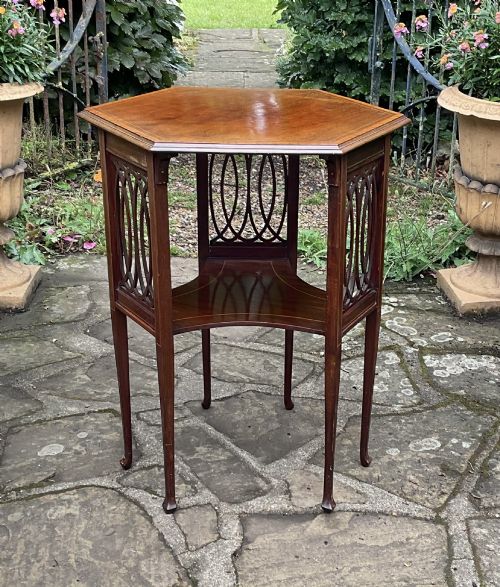


Fretwork Tier Stand
A fretwork tier stand provides open display shelving with intricate pierced woodwork, offering both practical surface area and ornamental elegance for a room.
Fretwork Tier Stand
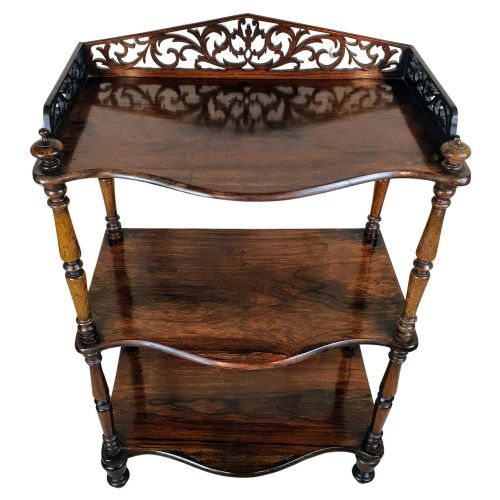
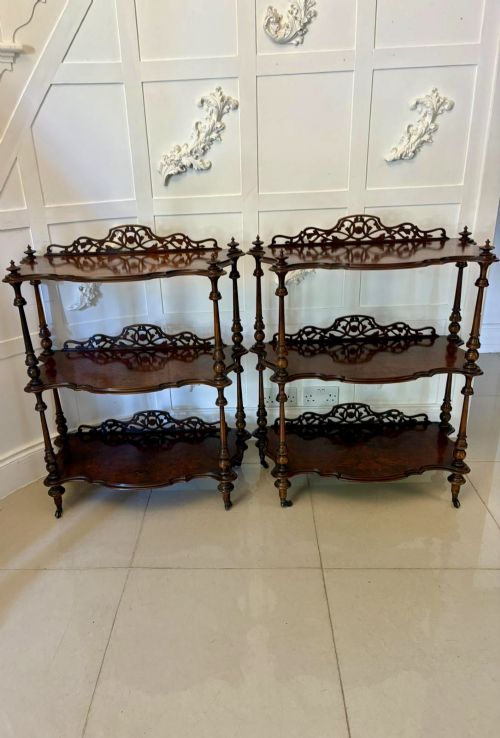
A fretwork tier stand encompasses multi-level display pieces, notably whatnots, corner shelves, and occasional tables featuring pierced wooden ornamentation. These items originate predominantly from the Victorian and Edwardian eras, spanning the nineteenth and early twentieth centuries.
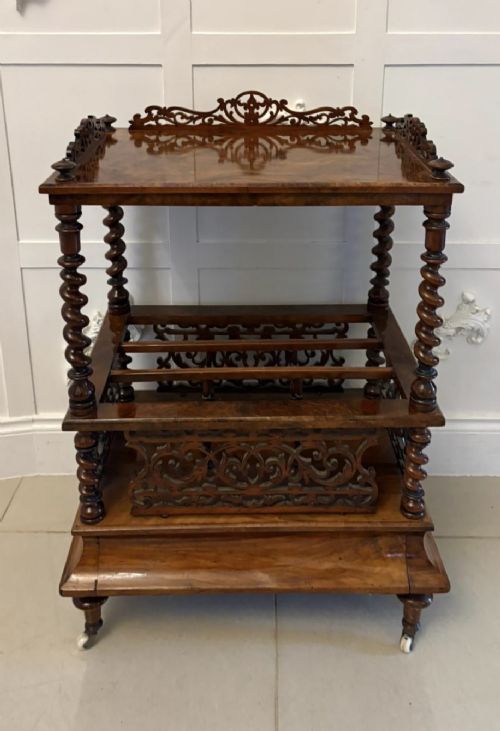
The most common examples on this page are walnut and mahogany whatnots and side tables, often incorporating multiple tiers supported by turned or carved uprights. Pieces range from straightforward corner brackets to elaborate freestanding displays with marquetry inlay and glass elements.
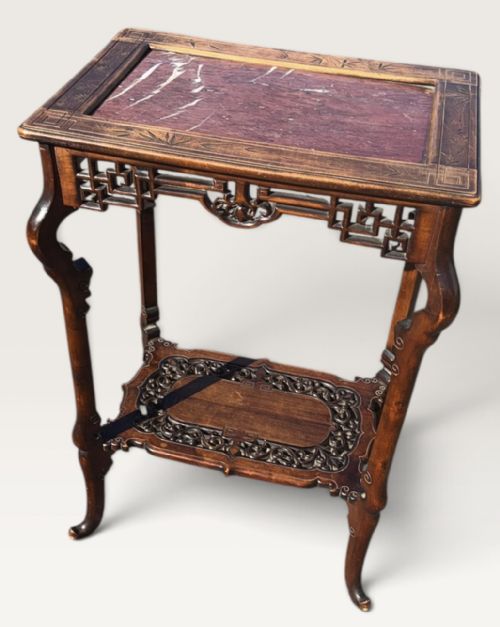
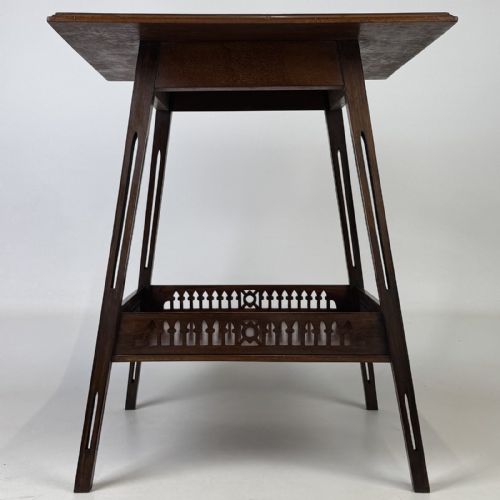
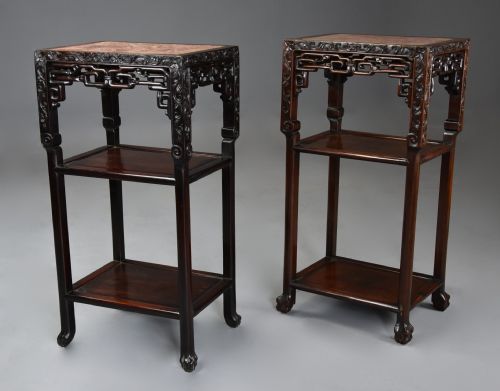
Makers and designers of the period drew upon diverse influences, producing items in styles as varied as Chinese traditional, Arts and Crafts, and Aesthetic Movement alongside standard Victorian revival designs. Buyers select these tiered units to display ceramics, books, or plants in domestic interiors.
What separates the finest examples
Quality rests upon the crispness of the fret-cutting and the choice of primary timber, with burr walnut and richly figured mahogany sitting at the upper end of the scale. Superior pieces display meticulous attention to jointing and stability across multiple tiers, ensuring the uprights remain plumb and rigid.
The presence of sophisticated decorative techniques, such as detailed marquetry inlay or matched pairs, elevates a piece beyond standard utility furniture. Finer examples also reflect thoughtful design lineages, including pieces referencing specific aesthetic movement traditions or known designer patterns.
Fretwork Tier Stand Retail Price Guide 2026
Typical asking prices for fretwork tier stand among the pieces listed under this phrase on Sellingantiques today, from the lower quarter to the upper quarter. They describe what is for sale here now, not the wider market.
Listings feature walnut, burr walnut, mahogany, oak, and rosewood, spanning periods from the mid-Victorian era through to Edwardian times.
The Fretwork Tier Stand Glossary
- Fretwork
- Openwork ornamentation cut from a thin board with a piercing saw. This technique creates delicate geometric or floral patterns along the edges of shelves and galleries.
- Whatnot
- A piece of furniture consisting of several open shelves for displaying small objects. They emerged in the nineteenth century as popular additions to parlours and drawing rooms.
- Marquetry
- The art and craft of applying pieces of veneer to a structure to form decorative designs. Craftsmen utilise various coloured woods to build up pictorial or abstract motifs.
- Canterbury
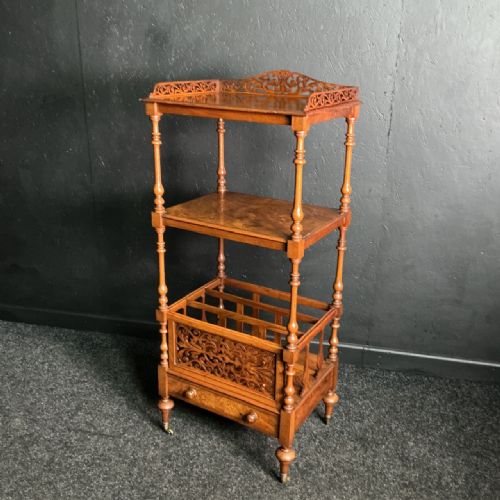
- A low stand fitted with partitions for sheet music, books, or periodicals. Many incorporate tiered sections or lower drawers alongside pierced wooden divisions.
Fretwork Tier Stand: Frequently Asked Questions
What is a fretwork tier stand used for?
These tiered pieces serve primarily as open display furniture for decorative items, ceramics, and books within domestic rooms. Their multiple shelves maximise vertical surface area without dominating the floor space.
They also function as occasional tables, plant stands, or corner units, allowing collectors to arrange collections across distinct levels. The open design keeps rooms feeling light while providing dedicated storage for small possessions.
How do I date a Victorian tier stand?
Dating relies on examining the timber species, construction methods, and stylistic cues present in the woodwork. Pieces from the middle of the nineteenth century frequently employ solid burr walnut with turned columns and straightforward bracket supports.
Later Victorian and Edwardian examples often introduce marquetry inlay, lighter mahogany timbers, or Arts and Crafts influence. The complexity of the fret-cutting and the specific joinery techniques inside the frame further help narrow down the period of manufacture.
Are these stands sturdy enough for daily use?
Most tier stands are structurally sound for normal display purposes, provided the vertical supports and shelf joints remain tight. However, their multi-tiered construction means they are best positioned against a wall or in a corner where accidental knocks are minimised.
Freestanding variations require level flooring to prevent rocking across the multiple levels. Distributing heavier items on the lower shelves helps maintain overall stability.
What is the difference between a whatnot and a side table?
A whatnot is specifically characterised by having three or more distinct open shelves stacked vertically to form a display tower. They frequently incorporate corner configurations or delicate galleries along the shelf edges.
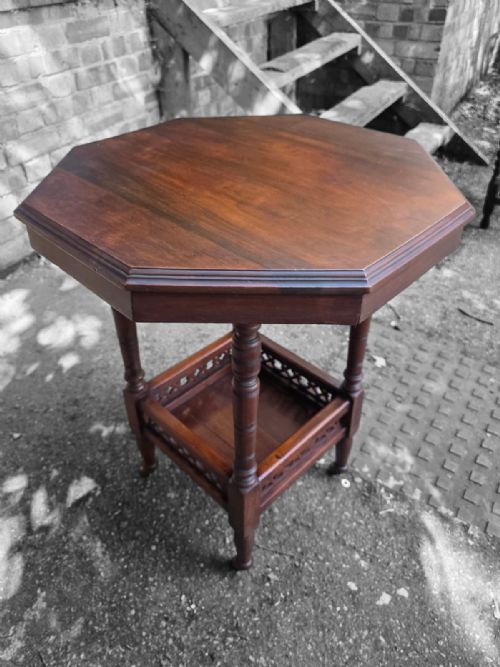
An occasional or side table prioritises a primary upper surface for working or placing lamps, sometimes supplemented by a single lower tier or magazine rack. While both utilise fretwork decoration, their primary structural purpose differs between tiered display and surface utility.