

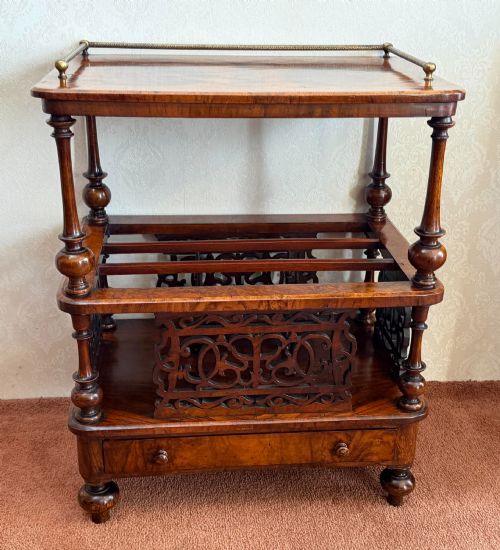
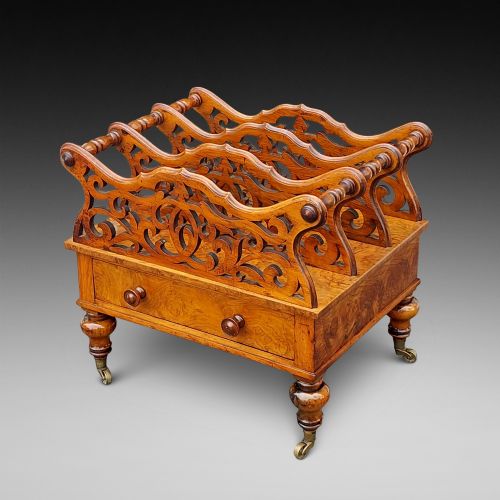

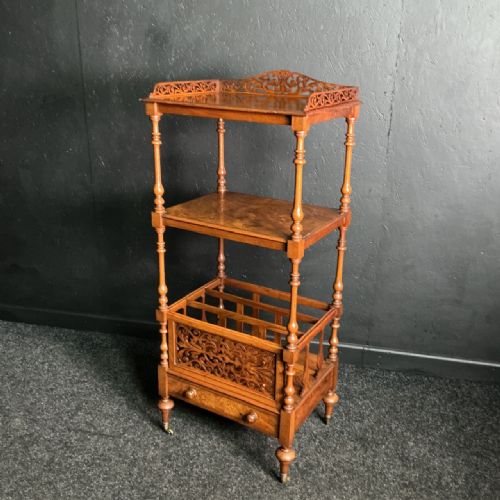
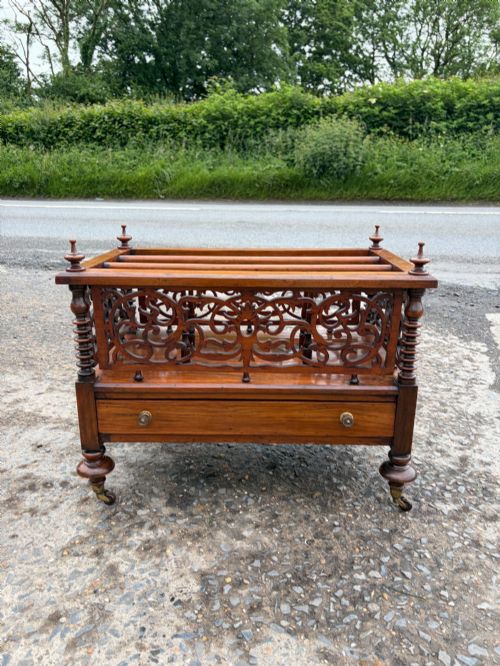

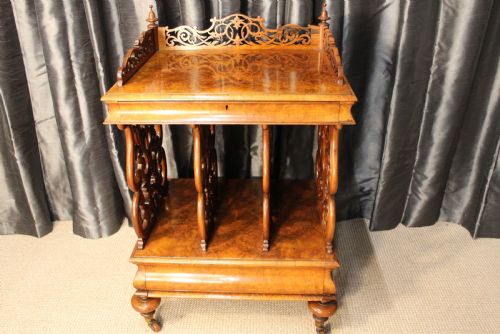


Fretwork Music Rack
A fretwork music rack is a pierced wooden stand for scores, built mostly in walnut or rosewood during the nineteenth century.
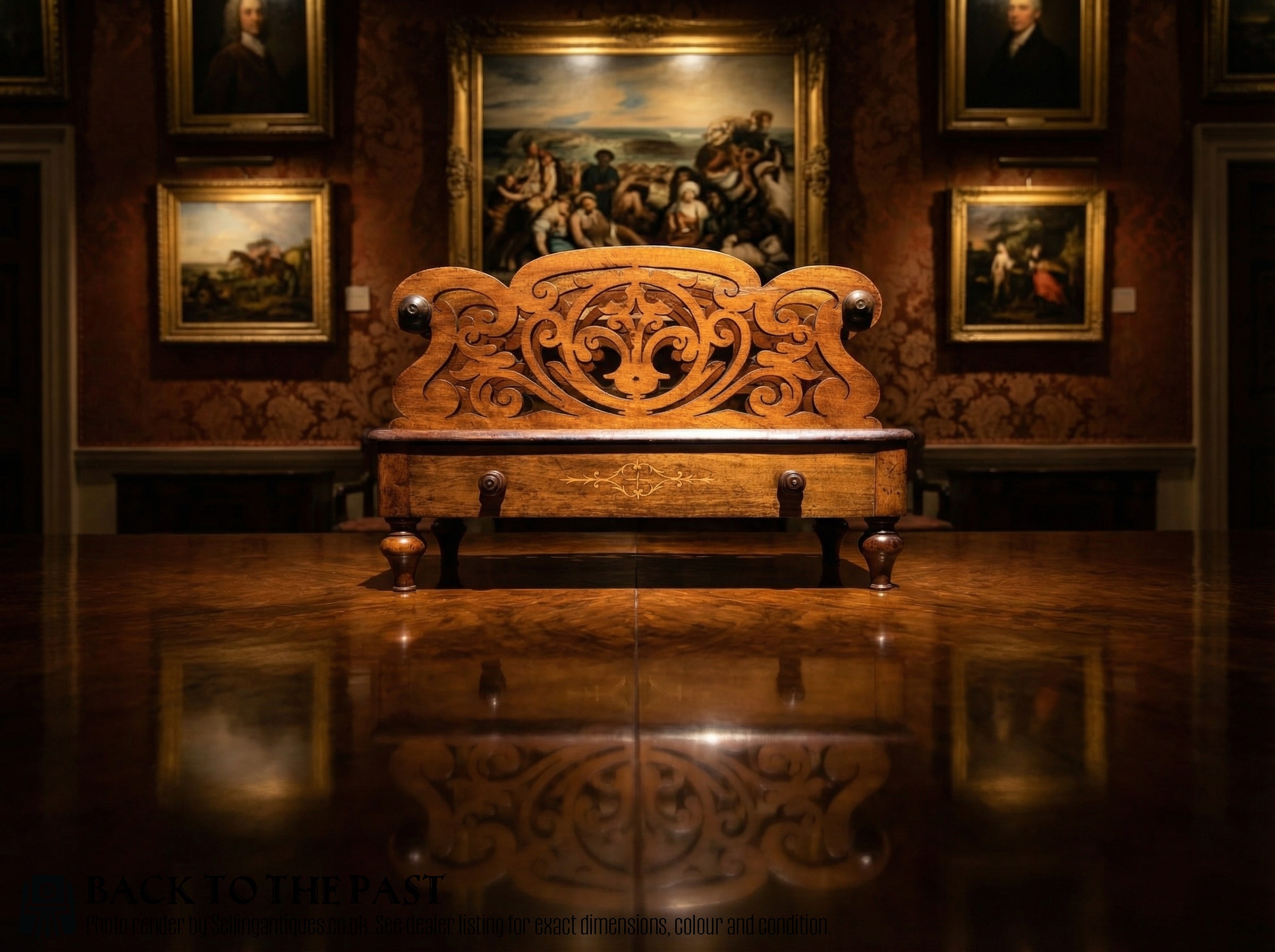
Fretwork Music Rack
When you search for a fretwork music rack, you enter a field dominated by Victorian canterburys, whatnots, and magazine stands. These pieces date from the nineteenth century, specifically spanning decades from eighteen fifty to eighteen eighty, reflecting the period's domestic musical habits.
You are most likely to meet walnut, burr walnut, and rosewood examples on this page, often formed with pierced scroll divisions or specific fretwork patterns. Many combine the function of a music rack with that of an occasional table or a small drawer unit, standing freely in a nineteenth-century parlour.
The evidence shows these forms appearing as oval tables, lamp tables, and multi-section stands alongside dedicated canterburys. Such pieces serve as both practical storage for sheets and decorative items of nineteenth-century furniture.
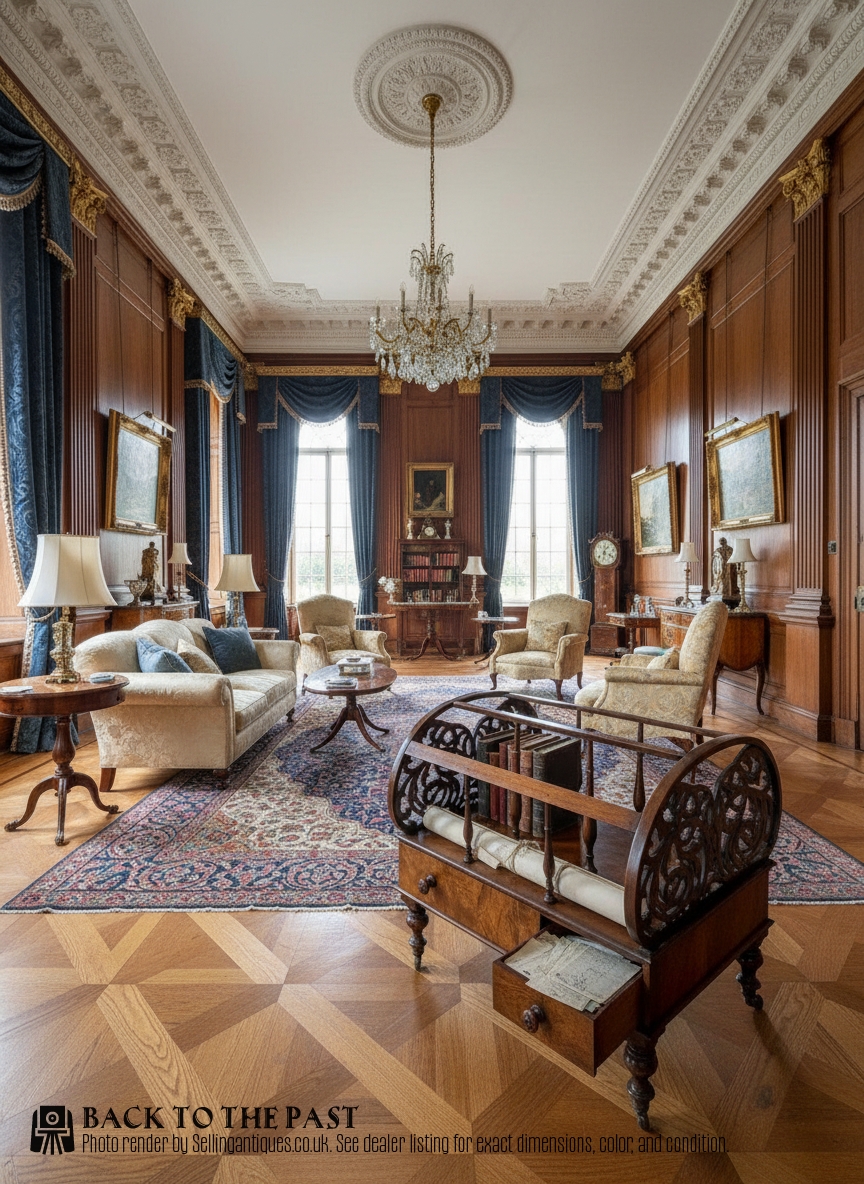
How they were made
Cabinet makers utilised dense hardwoods like walnut, burr walnut, mahogany, and rosewood for these stands. These timbers provided the structural strength needed to support pierced divisions and open framework without sagging under the weight of bound volumes.
Pierced scrollwork and inlay defined the decorative technique, requiring precise hand-sawing through thin timber sections. Brass elements and ceramic components occasionally appeared as castors or feet, adding mobility and subtle contrast to the dark timber surfaces.
Fretwork Music Rack Retail Price Guide 2026
Typical asking prices for fretwork music rack among the pieces listed under this phrase on Sellingantiques today, from the lower quarter to the upper quarter. They describe what is for sale here now, not the wider market.
Object forms recorded here include canterburys, whatnots, occasional tables, lamp tables, and combined magazine racks.
What varies in quality
The distinction between standard domestic pieces and finer examples rests upon the choice of timber figure and the complexity of the pierced fretwork. Burr walnut and rich rosewood grain patterns elevate a simple music rack into a more ambitious piece of parlour furniture.
Execution of the pierced scroll divisions shows the maker's hand, where sharp corners and balanced symmetry signal careful workshop production. The presence of inlaid detail and integrated drawers further separates basic utility stands from more elaborate Victorian forms.
The Fretwork Music Rack Glossary
- Canterbury
- A low stand fitted with upright divisions for holding sheet music, folios, or magazines. The form frequently includes a small drawer beneath and rests on short legs with castors.
- Whatnot
- A multi-shelved open cabinet designed for displaying small ornaments and books. In this context, it often merges with the canterbury form.
- Burr walnut
- Timber taken from a walnut tree outgrowth, producing intricate, swirling grain patterns. It was sliced into thin veneers for nineteenth-century cabinet fronts and table tops.
- Gothic revival
- An architectural and decorative style drawing on medieval forms, visible in nineteenth-century furnishings through pointed arches and heavy geometric pierced motifs.
- Fretwork
- Ornamental woodwork pierced with a pattern by a fretsaw. This technique creates the open, scroll-cut divisions characteristic of these stands.
Fretwork Music Rack: Frequently Asked Questions
What is a fretwork music rack?
A fretwork music rack is a nineteenth-century stand designed to hold sheet music and folios, distinguished by pierced wooden divisions and scrollwork.
Most examples date from the Victorian period and appear in timbers like walnut, burr walnut, and rosewood.
How were these music racks used?
They sat beside pianos or in sitting rooms to keep sheet music and scores organised and close to hand during parlour performances.
Many doubled as occasional tables, lamp tables, or small whatnots with drawers for musical accessories.
How do I identify a Victorian piece?
Victorian pieces display characteristic nineteenth-century timber choices, such as burr walnut veneer, rosewood, and mahogany.
Construction methods typically involve hand-pierced fretwork divisions, turned supports, and sometimes brass castors on the feet.
What woods were used for them?
Cabinet makers built these racks using dense hardwoods capable of holding delicate pierced designs without splitting.
Walnut, burr walnut, rosewood, and mahogany appear frequently across the available nineteenth-century pieces.