



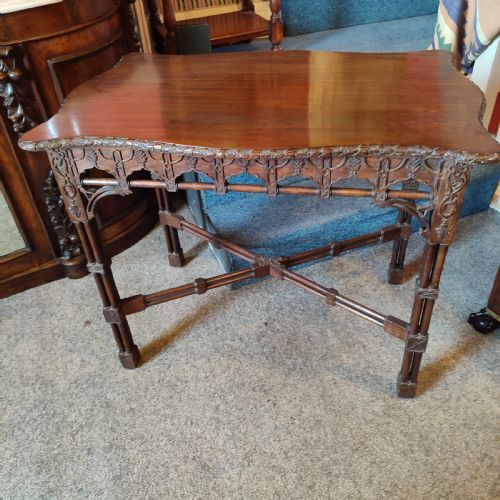
Fretwork Carved Accent Table
A fretwork carved accent table brings intricate openwork and rich timber grain into a room, offering a surface that holds a lamp or a cup with considerable style.

Fretwork Carved Accent Table
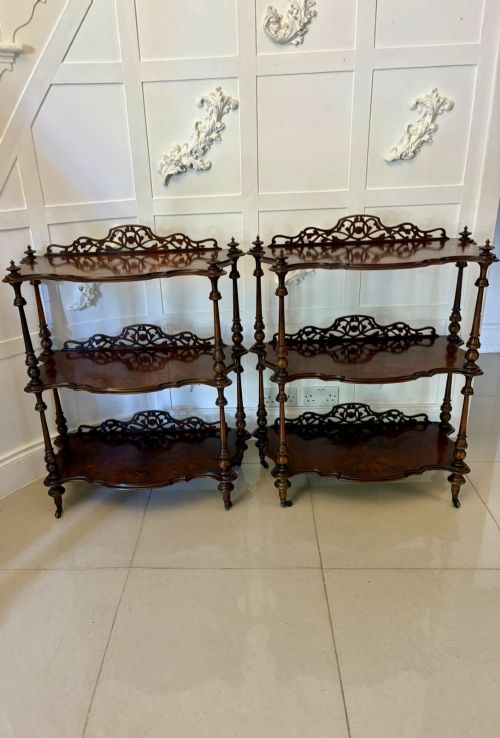
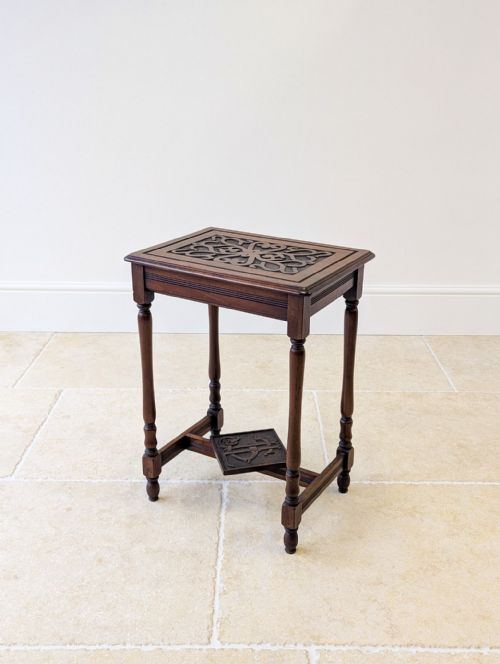
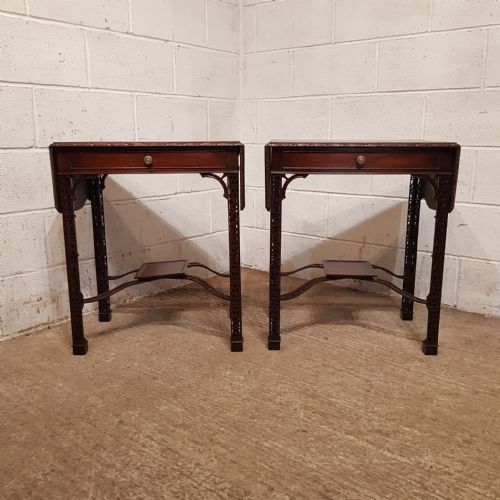
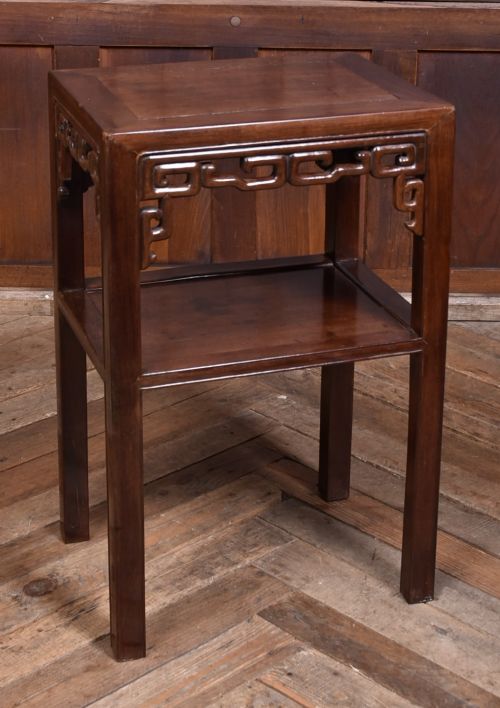
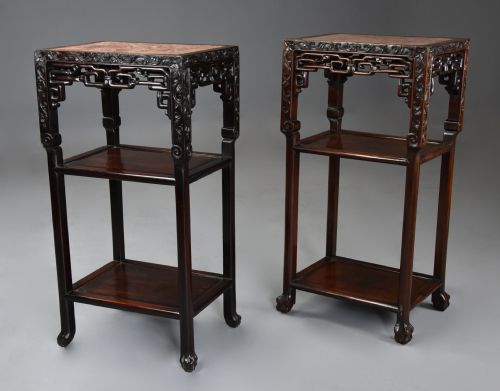
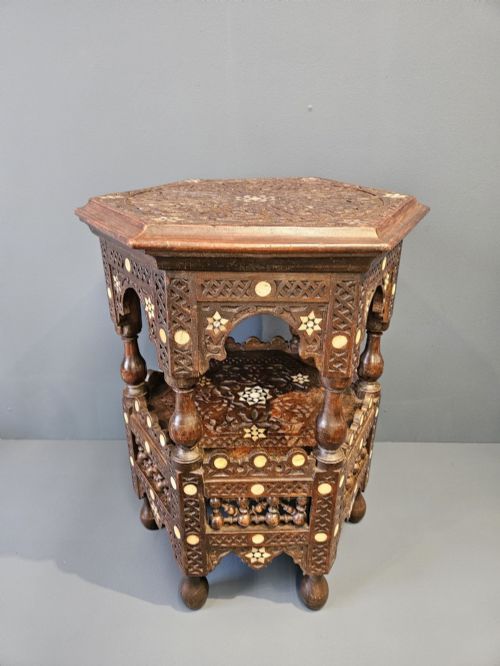
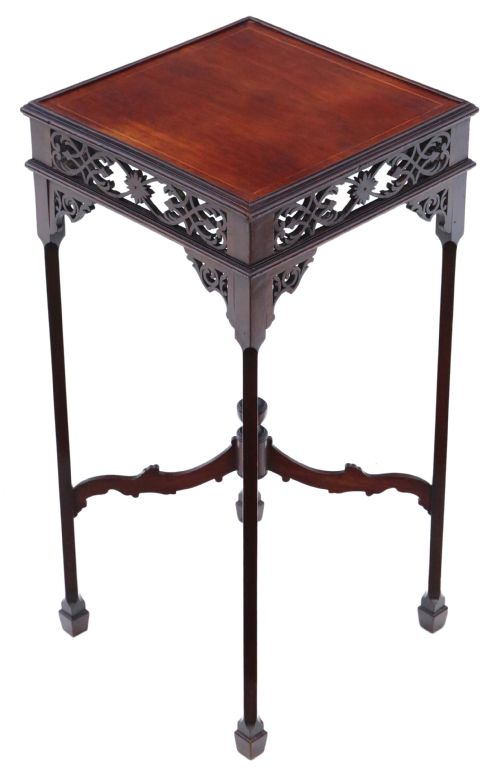
A fretwork carved accent table encompasses small occasional surfaces, side tables, and plant stands produced across the nineteenth and early twentieth centuries. These pieces draw on diverse design traditions, ranging from Chippendale revival and Chinese traditional styles to Anglo-Indian and Moorish revival work.
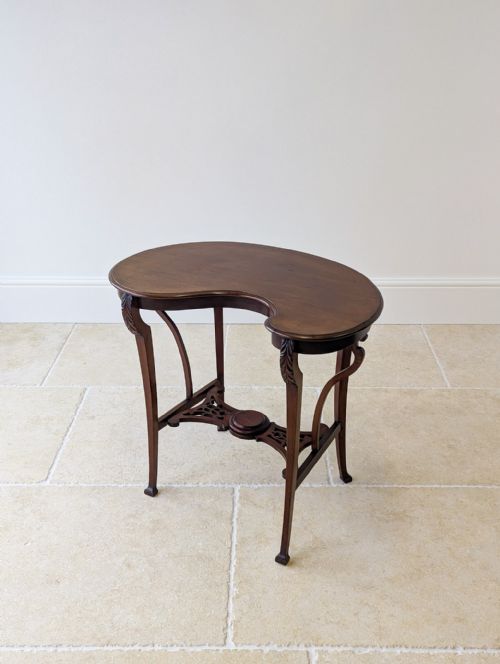
Buyers most frequently encounter mahogany and walnut side tables, along with occasional tables and whatnots dated to the Victorian and Edwardian eras. The form often serves as a central point in a room, functioning as a lamp table, wine table, or plant stand.
The selection ranges from mid-eighteenth century prototypes to later revival interpretations spanning the 1860s through the 1930s. Each example relies on pierced wooden panels and turned or carved supports to create a distinct silhouette.
Indicators of quality
Quality rests upon the crispness of the pierced carving and the selection of timber figures, such as burr walnut or dense mahogany. Superior examples display precise joinery and clean lines within the openwork panels.
The integration of secondary materials like bone inlay or brass accents distinguishes finer commissions from standard production pieces. Overall proportions and the stability of the frame further separate the top tier of work from routine manufacturing.
Listings span periods from the mid eighteenth century through the 1930s, featuring mahogany, walnut, teak, marble, and bone inlay.
The Fretwork Carved Accent Table Glossary
- Fretwork
- Ornamental design created by piercing wood with a fretsaw to form open patterns. This technique defines the visual lightness of the table top or apron.
- Whatnot
- A multi-tiered piece of furniture designed for displaying ornaments or books. Examples on this page include walnut construction from the nineteenth century.
- Chippendale Revival
- A late nineteenth and early twentieth century style copying eighteenth century mahogany designs. It frequently incorporates pierced brackets and intricate leg carving.
- Occasional table
- A small, movable table intended for specific, intermittent use in a room. These pieces appear in various timbers including walnut and mahogany.
- Plant stand
- A tall, slender table designed to elevate botanical displays. Listings show examples in hardwood from the late nineteenth century.
Fretwork Carved Accent Table: Frequently Asked Questions
What is a fretwork carved accent table used for?
These tables provide a decorative surface for lamps, books, or plants while adding architectural interest to a room.
Their compact size allows them to sit easily beside seating or in corners where a larger piece would crowd the space.
How do I date a Victorian side table?
Dating relies on timber selection, construction methods, and stylistic cues recorded in the piece.
Victorian examples often combine denser hardwoods with specific revival motifs characteristic of the mid to late nineteenth century.
What is the difference between an occasional table and a side table?
An occasional table is generally designed to be easily moved and used for specific tasks as needed.
A side table often remains stationary against a wall or beside furniture, though both categories share similar scales and functions.
Are these tables sturdy enough for daily use?
Solid timber construction and traditional joinery give these tables adequate strength for holding lamps and small objects.
The intricate pierced carving requires sensible care to avoid snagging fabrics or applying excessive lateral force.