
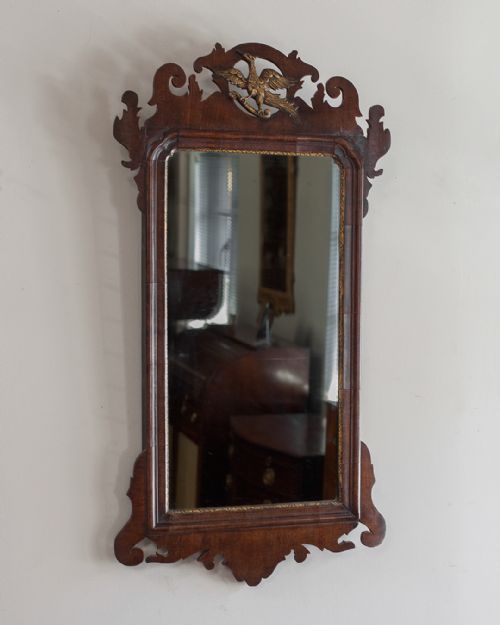
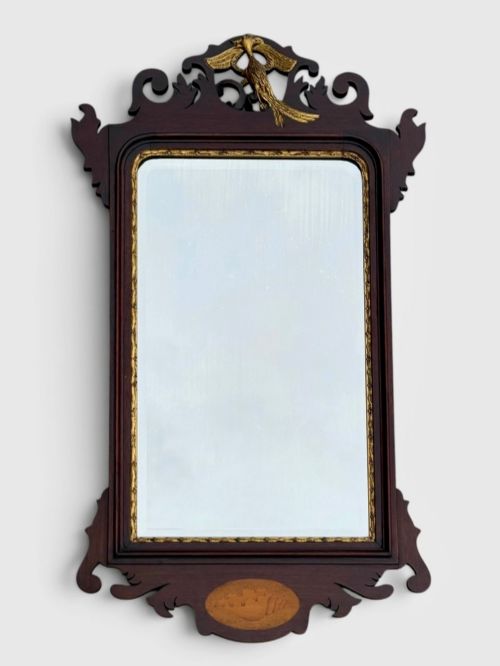
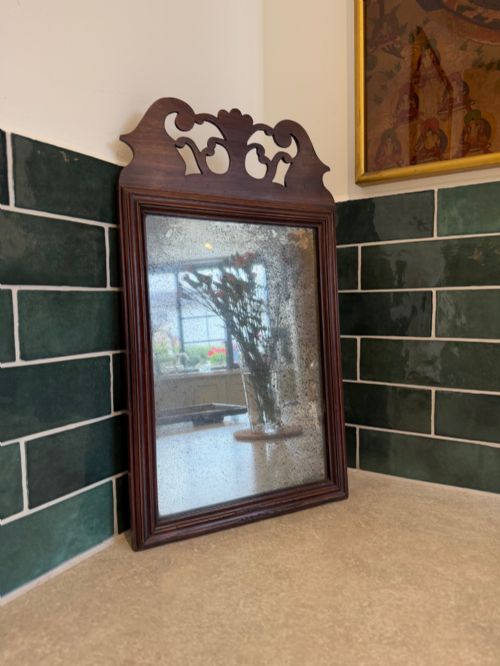
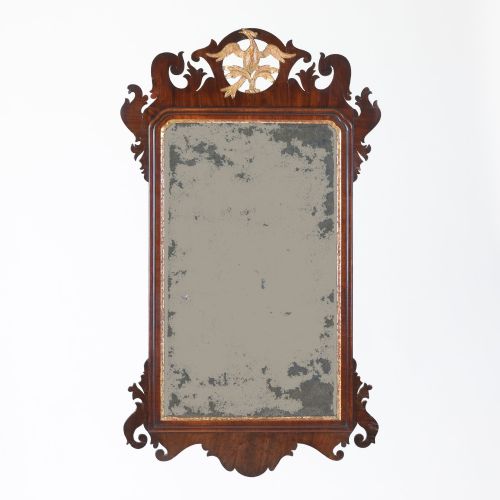
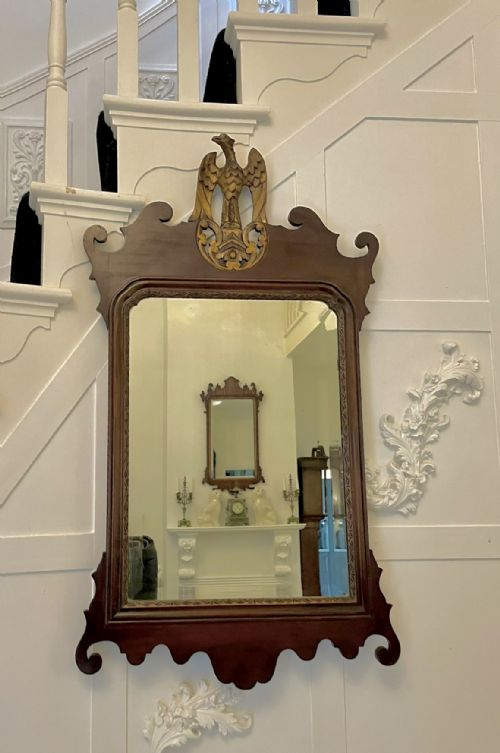


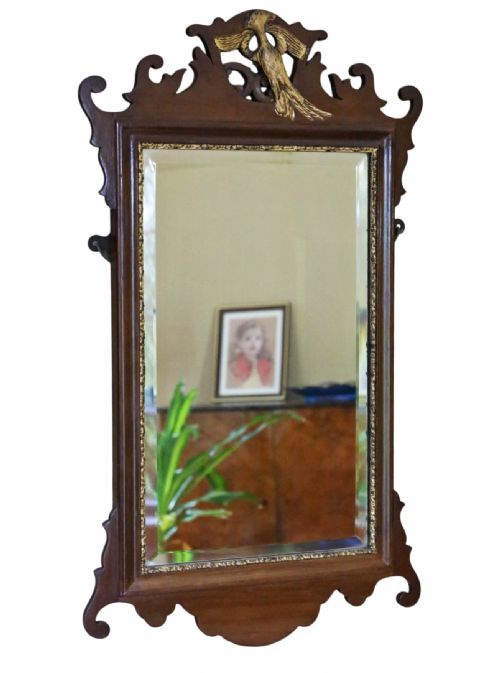


Fretted Mahogany Mirror
A fretted mahogany mirror brings crisp fretwork and rich timbers to a wall, offering the classic lines collectors prize in period rooms.
Fretted Mahogany Mirror
When you search for a fretted mahogany mirror, you encounter wall mirrors and overmantels originating from the Georgian period through to the Edwardian and Victorian eras. The most common examples on this page date from the eighteenth century or follow Georgian and Chippendale styles executed in later revivals around nineteen hundred.
These pieces typically take the form of wall mirrors featuring pierced wooden frames alongside larger overmantel formats. Walnut occasionally appears alongside the dominant mahogany, while giltwood accents and satinwood inlay frequently enrich the carved decoration.
How they were made
The construction relies upon solid mahogany timbers shaped with fretsaws to create intricate scrollwork and open panels. Cabinetmakers utilised mirror glass set within these pierced wooden frames, often incorporating parcel gilt details to highlight the carved motifs.
Inlaid versions integrate contrasting woods like satinwood into the primary mahogany structure, whilst revivals from later periods employ bevel-edged glass alongside traditional fret-cut gilt and mahogany assembly methods.
Ho-Ho birds keep a watchful eye from the crests of these frames, bringing mythical phoenix energy straight to the hallway.
What varies in quality
The fineness of the pierced fretwork separates standard examples from superior pieces, particularly where scrollwork remains crisp and deeply carved rather than blunt or shallow. The selection of timber also dictates the standard, with flame mahogany figuring creating a more commanding visual presence than plain grain.
Integration of original gilding and sophisticated inlay work elevates a piece, whilst the proportion between the wooden frame and the mirror glass determines the overall harmony of the design.
The Fretted Mahogany Mirror Glossary
- Fretwork
- Pierced decorative woodwork created by cutting patterns through thin timber panels. This technique forms the characteristic silhouette of the frame.
- Parcel gilt
- Partially gilded decoration applied to specific carved details of the wooden frame. It creates contrast against the dark mahogany.
- Overmantel
- A large mirror designed specifically to hang above a fireplace mantelpiece. These often span a wider format than standard wall mirrors.
- Giltwood
- Timber that has been coated with gold leaf or metallic paint. It frequently accents the crests and borders of Georgian frames.
- Inlay
- Contrasting pieces of wood inserted into recesses within the primary timber surface. Satinwood often provides this lighter contrast.
Fretted Mahogany Mirror: Frequently Asked Questions
Where should I hang a fretted mahogany mirror?
These mirrors suit principal reception rooms or above a living room fireplace where their reflective glass and detailed woodwork can catch the light. They also sit well in entrance halls above console tables.
Ensure the wall fixings can support the weight of the timber frame, particularly on larger Georgian and Edwardian examples.
How do I date a fretted mahogany mirror?
Dating relies upon examining the timber grain, the style of the fretwork, and the construction techniques visible on the reverse of the frame. Eighteenth-century pieces display distinct hand-tool marks and period timber characteristics.
Revival pieces from around nineteen hundred often feature machine-cut precision or bevel-edged glass that differs from older manufacturing methods.
What is a Ho-Ho bird on these mirrors?
The Ho-Ho bird is a stylized Chinese phoenix motif frequently carved into the crest of Georgian and Chippendale style mirror frames. It symbolizes virtue and prosperity in decorative arts.
This mythical bird appears perched at the top of the pierced mahogany fretwork, often surrounded by scrolling foliage.
Are all these mirrors from the eighteenth century?
No, the selection includes pieces from the eighteenth century alongside Victorian and Edwardian interpretations built in the Georgian Revival style. Makers in nineteen hundred frequently replicated earlier Chippendale designs.
Examining the materials and construction helps distinguish original Georgian items from later nineteenth and twentieth-century revivals.