

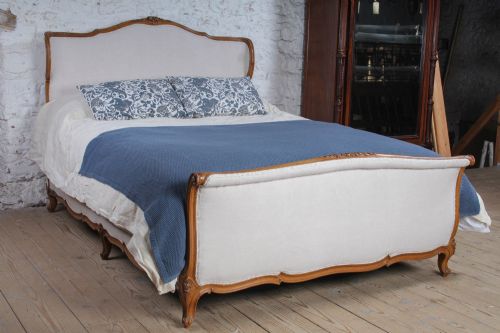
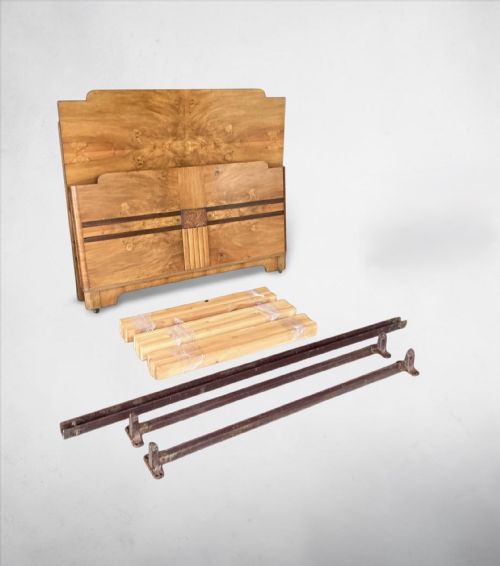
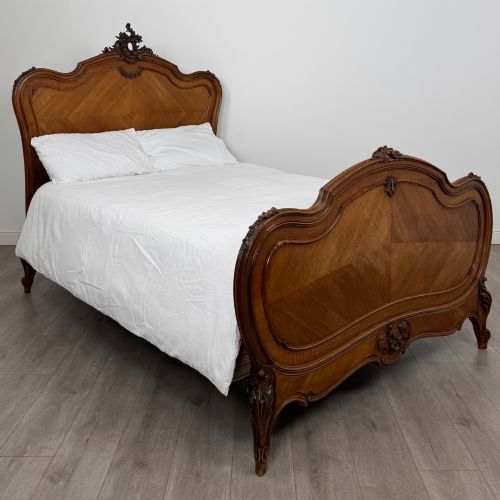
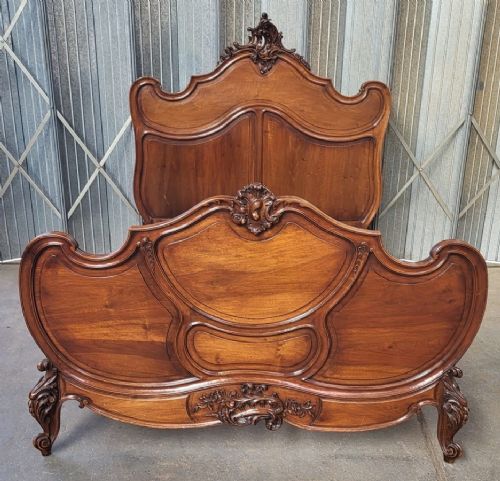


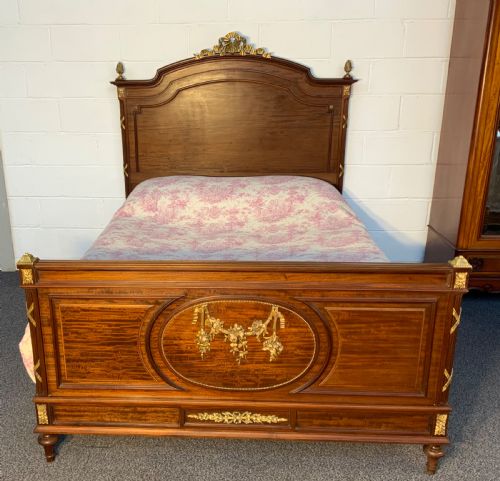

French Walnut Bedstead
A french walnut bedstead brings architectural presence and rich grain to a bedroom, drawing on nineteenth-century Parisian craftsmanship.
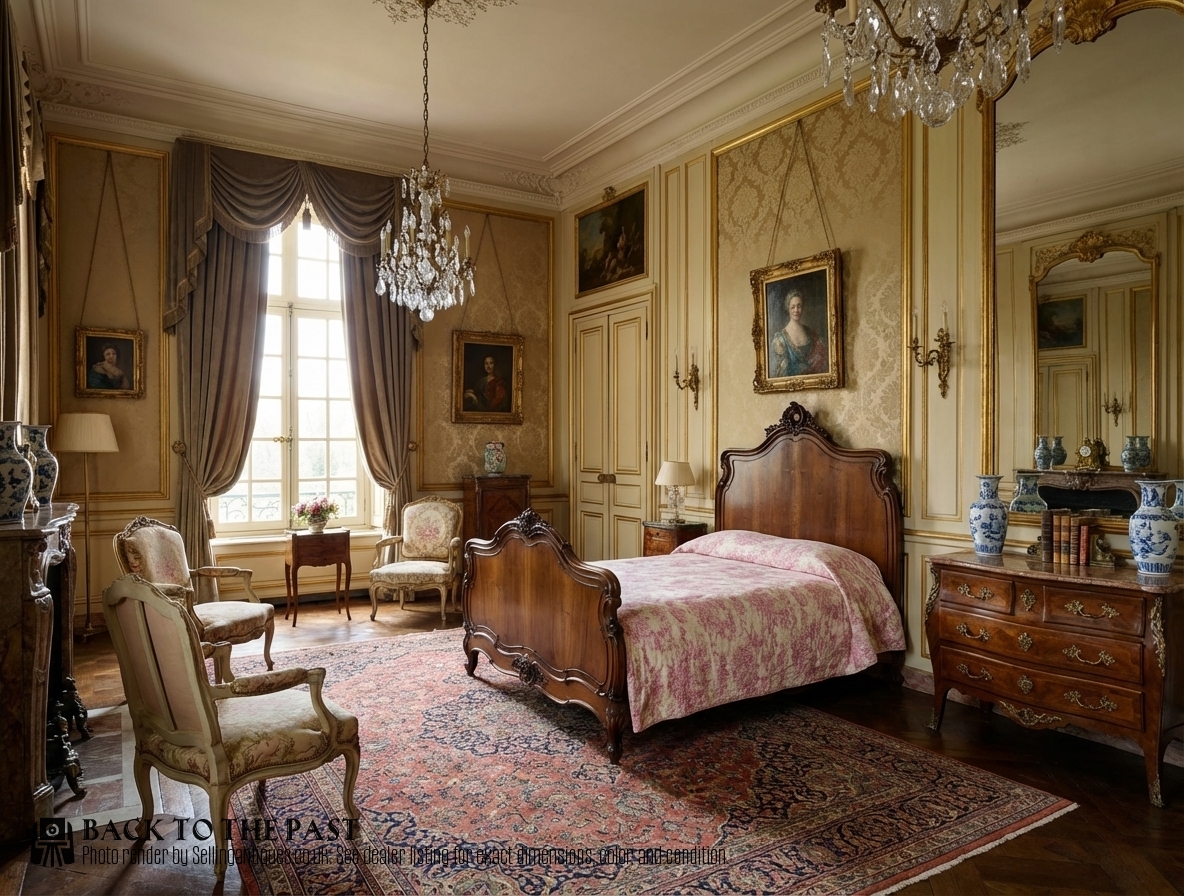
What these beds are
A french walnut bedstead is a substantial sleeping piece originating from the nineteenth century, including specific dates such as 1870 and 1910. These frames appear in king size, large king size, and double proportions, designed for prominent domestic spaces.
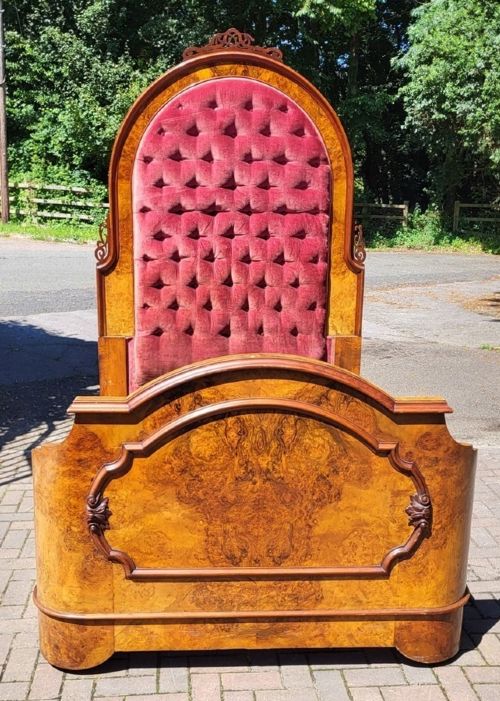
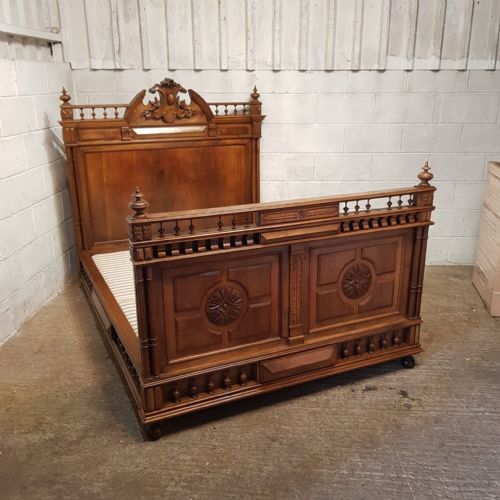
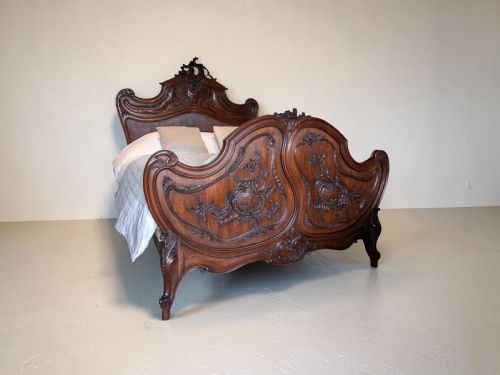
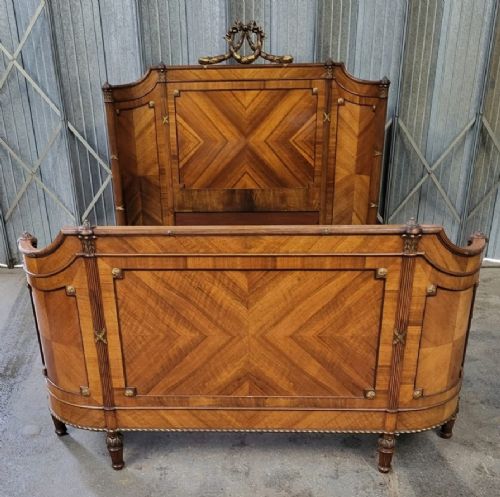
The styles range widely across the selections, encompassing French Renaissance Revival, Louis XV, Louis XVI, French Chateau, and French Rococo. Buyers frequently encounter carved woodwork alongside quarter-veneered surfaces and marquetry decoration.
Originating from France, these beds reflect historical cabinet-making traditions through named periods and distinct regional revivals. They stand as primary architectural elements within period bedroom schemes.
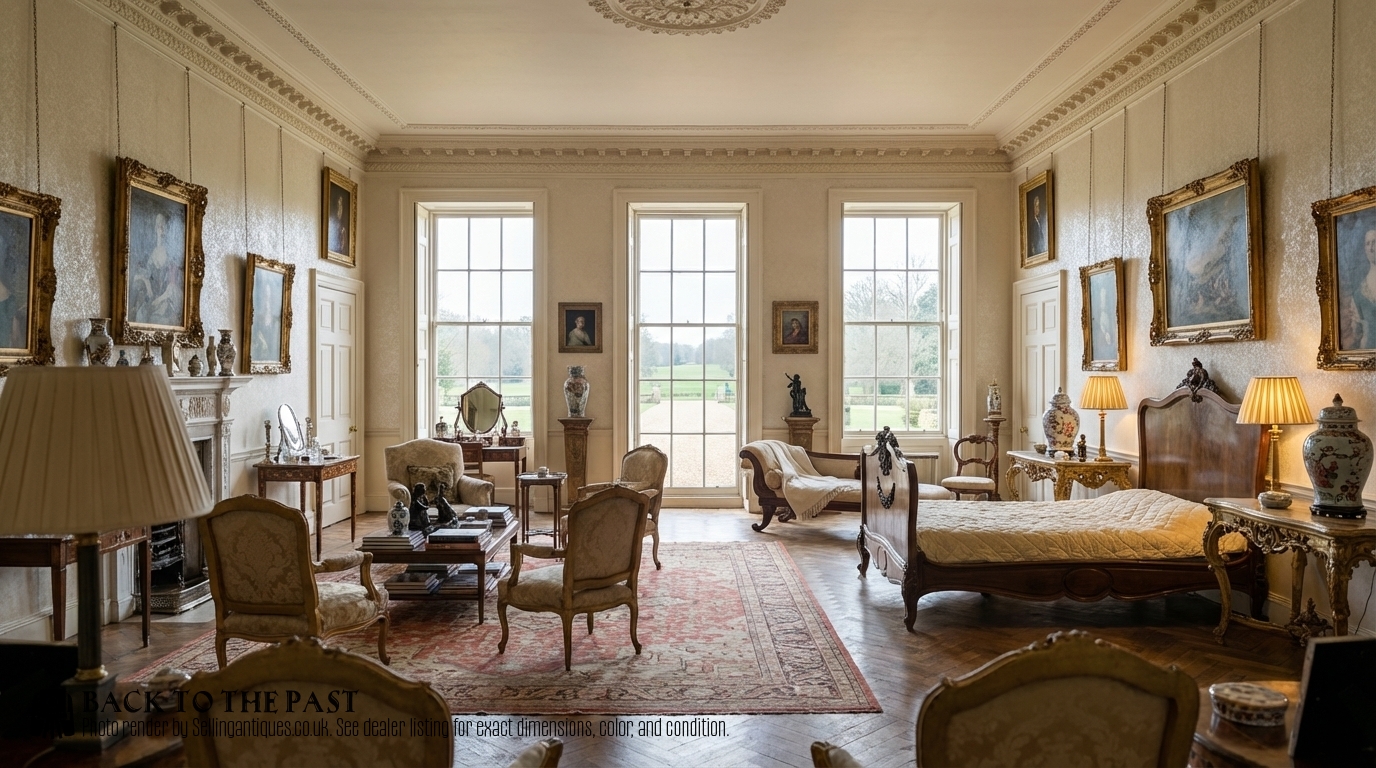
How they were made
Cabinet-makers constructed these frames primarily from solid and veneered walnut, often selecting quarter-venereing to create geometric grain patterns across headboards and footboards. Supplementary decorative elements rely on cast or applied ormolu and brass mounts.
Makers employed deep carving techniques by hand, executing floral motifs, scrolls, and architectural crests characteristic of Renaissance and Rococo revivals. Marquetry work introduces contrasting wood timbers to enrich flat panels with pictorial or geometric designs.
Retail Price Guide 2026
Typical UK retail prices for french walnut bedstead, calculated from the Sellingantiques database of over a million retail prices indexed since 2003. This retail price guide relies exclusively on Sellingantiques data; no external sources or auction records are used, so the figures do not describe the wider market.
Listings span the nineteenth century, including specific years 1870 and 1910, utilising walnut, ormolu, and brass.
What varies in quality
The distinction between standard production and superior execution rests upon the depth and crispness of the hand carving. Pieces featuring intricate marquetry panels and substantial ormolu or brass mountings demonstrate greater workshop ambition.
Quarter-veneered surfaces reveal quality through the careful book-matching of walnut grain across large structural spans. The integrity of the foundational timber and the precision of the revival styling determine the overall distinction of the frame.
The French Walnut Bedstead Glossary
- Quarter veneered
- A method of arranging four matching slices of walnut veneer from the same log to create a symmetrical pattern. This technique enhances the visual movement on large headboard panels.
- Ormolu
- Gilded bronze applied as decorative mounts and detailed highlights to the wooden framework. It provides a bright metallic contrast to the dark walnut tones.
- Marquetry
- The art of applying small pieces of different coloured wood veneers to form decorative patterns or pictures. It appears on select bedstead panels alongside brass detailing.
- Renaissance Revival
- A nineteenth-century design style drawing inspiration from sixteenth-century architectural motifs and heavy sculptural carving. Pieces in this manner display robust proportions and classical symmetry.
- Louis XV Revival
- A style defined by asymmetrical curves, naturalistic leaf scrolls, and flowing cartouches. These frames avoid straight lines in favour of organic movement.
Frequently Asked Questions
What sizes do these beds come in?
The selections encompass standard double sizes alongside king size and large king size proportions. These dimensions reflect nineteenth-century French sleeping standards.
Buyers should verify mattress compatibility, as historical French dimensions can differ slightly from modern UK sizing conventions.
How do I identify the style?
Stylistic attribution relies on decorative ornament and structural silhouette. Louis XV and Rococo variants use flowing curves and asymmetry, while Renaissance Revival pieces show heavier, architectural carving.
Reference dates from the nineteenth century help contextualise the revival movements popular among Parisian makers of the era.
What materials are used?
Walnut serves as the primary structural and visual timber, utilised both in solid form and as delicate quarter-veneers. Ormolu and brass accents frequently highlight the woodwork.
Marquetry inlays introduce additional contrasting woods to specific panels across the headboards and footboards.
Are these beds historically French?
The designs and workshops originate in France, reflecting periods such as the nineteenth century, 1870, and 1910. Specific examples note Parisian maker origin.
Stylistic categories directly reference French royal eras, including Louis XV and Louis XVI, adapted by later nineteenth-century cabinet-makers.