



French Walnut Bedside Chest
A french walnut bedside chest brings continental elegance and practical bedside storage to a room.
French Walnut Bedside Chest
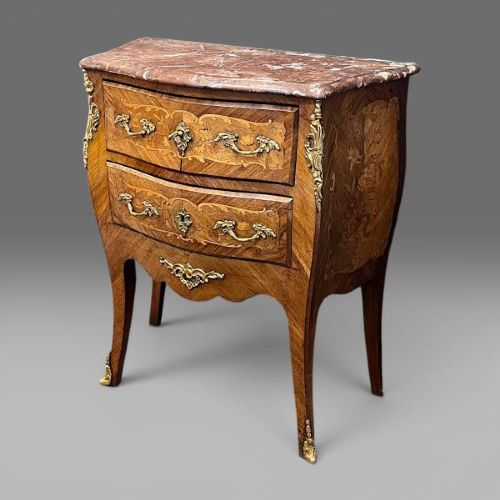
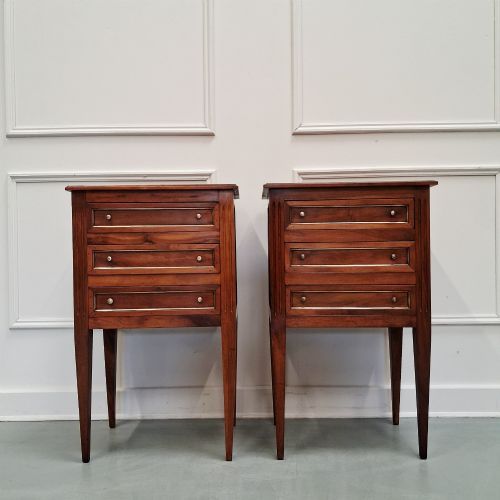
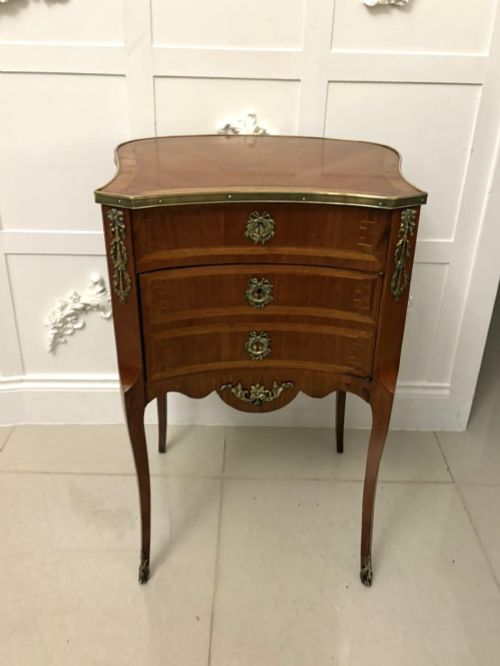
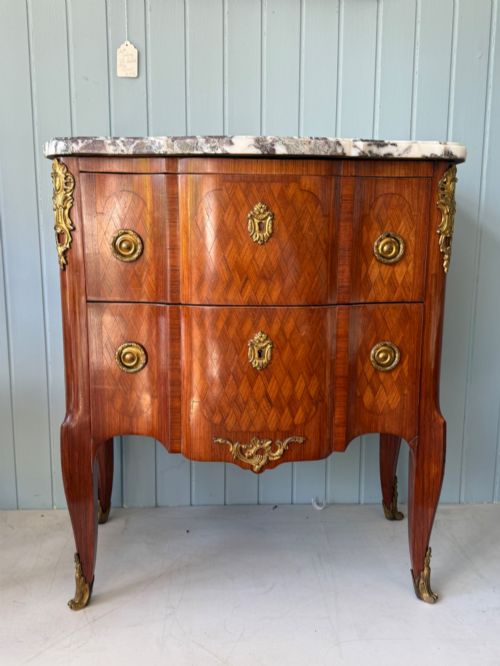
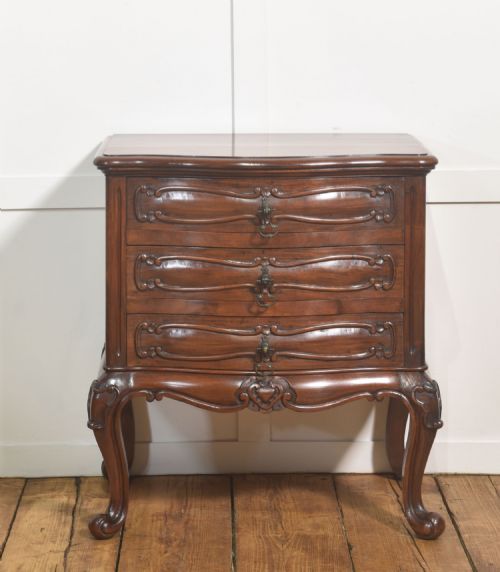
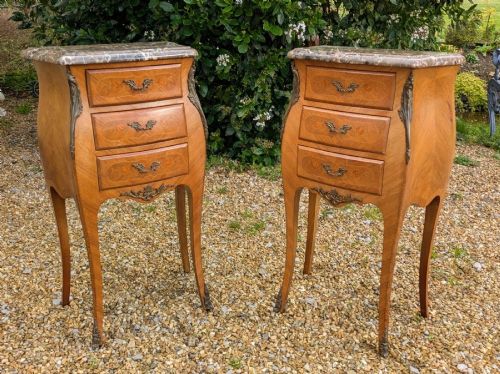
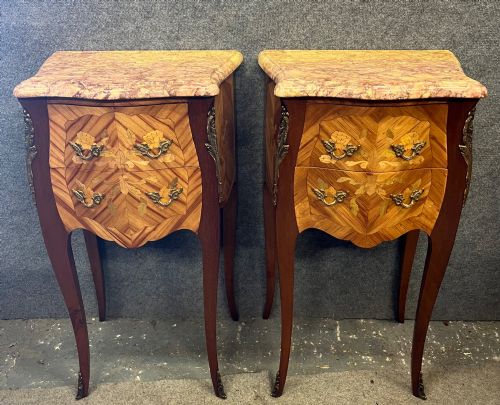
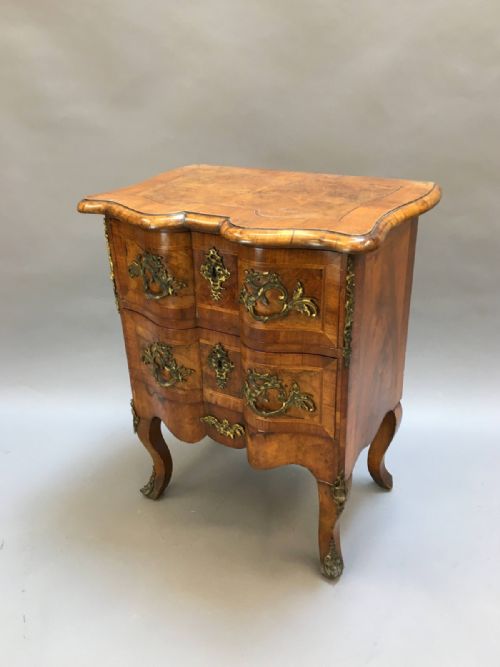
When you search for a french walnut bedside chest, you encounter a variety of compact bedside cabinets, commodes, and small chests of drawers dating from the eighteenth century to the early twentieth century. These pieces serve primarily as bedside storage or lamp tables, often appearing in matched pairs.
The selections span different revival movements, including Louis XV and Louis XVI styles, alongside provincial and chateau interpretations. Burr walnut and satin walnut frequently appear alongside standard walnut timbers, reflecting the diverse material choices of French cabinet makers across multiple decades.
Materials and Construction
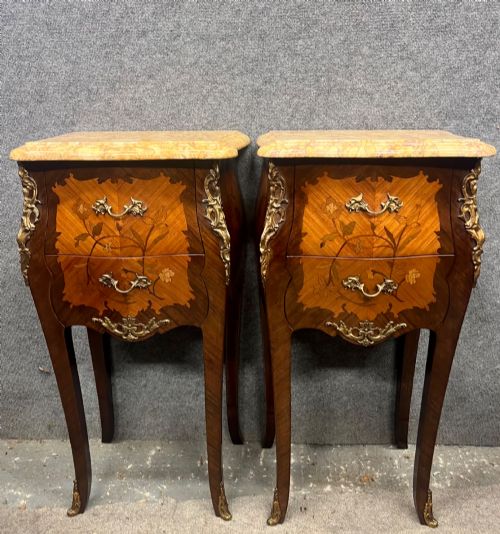
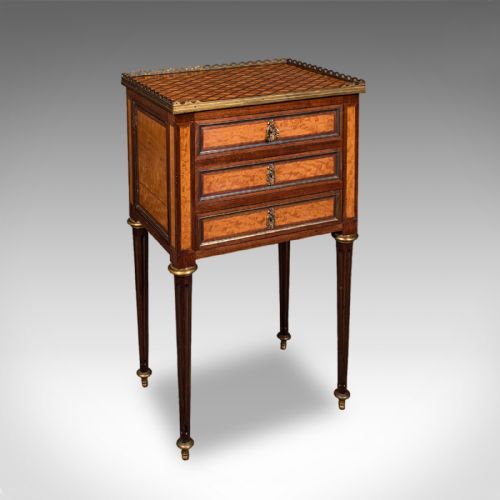
Craftsmen built these pieces using walnut, burr walnut, and kingwood veneers laid over secondary timbers, frequently incorporating intricate marquetry and parquetry inlay patterns. Many examples integrate marble tops and cast ormolu or brass mounts.
Structural designs include straight-sided cabinets and curved bombe forms requiring skilled timber bending. Ebonised details and delicate brass trims complete the construction of these refined nightstands.
French Walnut Bedside Chest Retail Price Guide 2026
Typical asking prices for french walnut bedside chest among the pieces listed under this phrase on Sellingantiques today, from the lower quarter to the upper quarter. They describe what is for sale here now, not the wider market.
Listings feature walnut, burr walnut, kingwood, marble, and ormolu across pieces dating from the eighteenth to the twentieth century.
Judging Quality
Quality rests in the precision of the marquetry inlay and the grain matching across drawer fronts and sides. Finer examples display crisp casting in their ormolu mounts and heavy, well-fitted marble slabs.
The joinery of the drawers and the symmetry of serpentine or bombe shapes dictate the standing of an individual commode or bedside cabinet. Superior pieces maintain crisp carving on their revival woodwork.
The French Walnut Bedside Chest Glossary
- Bombe
- A swelling or outwardly curving shape characteristic of continental commodes and bedside cabinets. This contour requires advanced woodworking skill to execute properly.
- Marquetry
- Decorative veneer work forming pictures or geometric patterns using various wood types. Artisans cut different coloured woods to fit precisely together.
- Ormolu
- Gilt bronze mounts applied to furniture for decorative effect. These metal accents highlight the corners, handles, and apron mounts of French cabinets.
- Parquetry
- Geometric wood inlay patterns such as cubes or chequers. It creates a structured, repeating design across tabletops and drawer fronts.
- Commode
- A low chest of drawers or cabinet. French commodes often feature marble tops and ornate brass mounts.
French Walnut Bedside Chest: Frequently Asked Questions
What is a french walnut bedside chest used for?
These pieces function as practical bedside tables or lamp chests, offering enclosed drawer or cabinet storage next to a bed.
Their compact proportions allow them to fit easily into bedrooms while providing a decorative surface for lighting and personal items.
How do I identify a Louis XV style chest?
Louis XV style pieces typically display characteristic serpentine curves, cabriole legs, and organic rococo floral motifs. The overall design prioritises asymmetry and flowing lines over rigid geometry.
In contrast, Louis XVI revival pieces feature straighter lines, fluted columns, and more formal classical symmetry.
Are marble tops original to these cabinets?
Many French bedside chests and commodes were originally fitted with shaped marble tops to provide a durable and luxurious surface. These stone slabs often match the precise contour of the wood cabinet underneath.
Inspect the fit between the marble and the wooden frame to understand how the piece was assembled.
How do I care for walnut veneer and marquetry?
Protect walnut veneer and intricate marquetry by keeping the furniture away from direct sunlight and sudden temperature changes. These environmental factors can dry out the timber and loosen delicate wood inlays.
Dust gently with a dry cloth and avoid harsh chemical polishes that might damage the polished finish.