
French Tub Armchair
A french tub armchair offers deep, curved seating shaped for comfort, drawing on centuries of continental craftsmanship.
French Tub Armchair
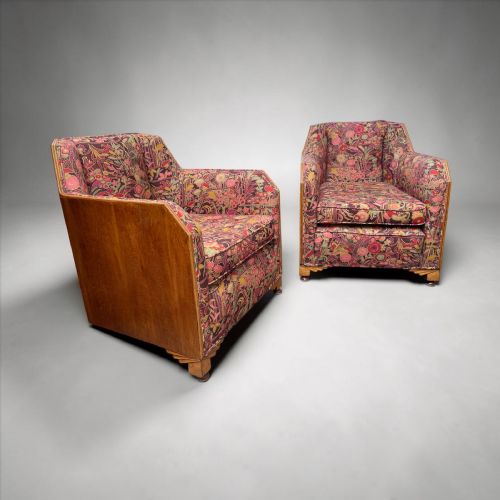
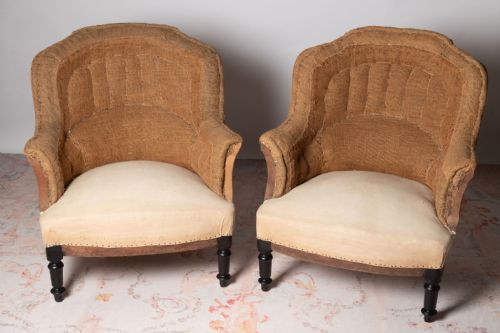
When you search for a french tub armchair, you are looking at deep, rounded seating where the back and arms form a continuous enclosed curve. These pieces trace their lineage through nineteenth and early twentieth century salons and libraries, embracing styles from Napoleon III to Art Deco.
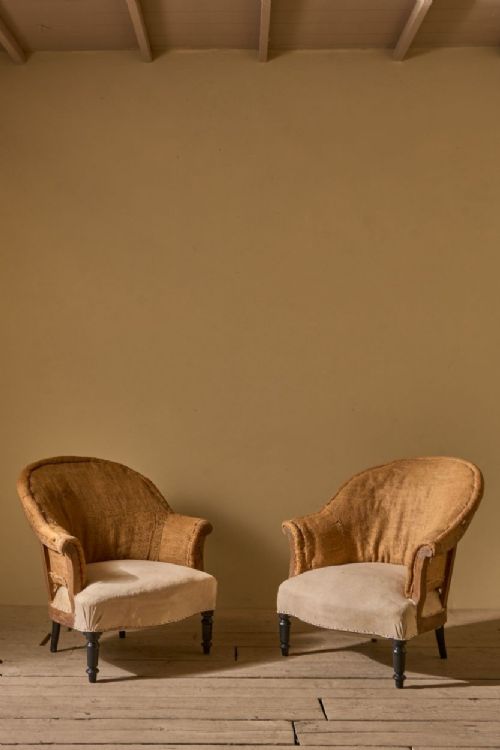
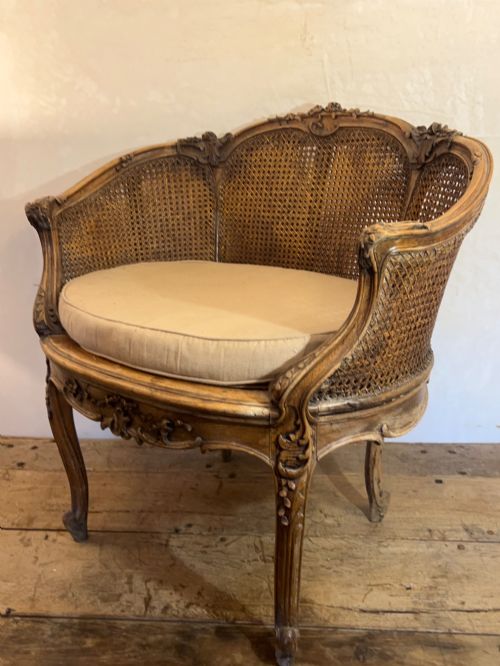
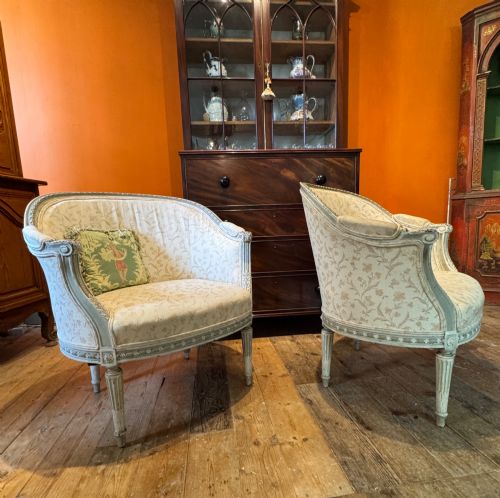
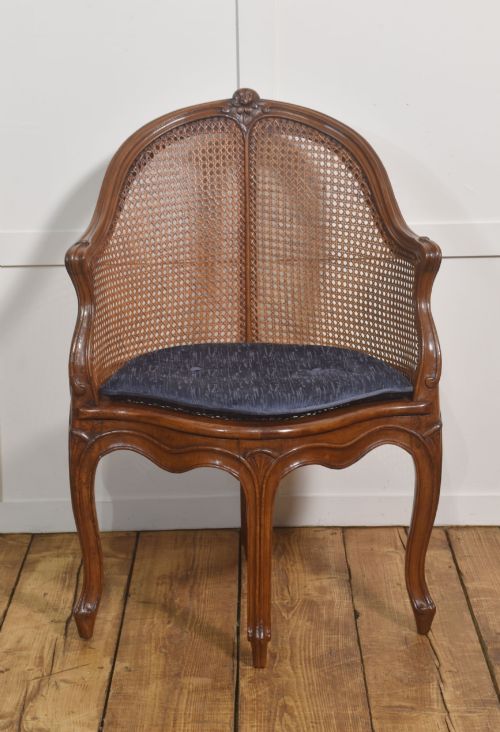
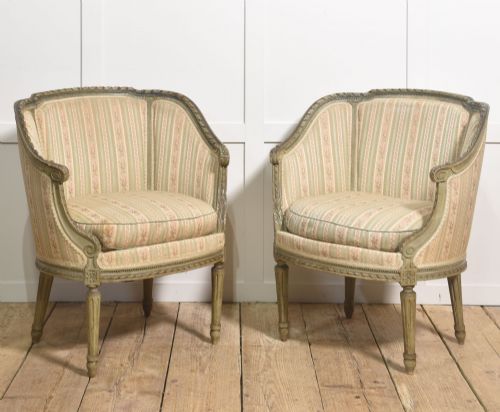
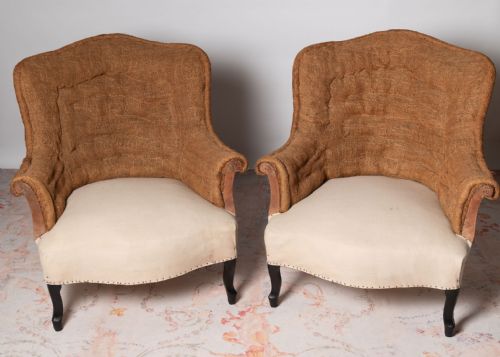
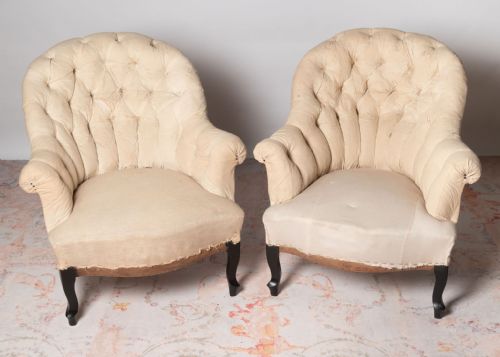
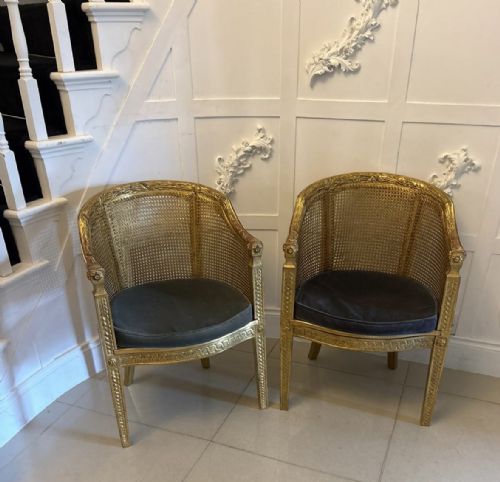
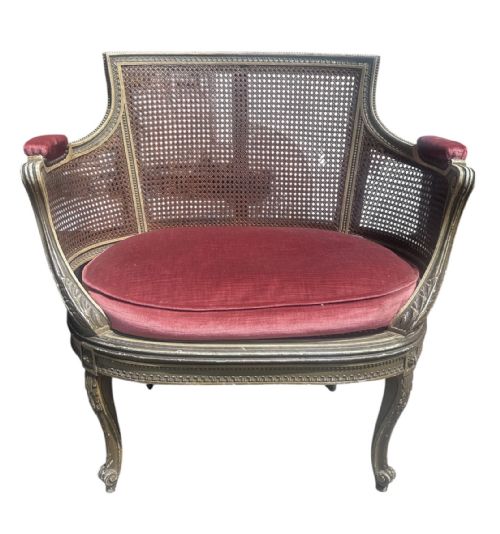
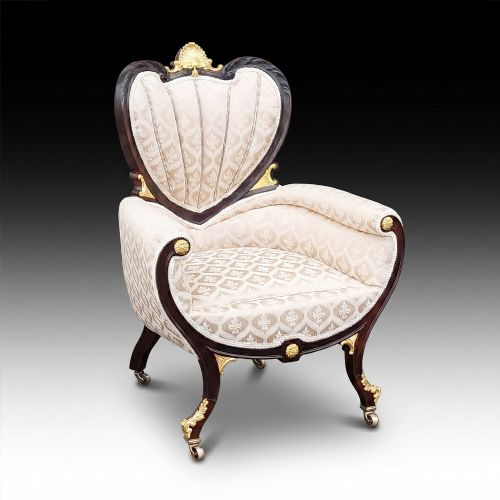
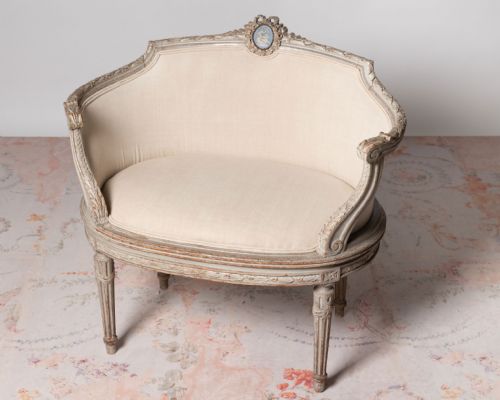
The version you are most likely to meet on this page is framed in beech, walnut, or painted wood, often featuring cane panels or traditional upholstery in fabric, cotton, or velvet. They appear singly or in matching pairs, spanning revival aesthetics like Louis XV and Louis XVI alongside later twentieth century iterations.
How they were made
Makers shaped solid woods like beech and walnut into curved frames, frequently employing carved details, giltwood finishes, or ormolu mounts depending on the reigning aesthetic. Caning was skilfully woven into wooden panels for open back and side designs.
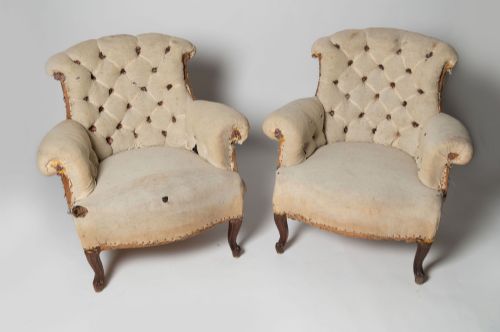
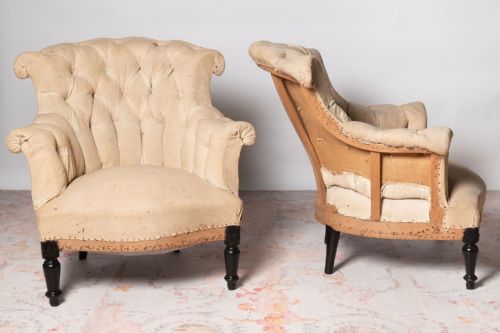
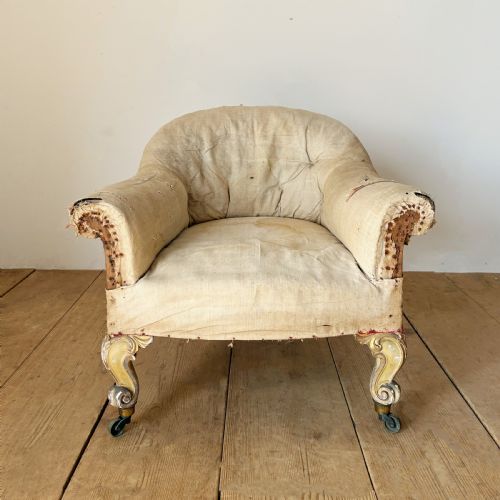
Upholstered variants relied on internal webbing and springs covered in calico, hessian, or luxury textiles such as silk, velvet, and leather. Buttoned back techniques were also applied to secure padding within the characteristic rounded silhouette.
What varies in quality
Quality rests in the integrity of the wooden frame and the precision of the carving, where hand-shaped details on walnut and beech demonstrate superior benchwork. The retention of original paint, gilding, or patinated leather elevates the historical integrity of a piece.
Construction depth dictates comfort, evident in the robustness of the internal springing and the seamless execution of curved cane work or tight fabric upholstery.
The French Tub Armchair Glossary
- Tub chair
- An armchair featuring a continuous curved back and armrest enclosure. This rounded form wraps around the sitter to provide enclosed support.
- Bergere
- An enclosed upholstered armchair with wooden framing exposed around the border. They frequently incorporate cane work on the sides and back.
- Napoleon III
- A nineteenth century French design period characterised by eclectic revivals of earlier royal styles and rich upholstery. It often embraces button-backed comfort and dark polished woods.
- Crapaud
- A low, heavily padded French armchair with fully upholstered framing that conceals the legs. The name translates literally as toad, reflecting its squat and rounded posture.
- Fauteuil
- An open-armed wooden armchair originating in France with padded elbow rests. They typically display exposed carved woodwork along the arms and frame.
French Tub Armchair: Frequently Asked Questions
What defines a french tub armchair?
A french tub armchair is characterised by a rounded, enclosed back that flows directly into the arms. This continuous curve sets it apart from standard open armchairs.
Such seating designs emerged to provide greater cosiness and support in nineteenth and early twentieth century drawing rooms and reading spaces.
How do I identify a revival style?
Revival styles draw on specific historical periods, such as the flowing asymmetrical lines of Louis XV or the neoclassical straight tapered legs of Louis XVI. Makers in the nineteenth century reinterpreted these motifs using contemporary woodworking techniques.
Examining the carved details, leg shapes, and overall symmetry helps connect a piece to its historical inspiration.
Were these chairs originally painted?
Many period examples feature original painted or gilt finishes applied to the wooden frames. These finishes range from subtle distressed tones to decorative giltwood accents.
Surface treatments varied according to the fashion of the decade, with painted woodwork particularly prominent in provincial and later revival pieces.
How should I place one in a room?
These rounded armchairs work effectively as standalone reading seats or paired symmetrically beside a fireplace. Their curved profiles allow them to sit comfortably in corners or float within open spaces.
Matching pairs provide formal balance in a drawing room, while single examples add character to a bedroom or study.