


French Terracotta Jar
A french terracotta jar brings tactile warmth to a room, offering centuries of regional utility shaped by provincial hands.
French Terracotta Jar
A french terracotta jar encompasses regional utility vessels from the eighteenth and nineteenth centuries, including confit pots, olive jars, and walnut oil jugs. These pieces originate from provincial workshops across France, reflecting local agricultural storage needs.
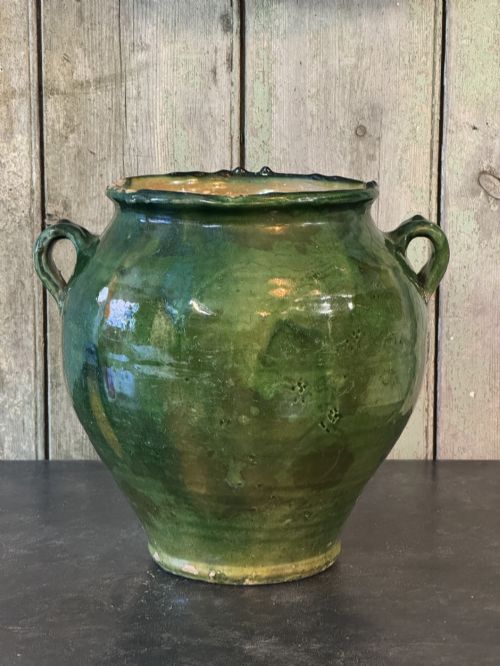
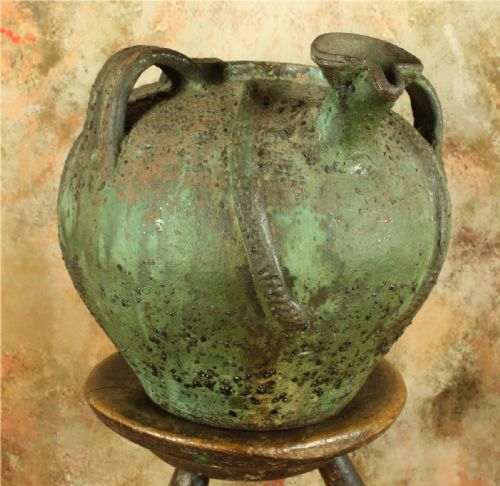
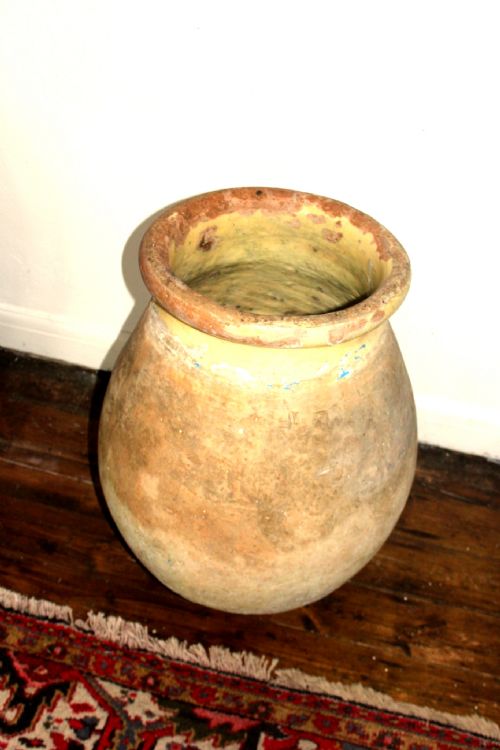
Confit pots and olive jars dominate the selection, appearing with single, double, or triple handles depending on their original purpose. Makers shaped these earthenware forms from local clay for storage, later adapting them for decorative display in homes and gardens.
Materials and Technique
Potters shaped local clay by hand or on simple wheels, producing sturdy earthenware bodies designed for daily farm work. Artisans then applied lead-based green or honey glazes selectively, often leaving the lower body unglazed to show the porous terracotta beneath.
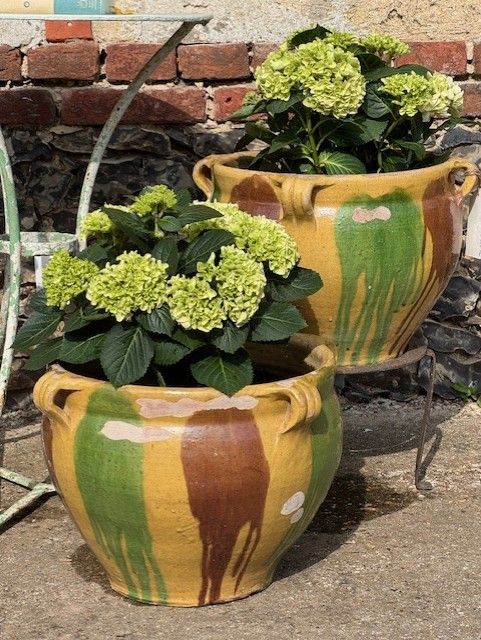
The firing process in regional kilns created natural variations in the surface, while decades of agricultural use added authentic patinas. Wrought iron fixtures occasionally reinforced larger vessels, and drip glazes formed organic patterns down the sides of Castelnaudary planters.
Olive jars sometimes bear the scars of clumsy agricultural laborers who gripped the wet clay too tightly before firing.
Evaluating the Pieces
Quality rests in the balance of form, the depth of the glaze, and the honesty of the wear. Early eighteenth-century examples show heavier potting and deeper patinas compared to later nineteenth-century production.
Intact handles and stable bodies distinguish superior vessels from those compromised by heavy structural damage. The richness of a dribble glaze or the smoothness of an aged patina elevates a standard garden pot into a collector piece.
The French Terracotta Jar Glossary
- Confit pot
- A traditional French earthenware vessel featuring handles, originally used for preserving meat and storing fats. These pots typically display green or honey lead glazes on the upper portion.
- Olive jar
- A large terracotta container utilised across the Mediterranean for storing and transporting oil and olives. They often feature multiple handles and heavy, robust walls.
- Terracotta
- Fired unglazed or partially glazed clay that ranges in colour from pale buff to deep reddish-brown. The material is naturally porous and develops distinctive weathering over time.
- Earthenware
- Pottery fired at lower temperatures than stoneware or porcelain, remaining slightly porous. It forms the essential body of provincial French vessels.
- Glaze
- A glassy coating fused to the ceramic body through firing, used to waterproof the interior and decorate the exterior. Dribble glazes run naturally down the sides during the kiln process.
French Terracotta Jar: Frequently Asked Questions
What were french terracotta jars used for?
These vessels served practical storage functions in rural French households and agricultural estates. Confit pots held preserved meats, while larger jars stored olive oil and walnuts.
Over time, changing domestic needs transformed them from kitchen utilities into decorative interior accents and garden planters.
How do I care for a terracotta jar?
Keep unglazed terracotta away from freezing temperatures if used outdoors, as absorbed moisture can expand and crack the clay body. Protect delicate interior surfaces by using liners if holding water for fresh foliage.
Dust the exterior gently with a dry cloth to preserve the historical patina without stripping away accumulated character.
How can I tell the age of a jar?
Examine the weight, potting marks, and consistency of the clay to gauge the period of manufacture. Eighteenth-century examples often display thicker walls and hand-thrown irregularities compared to later nineteenth-century pieces.
Patina also indicates age, showing natural wear from agricultural labour rather than artificial ageing.
Are these jars waterproof?
Most provincial jars feature partial interior glazing designed to hold oils and fats rather than store fresh cut flowers indefinitely. The unglazed lower portions of the terracotta body remain porous and can seep moisture over time.
Utilise a glass or ceramic insert inside the vessel if you plan to use it as a vase for water arrangements.