

French Tapestry Armchairs
These french tapestry armchairs bring centuries of woven texture and carved wood into a room, offering both historic seating and robust structural presence.

French Tapestry Armchairs
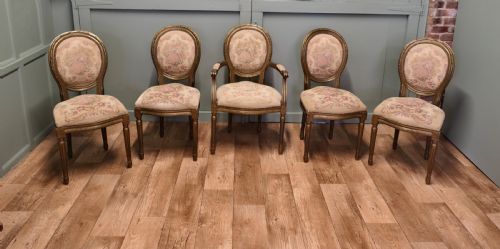
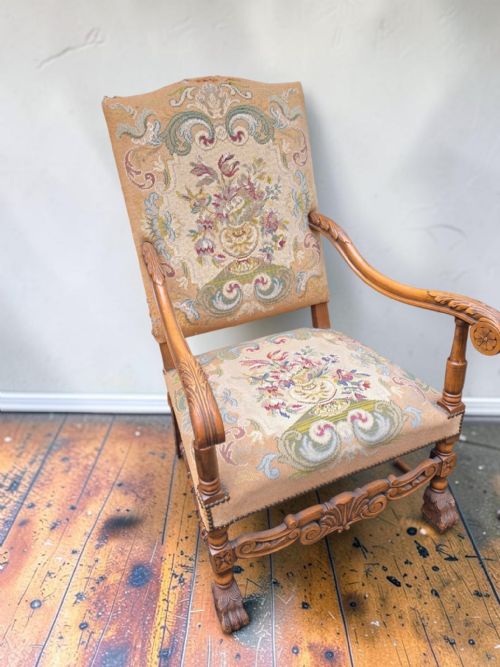
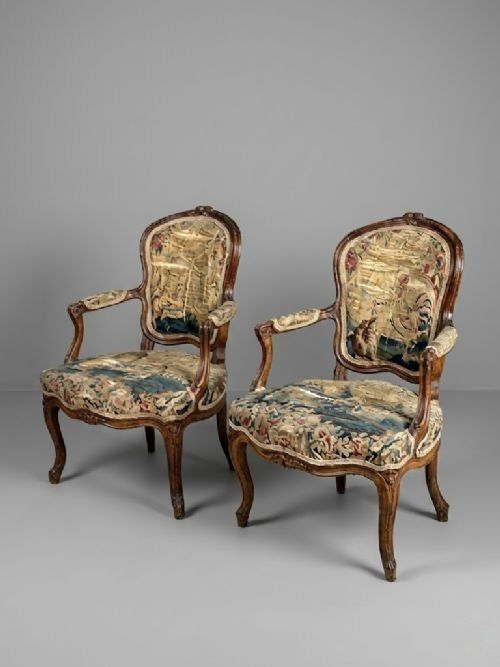
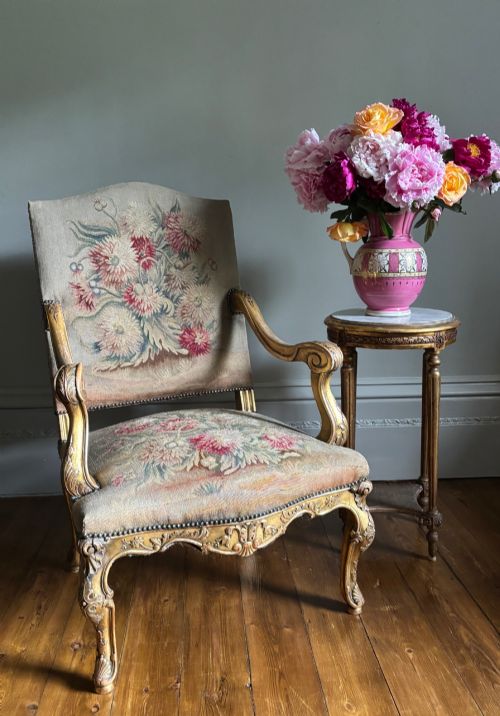
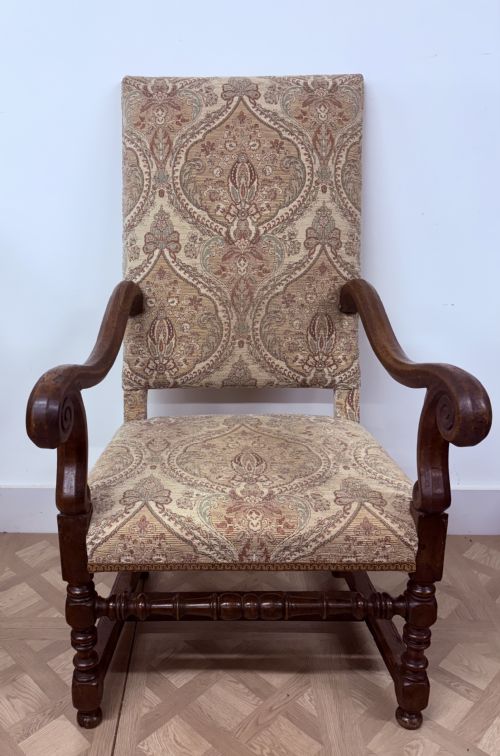
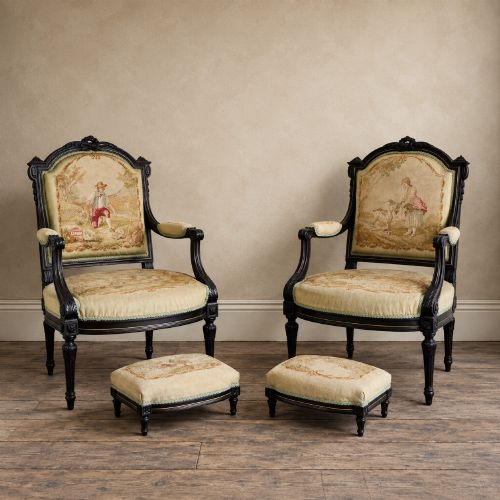
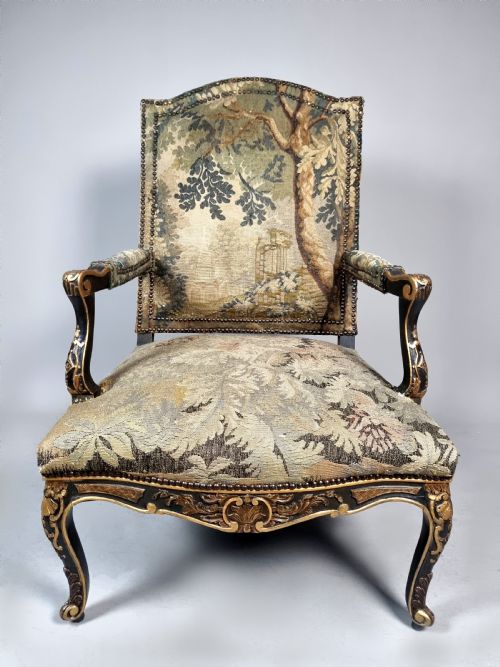
When searching for french tapestry armchairs, buyers encounter seating framed in walnut, beech, and giltwood, upholstered in wool needlework and tapestry fabric. These pieces range from seventeenth-century walnut frames to nineteenth-century revival suites.
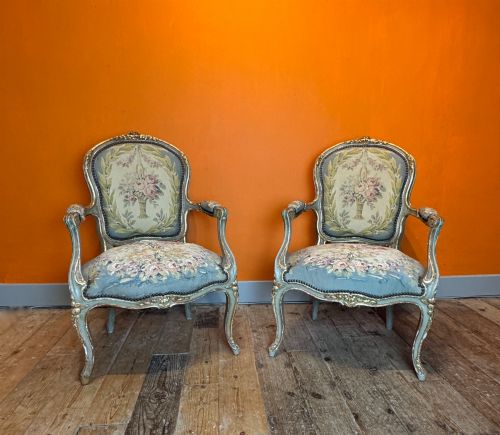
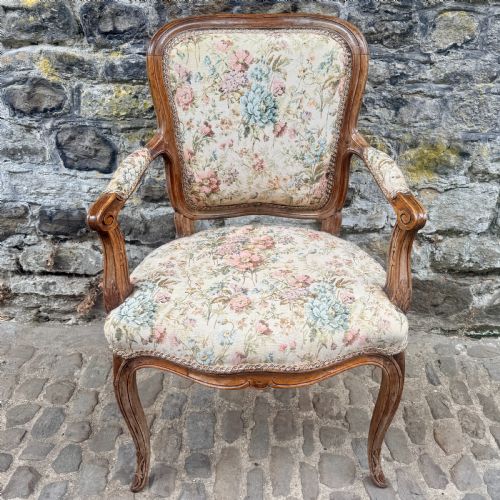
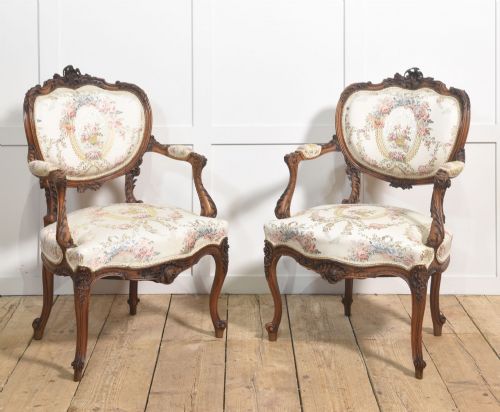
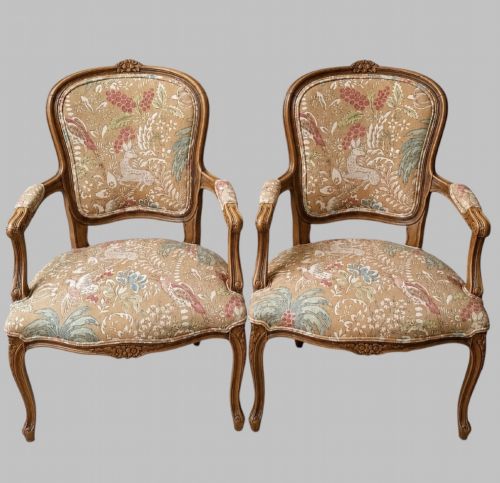
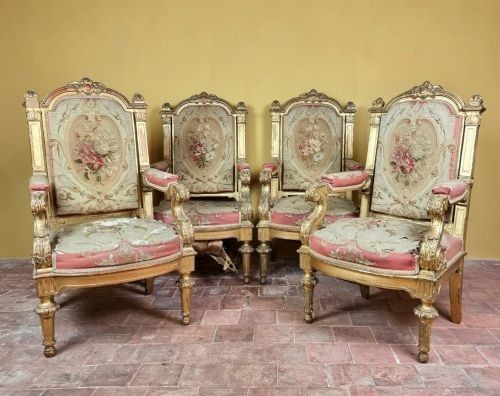
The most common examples on this page are nineteenth-century armchairs and salon chairs built in the Louis XV and Louis XVI styles. These seating options pair carved wooden frames with floral or pictorial tapestry panels.
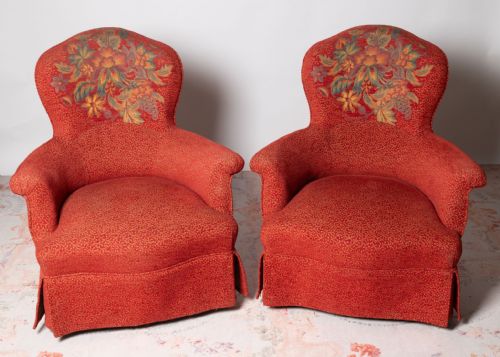
Origins stretch from regional French provincial workshops to formal Parisian ateliers, incorporating periods from the seventeenth century through the nineteen-thirties. Salon suites and pairs of chairs frequently appear alongside individual armchairs.
Materials and Techniques
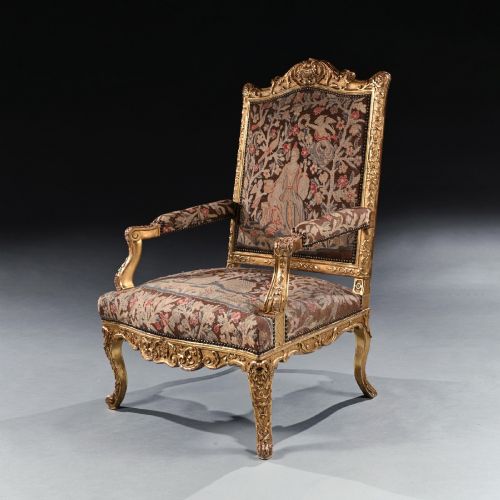
Makers shaped structural frames from solid hardwoods like walnut and beech, alongside carved softwoods finished with gesso, paint, or parcel gilt. Giltwood and ebonised finishes provided formal decoration for grander reception rooms.
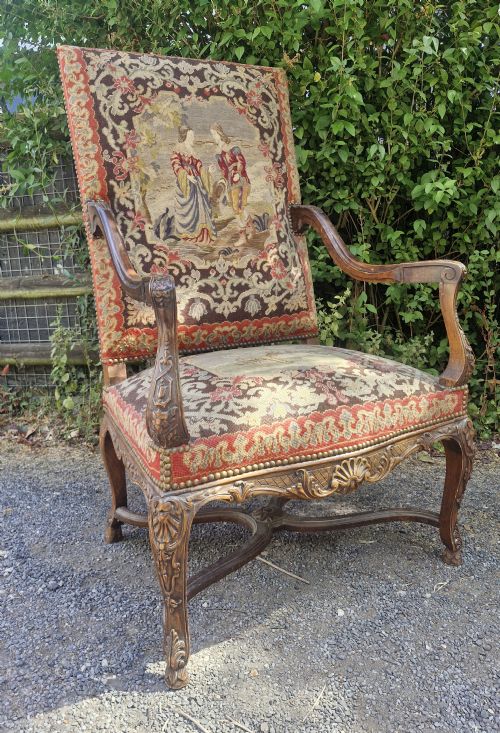
Upholstery relied on hand-woven wool tapestry, needlepoint, and petit point panels depicting floral motifs or figural scenes. These textiles were secured to open and closed armchairs using traditional stuffing and tension methods.
Some nineteenth-century makers snuck twentieth-century spring comfort inside seventeenth-century silhouettes.
Quality and Construction
The distinction between ordinary and exceptional seating lies in the depth and crispness of the hand-carved woodwork on the arms, rails, and crestings. Walnut frames with deep, dimensional carving command greater presence than simpler mouldings.
The fineness of the tapestry weave determines visual merit, with dense wool petit point panels offering superior detail compared to coarser upholstery. Original period textiles integrated into the frame elevate the historical integrity of the piece.
Holland and Sons
The French Tapestry Armchairs Glossary
- Fauteuil
- An open-arm armchair with upholstered back and seat, typically featuring exposed wooden arms and carved rails. These chairs formed standard seating in French salons from the seventeenth century onward.
- Aubusson
- A style of tapestry woven in the French town of Aubusson, noted for pictorial scenes and floral designs used on seat covers and wall hangings. These textiles appear on formal eighteenth-century and revival seating.
- Giltwood
- Timber coated with a thin layer of gold leaf over a prepared gesso ground, creating a bright decorative surface. This finish frequently highlights grand salon chairs.
- Petit point
- A fine needlepoint stitch worked on a single-thread canvas, allowing for intricate detail in upholstered tapestry panels. This technique appears on high-grade nineteenth-century chair coverings.
- Regence
- A transitional design period spanning the early eighteenth century, characterised by curvilinear carved frames and scrolling arm supports. This style bridges seventeenth-century heaviness and Louis XV lightness.
French Tapestry Armchairs: Frequently Asked Questions
How do I identify a true period armchair?
Examine the construction of the wooden frame, looking for hand-cut joinery, tool marks, and timber ageing consistent with centuries past rather than modern machinery.
Compare the carving style and wood species against documented examples from specific reigns like Louis XV or the Regence period.
Are these chairs comfortable for daily use?
These seating options were built for formal reception rooms, so their proportions and upright backs differ from modern lounge furniture.
Many period armchairs feature supportive sprung or webbed seats that accommodate contemporary sitting habits while maintaining their historic frame dimensions.
How should I care for antique tapestry upholstery?
Protect delicate wool needlepoint and tapestry panels from direct sunlight to prevent fading and textile degradation over time.
Vacuum the fabric gently using a low-suction attachment with a brush guard to remove dust without stressing old threads.
What is the difference between salon chairs and armchairs?
Armchairs generally feature substantial padded arms and sturdy frames designed for heavier daily seating in studies or living spaces.
Salon chairs often present lighter proportions, open frames, and gilt or painted surfaces intended for decorative arrangement in formal entertaining rooms.