



French Style Overmantle Mirror
A French style overmantle mirror brings substantial nineteenth century scale and continental decorative framing to a principal reception room fireplace.
French Style Overmantle Mirror
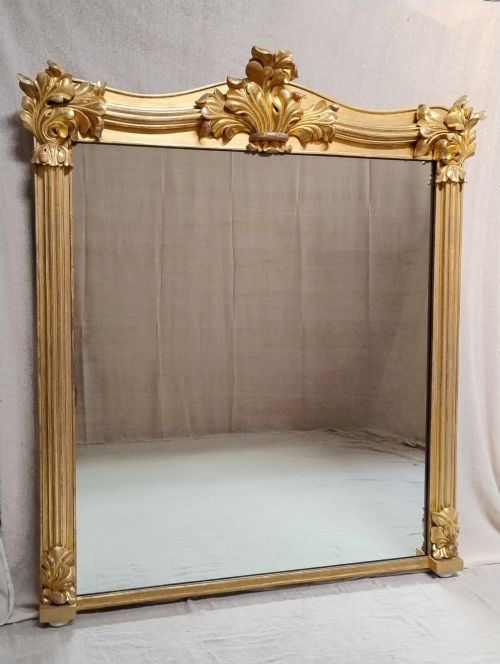
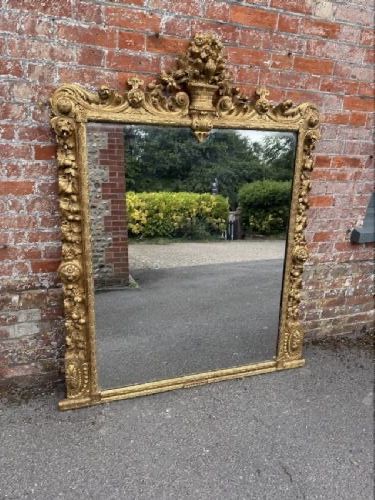
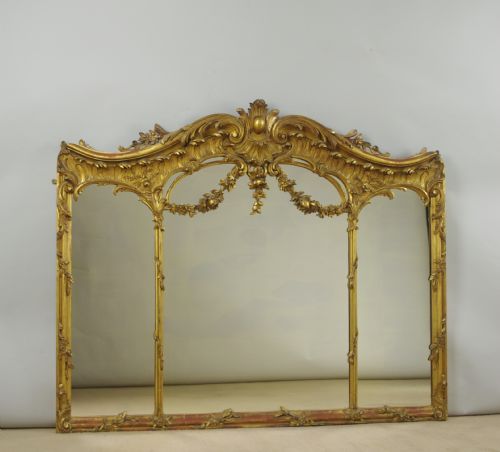
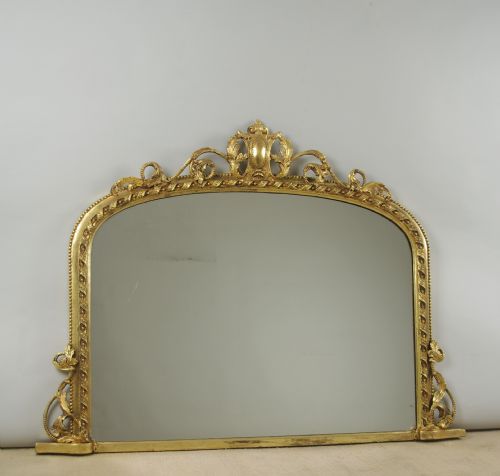
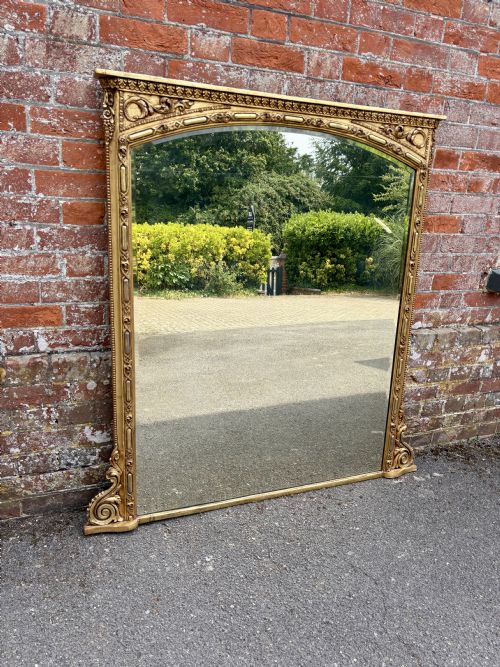
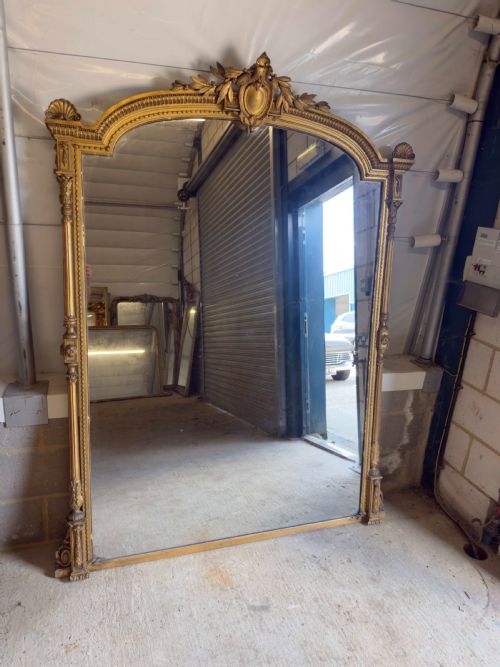
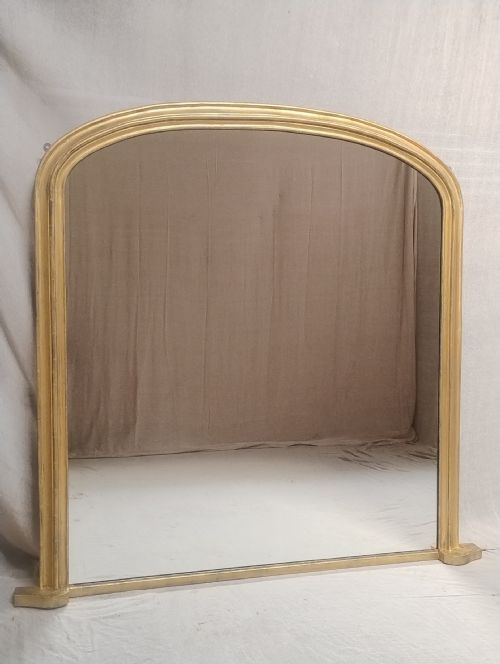
A french style overmantle mirror is a large wall mirror designed specifically to hang above a fireplace mantelpiece, drawing inspiration from continental nineteenth century interior design. These pieces often arrive with arched tops, shaped frames, or triple plates intended to sit low above the hearth.
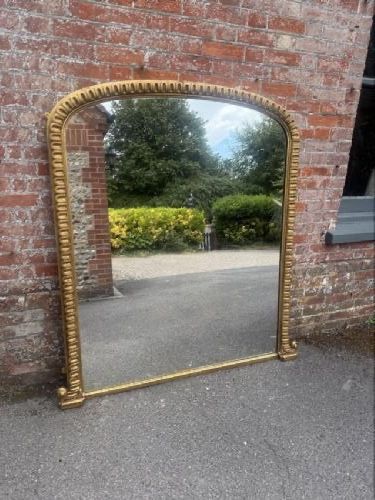
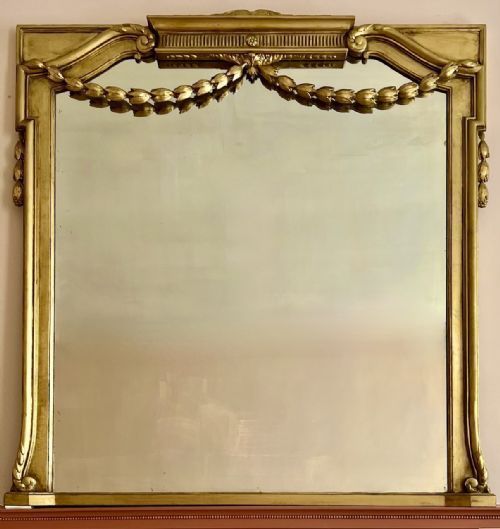
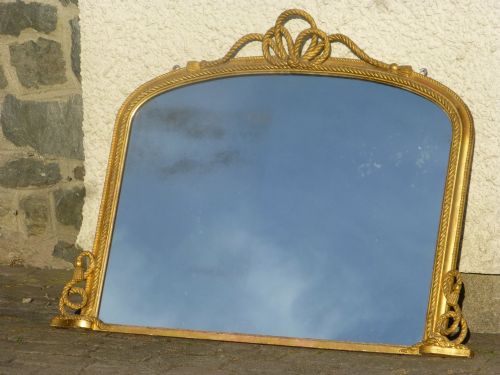
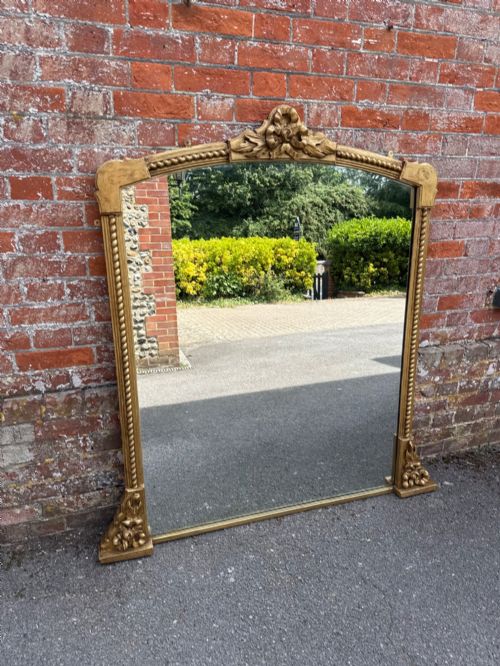
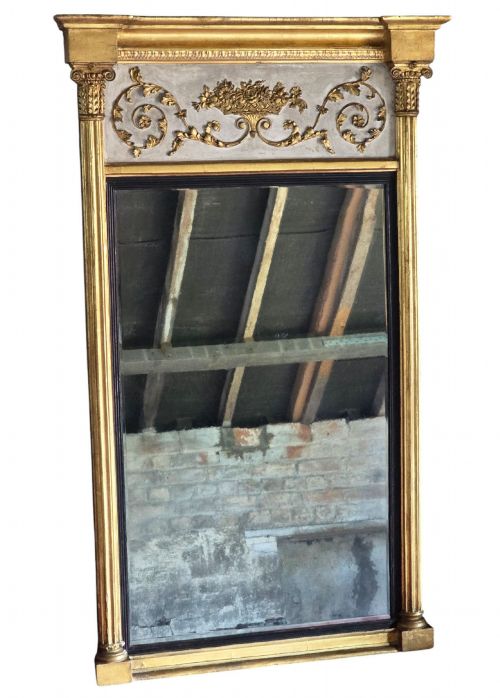
The selections recorded here span the Victorian era alongside French Chateau, Rococo Revival, Neoclassical, and Regency stylistic influences. Buyers encounter forms ranging from simple architectural arches to elaborate frames decorated with laurel leaves or rope twist details.
Originating predominantly from nineteenth century workshops, these mirrors function as dominant statement pieces within a room. Their proportions are typically broad and tall, built to reflect light and fill the expanse of chimney breasts.
Materials and construction
Carved wood provides the primary structural foundation for these frames, frequently paired with moulded gesso and composition details to build up elaborate decorative motifs. Artisans applied gold leaf, parcel gilt, or paint directly over the timber and plaster ground.
Giltwood and gold leaf surfaces catch the light, while alternative finishes incorporate white paint or contrasting parcel gilt accents. Heavy pine carcasses support the weight of the large glass plates and decorative crests.
Some frames incorporate nautical rope twist carvings, proving that nineteenth century artisans enjoyed bringing maritime textures far inland.
Judging the work
The crispness of the carved wood and gesso ornamentation distinguishes finer examples from simpler production. Superior pieces display deeply modeled relief work on their pediments, rope twists, and column frames rather than shallow, flat moulding.
Original mercury or early silvered glass plates with authentic foxing or oxidation carry more character than modern replacements. The integrity of the original gilt surface and the stability of the joined wooden frame determine the overall grade.
The French Style Overmantle Mirror Glossary
- Overmantle
- A mirror specifically proportioned to hang on the wall directly above a mantelpiece or fireplace. These objects were scaled to dominate the chimney breast.
- Gesso
- A plaster mixture applied to wood frames and carved or moulded into decorative reliefs before gilding. It provides the smooth white base for gold leaf.
- Giltwood
- Timber, typically pine or oak, that has been coated with gold leaf. This technique creates a luminous metallic finish across the carved frame.
- Rococo Revival
- A nineteenth century style drawing on mid eighteenth century French aesthetics featuring asymmetric curves and naturalistic scrollwork. It heavily influences many overmantle mirror frames.
- Parcel Gilt
- A finishing method where only specific carved portions of a painted or stained wooden frame are gilded. This highlights particular decorative details against the background.
French Style Overmantle Mirror: Frequently Asked Questions
How do I hang a heavy overmantle mirror?
These large nineteenth century frames require secure fixing directly into masonry or heavy wall studs using substantial brackets. Professional installation is recommended due to the considerable weight of the wood, gesso, and glass.
Ensure the weight is distributed evenly across multiple fixing points to protect the antique structure from undue stress.
What periods do these mirrors come from?
The available pieces originate primarily from the nineteenth century, including specific decades such as the eighteen fifties, sixties, seventies, eighties, and nineties, alongside the transition into nineteen hundred.
Stylistic influences span Victorian interpretations, French Chateau, Neoclassical, and Rococo Revival designs executed during that era.
Can these mirrors rest on the mantel?
While originally designed to sit immediately above the shelf, the weight and height of large examples mean they are usually anchored to the wall for safety rather than merely resting on the marble or wood.
Safety tethers or wall brackets secure the frame while allowing it to appear as though it belongs directly above the fireplace opening.
How should I clean the antique glass?
Use a soft microfiber cloth and a mild glass cleaner applied to the cloth rather than directly onto the mirror plate. This prevents liquid from seeping behind the old silvering or damaging the gesso frame.
Avoid harsh chemicals or abrasive pads that can scratch vintage glass or strip original parcel gilt finishes.