

French Style Marble Table
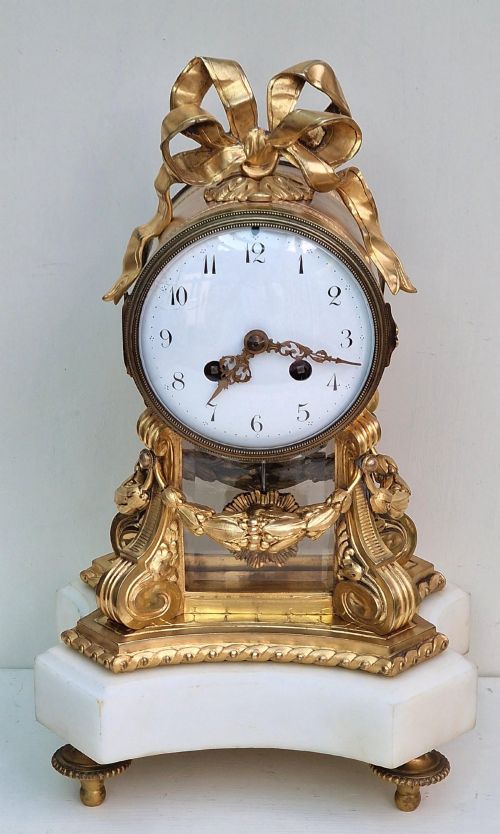
These pieces unite the striking combination of stone and continental flair known as a french style marble table.
French Style Marble Table
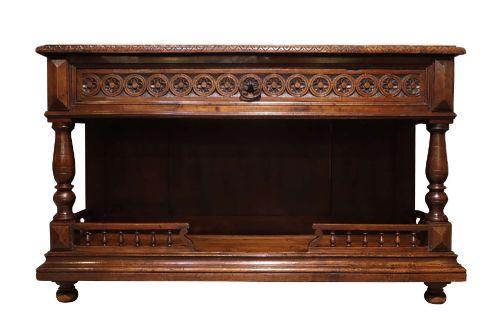
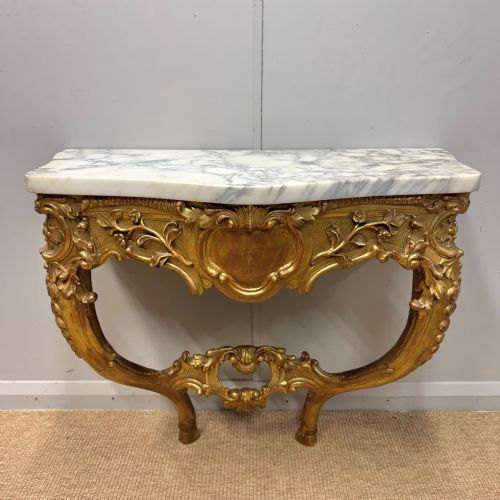
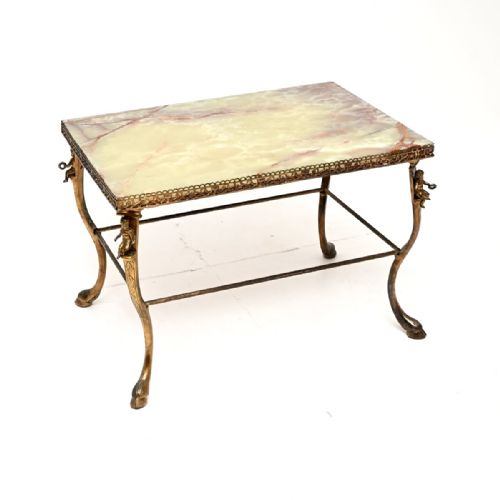
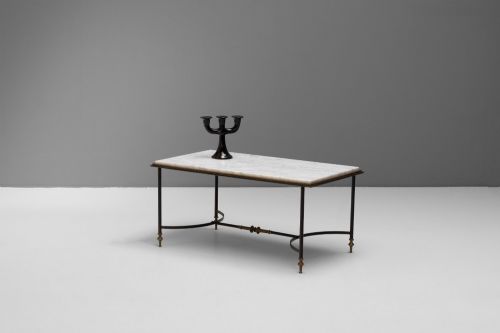
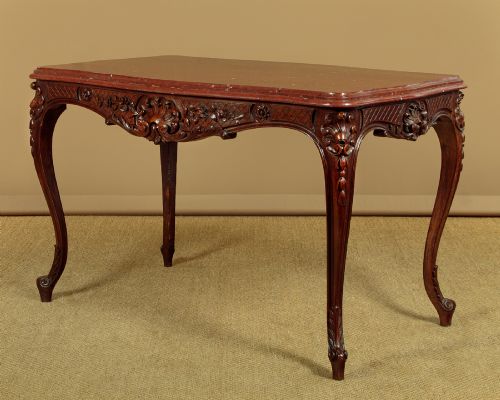
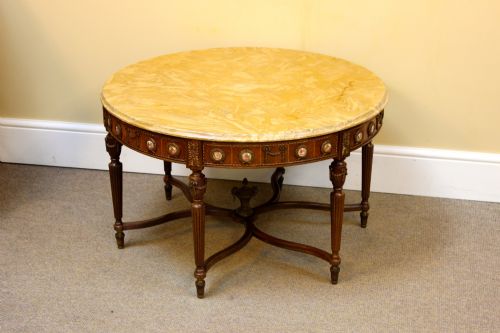
A french style marble table covers a broad sweep of domestic furniture designed to bring classical continental elegance into a room. Buyers searching this phrase meet console tables, side tables, centre tables, and coffee tables intended for drawing rooms, hallways, and boudoirs. The examples seen here span from the nineteenth century into the twentieth century, reflecting enduring continental tastes.
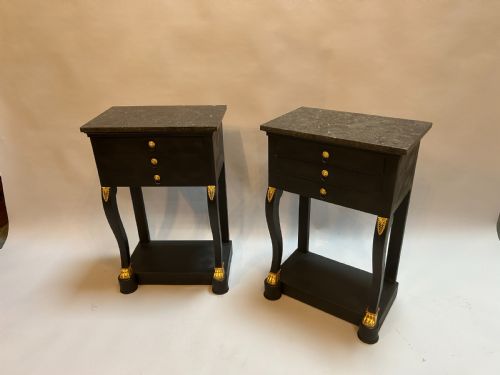
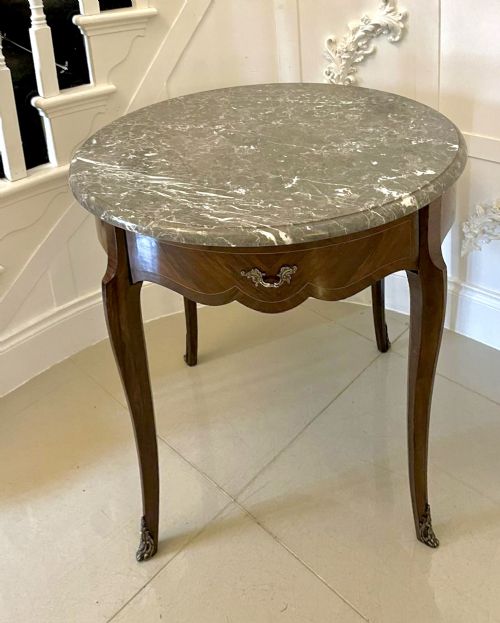
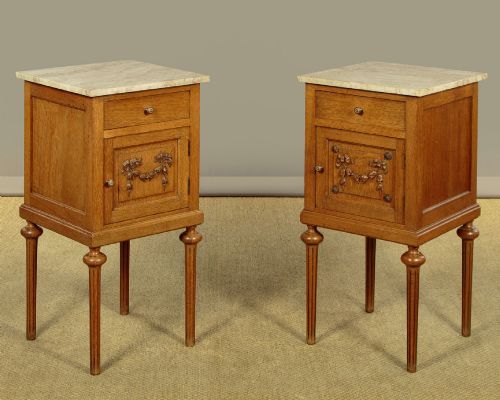
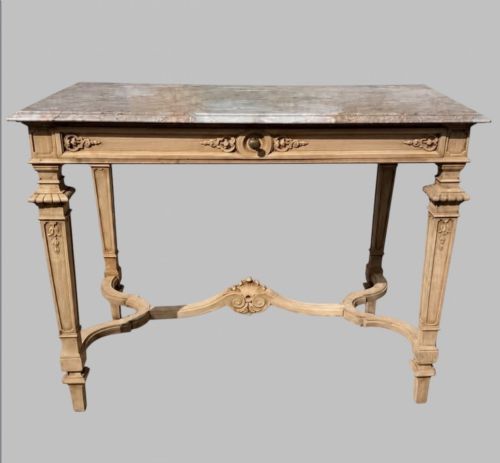
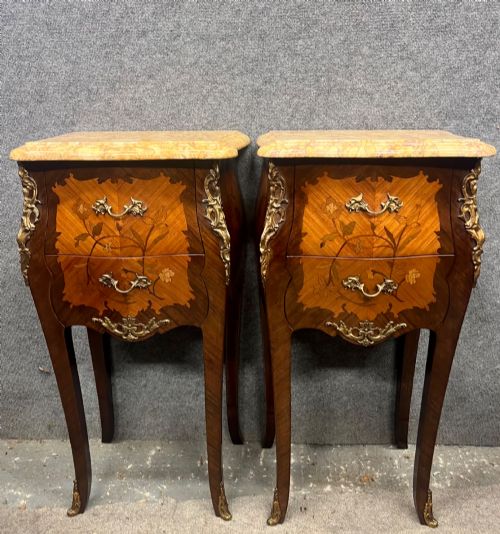
Console tables and centre tables dominate the selection, frequently displaying the influence of Louis XV, Louis XVI, and Empire styles. These items range from compact occasional stands to large architectural console tables designed to stand against a wall beneath a mirror. Alongside these tables, the category extends to bedside cabinets and dressing furniture featuring stone surfaces.
The aesthetic leans heavily on historical revivalism, incorporating Rococo curves, Neoclassical symmetry, and heavy ormolu mounts. Makers utilised rich timbers such as mahogany, walnut, and kingwood to construct the frames that support heavy marble slabs. Surviving pieces demonstrate how domestic furniture evolved from strict royal court patterns into more accessible nineteenth-century interpretations.
How They Were Made
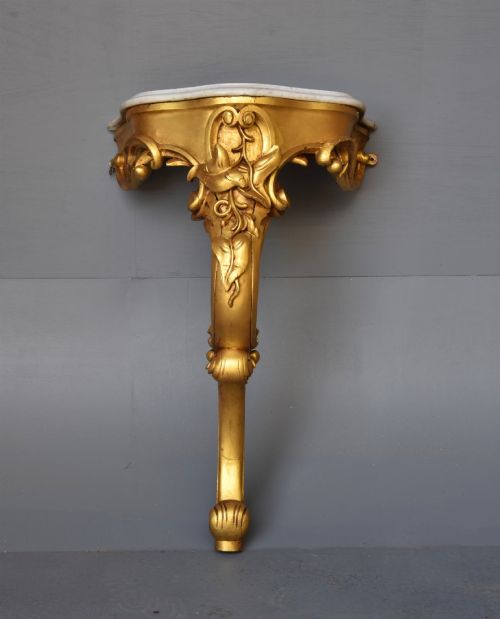
Cabinetmakers built the structural frames using dense timbers like mahogany, walnut, and kingwood, often applying intricate marquetry or giltwood finishes. Carved walnut and giltwood forms required skilled hand-chiselling to achieve the elaborate scrolls and foliage associated with Rococo and Neoclassical revivals. Iron and cast components also appear in specific utilitarian contexts such as bistro settings.
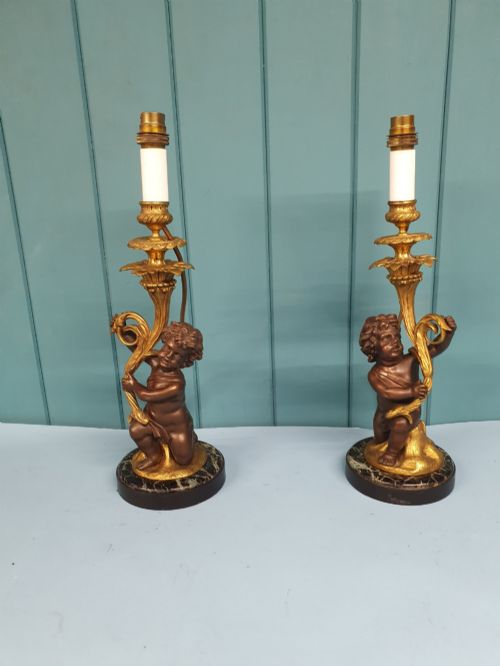
Surface adornment relied heavily on cast ormolu and gilt bronze mounts secured to the timber frame to accent corners, aprons, and legs. Marble tops, selected for their colour and veining, were cut and polished to fit precisely onto the wooden base or stone sub-structure. Joinery methods combined traditional mortise and tenon construction with fine veneer work to ensure structural stability.
Several pieces include hidden bedside compartments designed for nineteenth-century midnight reading materials.
What Varies in Quality
The refinement of the bronze or ormolu mounts dictates much of the visual hierarchy within these tables. Superior examples display crisp, hand-chased metalwork with sharp detail in the foliage and figures, whereas lesser pieces show softer, cast-only surfaces without secondary finishing. The weight and depth of the timber carving similarly separate standard production from master craftsmanship.
The choice and thickness of the marble slab influence the overall substance of the piece. High-grade items utilise finely figured marble with rich natural colouration, fitted flush to the frame without crude cement repairs. The precision of the marquetry inlay and the stability of the underlying carcase wood further distinguish workshops like those of recognised makers from anonymous production.
François Linke·Vincenti·Krieger Paris
The French Style Marble Table Glossary
- Ormolu
- Gilded bronze used for decorative mounts on furniture and clocks. This technique involves applying a gold amalgam to heated bronze.
- Console table
- A table designed to stand against a wall, frequently fixed with brackets or supported by front legs. These items often feature shaped marble tops.
- Guéridon
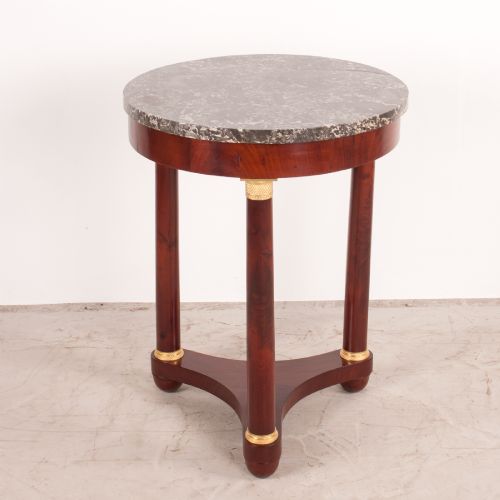
- A small circular occasional table supported by a central pillar or a tripod base. Originating in the seventeenth century, these tables frequently incorporate marble surfaces.
- Kingwood
- A dense, heavily figured exotic timber native to Brazil, prized for its use in fine cabinetmaking and marquetry. Makers utilised its contrasting grain patterns for decorative veneer panels.
- Marquetry
- The art of applying decorative pieces of veneer to a structural structure to form intricate patterns. Artisans cut various woods and materials to create pictorial or geometric designs.
French Style Marble Table: Frequently Asked Questions
Where should I place a console table?
Console tables function best against flat walls in hallways, drawing rooms, or dining spaces. They provide a stable surface for decorative objects while maintaining a shallow footprint.
Pairing a console table with a matching wall mirror creates a balanced focal point within a formal interior.
How do I care for a marble top?
Marble requires gentle cleaning with warm water and a soft cloth to avoid scratching the polished surface. Acidic liquids like wine or citrus juice can etch the stone if left unattended.
Applying a specialist stone sealer helps protect the marble from accidental spills and everyday wear.
What defines Louis XV style?
Louis XV furniture is characterised by asymmetrical curves, cabriole legs, and naturalistic floral carvings. This aesthetic avoids straight lines in favour of flowing, organic movement.
Ormolu mounts on these pieces typically accentuate the shoulders and feet of the table legs.
Are these tables suitable for daily use?
These tables handle normal domestic placement well when positioned away from direct heat sources and moisture. The robust timber frames and heavy stone tops offer inherent stability.
Using coasters and placemats protects both the polished wood and the marble from surface marks.