
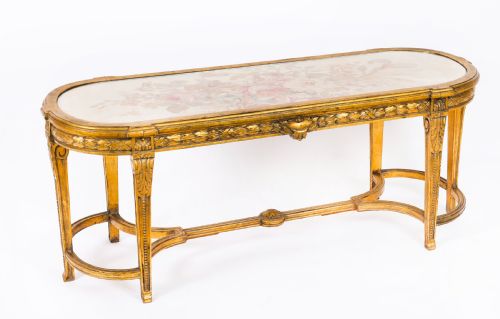
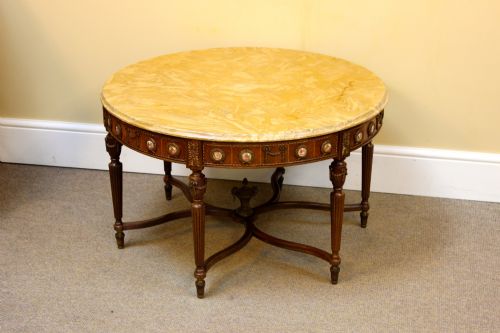
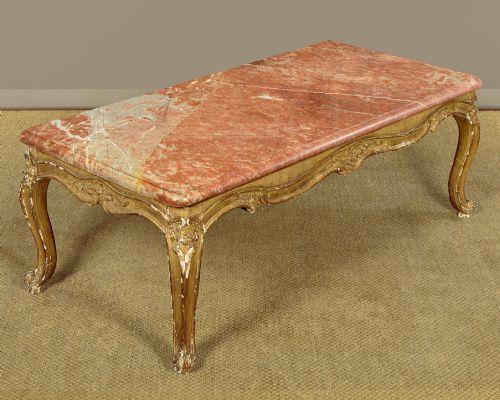
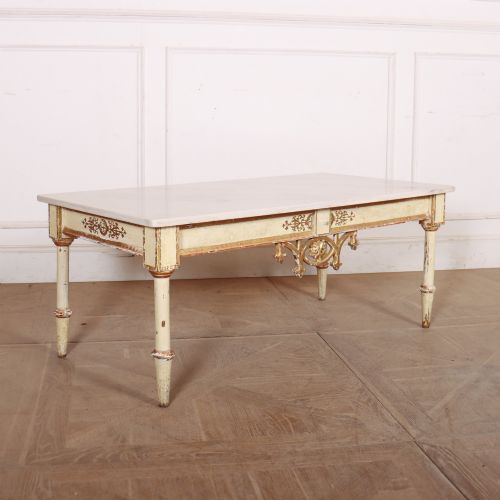


Gilt Carved Cocktail Table
These gilt carved cocktail table pieces combine gilded surfaces and low proportions, offering a functional centrepiece with distinct historical revival character.
Gilt Carved Cocktail Table
A gilt carved cocktail table brings low-level surface space to a room, appearing in forms such as coffee tables, low centre tables, and low tables. Buyers seeking a gilt carved cocktail table encounter variations spanning several decades from the late nineteenth century to the mid-twentieth century.
The selection includes pieces shaped by revival and regional idioms, featuring Louis XVI Revival, Edwardian Louis XVI Revival, French Rococo Revival, Italian Neoclassical, Louis XVI Style, Louis XV Revival, Chinoiserie, and Neoclassical Venetian designs. Origins range from French workshops to Italian makers and Chinese production.
Most examples function as low coffee tables designed to sit before seating, combining decorative frames with practical tabletops. The overarching form remains low to the ground, serving both decorative and functional roles within a reception room.
How they were made
Construction relies upon traditional timber framing, utilising wood, giltwood, and painted wood as foundational structures for the tables. Carved elements are enhanced with gold leaf and gilt metal applications to achieve reflective, gilded surfaces.
Tabletops incorporate contrasting materials such as polished marble, glass, soapstone, and lacquer. Raised relief detail and black and gilt lacquered finishes appear on specific pieces, demonstrating varied surface decoration techniques across different origins.
Listings incorporate items spanning from the 1880s to the 1950s, utilising materials including marble, giltwood, lacquer, and soapstone.
What varies in quality
Quality differences emerge in the execution of the carved detail and the application of the gilt finish, distinguishing finer sculptural work from simpler moulding. The integrity and weight of inset materials, particularly genuine marble slabs or fitted glass panels, further set apart the construction standards.
Coherence of style dictates visual success, where well-resolved revival proportions display greater harmony than heavier or mismatched adaptations. The refinement of surface decoration, such as raised relief work on lacquer or the crispness of giltwood carving, determines the overall standing of an individual table.
The Gilt Carved Cocktail Table Glossary
- Giltwood
- Wood that has been coated with gold leaf or a metallic substitute. This finish provides a bright, reflective surface characteristic of formal decorative furniture.
- Aubusson
- A style of tapestry or textile design often associated with French decorative arts. It relates to the visual motifs found on certain low coffee table items from the early twentieth century.
- Chinoiserie
- European decorative style reflecting Chinese artistic traditions. It involves lacquered surfaces and painted motifs applied to furniture forms.
- Louis XVI Revival
- A nineteenth and twentieth-century design movement emulating the neoclassical restraint of the French royal court. Pieces display symmetrical lines and classical ornamentation.
- Neoclassical
- A style drawing upon classical antiquity, featuring restrained geometry and balanced proportions. It influences several Italian and French tables in this category.
Gilt Carved Cocktail Table: Frequently Asked Questions
What is a gilt carved cocktail table?
A low table featuring carved wooden frames with gilded finishes, designed for use in a sitting room or reception space.
These pieces function primarily as coffee tables, offering a flat surface supported by decorative legs and frames.
How do I date a table?
Dating relies on stylistic revival traits, construction materials, and recorded period indicators such as Edwardian or mid-century markers.
Comparing the specific ornamentation, such as Rococo or Neoclassical motifs, helps place the item within its correct era.
Are the tabletops marble?
Many examples feature fitted marble tops, while others utilise glass, wood, soapstone, or lacquered panels.
Original stone inserts are heavy and sit within the wooden or gilt frame of the table structure.
Where were these tables made?
The listings show origins primarily rooted in French and Italian workshops, alongside Chinese export styles.
Regional characteristics separate Venetian and French revival pieces from Asian lacquerwork items.