


Antique Italian Tea Table
An antique italian tea table brings Mediterranean craftsmanship into a room, offering rich marquetry and carved wood for daily hospitality.
Antique Italian Tea Table
When someone searches for an antique italian tea table, they are looking at low tables, tray tables, and occasional pieces designed for serving or display. These items bridge historical European furniture forms and practical living space requirements.
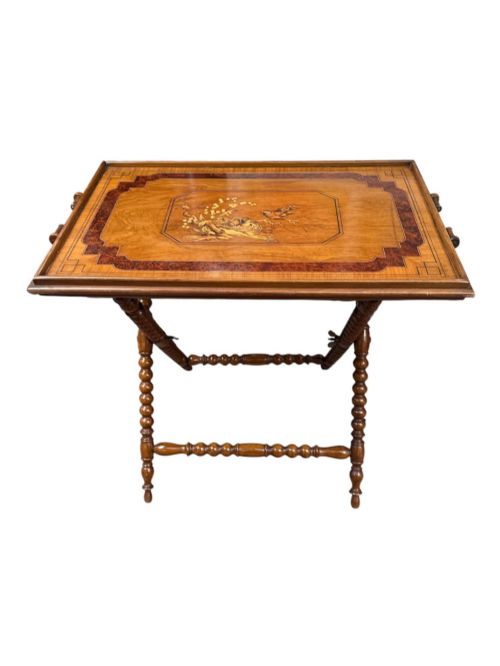
The versions most likely to be met on this page include nineteenth-century Sorrento ware featuring intricate marquetry and parquetry, alongside walnut and mahogany occasional tables from the late nineteenth and early twentieth centuries. Surviving examples often take the form of coffee tables, butler's trays, and specimen top designs.
Origins span regional workshops across Italy, incorporating styles such as Italian Baroque, Neoclassical, Renaissance Revival, and Venetian Rococo. These pieces frequently utilise folding stands or fixed carved legs suited to sitting rooms and libraries.
Materials and construction
Construction relies heavily on timbers such as walnut, burr walnut, olive wood, and mahogany, shaped into solid frames and veneered surfaces. Marquetry and parquetry techniques build intricate geometric or pictorial motifs using contrasting wood veneers.
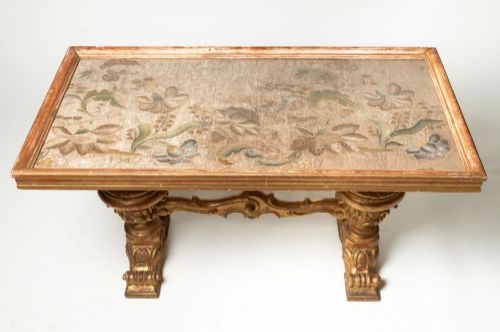
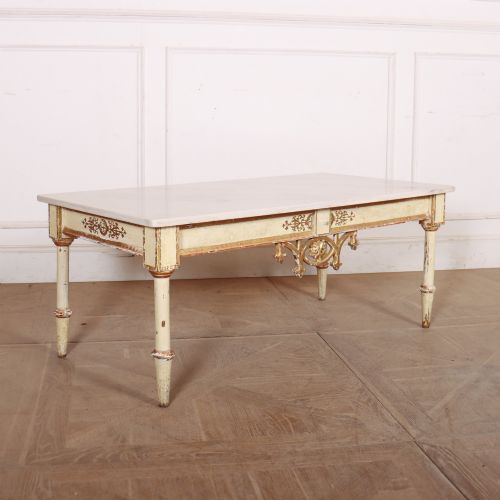
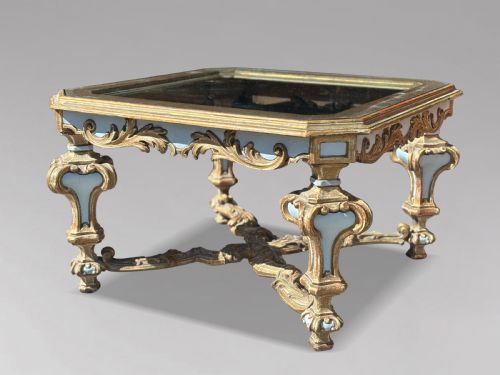
Some examples incorporate marble tops set within carved wooden frames, while others utilise giltwood or painted finishes. Folding mechanisms in tray tables employ hinged supports designed for practical storage and movement.
The documented forms span Sorrento ware marquetry trays, specimen top coffee tables, and occasional tables with folding frames.
Assessing quality and execution
Quality rests upon the precision of the marquetry and the crispness of the carving in the wood or gilt gesso. Finer examples display meticulous control in cutting and fitting diverse wood veneers to form complex pictorial or geometric scenes.
The choice of primary timber and secondary materials also dictates standard, with burr walnut and multi-wood inlay marking higher tiers of production. Structural integrity in the joints and the original condition of painted or polished surfaces further separate standard work from exceptional craftsmanship.
Carlo Bugatti
The Antique Italian Tea Table Glossary
- Sorrento ware
- Woodwork decorated with marquetry and inlay originating from the town of Sorrento in southern Italy. It frequently depicts architectural scenes or floral patterns on small tables and boxes.
- Marquetry
- The art of applying small pieces of veneer to a structure to form decorative patterns and pictures. It differs from parquetry through its pictorial and curving designs.
- Parquetry
- Geometric mosaic woodwork used for tabletops and flooring. Artisans arrange regular wood shapes to create repeating patterns.
- Giltwood
- Wood that has been covered with a thin layer of gold leaf or gilt powder. This finish appears frequently on decorative frames and tables.
- Specimen top
- A tabletop composed of various coloured marbles or mineral samples arranged in geometric patterns. These were popular souvenirs from the Grand Tour.
Antique Italian Tea Table: Frequently Asked Questions
Can I use these tables for daily coffee?
Many of these pieces function well as low coffee tables in contemporary reception rooms, providing a stable surface for everyday use. Care must be taken with liquids and heat, employing coasters and placemats to protect antique polished finishes and delicate marquetry.
Tray tables with folding stands offer flexibility for moving around a room when entertaining guests. Ensure the folding mechanism is fully secured before placing heavy items on the surface.
What is Sorrento ware?
Sorrento ware refers to decorative wooden items produced in the Campania region of Italy, famous for intricate micro-mosaics and veneer inlay. Craftsmen utilised local timbers like olive wood and walnut to create detailed views of buildings and figures.
These decorative surfaces frequently adorn the tops of occasional tables and butler's trays from the nineteenth century. The style gained immense popularity among European travellers seeking portable artworks.
How do I date a nineteenth-century Italian table?
Dating relies on examining the construction methods, secondary timbers, and stylistic markers visible in the carving and inlay. Mid-century examples often feature dense walnut marquetry, while late nineteenth-century pieces may show influences from the Grand Tour or Revival styles.
Hardware such as hinges, screws, and lock mechanisms also provide clues to the manufacturing decade. Comparing the decorative motifs to known regional patterns helps narrow the period of origin.