




Gilded Legs Coffee Table
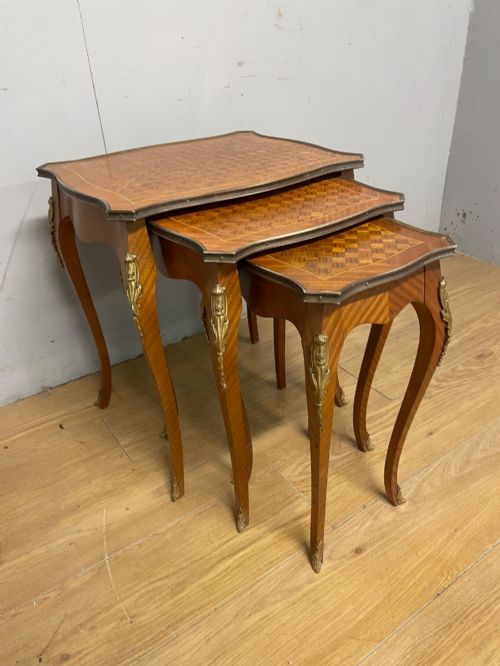
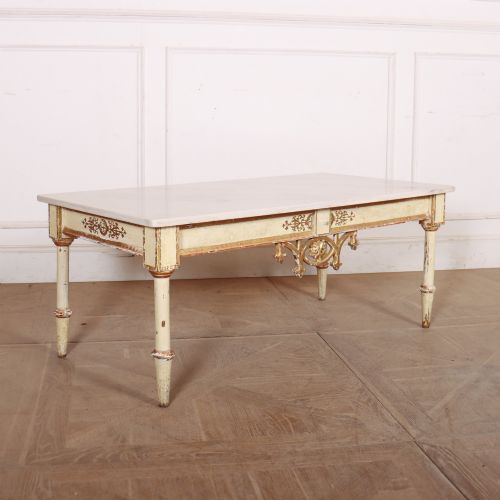
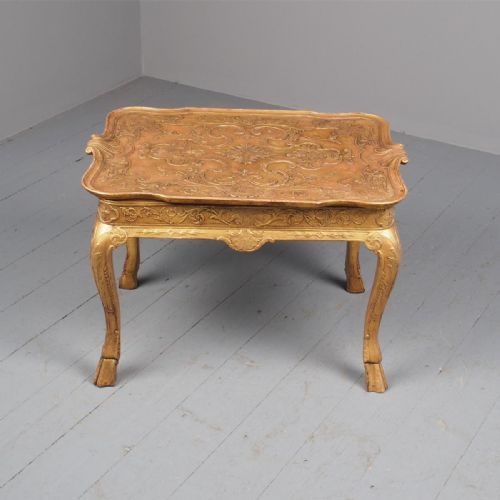
These gilded legs coffee table selections bring together nineteenth and early twentieth century occasional tables, nests, and low tables finished with gold leaf, gilt wood, and painted surfaces.
Gilded Legs Coffee Table
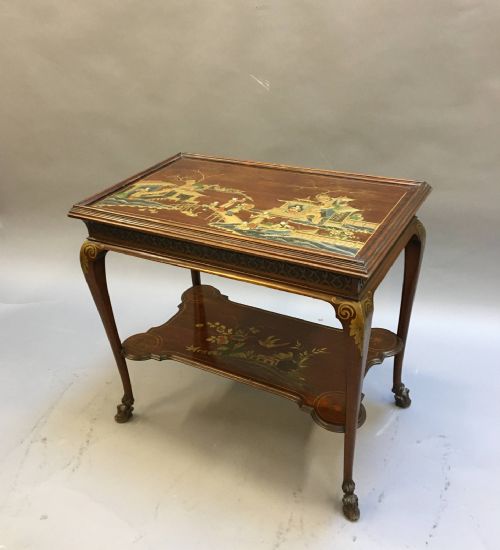
When searching for a gilded legs coffee table, buyers encounter a variety of low tables, occasional tables, nests of tables, and side tables dating from the nineteenth century up to the nineteen thirties. These pieces emerge from diverse design traditions, spanning French Louis XVI style, Italian and French neoclassicism, Rococo Revival, George I style, Queen Anne style, and Chinoiserie.
The selection on this page relies heavily on early twentieth century examples alongside nineteenth century pieces. Forms include standard coffee tables, nests of multiple tables, tray top side tables, and even low lacquered tables from the nineteen tens and nineteen twenties.
Origins and periods represented in the evidence range from eighteen seventy through to nineteen thirty. Buyers find brass and marble top coffee tables, painted occasional tables, and giltwood creations designed to anchor a drawing room or sitting room.
How they were made
Construction relies on traditional hardwoods and walnut, often combined with painted wood, lacquer, or specialised gilt finishes. Craftsmen applied gold leaf and gilt wood to intricate frames, shaping tables to reflect Rococo Revival and neoclassical aesthetics.
Surfaces frequently feature inset marble tops or brass details. Chinoiserie and black and gilt lacquered low tables employ specialist lacquer techniques alongside painted decoration, while tray top side tables incorporate raised edges and detailed wooden frames.
A solitary gilded footstool sneaks into the company of tables, proving that gilt legs are happy to support feet as well as coffee cups.
What varies in quality
Quality separates through the execution of the surface finish, whether in the crispness of the gilt wood carving, the depth of the lacquer, or the quality of the painted decoration. Pieces after specific makers or movements display refined proportions and hand-applied gold leaf that retain integrity over decades.
Materials such as genuine marble tops and solid hardwoods elevate the substance of the table compared to simpler painted wood constructions. The cohesion of style, from French Louis XVI to George I interpretations, dictates the visual harmony of the piece.
Zwiener
The Gilded Legs Coffee Table Glossary
- Giltwood
- Wood that has been treated with gold leaf or a gold-coloured metallic finish. This technique highlights carved details on frames and legs.
- Chinoiserie
- European interpretations of Chinese and East Asian artistic traditions, often featuring painted motifs and lacquered surfaces. It appears frequently on occasional and low tables from the early twentieth century.
- Nest of tables
- A set of graduated tables designed to fit neatly beneath one another when not in use. They offer practical surface space in compact arrangements.
- Occasional table
- A small, versatile table intended for intermittent use around a sitting room or drawing room. These pieces often feature decorative legs and surface treatments.
Gilded Legs Coffee Table: Frequently Asked Questions
What periods do these tables come from?
The pieces span the nineteenth century and the early decades of the twentieth century, specifically between eighteen seventy and nineteen thirty.
Craftsmen working across these decades drew on historical styles such as Queen Anne, George I, and Louis XVI.
What materials are used on the surfaces?
Surfaces feature marble, lacquer, painted wood, and polished walnut alongside inset brass elements.
Support structures utilise wood and hardwood finished with gold leaf, gilt, or silver gilt.
How do I identify a Chinoiserie table?
Chinoiserie tables feature characteristic black and gilt lacquered finishes alongside painted Asian-inspired motifs.
They date primarily to the early twentieth century and serve as low tables or occasional pieces.