
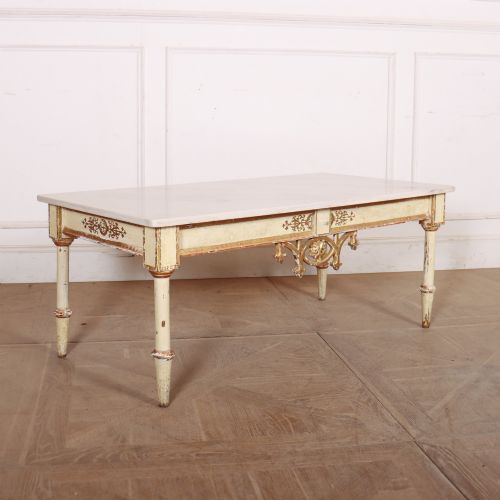
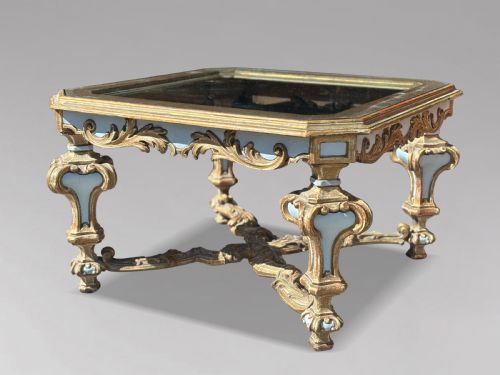


Vintage Italian Centre Table
These vintage italian centre table examples bring regional craftsmanship and stone surfaces into domestic spaces with distinct character.
Vintage Italian Centre Table
A vintage italian centre table brings traditional continental craftsmanship into a room, serving as a striking focal point for domestic spaces. Buyers searching for a vintage italian centre table encounter diverse forms ranging from low coffee tables to grand pedestal designs spanning several centuries.
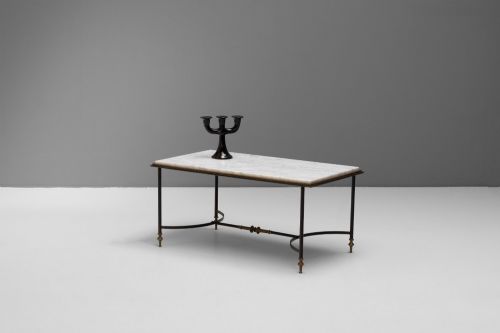
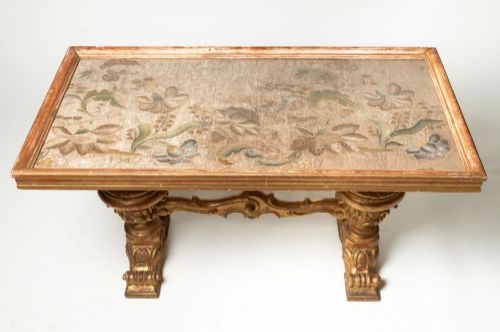
Makers and workshops across Italy produced these items for various domestic functions, resulting in circular occasional tables, tilt-top variants, and low coffee tables. Walnut remains the predominant timber, often paired with marble or onyx tops.
How they were made
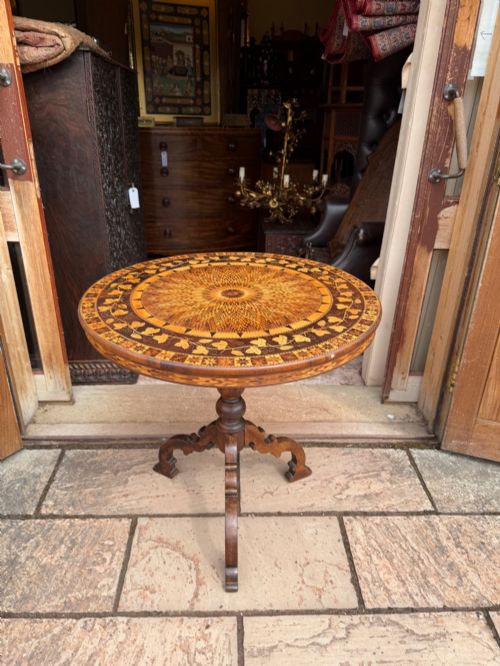
Craftsmen utilised European walnut, fruitwood, and olive wood as the primary structural timbers, shaping them through traditional joinery and detailed carving. Many examples incorporate marquetry and delicate wood inlays to create geometric or pictorial motifs across the surface.
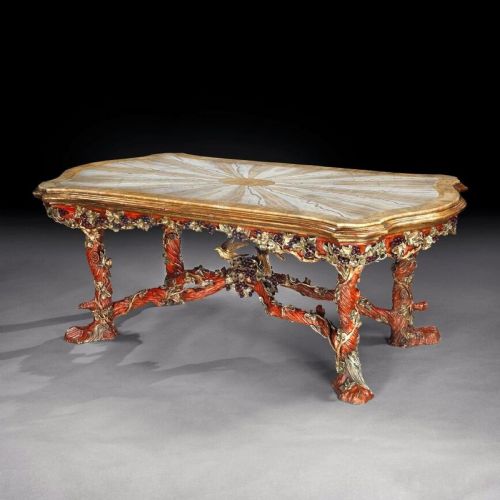
Heavy stone tops, including pink Salome marble, purple marble, and onyx, require secure wooden framing and structural support. Metal elements such as brass, gilt, and iron appear in supporting pedestals and decorative mounts, alongside hand-applied paint and polychrome finishes.
The listings span from the eighteenth century through to the mid-twentieth century, featuring walnut, marble, and gilt metal.
What varies in quality
The finesse of the carved wood details and the precision of the marquetry inlay determine the standard of execution. Tables featuring complex figurative carving or intricate Sorrento mosaic work demonstrate superior workshop skill.
Amleto Bertoni·B Battioli, Varese
The Vintage Italian Centre Table Glossary
- Marquetry
- Decorative veneer applied to furniture structures in geometric or pictorial patterns. This technique utilises various coloured woods to create detailed surface designs.
- Sorrento Ware
- Intricate wood inlay work originating from the town of Sorrento in southern Italy. It typically depicts architectural views, floral motifs, or geometric mosaics.
- Tilt-top table
- A table with a hinged top that rotates to a vertical position when not in use. This mechanism allowed for easier storage in period interiors.
- Polychrome
- Decorated in multiple colours, often applied to carved wood surfaces. This finish enhances sculptural details with painted highlights.
- Pedestal table
- A table supported by a single central pillar rather than four legs. The pillar usually rests on a tripartite base or feet.
Vintage Italian Centre Table: Frequently Asked Questions
What rooms suit a vintage italian centre table?
These tables function effectively in principal reception rooms or libraries where a strong focal point is required. Their decorative stone tops and intricate woodwork complement both traditional and eclectic interior schemes.
Lower coffee table variants suit relaxed seating areas, while pedestal designs anchor larger open spaces as central display surfaces.
How do I care for marble and stone tops?
Stone surfaces require gentle cleaning with mild, pH-neutral soap and water to avoid damaging the polished finish. Acidic liquids like wine or citrus juice should be wiped away immediately to prevent etching.
Periodic application of a suitable stone sealer helps protect the marble or onyx from stains and everyday wear.
What is Sorrento ware inlay?
Sorrento ware refers to a specific tradition of wood mosaic and micro-mosaic inlay originating from coastal Italy. Artisans assemble tiny pieces of different coloured woods to form pictorial scenes or geometric patterns.
This technique requires exceptional precision and adorns the tops and borders of smaller tables and boxes.
How can I identify the period of a table?
Dating relies on stylistic indicators such as Baroque curves, Neoclassical symmetry, or Victorian eclectic detailing. The construction methods, tool marks on the underside, and the choice of timber also provide clues to the era of manufacture.
Earlier examples from the eighteenth and nineteenth centuries often feature hand-cut joinery and aged patination on the wood.
Are these tables sturdy enough for daily use?
Solid timber construction and heavy stone tops provide inherent stability for everyday domestic activities. However, the delicate nature of marquetry and inlaid surfaces means users should employ coasters and avoid excessive moisture.
Regular checks on the fixing points between the base and stone top ensure structural integrity over time.